LI AUTO(LI)

Search documents
人形机器人产业周报:FigureAI发布人形机器人Helix02,OptimusV3即将亮相-20260202
Guoyuan Securities· 2026-02-02 10:45
Investment Rating - The report maintains a "Recommended" rating for the humanoid robot industry, indicating that the industry index is expected to outperform the benchmark index by more than 10% [30]. Core Insights - The humanoid robot concept index experienced a decline of 5.69% from January 25 to January 30, 2026, underperforming the CSI 300 index by 5.78 percentage points. However, year-to-date, the humanoid robot index has increased by 3.44%, outperforming the CSI 300 index by 1.79 percentage points [11][15]. - Key companies in the humanoid robot sector are showing significant growth, with notable announcements of increased net profits for 2025, such as a projected increase of 39.08% to 63.63% for Boke Technology and 105% to 131% for Lide Harmony [4][27]. Weekly Market Review - The humanoid robot index saw a weekly decline of 5.69%, with the largest weekly gain recorded by Zhongwei Semiconductor at +36.57% and the largest loss by Haozhi Electromechanical at -22.44% [11][15]. - The humanoid robot industry is witnessing a surge in investment, with Zhejiang Humanoid Robot Innovation Center completing a 450 million yuan Pre-A round financing, and Shandong Future Robot securing several hundred million yuan in B round financing [4][24]. Weekly Hotspots Review Policy Developments - The Ministry of Civil Affairs issued guidelines to promote technological innovation in civil affairs, emphasizing the application of humanoid robots in elderly care and rehabilitation [18]. - Jilin Province has identified "embodied intelligence" as a key industry focus for 2026, aiming to enhance applications in various sectors [19]. - Guangdong Province's government report highlights the importance of developing new industries, including intelligent robots, as part of its economic strategy [20]. Product and Technology Iteration - Figure AI launched the Helix 02 humanoid robot, which can autonomously perform complex tasks in a kitchen environment using a single neural network [5][21]. - Yushun announced the open-source release of UnifoLM-VLA-0, a model aimed at enhancing humanoid robot operations [21]. Investment and Financing - Zhejiang Humanoid Robot Innovation Center's recent financing reflects strong market confidence in humanoid robots' potential in industrial digitalization [24]. - Shandong Future Robot's B round financing will support the development of new core technologies and market expansion [26]. Key Company Announcements - Boke Technology expects a significant increase in net profit for 2025, driven by the growing demand for robots [27]. - Lide Harmony anticipates a substantial growth in its embodied intelligent robot business, contributing to its overall performance [28]. - Changan Automobile aims to achieve mass production of humanoid robots by 2028, indicating a strategic shift towards robotics [28].




1月新势力分化加剧:鸿蒙领跑,理想下滑
Bei Jing Shang Bao· 2026-02-02 08:27
Core Insights - The delivery performance of new car manufacturers in January 2026 showed a significant decline in month-on-month figures, with some brands experiencing drops exceeding 40%, while year-on-year results displayed a stark divergence among companies [2][3] - The competition in the automotive industry is shifting towards technology and ecosystem advantages, necessitating adjustments in product offerings and marketing strategies to meet changing consumer demands [2][8] Delivery Performance - In January 2026, the overall delivery volume for new car manufacturers decreased, with three companies reporting a month-on-month decline of over 40% and three others over 30% [3] - Hongmeng Zhixing led the market with nearly 58,000 deliveries, marking a year-on-year increase of 65.6%, despite a month-on-month drop of 35.4% [3][4] - Xiaomi and Leap Motor also reported strong growth, while NIO and Zeekr saw near doubling in year-on-year figures; however, Li Auto and Xpeng faced year-on-year declines [2][3] Market Trends - The automotive market is experiencing a "financial war" as companies introduce low-interest financing options to stimulate sales, with Tesla and Xiaomi leading the charge with attractive financing plans [5][6] - The long-term growth trajectory for the electric vehicle market remains positive, with projections indicating that sales in China could reach 19 million units in 2026, representing a year-on-year growth of 15.2% [7] Competitive Landscape - The competitive focus is shifting from price competition to value competition, driven by changes in government policies that encourage technological upgrades and quality consumption [7][8] - Key trends identified for 2026 include a shift towards value competition, accelerated market differentiation, and a focus on intelligent driving, smart cabins, and new battery technologies as critical areas for differentiation [7][8]


2026车圈反思开局:我们犯了大错误
汽车商业评论· 2026-02-02 04:03
Group 1 - The automotive industry is reflecting on its challenges and opportunities as leaders like Li Shufu of Geely emphasize the importance of core values and technological innovation in navigating critical moments [9][10] - Oliver Blume, former CEO of Porsche, admits to significant strategic errors, particularly regarding the decision to fully electrify the Macan model, which has led to a product gap and financial losses for shareholders [14][15] - Xiaomi's CEO Lei Jun acknowledges the industry's issues with marketing practices and emphasizes the need for transparency and accountability in communications with consumers [17][19] Group 2 - NIO's founder Li Bin celebrates the production of the company's one millionth electric vehicle and outlines ambitious plans for expanding battery swap stations, while maintaining a focus on long-term growth and profitability [22][24] - Elon Musk expresses confidence in China's rapid advancements in AI and energy infrastructure, predicting that China will surpass the U.S. in power generation by three times by 2026 [26][27] - Zhu Hao, founder of Zhi Mi Technology, boldly claims that his company will create the world's first trillion-dollar ecosystem, aiming for a significant increase in market valuation over the next two decades [30][31] Group 3 - Renault's CEO François Provost advocates for a shift from volume-driven strategies to value-driven approaches in the Chinese automotive market, criticizing the detrimental effects of price wars [41] - Li Xiang of Li Auto announces a strategic pivot towards humanoid robotics and AI, emphasizing the need for innovation in product development and collaboration within the industry [44][46] - Huawei's executive Yu Chengdong expresses dissatisfaction with the current capabilities of the HarmonyOS cockpit, calling for improvements to meet user expectations [36][37]


“网红”电动车,谁能跨过“斩杀线”
创业邦· 2026-02-02 03:36
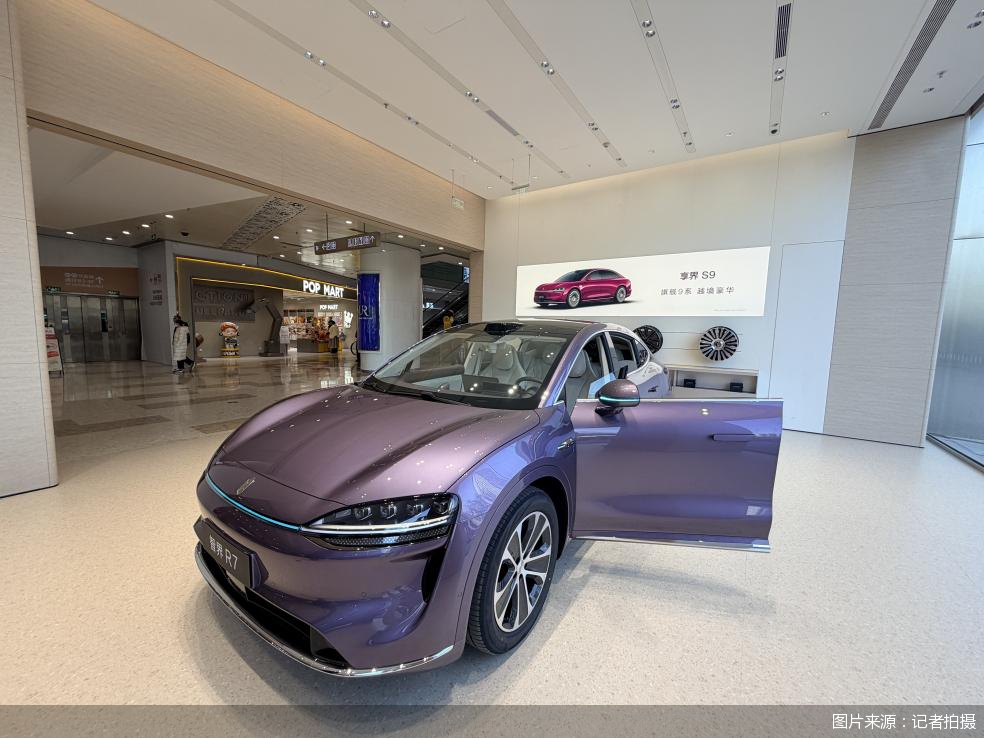
Core Viewpoint - The article discusses the evolving landscape of the electric vehicle (EV) market, emphasizing the need for sustainable sales strategies beyond initial hype and the importance of establishing a strong value proposition for long-term success [6][54]. Group 1: Market Dynamics - The EV market has seen a surge in new models, but success is often measured by initial sales figures and year-end rankings, which can be misleading [6][7]. - Traditional "internet celebrity cars" tend to follow a parabolic sales curve, peaking shortly after launch and then declining, relying on short-term marketing and product appeal [11][12]. - The article identifies three new models that have successfully navigated the market, showcasing different strategies for sustained sales [12]. Group 2: Case Studies of Successful Models - **Xiaomi SU7**: Achieved peak sales of nearly 30,000 units in March 2025, supported by Xiaomi's extensive user base and effective marketing. However, it faces the challenge of maintaining interest beyond initial hype [15][16]. - **Xpeng MONA M03**: Launched in August 2024, it quickly reached over 10,000 units in sales within three months and maintained monthly sales between 10,000 and 16,000 units, capitalizing on a key price segment and offering advanced features [18][20]. - **AITO M8**: Experienced a "deep squat and jump" sales pattern, stabilizing at over 20,000 units monthly by summer 2025, benefiting from Huawei's technology integration and brand recognition [23][24]. Group 3: Challenges and Market Positioning - The article highlights the importance of establishing a "value anchor" in consumers' minds to ensure long-term sales, as seen with models like Li Auto L6, which despite a decline, remains a top seller due to its defined market position [28][29]. - Models in the competitive 200,000 to 300,000 yuan price range face significant challenges, with many struggling to differentiate themselves in a crowded market [31][32]. - The **智界 R7** and **享界 S9** illustrate the difficulties faced by models that fail to establish a unique market position, leading to declining sales despite technological backing [34]. Group 4: The Importance of Sustainable Sales - The article emphasizes the existence of "low-profile long runners" that, while not flashy, maintain steady sales through balanced product offerings and precise market positioning [36][38]. - Models like **零跑 C10** and **腾势 D9** demonstrate the effectiveness of a stable sales strategy, contributing significantly to their brands' overall performance [41][43]. - The need for a healthy product matrix is highlighted, as brands that rely solely on a single "hit" model face increased risks in a competitive environment [51]. Group 5: Emerging Market Rules - The article outlines new market rules where "smart equality" becomes a baseline requirement, and the importance of a comprehensive product matrix is emphasized for risk mitigation [51][52]. - The concept of "value for money" has evolved to include total ownership costs, making it a critical factor in consumer decision-making [51]. - The success of models like AITO is attributed to deep collaboration between technology providers and manufacturers, contrasting with less effective loose partnerships [52].



造车新势力1月销量承压 环比平均降幅达38%
Zhong Zheng Wang· 2026-02-02 03:16
Core Insights - The domestic new energy vehicle market experienced a significant decline in January 2026, with all nine major manufacturers reporting a month-on-month drop in deliveries averaging 38%, with the highest decline exceeding 47% [1][2] - However, year-on-year performance showed a stark contrast, with leading brands like Zeekr and NIO nearly doubling their deliveries, while brands like Xpeng and Li Auto faced declines of 34.1% and 7.6% respectively, highlighting a widening gap between top and smaller brands [1][2] Group 1: Market Performance - The nine major manufacturers saw month-on-month delivery declines ranging from 21.2% to 47.0%, indicating market volatility due to policy adjustments and changes in consumer behavior [2][5] - Leading brand Homologous Intelligence maintained the highest delivery volume at 57,915 units, despite a 35.4% month-on-month decline, showcasing a year-on-year growth of 65.6% [2][3] - Xiaomi's deliveries exceeded 39,000 units, with a month-on-month drop of 22.3% but a year-on-year surge of 70%, indicating strong market acceptance [2][3] Group 2: Brand-Specific Insights - NIO and Zeekr emerged as the "dual engines" of year-on-year growth, both exceeding 95% growth, with NIO delivering 27,182 units (up 96.1% year-on-year) and Zeekr delivering 23,852 units (up 99.7% year-on-year) [3][4] - Li Auto and Xpeng faced challenges with year-on-year declines, with Li Auto delivering 27,668 units (down 7.6%) and Xpeng delivering 20,011 units (down 34.1%) [4][5] - Leap Motor and Lantu maintained steady growth, with Leap Motor delivering 23,591 units (up 63.9% year-on-year) and Lantu delivering 10,515 units (up 31.3% year-on-year) [4][5] Group 3: Market Dynamics and Future Outlook - The decline in January sales is attributed to short-term factors such as policy changes, seasonal demand fluctuations, and inventory management by dealers, with a forecasted 40% month-on-month drop in national retail sales of new energy vehicles [5][6] - Despite short-term pressures, the long-term growth trajectory for the new energy vehicle industry remains intact, with projections of 19 million units sold in 2026, representing a 15.2% year-on-year increase [6] - The market is expected to stabilize post-policy transition, with new product launches and supportive measures from local governments anticipated to drive recovery in February and March [6]
理想汽车1月交付新车2.77万辆,累计交付突破156万辆
Ju Chao Zi Xun· 2026-02-02 03:04
理想汽车董事长兼CEO李想表示:"1月,我们向用户推送了OTA 8.2版本系统更新,带来40项新增功能和25项体验优化,辅助驾驶、智能空间 和智能电动体验全面升级。强化版VLA司机大模型对物理世界的思考和理解能力迎来质变,城区复杂路况的应对更接近真人驾驶。新上线的 宠物模式和AI艺术相框功能广受用户喜爱,非常多的用户创作和分享AI宠物屏保,回忆和爱宠的治愈时刻。我始终相信AI带来的生产力变 革,将极大地加速智能电动车向具身智能产品进化,为理想汽车创造更大的机遇。感谢用户和伙伴长期以来的信任和支持,我们会不负期 待,把握机遇、主动积极迎接挑战,持续为用户提供更主动、更聪明、更有温度的服务。" 在销售与服务网络方面,截至2026年1月31日,理想汽车在全国范围内已有547家零售中心,覆盖159个城市;售后维修中心及授权服务中心共 计547家,覆盖221个城市。充电网络建设同步推进,全国已投入使用3966座理想超充站,拥有21,945个充电桩。 2月1日,理想汽车公布了2026年1月的交付数据。2026年1月,理想汽车交付新车27,668辆。截至2026年1月31日,理想汽车历史累计交付量已 达1,567,883辆 ...

国新证券每日晨报-20260202
Guoxin Securities Co., Ltd· 2026-02-02 02:49
Domestic Market Overview - The domestic market showed a mixed performance with the Shanghai Composite Index closing at 4117.95 points, down 0.96%, and the Shenzhen Component Index at 14205.89 points, down 0.66%. The STAR 50 Index rose by 0.12%, while the ChiNext Index increased by 1.27%. The total trading volume of the A-share market reached 286.24 billion yuan, an increase from the previous day [1][5][7] - Among the 30 sectors tracked by CITIC, 6 sectors saw gains, with telecommunications, agriculture, forestry, animal husbandry, and fishery, as well as electronics leading the increases. Conversely, non-ferrous metals, steel, and food and beverage sectors experienced significant declines [1][5][7] Overseas Market Overview - The three major U.S. stock indices experienced slight declines, with the Dow Jones Industrial Average falling by 0.36%, the S&P 500 down by 0.43%, and the Nasdaq Composite decreasing by 0.94%. The index tracking the seven major U.S. tech companies also dropped by 0.32% [2][5] Key News Highlights - The Central Political Bureau of the Communist Party of China conducted a collective study on forward-looking layouts and the development of future industries, with President Xi Jinping delivering an important speech emphasizing the significance of nurturing future industries for national development [9][10] - An important article by Xi Jinping titled "Walking the Path of Financial Development with Chinese Characteristics and Building a Financial Power" will be published in the upcoming issue of "Qiushi" magazine, outlining the principles for developing a robust financial system [13][14] - The personal income tax threshold for individual taxpayers has been raised to 1000 yuan per transaction, effective this year [17][18] - British Prime Minister Keir Starmer's visit to China resulted in 12 cooperation agreements, marking a significant step in UK-China relations [19] Driving Factors - The upcoming publication of Xi Jinping's article is expected to influence market sentiment, as it outlines the strategic direction for China's financial development and emphasizes the importance of a strong financial system [8][14] - The A-share market saw 2453 stocks rise, 2896 decline, and 113 remain unchanged, indicating a volatile trading environment influenced by international market fluctuations [8]


1月车企销量排行
数说新能源· 2026-02-02 02:37
根据2026年2月1-2日各大车企发布的最新数据,2026年1月中国汽车市场销量排行如下: 车企集团销量排行(TOP 5) | 排名 | 车企集团 | 1月销量 | 同比变化 | 主要亮点 | | --- | --- | --- | --- | --- | | 1 | 吉利汽车集团 | 270,167辆 | +1% | 海外出口60,506辆,同比翻倍;新能源124,252辆 | | 2 | 比亚迪 | 210,051辆 | -30.11% | 出口100,482辆,同比+51.47%,蝉联新能源冠军 | | 3 | 奇瑞集团 | 200,269辆 | -10.72% | 出口11.96万辆,同比+48.1%,出口占比近60% | | 4 | 广汽集团 | 116,622辆 | +18.47% | 自主品牌超4.9万辆,同比+87.58% | | 5 | 长城汽车 | 90,312辆 | +11.59% | 海外销量40,278辆,同比+43.77% | | | 🚀 造车新势力销量排行(TOP 10) | | | | 排名 品牌 1月销量 同比变化 备注 1 问界(AITO) 40,016辆 +83% 鸿蒙智 ...

出行革命_自动驾驶与机器人出租车-Mobility Revolution_ Autonomous driving and robotaxi
2026-02-02 02:22
Summary of Key Points from the Conference Call Industry Overview - The automotive sector is undergoing significant transformation with advancements in electrification, automation, and informatization, potentially leading to a revolution in transportation similar to the introduction of the moving assembly line by Ford over a century ago [2][10] Autonomous Driving and Robotaxi Trends - The shift from rule-based systems to end-to-end (E2E) architectures and variable large architectures (VLA) is evident, with many companies pursuing hybrid designs that combine safety mechanisms with AI models [3] - Advanced Driver Assistance Systems (ADAS) and Autonomous Driving (AD) penetration is expected to rise significantly, with L2+ systems projected to reach approximately 34% penetration by 2035, up from 12% in 2025 [5] - The global robotaxi market is anticipated to grow to USD 67.3 billion by 2030, with China being the most scalable market due to supportive policies and deployment momentum [6] Key Players and Strategies - Major automakers are adopting diverse strategies for autonomous driving: - **Toyota** is pursuing a multi-pathway strategy, combining in-house development with partnerships [10] - **Honda** is focusing on developing its own E2E system while collaborating with Helm.ai [10] - **Nissan** is leveraging Wayve's E2E technology [10] - In China, companies like **Pony.ai**, **WeRide**, and **Apollo Go** are leading the robotaxi deployment, with significant partnerships enhancing their capabilities [45] Investment Implications - Japanese automakers are expected to launch software-defined vehicles (SDVs) starting with Toyota's RAV4 in 2025, followed by Honda's 0 Series and Sony Honda Mobility's AFEELA in 2026 [10] - The transition to SDVs presents both opportunities and risks for traditional auto parts suppliers, as automakers increasingly assert control over software layers, potentially eroding supplier revenues [11] - The Japanese government has set a target for 30% SDV penetration by 2030-2035, which may accelerate strategic initiatives across the sector [12] Market Ratings - **Outperform Ratings**: Toyota, Suzuki, BYD, Xiaomi, Li Auto, Grab, BMW, Ferrari, Renault, Aston Martin, Hesai, Tuopu - **Market-Perform Ratings**: Honda, Denso, XPeng, NIO, Volkswagen, Mercedes, Stellantis, Volvo Cars, Continental - **Underperform Ratings**: Nissan, Mazda, Subaru, Black Sesame, Daimler Truck [12][15][17][26] Additional Insights - The integration of advanced technologies in the automotive sector is leading to a shift in competitive dynamics, with traditional OEMs partnering with tech companies to enhance their offerings [14] - The development of autonomous driving capabilities is closely linked to the operational design domain (ODD), which defines the conditions under which autonomous vehicles can operate [41][42] - The future of tyre technology is also evolving, with tyres expected to function as sensors that communicate data to vehicles, enhancing predictive maintenance and driving performance [18]


车企金融促销战升级,7年低息贷款成标配
Jin Shi Shu Ju· 2026-02-02 01:58
Core Viewpoint - The automotive industry is shifting from direct price competition to financial incentives as companies respond to regulatory pressures against price wars, raising questions about the sustainability and risks of this strategy [2][6]. Group 1: Financial Promotions - Tesla initiated a financial promotion with a "7-year low-interest" plan, offering a minimum down payment of 79,900 yuan and monthly payments of 1,918 yuan for the Model 3 [2]. - Xiaomi, Li Auto, and other companies quickly followed suit with similar financing options, highlighting a trend towards extended loan terms and lower monthly payments to attract consumers [3]. - The trend of "7-year low-interest" financing has become a standard offering among major automakers, with various companies providing competitive down payment and monthly payment options [3]. Group 2: Consumer Behavior and Market Dynamics - There is a growing consumer demand for flexible payment options, particularly among younger buyers, which can lead to an "equivalent price reduction" effect [4]. - The automotive market is facing significant pressure, with retail sales of passenger vehicles dropping by 28% year-on-year in early January 2026, prompting companies to adopt financial promotions to stimulate demand [6]. - The impending reduction of tax incentives for electric vehicles is expected to increase consumer costs, further motivating companies to offer attractive financing solutions [6]. Group 3: Regulatory and Policy Environment - Recent policies from financial regulators have allowed for the extension of personal consumption loans to 7 years, making low-interest financing a compliant option for automakers [7]. - The government has introduced fiscal subsidies for qualifying personal consumption loans, which can help offset the costs of low-interest financing for consumers [8]. - The inclusion of the automotive sector in key fiscal subsidy areas indicates a supportive regulatory environment for financial promotions in the industry [7]. Group 4: Financing and Leasing Controversies - Many automakers are incorporating financing leasing services into their promotional strategies, which can create confusion among consumers regarding ownership and contractual obligations [9]. - The financing leasing model, while innovative, has faced criticism for potentially misleading consumers about ownership rights and responsibilities [10]. - The automotive financing leasing sector is undergoing regulatory improvements to enhance transparency and protect consumer interests [10][11].