
LEAPMOTOR(09863)

Search documents
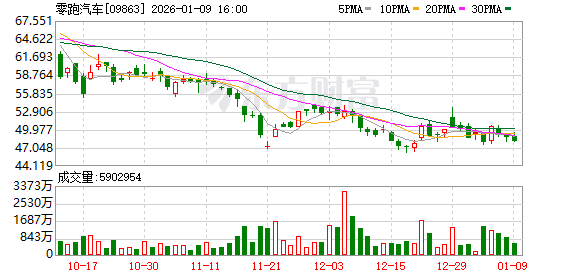
汽车股继续走低,元旦以来超20家车企降价促销
Ge Long Hui· 2026-01-12 02:25
Group 1 - The core viewpoint of the article highlights the ongoing weakness in Hong Kong's automotive stocks, with significant declines observed in companies such as Geely Auto and Li Auto, among others [1] - As of January 12, 2026, over 20 automotive companies have launched promotional activities for more than 75 models, employing various strategies such as cash subsidies and interest-free financing [1] - The Secretary-General of the National Passenger Car Market Information Association, Cui Dongshu, suggests that the current price reductions by car manufacturers are a rational return to pricing rather than a price war, although the trend of price cuts is expected to continue into 2026 [1] Group 2 - Analysts predict that the promotional activities may stimulate sales, potentially leading to a strong start for the automotive market in January 2026, but these promotions are likely to compress profit margins for companies and create significant operational pressure for dealers [1] - It is widely anticipated that the number of automotive companies will decrease by 2026, with market concentration (CR5) expected to rise from 65% to 80%, indicating that brands lacking core competitiveness may face elimination or consolidation [1]



浙江零跑汽车销售服务公司注册资本增至8.5亿元
Zheng Quan Ri Bao· 2026-01-11 14:08
Group 1 - The core point of the article is that Zhejiang Leap Motor Sales Service Co., Ltd. has increased its registered capital from 200 million to 850 million yuan [2] Group 2 - The change in registered capital indicates a significant increase of 325% [2] - This capital increase may reflect the company's growth strategy and potential expansion plans in the automotive industry [2] - The information was sourced from Tianyancha business data [2]

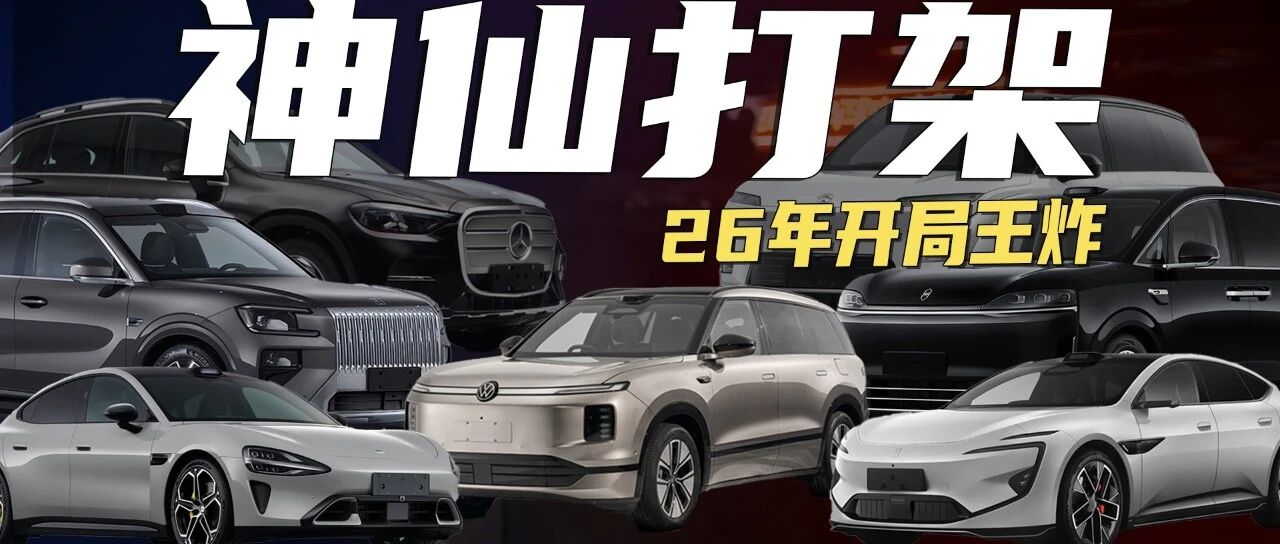
2026开局王炸!比亚迪宋Ultra、蔚来ES9、智界V9、极氪8X、大众ID.ERA、奔驰GLC纯电等多款新车登陆工信部!
电动车公社· 2026-01-10 16:06
Core Viewpoint - The automotive market in China is expected to experience cautious optimism for 2026, with predictions of a decline in passenger car sales after a peak in 2025 [1][2]. Group 1: Market Predictions - Morgan Stanley forecasts a 9% year-on-year growth in China's passenger car sales in 2025, followed by a 5% decline in 2026 [2]. - Despite continued growth in new energy vehicle (NEV) sales and exports, there may be a 30% drop in the first quarter due to changes in subsidies and purchase tax policies, impacting overall annual sales [3]. Group 2: Industry Competition - The consensus is that the Chinese automotive industry is entering a decisive phase, with expectations that only 5-10 NEV companies will survive in the coming years [7]. - As competition intensifies, there are indications of a significant influx of new models, with at least 24 different new energy vehicles expected to be launched, indicating fierce competition ahead [8][9]. Group 3: Key Trends for 2026 - Key themes for 2026 include technological iteration, configuration upgrades, larger vehicle sizes, and responses from joint ventures [10].


传统车企分化、新势力加速洗牌 打响生态战 2025车企生存启示录
Zhong Guo Jing Ying Bao· 2026-01-09 20:03
Core Insights - The Chinese automotive market in 2025 shows a stable total volume with a differentiated structure, indicating a new competitive norm where traditional automakers maintain dominance while new players face varied growth trajectories [3][4][5] Traditional Automakers - SAIC Group sold 4.507 million vehicles in 2025, a 12.3% increase year-on-year, with a retail volume of 4.67 million, maintaining its industry leadership [3] - Geely Automobile achieved sales of over 3.02 million vehicles in 2025, exceeding its targets and setting a 2026 goal of 3.45 million vehicles, reflecting strong growth momentum [4] - Chery Group sold 2.806 million vehicles, including 1.344 million exports, leading in Chinese passenger car exports for 23 consecutive years, with its new energy segment growing by 54.9% year-on-year [4] New Energy Vehicle Players - Leap Motor emerged as a significant player with 596,600 deliveries in 2025, marking a 103% year-on-year increase and becoming the top seller among new forces [2][4] - NIO is gradually recovering from a downturn, with a milestone of producing its one-millionth vehicle expected in early 2026, despite reporting a cumulative loss of nearly 15.7 billion yuan in the first three quarters of 2025 [2][5] - The competitive landscape for new energy vehicles is marked by a stark contrast, with some players struggling while others, like Lantu and Avita, show steady growth backed by traditional automakers [4][5] Strategic Shifts - The industry is shifting from product-centric competition to a focus on ecosystem collaboration and technological innovation, as companies aim to build resilient and innovative ecosystems [5][7] - SAIC Group emphasizes a dual strategy of technological innovation and ecosystem cooperation, launching over 20 competitive new products and collaborating with partners like Huawei and OPPO [6][8] - Companies are setting ambitious goals for 2026, with a focus on advanced technologies such as solid-state batteries, AI, and global expansion, indicating a move towards a more integrated and strategic approach to competition [8][9]

2026年目标年销100万辆,零跑汽车瞄准“世界级车企”
Xin Lang Cai Jing· 2026-01-09 14:34
Group 1 - The core goal of Leap Motor is to achieve annual sales of 1 million vehicles by 2026, with a long-term target of over 4 million vehicles annually to become a "world-class automaker" [1] - Leap Motor's sales performance in 2025 shows a total delivery of 596,555 vehicles, a year-on-year increase of 103%, maintaining its position as the leading new force in China's automotive industry [1] - The company attributes its sales growth to a focus on technology accessibility and comprehensive in-house research and development, covering 65% of the core technology costs of new energy vehicles [1] Group 2 - Leap Motor has developed a competitive autonomous parts system and mastered all core technologies necessary for electric vehicles over the past decade [2] - In 2025, China's automotive export volume exceeded 700,000 units for the first time, with Leap Motor completing business operations in 35 countries and regions, and achieving over 60,000 overseas deliveries, ranking first among new forces in international sales [2]
小米汽车销量创新高,华为鸿蒙月销逼近9万,12月国产新能源百花齐放
Xin Lang Cai Jing· 2026-01-09 11:54
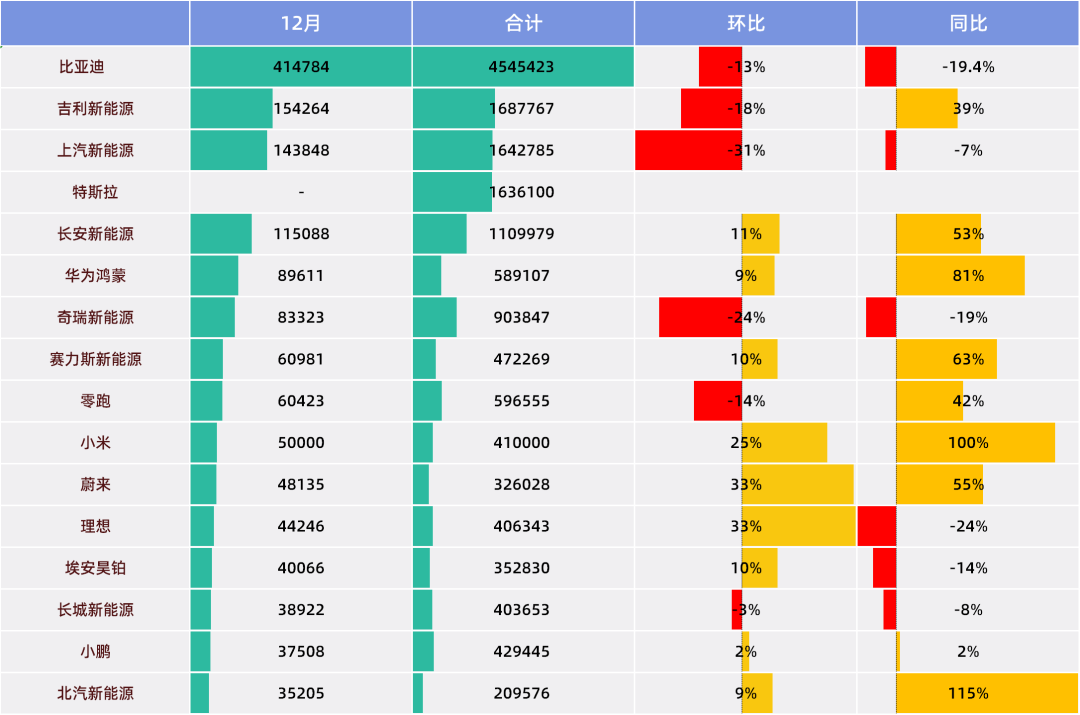
Core Insights - BYD's sales surged from 426,000 units in 2020 to 4.545 million units in 2025, achieving a compound annual growth rate of 60% [1] - Despite rapid growth, BYD faced intense competition from other automakers and did not meet its performance targets in 2025 [1] - The Chinese automotive market is undergoing significant changes, with many companies preparing for global expansion [1] Sales Performance - In December, BYD sold 414,784 units, a decrease of 13% month-over-month and 19.4% year-over-year [3] - Among 15 Chinese automakers, only five achieved both month-over-month and year-over-year sales growth [4] - The average sales volume dropped to 94,427 units in December, primarily due to declines in the first and second-tier companies [4] Market Dynamics - The Chinese government continues to support the automotive market with subsidies exceeding 1.1 billion yuan [2] - The competition is intensifying, with several brands achieving historical sales highs, particularly in the third tier [6] - The central economic work conference emphasized the importance of domestic demand, indicating ongoing support for the automotive sector [7] Company-Specific Developments - Only five out of 14 automakers met their sales targets for 2025, with companies like Li Auto and Aion falling short [8] - BYD's electric vehicle sales reached 2.2567 million units, surpassing Tesla's 1.636 million units for the first time [11] - The export volume of Chinese automobiles is expected to exceed 7 million units in 2025, with BYD emerging as a key player [14] Technological Advancements - The introduction of L3 autonomous driving technology is gaining momentum, with several companies, including BYD and Huawei, conducting road tests [17][18] - The competition for L3 autonomous driving capabilities is expected to intensify in 2026 [18] Brand Strategies - Huawei's HarmonyOS ecosystem has expanded, contributing to record sales for its vehicles [19] - Xiaomi's sales reached over 500,000 units in 2025, but the company faced a public relations crisis that may impact future products [21][23] - NIO and Xpeng have shifted to lower price segments to maintain competitiveness, with NIO achieving a record monthly sales of 48,135 units in December [24][27] Future Outlook - The automotive industry is expected to continue evolving rapidly, with companies focusing on both domestic and international markets [49] - The competitive landscape is shifting, with traditional automakers adapting to new market realities and consumer preferences [49]


CES变成中国科技秀:机器人跳舞、熊猫获奖
3 6 Ke· 2026-01-09 08:24
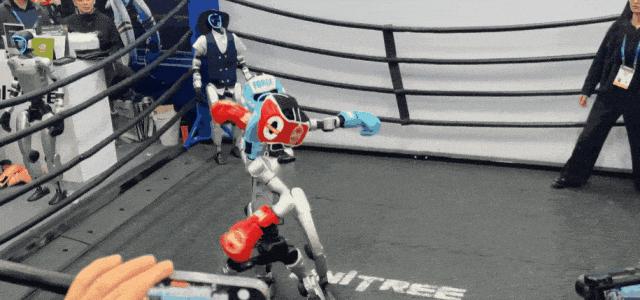
Group 1: Core Themes of CES 2026 - The main theme of CES 2026 is "human-centered" AI applications, marking a shift from traditional consumer electronics to AI-centric technological transformations [1] - Chinese companies are increasingly taking center stage at CES, with 942 exhibitors, accounting for approximately 22% of the total, maintaining their position as the second-largest exhibiting nation [1] - In specific sectors, Chinese firms dominate, with 55% of humanoid robot exhibitors and nearly 70% of AI glasses brands coming from China [1] Group 2: Robotics and AI Innovations - Chinese manufacturers are expected to continue leading in cost reduction and efficiency improvements in humanoid robots, showcasing their capabilities in unstructured environments [2] - Notable products include the Unitree H1 humanoid robot with advanced sensing capabilities and the latest generation of the "绝影" series robotic dogs, which excel in indoor navigation [4][11] - The "Care-bot" humanoid robot by Fourier demonstrates embodied intelligence in real-life interaction scenarios [7] Group 3: Consumer Electronics and Smart Devices - Over 80% of global smart glasses supply chain manufacturers are from China, with 16 Chinese companies showcasing their products at CES [15] - Innovations in smart home devices include the AI-driven "安安" companion robot designed for elderly and cognitively impaired individuals [16] - Companies like Alibaba and XREAL are launching advanced AI glasses, with features such as ultra-lightweight designs and integration with various AI services [19][20] Group 4: Automotive and AI Integration - The automotive industry is transitioning from "software-defined" to "AI-defined" vehicles, with companies like Geely and Great Wall showcasing new technologies [28] - Geely's G-ASD smart driving solution and Great Wall's focus on new energy technologies highlight the industry's shift towards AI integration [30][32] - New products like the AI-driven logistics solutions from New Stone and advanced lidar technology from Hesai demonstrate the growing importance of AI in transportation [34][35] Group 5: Home Appliances and AI - Hisense introduced new RGB-Mini LED display technology and AI-controlled smart refrigerators, showcasing the integration of AI in home appliances [41] - TCL's innovations in display technology, including the world's first printed OLED car screen, reflect advancements in consumer electronics [43][44] - Companies are increasingly focusing on AI capabilities in home security and smart home management systems [51][49] Group 6: Overall Impact of AI - CES 2026 emphasizes the profound impact of AI on the consumer electronics industry, with expectations for AI user numbers to grow significantly [59] - The event serves as a platform for global tech companies to set the foundation for future technological development and transformation [59] - The integration of AI into various sectors, including robotics, automotive, and consumer electronics, indicates a trend towards deeper AI adoption in everyday life [59]



浙江零跑汽车销售服务公司增资至8.5亿
Sou Hu Cai Jing· 2026-01-09 04:27
Core Insights - Zhejiang Leap Motor Sales Service Co., Ltd. has increased its registered capital from 200 million RMB to 850 million RMB, representing a 325% increase [1] Company Overview - The company was established in August 2018 and is wholly owned by Zhejiang Leap Technology Co., Ltd. [1] - The legal representative of the company is Xu Jun [1] Business Scope - The company's business activities include retail and wholesale of auto parts, sales of automotive decorative products, sales of new energy vehicles and their electrical accessories, sales of mechanical and electrical equipment, and internet data services [1]
高盛:料内地车企今年本土业务利润承压 加速海外扩张 比亚迪股份(01211)及小鹏汽车-W(09868)具优势
智通财经网· 2026-01-09 02:33
Group 1 - The core observation from Goldman Sachs indicates a cautious outlook on the overall Chinese automotive market, with management expecting retail sales of passenger vehicles in 2026 to decline by 5% to grow by 1% year-on-year, despite the continuation of the "old-for-new" subsidy policy [1] - The report highlights that all six OEMs anticipate their sales growth in 2026 to range from 11% to 68%, while overseas sales are expected to increase between 19% and 108%, indicating a significant expansion despite a stable domestic market [2] - The management teams emphasize an accelerated overseas expansion strategy for 2026, with plans to launch more overseas versions of new models and establish local sales and service channels [3] Group 2 - The introduction of new models is expected to be aggressive, with a total of 119 new models projected for 2026, categorized by price range: 46 in the mass market (below 200,000 RMB), 37 in the mid-to-high-end market (200,000 to 300,000 RMB), and 36 in the high-end/luxury market (above 300,000 RMB) [3] - The competitive landscape in the high-end market is anticipated to become more crowded, particularly in the 250,000 to 300,000 RMB price range, which is expected to be the most competitive segment [3] - Goldman Sachs predicts a contraction in the domestic profit pool for the Chinese automotive industry in 2026, while the overseas market is expected to see accelerated adoption of new energy vehicles [3]
零跑汽车在金华新设汽车零部件公司
Zheng Quan Shi Bao Wang· 2026-01-09 01:58
Group 1 - The core point of the article is the establishment of Jinhua Lingda Automotive Parts Co., Ltd., which is fully owned by Leap Motor through indirect shareholding [1] - The registered capital of the new company is 25 million yuan, indicating a significant investment in the automotive parts sector [1] - The business scope of the company includes manufacturing and research of automotive parts, retail of automotive components, manufacturing of electronic components and electromechanical equipment, and solar power technology services [1]