
TRT(600085)

Search documents
国家医保局曝光70家“失信企业” 一品红、同仁堂、冯了性、石四药、通用上海、山西振东等在列
Zhong Guo Jing Ji Wang· 2025-12-22 02:31
中国经济网12月22日讯12月19日,国家医疗保障局发布第15期价格招采信用评价"特别严重(失信)"和"严 重(失信)"评定结果。截至2025年10月1日,70家医药企业被各省份评级为"特别严重(失信)"和"严重(失 信)",涉及广州一品红(300723)制药有限公司、石家庄四药有限公司、通用(上海)医疗器材有限公 司、山西振东道地药材开发有限公司、北京同仁堂(600085)(亳州)饮片有限责任公司、安徽冯了性中 药材饮片有限公司等。 国家医疗保障局于2020年建立价格招采信用评价制度,对法院判决、有关部门查处的医药购销行贿、带 金销售等问题突出的企业开展失信评级,并采取限制挂网、配送等约束措施。价格招采信用评级主要依 据行贿金额、不正当价格行为、扰乱集中采购秩序等严重程度进行确定。比如,累计行贿金额1万元以 上为"失信",累计行贿金额50万元以上为"严重失信",累计行贿金额100万元以上为"特别严重失信"。 | 医者 | 企业名称 | 评级 | 评定结果 | 酱注 | 评定 标准 | | --- | --- | --- | --- | --- | --- | | | | 省份 | | | | | 1 | 重 ...




同仁堂麻仁润肠软胶囊、云南白药气雾剂超价格“黄线”被点名
Zhong Guo Jing Ji Wang· 2025-12-22 02:26
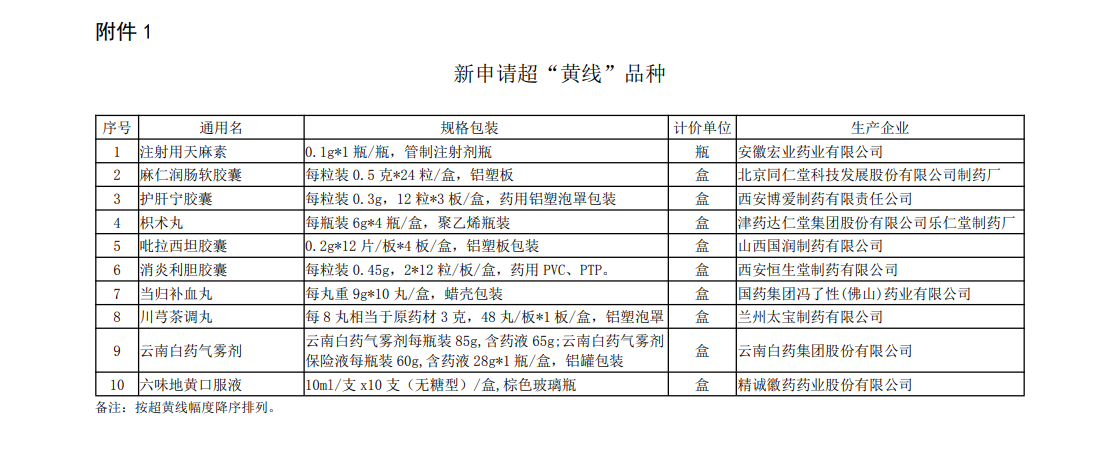
Core Insights - The Shanghai Municipal Medical Procurement Management Office has released a list of drug varieties for public bidding and procurement supervision for September 2025, highlighting products that exceed the "yellow line" threshold, did not pass fairness assessments, or are under close monitoring [1][10] Group 1: Drug Varieties - The list includes exclusive products such as Ma Ren Run Chang Soft Capsules, Yunnan Baiyao Aerosol, and Bu Xin Qi Oral Liquid [1] - New applications exceeding the "yellow line" include exclusive products from Beijing Tongrentang and Yunnan Baiyao Group [1] - Existing products on the "yellow line" list include exclusive items like Regaglinide Metformin Tablets (II) from Zhejiang Tailisen Pharmaceutical [1] Group 2: Regulatory Framework - Since September 2018, Shanghai has implemented a public bidding mechanism for drug procurement, utilizing a pricing inquiry model based on "information push, green line reference, yellow line reminder, and red line interception" [9] - Starting from June 2024, the list will also include products that did not pass fairness assessments and those under close monitoring [9] Group 3: Procurement Guidelines - The Shanghai Municipal Medical Procurement Management Office emphasizes that the published list serves as a reminder for medical institutions to price reasonably based on market supply and demand, ensuring clinical needs are met while avoiding unreasonable price adjustments [10]

周末| 全国首块L3级自动驾驶专用正式号牌颁发!大动作!美军宣布35亿美元采购72颗导弹预警和跟踪卫星!13大重磅消息影响股市
Xin Lang Cai Jing· 2025-12-22 01:20
Group 1: Military and Aerospace Developments - The U.S. Space Force announced a $3.5 billion contract for the procurement of 72 missile warning and tracking satellites, marking the largest transaction for low Earth orbit constellations to date [3][4] - The contract involves four companies: Lockheed Martin ($1.1 billion), Northrop Grumman ($764 million), L3 Harris ($843 million), and Rocket Lab ($805 million), each tasked with producing 18 satellites over the next three years [3][4] - This initiative is part of the U.S. strategy to leverage commercial satellite constellations for military advantages, particularly in tracking advanced threats like hypersonic missiles [4] Group 2: Consumer Market Trends - Hainan's new zero-tariff policy for imported vehicles has led to significant price reductions, with luxury cars like the Porsche Cayenne being sold for approximately $600,000, down from over $1.2 million [4] - The policy has sparked a surge in interest, with over 720,000 flight bookings to Hainan, reflecting a 10% year-on-year increase [4] Group 3: Stock Market and Investment Trends - The RRP Semiconductor stock in India has seen an unprecedented rise of over 55,000% in 20 months, driven by retail investor enthusiasm despite the company reporting negative revenues [5][6] - Institutional funds are shifting towards the CSI A500 index, indicating a "high-low switch" strategy as they reduce exposure to high-valuation tech stocks and move towards undervalued sectors [6][7] Group 4: Currency and Economic Outlook - Huang Qifan predicts that the RMB exchange rate may appreciate to around 1:6 against the USD over the next decade, which could double the per capita GDP in dollar terms by 2035 [6] Group 5: New Stock Offerings - Three new stocks are set to be offered next week, including Shaanxi Tourism, which is the second highest-priced IPO on the main board this year at ¥80.44 per share [6] Group 6: Autonomous Driving Developments - China has officially entered the L3 autonomous driving era with the issuance of the first L3-level license plate to Changan Automobile, marking a significant milestone in the commercialization of autonomous driving technology [9][28]




老字号经不起瞎折腾
Chang Sha Wan Bao· 2025-12-21 12:33
老百姓之所以愿意为老字号买单,不就是图个东西实在、价格公道。涉事企业用"同仁堂"背书,公然弄 虚作假,不仅辜负消费者的信任,更是在砸自己的饭碗,毁百年老字号的招牌。 白木 最近,市场上一款标称"北京同仁堂99%高纯南极磷虾油"的产品,宣称磷脂含量43%,实测结果却为 0,被上海市消保委点名,并受到社会、媒体广泛关注。 12月20日,成都市新都区市场监督管理局发布情况通报,已成立联合调查组进驻涉事企业北京同仁堂 (四川)健康药业有限公司开展调查。(12月20日 潇湘晨报) "同仁堂"是百年老字号,凝结着世代相传的匠心与信义,更是无数消费者用信任铸就的口碑。可再结实 的金字招牌,也经不起瞎折腾。涉事产品磷脂含量实测为零,出厂价3元售价60多元。面对调查,经销 商和生产商互相甩锅,经销商对产品质量一问三不知,生产商称按经销商要求制作。这哪里还有百年老 字号的半点担当? 好在监管部门反应迅速、立案调查,同仁堂集团也紧急致歉,下架产品、承诺赔偿、追究责任。但补救 措施再及时,恐怕也很难重建消费者的信任。就像摔碎的瓷碗,再粘起来也会有裂痕,再也回不到当初 的模样。 其实,不只同仁堂,不少老字号都吃过盲目扩张的亏。为了赚快 ...
每经热评丨同仁堂就南极磷虾油事件致歉 守住信用才能守住百年老字号
Mei Ri Jing Ji Xin Wen· 2025-12-21 12:14
Core Viewpoint - The incident involving Antarctic krill oil has highlighted significant management failures within Beijing Tongrentang, leading to a brand trust crisis despite the company's long-standing reputation and extensive business operations [1][2][3] Group 1: Incident Overview - Beijing Tongrentang issued a formal apology on December 20 and announced a zero-tolerance brand management initiative following the Antarctic krill oil incident [1] - The product in question claimed to contain "99% high-purity Antarctic krill oil" with a "phospholipid content of 43%" but was found to have zero phospholipid content, raising serious concerns about quality control [2] - This incident is not isolated; a previous scandal in 2018 involved the company using expired honey as raw material, indicating ongoing quality control issues [2] Group 2: Management and Operational Challenges - The company's extensive operations include seven subsidiaries, over 2,400 retail outlets, and 36 production bases, complicating management and oversight [1][2] - The scale of operations, which should provide a competitive advantage, has instead become a liability, leading to a loss of brand trust [2] - Effective management of quality control and brand authorization processes is now a critical challenge for the company [2][3] Group 3: Consumer Trust and Brand Integrity - Consumer trust in the brand has significantly declined, with perceptions shifting from "very trustworthy" to "completely untrustworthy" due to management failures [3] - The brand's reputation is built on a legacy of quality and integrity, which is at risk if the company cannot implement comprehensive oversight across its subsidiaries [3] - A genuine commitment to "zero tolerance" in management practices is essential to restore consumer confidence and protect the brand's long-standing reputation [3]
同仁堂就南极磷虾油事件致歉 守住信用才能守住百年老字号
Mei Ri Jing Ji Xin Wen· 2025-12-21 12:13
Core Viewpoint - The incident involving Antarctic krill oil has highlighted significant management failures within Beijing Tongrentang (Group), leading to a brand trust crisis despite the company's long-standing reputation and extensive business operations [2][3][4]. Group 1: Incident Overview - On December 20, Tongrentang issued a formal apology and announced a zero-tolerance brand management initiative following the Antarctic krill oil incident, which revealed that the product claimed to contain "99% high-purity Antarctic krill oil" but had a phospholipid content of zero [2][3]. - The company has a vast commercial structure, including seven subsidiaries, over 2,400 retail terminals, and 36 production bases, producing more than 2,600 types of pharmaceuticals and health products [2][3]. Group 2: Management Issues - The krill oil incident is not isolated; a previous "honey incident" in 2018 also raised concerns about product quality and management oversight, indicating systemic issues within the company's management framework [3][4]. - The complexity of Tongrentang's operations, with numerous products and widespread distribution, has made it challenging to maintain effective quality control and brand management processes [3][4]. Group 3: Brand Trust and Consumer Perception - Consumer trust in Tongrentang has significantly declined, with feedback indicating a shift from "very trusting" to "completely distrustful," reflecting disappointment in the company's management capabilities [4]. - The company's commitment to "zero tolerance" must be integrated into every management aspect and business process to prevent further erosion of brand trust and protect its century-old reputation [5].
中新网评:同仁堂,别再野蛮生长
Zhong Guo Xin Wen Wang· 2025-12-21 03:29
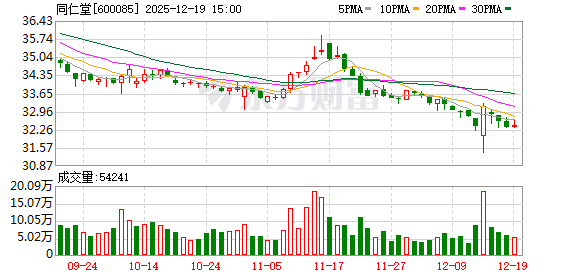
中新网北京12月21日电(记者 宋宇晟) 同仁堂就磷虾油事件再发声明。 12月20日,中国北京同仁堂(集团)有限责任公司发布声明,针对近日有关"南极磷虾油"的舆论关注,立 即开展零容忍品牌严管专项行动,已派专项工作组到四川,对涉事产品开展全面深入核查。 从核心成分磷脂含量为零的磷虾油,到越来越多疑似贴牌产品被曝光,公众关注的产品质量问题已演化 成一场对同仁堂的信任危机。 目前在电商平台上,仍存在大量刻意突出"北京同仁堂"字样,但未使用同仁堂认定双龙商标的产品,包 括深海鱼油、复合维生素片、辅酶胶囊等。 有央媒报道指出,一个庞大而混乱的"擦边球式同仁堂宇宙"正在野蛮生长。 同仁堂真正的挑战,不在于处理一两个特定产品的问题,而在于必须对当前商业逻辑进行一场刮骨疗毒 式的审视。 是继续维持目前这种"品牌大伞"下的松散贴牌联盟,追求短期营收;还是回归"炮制虽繁必不敢省人 工,品味虽贵必不敢减物力"的古训,构建一个权责清晰、标准统一、管控直达末端的现代品牌管理体 系?这已不是商业策略选择,而是关乎品牌信誉的抉择。 说到底,保证产品质量不能只靠消费者自己擦亮眼睛,品牌方本应从源头做好把控。 消费者的信任是老字号的珍贵资产 ...
成都通报:对同仁堂(四川)健康药业立案
Guan Cha Zhe Wang· 2025-12-21 02:49
Core Viewpoint - The Chengdu Xindu District Market Supervision Administration has initiated an investigation into Beijing Tongrentang (Sichuan) Health Pharmaceutical Co., Ltd. regarding the alleged misrepresentation of a product labeled as "99% Pure Antarctic Krill Oil" [1][3]. Group 1: Investigation and Findings - A joint investigation team has been established by provincial and municipal market supervision departments to look into the allegations against the company [1]. - The Shanghai Consumer Protection Commission has identified two main fraudulent behaviors by the involved companies: knowingly misrepresenting the product's phospholipid content and misleading marketing practices [4][6]. Group 2: Company Responses - Beijing Tongrentang Health Pharmaceutical Co., Ltd. has ordered the cessation of sales of the disputed product and is conducting a thorough review of the situation [6]. - The company has also announced legal actions against the involved parties for unauthorized use of its brand name, which misled consumers [7]. Group 3: Consumer Protection Actions - The Shanghai Consumer Protection Commission has urged the company to conduct a self-examination, apologize to consumers, recall the problematic products, and provide compensation [4][6]. - Beijing Tongrentang Group has expressed deep regret over the incident and is committed to ensuring consumer rights are protected [6][7].

2025年中国即食人参行业发展历程、市场政策、产业链图谱、市场规模、竞争格局及发展趋势分析:市场格局较为分散[图]
Chan Ye Xin Xi Wang· 2025-12-21 01:18
Core Insights - The core viewpoint of the article highlights the growing market for ready-to-eat ginseng products in China, driven by increasing health awareness among consumers, including not only the elderly but also young professionals and health-conscious individuals [1][10]. Industry Overview - Ready-to-eat ginseng is produced from ginseng through processes such as washing, steaming, slicing, drying, and flavoring, making it convenient for direct consumption while retaining essential nutrients [2]. - The market for ready-to-eat ginseng is projected to reach 28 billion yuan in 2024, with a year-on-year growth of 14.3% [1][10]. Development History - Historically, ginseng was consumed in its whole form, requiring complex preparation methods. The demand for convenient health supplements has led to the industrial development of ready-to-eat ginseng since 2011, driven by technological innovations and consumer upgrades [2][10]. - New technologies such as freeze-drying and bio-fermentation have been widely adopted, enhancing product quality and extending shelf life [2]. Regulatory Environment - Recent policies emphasize food safety and quality control across all stages of production, processing, and distribution of ready-to-eat ginseng, promoting a shift towards standardized and high-quality industry practices [4][5]. Industry Chain - The upstream of the ready-to-eat ginseng industry includes suppliers of raw materials like ginseng, honey, and packaging materials, while the midstream involves research, production, and processing [6]. - The downstream consists of various sales channels, including pharmacies, health product stores, and e-commerce platforms [6]. Market Competition - The ready-to-eat ginseng market is characterized by a fragmented competitive landscape, with the top five companies holding less than 40% market share in 2024 [12]. - Key players include Tongrentang, China Resources Sanjiu, and Yisheng Pharmaceutical, among others, each with distinct product offerings and market strategies [12][13]. Future Trends - The future of the ready-to-eat ginseng market will focus on standardized cultivation and innovative product forms to cater to diverse consumer needs, including portable packaging for convenience [16]. - There will be an increase in customized products targeting specific demographics, such as beauty products for women and fatigue-relief options for young professionals [16].


新浪财经资讯AI速递:昨夜今晨财经热点一览 丨2025年12月21日
Xin Lang Cai Jing· 2025-12-21 00:03
Group 1: Economic Performance and Challenges - Nanjing aims for a GDP exceeding 2 trillion yuan by 2025, but its 2024 GDP is projected at 1.85 trillion yuan, with growth rates below national and provincial levels [1][6] - The growth rate for the first three quarters of 2025 is 5.2%, significantly lower than the required 8.1% to meet the target, indicating substantial challenges ahead [1][6] Group 2: Consumer Behavior Trends - The "zero-debt population" has gained popularity on social media, characterized by living without loans and avoiding overspending, leading to discussions on consumer attitudes and quality of life [1][6] Group 3: Gold Market Dynamics - Domestic gold prices have been rising, with brands like Chow Tai Fook increasing prices by over 30% for some products, having raised prices three times this year [1][7] - In response to high gold prices, the consumption of gold jewelry has significantly declined, prompting brands to shift from traditional weight-based pricing to a higher-margin fixed-price model [1][7] Group 4: Regulatory Developments in Banking - Three major banks, including China Communications Bank, Industrial and Commercial Bank of China, and Shanghai Pudong Development Bank, were fined over 120 million yuan for various regulatory violations [2][8] - The fines were issued for issues such as account management and anti-money laundering, with all banks stating that the problems occurred before 2023 and have since been rectified [2][8] Group 5: Stablecoin Regulation - A global regulatory framework for stablecoins is taking shape, with the U.S. and EU introducing relevant legislation [2][9] - China is encouraged to pilot a unique stablecoin scheme in free trade zones, leveraging stablecoins for cross-border payments while ensuring financial security and currency sovereignty [2][9] Group 6: Quality Control Issues in Traditional Brands - Tong Ren Tang, a century-old brand, faces a quality crisis due to a product with zero phospholipid content being sold at a significant markup, raising concerns about profit-driven practices and consumer trust [3][10] - The company has previously encountered quality issues with its branded products, leading to a decline in its reputation and sales performance [3][10] Group 7: Cash Payment Regulations - New regulations from the People's Bank of China will take effect on February 1, 2026, mandating cash acceptance in various payment scenarios to uphold the legal status of the yuan [4][11] - The regulations aim to address cash refusal practices and ensure that cash payment options are available in both online and offline settings [4][11] Group 8: Market Adjustments in Gold Investment - Following new tax policies, the Shenzhen Shui Bei gold market has seen a tightening of regulations, with reports indicating that "investment gold" has been quietly removed from listings [1][13]


