Haitong Securities(600837)

Search documents
券商竞争激烈 头部效应显著
Zheng Quan Ri Bao· 2026-01-04 23:26
Core Insights - The capital market showed a positive trend in 2025, with active trading reflected in the significant increase in transaction volume on the Longhu list, reaching 3.34 trillion yuan, a year-on-year growth of over 40% [1][2] - The competition among brokerage firms intensified, with notable changes in the rankings of the top 100 brokerage departments, highlighting the emergence of several "dark horse" firms [1][3] Group 1: Market Performance - In 2025, a total of 7,029 brokerage departments appeared on the Longhu list 123,900 times, with a total transaction volume of 3.34 trillion yuan, marking a 42.6% increase year-on-year [2] - The top 100 brokerage departments accounted for 2.26 trillion yuan of the total transaction volume, representing 67.66% of the market share, indicating a strong head effect [2] Group 2: Top Brokerage Departments - The "Lhasa team" under Dongfang Caifu Securities maintained a strong performance, occupying three of the top ten positions, with the Lhasa Tuanjie Road No. 1 Securities Department leading with a transaction volume of 127.87 billion yuan [2] - New entrants to the top ten include Kaiyuan Securities' Xi'an Xidajie Securities Department, which rose from 27th place in 2024 to 3rd in 2025, and several other firms that significantly improved their rankings [2][3] Group 3: Emerging Firms and Foreign Participation - Several "dark horse" brokerage departments made significant leaps in rankings, such as Guotai Junan's Shanghai Jing'an District New Zha Road Securities Department, which rose from 559th to 14th place [3] - The presence of foreign brokerage firms is increasing, with six foreign brokerage departments making it into the top 50, including UBS and Goldman Sachs, showcasing their growing influence in the market [4] Group 4: Industry Trends - The competition in brokerage business has intensified, reflecting differences in client scale, market share, and overall strength among various firms, as well as the strategic focus on regional development by branch offices [5] - The Longhu list serves as an important indicator of market sentiment and hotspots, with sectors like general equipment, chemical products, computer software, automotive, and semiconductors attracting significant investment [6]




海外经济政策跟踪:地缘风险再起,国际油价或迎剧烈波动
GUOTAI HAITONG SECURITIES· 2026-01-04 15:06
Geopolitical Risks - The U.S. military action against Venezuela is expected to cause significant fluctuations in international oil prices, with short-term production and exports being impacted, leading to a potential rise in oil prices[1] - If the U.S. invests in Venezuelan oil, it may lead to a downward shift in the price equilibrium in the medium to long term[1] Economic Impact - Short-term oil price increases may exacerbate inflation expectations in the U.S., potentially affecting the Federal Reserve's interest rate cut schedule[1] - The U.S. refinery utilization rate slightly increased to 94.7% in the week of December 26, 2025, compared to 94.6% the previous week[9] Market Performance - Emerging market stock indices rose by 2.27%, while developed market indices fell, with the S&P 500 down by 1.03%[8] - Commodity prices mostly declined, with the S&P-Goldman Commodity Index down by 0.37% and COMEX copper down by 2.62%[8] Inflation and Interest Rates - The 10-year inflation expectation in the U.S. rose by 3 basis points to 1.94% as of January 2, 2026[15] - The Federal Reserve is expected to be cautious with interest rate cuts due to geopolitical tensions affecting inflation[25] European Economic Indicators - Germany's manufacturing PMI decreased to 47.0%, while France and the UK saw increases to 50.7% and 50.6%, respectively[19] - Eurozone bond yields fell, with the 1-year yield decreasing from 2.0269% to 2.0237%[19]
国泰海通证券开放式基金周报(20260104):均衡偏成长风格配置,重视科技主线,兼顾顺周期和大金融-20260104
GUOTAI HAITONG SECURITIES· 2026-01-04 14:12
Report Industry Investment Rating No relevant content provided. Core Viewpoints of the Report - It is recommended to adopt a balanced and growth - oriented style allocation, emphasizing the technology mainline while taking into account pro - cyclical and large - finance sectors. For equity - hybrid funds, emerging technology remains the mainline in 2026, with a focus on the transformation of cyclical and consumer sectors and continued optimism about large - finance. For bond funds, the pressure in the first quarter of 2026 is relatively limited, with a "weak - first - then - strong" rhythm [1][4][14]. Summary by Relevant Catalogs 1. Last Week's Market Review A - Share Market - The A - share market was volatile and structurally differentiated. The petrochemical, national defense and military industry, and media sectors led the gains. The Shanghai Composite Index had an 11 - day consecutive rise. The Shanghai Composite Index rose 0.13% to 3968.84 points, while the Shenzhen Component Index fell 0.58% to 13525.02 points. Among the major indices, the Shanghai 50 Index fell 0.47%, the CSI 300 Index fell 0.59%, the CSI 500 Index rose 0.09%, the ChiNext Index fell 1.25%, and the STAR 50 Index fell 0.12%. The total trading volume of the two A - share markets was 6.33 trillion yuan, with the average daily trading volume increasing by about 163.6 billion yuan compared to the previous week. In the industry aspect, 12 out of 31 Shenwan primary industries rose, and 19 fell. The top - performing industries were petrochemical, national defense and military industry, media, automobile, and machinery and equipment, rising 3.92%, 3.05%, 2.13%, 1.44%, and 1.32% respectively; the bottom - performing industries were public utilities, food and beverages, power equipment, pharmaceutical biology, and non - bank finance, falling 2.72%, 2.26%, 2.18%, 2.06%, and 1.84% respectively [6]. Bond Market - The bond market declined, with both short - and long - term interest rates rising. The central bank's net open - market operation injection of 1.17 trillion yuan to maintain cross - year liquidity was offset by high cross - year capital demand, pushing up capital interest rates. The 1 - year Treasury bond yield rose 5BP to 1.34%, the 10 - year Treasury bond yield rose 1BP to 1.85%; the 1 - year CDB bond yield rose 2BP to 1.55%, and the 10 - year CDB bond yield rose 2BP to 2%. In the credit bond market, the grade spread widened, and the term spread was differentiated. The AAA - rated corporate bond yield rose 1BP, the AA - rated corporate bond yield rose 2BP, and the urban investment bond yield rose 1BP. The ChinaBond Total Net Price Index fell 0.23%, the ChinaBond Treasury Bond Total Net Price Index fell 0.31%, the ChinaBond Financial Bond Total Net Price Index fell 0.12%, and the ChinaBond Corporate Bond Total Net Price Index fell 0.04%. The CSI Convertible Bond Index fell 0.27% [7]. Global Market - Global stock markets showed mixed performance, with oil prices rising and gold prices falling. The US stock market declined due to reduced interest - rate cut expectations and increased concerns about AI valuation bubbles. The Dow Jones Industrial Average fell 1.33%, the S&P 500 Index fell 1.03%, and the Nasdaq Index fell 1.52%. European stock markets generally rose, with the French CAC40 Index rising 1.13%, the German DAX Index rising 0.82%, and the British FTSE 100 Index rising 0.82%. The Asia - Pacific markets were also differentiated, with the Nikkei 225 Index falling 0.81%, the Taiwan Weighted Index rising 2.78%, the South Korean Composite Index rising 4.36%, and the Hang Seng Index rising 2.01%. The US Dollar Index rose 0.43%. In the commodity market, global oil prices rose, and the precious metal market experienced a sharp correction after the CME Group raised trading margins, with the precious metal index falling 5.20%, COMEX gold falling 4.63%, and COMEX silver falling 6.39% [8]. 2. Last Week's Fund Market Review - Stock - type funds fell 0.45%, with index stock - type funds falling 0.38% and active stock open - type funds falling 0.76%. Active hybrid open - type funds fell 0.48%. Funds heavily invested in humanoid robots and commercial aerospace sectors performed well. Among index funds, aerospace, robot, and media theme funds were among the top performers [10]. - Bond - type funds fell 0.06%. Partial - debt bond funds and convertible - bond funds with equity allocations in non - ferrous metals, TMT, or military industries performed well. The annualized yield of money market funds was 1.25%. Among QDII funds, equity QDII funds fell 0.68%, with funds heavily invested in Asia - Pacific technology sectors and crude - oil theme funds performing better. QDII bond - type funds rose 0.04%. Gold ETFs and their linked funds fell 3.18%, and commodity - type funds fell 2.76% [10][11][12]. 3. Future Investment Strategies Macroeconomy - The macro policy in 2026 will be more proactive and front - loaded. The new local government debt quota for 2026 has been pre - allocated. The National Development and Reform Commission has issued the list of the first - batch of "two major" construction projects and the central budgetary investment plan for 2026, totaling about 295 billion yuan, and will accelerate the allocation and use of funds. The first - batch of 62.5 billion yuan of ultra - long - term special Treasury bond funds for consumer goods trade - in has been pre - allocated [13]. Stock Market - The Chinese stock market is expected to cross and stabilize at important levels. Emerging technology remains the mainline, and there is a focus on the transformation of cyclical and consumer sectors. Large - finance is still favored. Recommended sectors include technology growth (such as Hong Kong - listed internet, media, computer, and computing power, as well as globally competitive manufacturing going overseas in power equipment and machinery), large - finance (securities and insurance), and pro - cyclical sectors (consumer stocks in food and beverages, agriculture, forestry, animal husbandry, and fishery, hotels, and tourism services, as well as cyclical sectors like non - ferrous metals and chemicals) [14][15]. Bond Market - In the first quarter of 2026, the bond market's core concerns are policy expectations and bond issuance rhythm. The government bond issuance progress may be slower than in 2025, with the net financing in the first quarter accounting for about 25% of the whole year. The bond market may be under pressure due to the potential spring rally in the stock market. The probability of a reserve - requirement ratio cut is higher than an interest - rate cut. In 2026, there will be new features in the bond market, such as more timely support from MLF, repurchase, and Treasury bond trading, possible lower funds volatility and lower certificate - of - deposit interest rates, a possible change in the bond - market configuration power around the Spring Festival, and a lower and more short - term impact of equity and commodity markets on the bond market, with a possibility of "double - bull" in stocks and bonds [15][16]. Fund Investment - For equity - hybrid funds, a balanced and growth - oriented style allocation is recommended. Long - term attention should be paid to technology - themed funds, and products mainly investing in pro - cyclical and financial sectors should also be considered. For bond funds, given the expected volatility in early 2026, interest - rate bond funds with flexible duration adjustments or products heavily invested in high - liquidity credit bonds are recommended. Money market funds have no trend - based investment opportunities, and gold ETFs can be appropriately allocated for long - term and hedging investments [17]. 4. Latest Fund Market Developments Impact of New Fund Fee Regulations on Bond Funds - The new regulations partially exempt the redemption fees of bond funds and index funds. For individual investors holding index funds and bond funds for more than 7 days and institutional investors holding bond funds for more than 30 days, the fund managers can negotiate the redemption fee standards. The transition period for non - compliant existing funds is set at 12 months. Short - term bond funds may face challenges as the exemption threshold for institutional investors is raised, and funds may flow to money market funds or bond ETFs. Bond ETFs may expand in scale but shorten their duration [18][19]. Total Public - Offering Fund Assets Exceed 37 Trillion Yuan - As of the end of November 2025, the total net asset value of public - offering funds in China reached 37.02 trillion yuan for the first time, with continuous growth since the end of April. Compared with the end of October, the scale of bond funds, money market funds, FOF, and other funds increased, while the scale of stock funds and hybrid funds decreased. However, investors' subscriptions for equity - type funds were still active, and equity - type funds were the main focus of public - offering institutions in November [20][21]. New Fund Launches Last Week - A total of 33 new funds were established last week, including 12 passive index funds, 7 enhanced index funds, 6 partial - stock hybrid funds, 3 hybrid bond - type secondary funds, 2 ordinary stock funds, 2 hybrid FOFs, and 1 passive index bond fund. The average subscription period was about 15 days, and the average raised share was 361 million shares, with a total of 11.916 billion shares [22]. Fund Dividends Next Week - There will be 30 fund share ex - rights registrations next week. The most notable is the Zhongjin Shanjiao Group Expressway REIT, which will distribute a dividend of 1.24 yuan per 10 shares [23].
国泰海通|非银:销售费新规落地,优化短期赎回费要求
国泰海通证券研究· 2026-01-04 13:14
Core Viewpoint - The new regulations aim to enhance the competitiveness of public funds while considering the liquidity needs of holders of off-market index and bond funds, thus promoting high-quality development in the public fund industry [2][3]. Summary by Sections Regulatory Changes - The new regulations, effective from January 1, 2026, optimize short redemption fee policies for off-market index and bond funds, addressing feedback from the consultation draft [2][3]. - The maximum subscription fee for actively managed mixed equity funds has been raised from 0.5% to 0.8%, while the maximum for index funds is set at 0.3% [2]. - New provisions allow for different redemption fee standards for individual investors holding off-market index and bond funds for more than seven days, and for institutional investors holding bond funds for more than thirty days [2][3]. Impact on Fund Sales - The regulations continue to guide fund sales towards a focus on long-term holding, while also accommodating liquidity needs for off-market index and bond fund holders [3]. - The average maximum subscription fee for stock index funds, previously at 0.73%, is expected to decrease further, enhancing the attractiveness of these funds for long-term investors [3]. Investment Recommendations - The new regulations are seen as favorable for the development of bond funds, with ETF holdings becoming a key focus in the fund distribution model [3]. - It is recommended to prioritize brokers with strong ETF comprehensive service capabilities and investment advisory business [3].


券商行业2025年十大事件:行业首例“三合一” 券商纷纷“换帅”
Nan Fang Du Shi Bao· 2026-01-01 23:10
Core Viewpoint - In 2025, the Chinese securities industry underwent profound changes under the strategy of "cultivating first-class investment banks," marked by resource integration, technological empowerment, and ecological restructuring, signaling a new chapter for the industry. Group 1: Major Events - The merger of Guotai Junan and Haitong Securities in 2025 established a new "dual leader" pattern in the industry, with the combined entity "Guotai Haitong" reporting a net profit of 22.074 billion yuan, closely following CITIC Securities' 23.159 billion yuan, both surpassing the 20 billion yuan mark [4] - The first "three-in-one" integration in the industry is being planned by CICC, Dongxing Securities, and Xinda Securities, which, if completed, will create a new model for industry integration with total assets exceeding 1 trillion yuan [5] - The margin trading balance reached a historical high of 2.551734 trillion yuan by December 29, 2025, accounting for 2.59% of the A-share market's circulating market value, with a 288% year-on-year increase in new accounts opened in September 2025 [6] Group 2: Regulatory and Structural Changes - The China Securities Regulatory Commission revised and renamed the "Securities Company Classification Evaluation Regulations" in 2025, focusing on guiding the industry to serve national strategies and enhancing professional capabilities [7] - AI applications in securities firms accelerated, with leading institutions showcasing advancements at the 2025 World Artificial Intelligence Conference, enhancing capabilities in investment research and risk control [8] Group 3: Leadership and Talent Dynamics - Over 10 chief economists in the securities industry changed positions in 2025, primarily due to the merger wave, indicating a significant reshuffling of talent [9] - More than 50 securities firms experienced changes in leadership roles, with approximately one-third of firms undergoing a "leadership change," driven by factors such as retirement and shareholder changes due to mergers [10] Group 4: Market Competition and Trends - Despite the rising trend of "anti-involution," a price war among securities firms intensified, with commission rates dropping to as low as 0.01% and financing rates falling below 4%, highlighting the need for the industry to return to its core financial services [11] - Securities firms were first included as issuers of Sci-Tech Innovation Bonds in May 2025, with total issuance exceeding 80 billion yuan since then, enhancing their competitive edge [12] - The wave of public fund business that began in 2022 receded in 2025, with several institutions withdrawing their applications for public fund qualifications, indicating a shift in business models [14]

数字人民币2.0:“计息数字货币”的机制与技术创新
Hua Er Jie Jian Wen· 2026-01-01 08:06
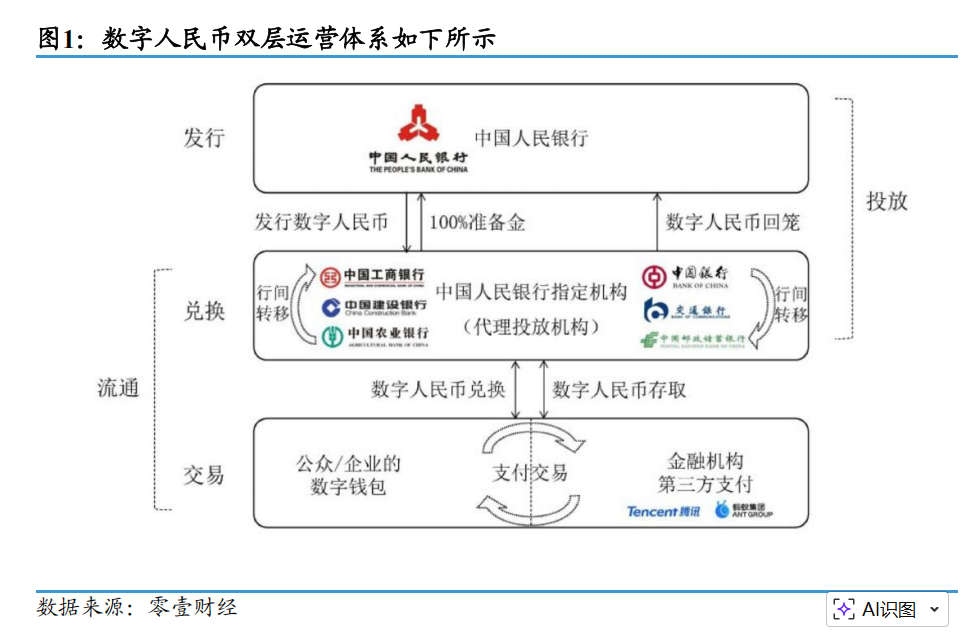
Core Viewpoint - The People's Bank of China is officially transitioning the digital yuan from a "cash-type 1.0" to a "deposit currency type 2.0," introducing a historical transformation that enhances its functionality as a financial asset with value storage capabilities [1][2]. Group 1: Mechanism Innovation - The core mechanism innovation of version 2.0 is characterized by the redefinition of liability attributes and the incorporation of a macro framework, allowing digital yuan balances in commercial banks to be classified as "account-based commercial bank liabilities" [3][6]. - The cancellation of the "non-interest" policy for digital yuan enables liquidity to flow directly into the electronic wallet system, marking the end of the cash era [3][6]. - The new framework enhances user willingness to hold and use digital yuan while providing banks with a manageable asset-liability space [6]. Group 2: Technical Architecture - The technical architecture features three major innovations: an account system, a currency string, and smart contracts, which facilitate a digital path for the digital yuan [7]. - The upgrade maintains compliance with existing bank account rules while introducing a "currency string" for value transfer and offline circulation, enhancing verification and system resilience [7]. - Smart contracts embedded in the funding flow can trigger conditions and automate verification in various scenarios, reducing misuse risks and compliance costs [7]. Group 3: Cross-Border Applications - The transition to "digital deposit currency" is reshaping the liquidity foundation and settlement efficiency of the multilateral central bank digital currency bridge (mBridge) [11]. - As of November 2025, digital yuan holds a dominant position in mBridge operations, accounting for 95.3% of transactions, with a total of 4,047 cross-border payments amounting to 387.2 billion yuan [14]. - The introduction of deposit insurance significantly lowers the risk costs for foreign participants holding digital yuan, enabling more robust fund position management [14].


2025年度债券承销排行榜
Wind万得· 2025-12-31 22:50
Key Points - The total bond market in mainland China reached 196.18 trillion yuan by the end of 2025, an increase of 20.30 trillion yuan from the beginning of the year, with interest rate bonds at 123.61 trillion yuan, credit bonds at 52.88 trillion yuan, and interbank certificates at 19.69 trillion yuan [3] - In 2025, the issuance of various bonds in mainland China totaled 89.0 trillion yuan, a year-on-year increase of 11%, with interest rate bonds reaching 33.0 trillion yuan, up 18% from the previous year [3] - The issuance of government bonds increased by 28% year-on-year, while local government bonds grew by 5%, and policy financial bonds rose by 17% [3] - Credit bonds issuance was 22.2 trillion yuan, an 8% increase year-on-year, and interbank certificates totaled 33.8 trillion yuan, up 7% [3] Bond Issuance Statistics - Interest rate bonds: 3,534 issues, 329,829.6 billion yuan, 18% growth [4] - Government bonds: 206 issues, 160,140.2 billion yuan, 28% growth [4] - Local government bonds: 2,449 issues, 102,901.0 billion yuan, 5% growth [4] - Policy bank bonds: 879 issues, 66,788.4 billion yuan, 17% growth [4] - Credit bonds: 24,003 issues, 222,246.7 billion yuan, 8% growth [4] - Financial bonds: 1,499 issues, 56,780.6 billion yuan, 25% growth [6] Bank Underwriting Rankings - The top three banks in total underwriting amount (including local government bonds) are China Bank (16,765.2 billion yuan), Industrial and Commercial Bank (16,479.0 billion yuan), and Construction Bank (15,020.5 billion yuan) [12] - In the detailed local government bond underwriting, the top three are Industrial and Commercial Bank (22,584.8 billion yuan), China Bank (16,312.8 billion yuan), and Construction Bank (14,568.1 billion yuan) [17] Securities Firm Underwriting Rankings - The top three securities firms (excluding local government bonds) in total underwriting amount are CITIC Securities (16,136.2 billion yuan), Guotai Junan (13,613.4 billion yuan), and CITIC Jianzhong (12,419.6 billion yuan) [21] - In the local government bond underwriting (averaged), the top three are CITIC Securities (22,491.6 billion yuan), CITIC Jianzhong (17,333.3 billion yuan), and Guotai Junan (16,426.2 billion yuan) [26] NAFMII Debt Financing Tool Underwriting Rankings - CITIC Bank leads the NAFMII debt financing tool underwriting with 9,043.4 billion yuan, followed by Industrial Bank with 8,412.7 billion yuan and Construction Bank with 6,077.7 billion yuan [36] Credit Bond Underwriting Rankings - The top three in credit bond underwriting are CITIC Securities (16,136.2 billion yuan), Guotai Junan (13,613.4 billion yuan), and CITIC Jianzhong (12,419.6 billion yuan) [40]

银河期货国债期货持仓日报-20251231
Yin He Qi Huo· 2025-12-31 11:34
1. Report Date - The report is dated December 31, 2025 [2] 2. Treasury Bond Futures Transaction Summary 2.1 Ten - year Treasury Bond Futures - T2603: Closing price 107.86, down 0.07%; volume 93,519, up 30%; turnover 100.8 billion, up 30%; open interest 223,646, down 6,646; margin 4.82 billion [3] - T2606: Closing price 107.88, down 0.06%; volume 5,005, up 17%; turnover 5.4 billion, up 17%; open interest 11,156, up 124; margin 240 million [3] - T2609: Closing price 107.74, down 0.08%; volume 548, down 4%; turnover 600 million, down 4%; open interest 1,317, up 156; margin 30 million [3] - Total: Volume 99,072, up 29%; turnover 106.8 billion, up 29%; open interest 236,119, down 6,366; margin 5.09 billion [3] 2.2 Five - year Treasury Bond Futures - TF2603: Closing price 105.76, down 0.04%; volume 66,075, down 3%; turnover 69.9 billion, down 3%; open interest 147,910, up 595; margin 1.88 billion [3] - TF2606: Closing price 105.75, down 0.04%; volume 5,300, up 79%; turnover 5.6 billion, up 79%; open interest 15,693, up 575; margin 200 million [3] - TF2609: Closing price 105.62, down 0.03%; volume 72, up 3%; turnover 100 million, up 3%; open interest 1,757, up 26; margin 20 million [3] - Total: Volume 71,447, up 1%; turnover 75.5 billion, up 1%; open interest 165,360, up 1,196; margin 2.1 billion [3] 2.3 Thirty - year Treasury Bond Futures - TL2603: Closing price 111.41, down 0.35%; volume 117,690, up 41%; turnover 130.9 billion, up 41%; open interest 142,077, up 998; margin 5.54 billion [3] - TL2606: Closing price 111.63, down 0.37%; volume 10,496, up 56%; turnover 11.7 billion, up 55%; open interest 25,486, up 676; margin 1 billion [3] - TL2609: Closing price 111.40, down 0.33%; volume 472, up 387%; turnover 500 million, up 384%; open interest 1,202, up 71; margin 50 million [3] - Total: Volume 128,658, up 43%; turnover 143.1 billion, up 42%; open interest 168,765, up 1,745; margin 6.58 billion [3] 2.4 Two - year Treasury Bond Futures - TS2603: Closing price 102.45, down 0.03%; volume 39,159, down 5%; turnover 80.2 billion, down 5%; open interest 74,199, down 1,931; margin 760 million [3] - TS2606: Closing price 102.49, down 0.03%; volume 472, up 278%; turnover 1 billion, up 277%; open interest 2,687, up 20; margin 30 million [3] - TS2609: Closing price 102.50, down 0.04%; volume 525, up 108%; turnover 1.1 billion, up 107%; open interest 741, up 50; margin 10 million [3] - Total: Volume 40,156, down 4%; turnover 82.3 billion, down 4%; open interest 77,627, down 1,861; margin 800 million [3] 3. Treasury Bond Futures Net Open Interest - There are charts showing the net open interest of ten - year, five - year, thirty - year, and two - year Treasury bond futures for different periods, including the top five, top ten, and top twenty positions [5] 4. Ten - year Treasury Bond Futures Position Details 4.1 T2603 Contract - In terms of trading volume, the top three are CITIC Futures (on behalf of clients) with 40,023 and an increase of 6,509, Orient Securities Futures (on behalf of clients) with 28,884 and an increase of 10,130, and Guotai Junan (on behalf of clients) with 16,495 and an increase of 1,894 [8] - For long positions, the top three are CITIC Futures (on behalf of clients) with 50,890, Orient Securities Futures (on behalf of clients) with 31,057 and a decrease of 296, and Guotai Junan (on behalf of clients) with 29,996 and a decrease of 1,855 [8] - For short positions, the top three are CITIC Futures (on behalf of clients) with 34,251 and a decrease of 10, Orient Securities Futures (on behalf of clients) with 25,216 and a decrease of 4,858, and China Merchants Futures (on behalf of clients) with 19,256 and a decrease of 61 [8] 4.2 T2606 Contract - In terms of trading volume, the top three are CITIC Futures (on behalf of clients) with 3,572 and an increase of 1,084, Haitong Futures (on behalf of clients) with 998 and an increase of 177, and Orient Securities Futures (on behalf of clients) with 988 and a decrease of 667 [10] - For long positions, the top three are Guotai Junan (on behalf of clients) with 3,419, Galaxy Futures (on behalf of clients) with 1,246, and Hongyuan Futures (on behalf of clients) with 891 [10] - For short positions, the top three are Galaxy Futures (on behalf of clients) with 2,641 and an increase of 27, Orient Securities Futures (on behalf of clients) with 1,430, and GF Futures (on behalf of clients) with 1,048 and a decrease of 48 [10] 5. Five - year Treasury Bond Futures Position Details 5.1 TF2603 Contract - In terms of trading volume, the top three are CITIC Futures (on behalf of clients) with 24,885 and a decrease of 730, Orient Securities Futures (on behalf of clients) with 23,092 and an increase of 2,721, and Guotai Junan (on behalf of clients) with 10,895 and a decrease of 5,128 [12] - For long positions, the top three are Orient Securities Futures (on behalf of clients) with 32,897 and an increase of 4,887, CITIC Futures (on behalf of clients) with 27,254 and a decrease of 123, and Guotai Junan (on behalf of clients) with 9,872 and a decrease of 772 [12] - For short positions, the top three are CITIC Futures (on behalf of clients) with 25,676 and an increase of 350, Guotai Junan (on behalf of clients) with 16,413 and an increase of 331, and Ping An Futures (on behalf of clients) with 13,685 and a decrease of 477 [12] 5.2 TF2606 Contract - In terms of trading volume, the top three are CITIC Futures (on behalf of clients) with 2,049 and an increase of 946, Guotai Junan (on behalf of clients) with 1,583 and an increase of 1,275, and Orient Securities Futures (on behalf of clients) with 1,506 and an increase of 159 [14] - For long positions, the top three are CITIC Futures (on behalf of clients) with 4,269 and a decrease of 342, Xingzheng Futures (on behalf of clients) with 1,784, and Galaxy Futures (on behalf of clients) with 1,382 and an increase of 105 [14] - For short positions, the top three are CITIC Futures (on behalf of clients) with 3,119 and an increase of 1, Huatai Futures (on behalf of clients) with 2,348, and Guotai Junan (on behalf of clients) with 2,318 and an increase of 1,000 [14] 6. Thirty - year Treasury Bond Futures Position Details 6.1 TL2603 Contract - In terms of trading volume, the top three are CITIC Futures (on behalf of clients) with 39,632 and an increase of 11,428, Orient Securities Futures (on behalf of clients) with 24,643 and an increase of 6,198, and Guotai Junan (on behalf of clients) with 19,077 and an increase of 5,014 [15] - For long positions, the top three are CITIC Futures (on behalf of clients) with 16,270 and an increase of 588, Guotai Junan (on behalf of clients) with 16,201 and a decrease of 453, and Orient Securities Futures (on behalf of clients) with 12,796 and an increase of 139 [15] - For short positions, the top three are CITIC Futures (on behalf of clients) with 17,400 and a decrease of 462, Galaxy Futures (on behalf of clients) with 13,711 and an increase of 25, and Orient Securities Futures (on behalf of clients) with 13,473 and a decrease of 1,462 [15] 6.2 TL2606 Contract - In terms of trading volume, the top three are CITIC Futures (on behalf of clients) with 3,816 and a decrease of 105, Haitong Futures (on behalf of clients) with 2,629 and an increase of 691, and Guotai Junan (on behalf of clients) with 2,626 and an increase of 910 [18] - For long positions, the top three are CITIC Futures (on behalf of clients) with 8,197, Guotai Junan (on behalf of clients) with 2,398, and Galaxy Futures (on behalf of clients) with 2,258 [18] - For short positions, the top three are Galaxy Futures (on behalf of clients) with 4,951 and an increase of 136, Guojin Futures (on behalf of clients) with 2,944 and a decrease of 94, and Huatai Futures (on behalf of clients) with 2,559 and an increase of 240 [18] 7. Two - year Treasury Bond Futures Position Details 7.1 TS2603 Contract - In terms of trading volume, the top three are CITIC Futures (on behalf of clients) with 17,261 and an increase of 1,419, Orient Securities Futures (on behalf of clients) with 11,976 and an increase of 896, and Guotai Junan (on behalf of clients) with 5,834 and a decrease of 4,549 [19] - For long positions, the top three are CITIC Futures (on behalf of clients) with 13,550, Guotai Junan (on behalf of clients) with 6,297 and a decrease of 21, and CITIC Construction Investment (on behalf of clients) with 6,233 and an increase of 45 [19] - For short positions, the top three are CITIC Futures (on behalf of clients) with 19,436 and a decrease of 1,243, Guotai Junan (on behalf of clients) with 10,833 and an increase of 475, and GF Futures (on behalf of clients) with 8,703 and an increase of 27 [19] 7.2 TS2606 Contract - All trading volume, long - position, and short - position data are 0 [22]

调研速递|浙江托普云农接待国泰海通证券等5家机构调研 AI赋能智慧农业 病虫害识别准确率超90%
Xin Lang Cai Jing· 2025-12-31 10:35
Company Overview - Zhejiang Top Yun Nong Technology Co., Ltd. is a national-level specialized and innovative "little giant" enterprise focused on smart agriculture, established in 2008 [1] - The company utilizes IoT, AI, big data, and algorithms to provide comprehensive solutions for data collection, analysis, decision-making, and scientific management in agriculture [1] Industry Insights - The smart agriculture industry in China is in its early growth stage, with significant market potential due to late development compared to global standards [2] - Government policies and financial investments are increasingly supporting the industry, but there are few companies that offer integrated hardware and AI-enabled solutions [2] Strategic Focus - The company aims to develop an "AI + Agriculture" strategy, creating three core systems: a perception monitoring system, a decision-making system based on model algorithms, and an execution system centered on smart agricultural machinery [3] - The strategic plan includes a timeline of "ten years for planning, three years for regulation, and one year for implementation" to transition agriculture from traditional production to a digital ecosystem [3] Product and Technology Integration - The company has developed various technologies, including smart instruments for plant digital phenotyping and algorithms for corn tassel identification, enhancing breeding efficiency [4] - New products like the AR glasses "Crop Guardian" and the robotic dog "Field Scout" are being developed to assist in precision agriculture management [4] AI Application and Success Cases - The company has achieved over 90% accuracy in pest and disease identification through its smart plant protection system, which integrates AI applications and monitoring equipment [5][6] - The intelligent pest monitoring lamp has won first place in national competitions for three consecutive years, showcasing the company's strong capabilities in agricultural data [6]
中国资本市场2025:十大“最”时刻
Xin Lang Cai Jing· 2025-12-31 08:18
Core Insights - The year 2025 marked significant transformations in China's capital market, characterized by index breakthroughs and ecological restructuring, including the Shanghai Composite Index surpassing 4000 points and the handling of the Dongxu Group's 600 billion yuan fraud case [1][10] Group 1: Major Transformations - The most important ideological shift was from "heavy financing" to "coordinated investment and financing," emphasizing a balanced ecosystem and investor returns through improved systems for dividends, buybacks, and mergers [2][12] - A strong consensus emerged around market value management, transitioning from a niche practice to a standard across the market, with 1001 A-share companies disclosing value management systems by November, a fivefold increase from earlier in the year [2][12] Group 2: Key Market Trends - The hottest sectors were AI and hard technology, with the launch of DeepSeek-R1 in January triggering a massive influx of capital into the AI industry chain, leading to a significant revaluation of related stocks [2][13] - A major shift in funding structures occurred, with insurance and social security funds increasing equity asset allocations, and a "deposit migration" trend among residents as savings rates fell below 1% [2][14] Group 3: Regulatory Environment - 2025 was marked by stringent regulatory enforcement, highlighted by the forced delisting of major companies like Dongxu Group for significant fraud, with over 60 companies delisted throughout the year [3][5] - The year also saw a focus on mergers and acquisitions as a strategic solution for asset revaluation, with notable transactions including Guotai Junan's acquisition of Haitong Securities [3][15] Group 4: Notable Reforms - The launch of the "1+6" reform series for the Sci-Tech Innovation Board aimed to enhance the inclusivity and adaptability of the capital market, facilitating the listing of unprofitable companies [5][16] Group 5: Market Performance - The Shanghai Composite Index reached a ten-year high, crossing the 4000-point mark for the first time since August 2015, reflecting a significant recovery in market confidence [6][16] - The total trading volume of A-shares reached a record 29.92 trillion shares, with a total transaction value exceeding 419.86 trillion yuan, marking a 63% increase from 2024 [6][16] Group 6: Unexpected Developments - Hong Kong's stock market made a remarkable comeback, becoming the world's best-performing market with IPO fundraising returning to the top globally and the Hang Seng Index achieving its best annual performance since 2017 [7][17] - The most profitable new stocks were the domestic GPU companies, Moer Thread and Muxi Co., with record profits from initial public offerings, indicating strong market support for domestic GPU alternatives [8][18]