
Proya(603605)

Search documents
百亿珀莱雅,难圆大牌梦
Xin Lang Cai Jing· 2025-12-12 14:20
Core Viewpoint - In 2023, Proya surpassed L'Oreal on Tmall's Double 11 list, but after achieving over 10 billion in revenue, it faced significant declines in performance, with Q3 revenue down 11.63% and net profit down 23.64%, marking the largest quarterly drop in recent years [1][41] Company Performance - Proya's revenue for the first half of the year was 39.79 billion yuan, a slight decline of 0.08% year-on-year [1] - The company aims to enter the top ten global cosmetics brands within the next decade under the "Double 10 Strategy" initiated by the new general manager, Hou Yameng [1][41] - Proya's sales expenses reached 35.25 billion yuan in Q3 2025, accounting for 49.66% of revenue, a significant increase from the previous year [17][57] Market Positioning - Proya has been labeled as a "big brand alternative," often compared to L'Oreal, which has helped it penetrate the market but now poses challenges as it seeks to break through its brand ceiling [2][42] - The brand's product matrix follows a pyramid structure similar to L'Oreal, with a focus on mid-to-high-end efficacy skincare [5][45] Consumer Trends - The rise of domestic brands has been supported by a shift in consumer preferences towards value for money, with Proya's products priced between 200-500 yuan appealing to cost-conscious consumers [7][47] - Consumers are increasingly prioritizing product efficacy and ingredient safety over brand prestige, creating opportunities for Proya and other domestic brands [8][48] Challenges Faced - Proya is experiencing a decline in the effectiveness of its core products, with the market becoming saturated and competition intensifying [11][57] - The company's heavy reliance on marketing over research and development has led to a situation where marketing efforts are not translating into sustained product innovation [18][58] - Proya's online sales channel dependency exceeds 95%, limiting its ability to engage with consumers through offline experiences, which are increasingly valued by younger consumers [21][62] Global Expansion Efforts - Proya aims to expand internationally, focusing on markets in Japan and Southeast Asia, but its overseas revenue remains low at only 1.6% of total revenue [35][68] - The brand's high-end product lines and overseas operations are still in the early stages, lacking the scale and maturity of its mainstream offerings [28][68]



响应“十五五”规划指引 珀莱雅以科技创新谋发展
Zhong Guo Jing Ji Wang· 2025-12-10 04:53
"十五五"规划建议明确提出"加快高水平科技自立自强",并将"科技自立自强水平大幅提高"列入"十五 五"时期经济社会发展的主要目标之一,始终把科技创新摆在国家战略核心位置。而科技创新也正是珀 莱雅公司自创立以来持续深耕的核心驱动力。 "十五五"规划建议将"加快经济社会发展全面绿色转型,建设美丽中国"列为"十五五"时期核心战略任 务。珀莱雅股份始终将绿色可持续发展作为企业责任与战略,深度锚定"美丽中国"建设要求,全面推进 从生产到消费的全链条绿色发展。 数据显示:2024年,公司研发投入达2.1亿元,同比增长21.21%,研发团队的人数达389人。目前,公司 已在杭州、上海和巴黎设立三大研发与科创中心,逐步构建起"本土需求响应+国际技术协同"的创新网 络,持续夯实全球科研根基。 据2025年半年报披露,公司已累计拥有专利240项,其中包括国家授权发明专利124项、实用新型专利22 项及外观设计专利94项。在行业标准建设方面,公司至今已参与制定国家标准21项、行业标准6项,持 续引领行业规范与发展。 党的二十届四中全会审议通过的"十五五"规划建议,明确提出"坚持把发展经济的着力点放在实体经济 上,坚持智能化、绿色化 ...
化妆品板块12月9日跌0.37%,嘉亨家化领跌,主力资金净流出8817.78万元
Zheng Xing Xing Ye Ri Bao· 2025-12-09 09:11
Core Insights - The cosmetics sector experienced a decline of 0.37% on December 9, with Jiaheng Jiahua leading the drop [1] - The Shanghai Composite Index closed at 3909.52, down 0.37%, while the Shenzhen Component Index closed at 13277.36, down 0.39% [1] Company Performance - Qing Song Co. (300132) saw a closing price of 8.17, with an increase of 4.34% and a trading volume of 475,200 shares, amounting to a transaction value of 383 million [1] - Kesheng Co. (300856) closed at 15.70, up 3.36%, with a trading volume of 158,000 shares and a transaction value of 252 million [1] - Jiaheng Jiahua (300955) closed at 36.00, down 2.91%, with a trading volume of 64,600 shares and a transaction value of 23.4 million [2] Capital Flow - The cosmetics sector experienced a net outflow of 88.18 million from main funds, while retail investors saw a net inflow of 55.04 million [2] - Main funds showed a net inflow in Qing Song Co. of 20.05 million, while Jiaheng Jiahua experienced a net outflow of 2.01 million [3] - Retail investors contributed a net inflow of 804.95 million to Shuiyang Co. (300740), while Qingdao Jinwang (002094) saw a net outflow of 264.27 million [3]




研判2025!中国胶原蛋白面膜行业产业链全景、发展现状、企业布局及未来发展趋势分析:重组技术领航赛道,千亿市场潜力迸发[图]
Chan Ye Xin Xi Wang· 2025-12-09 01:09
Industry Overview - Collagen masks are mainstream skincare products focused on anti-aging and repair, utilizing collagen as the core ingredient along with auxiliary components to achieve hydration and skin barrier repair [1][2] - The Chinese mask industry is expected to reach a market size of 72.986 billion yuan in 2024, entering a period of adjustment and transformation, facing growth slowdown and intensified competition [1][6] - The collagen market is experiencing explosive growth, with a compound annual growth rate (CAGR) of 41.9% from 2020 to 2023, and retail scale expected to exceed 269.5 billion yuan by 2030 [1][7] Market Dynamics - The market structure in China shows that sheet masks remain dominant, while cream masks are rapidly growing, focusing on hydration and repair needs [1][7] - The competitive landscape features local leaders dominating, niche players breaking through, and international brands penetrating the market, with a clear price gradient and significant differentiation between high, medium, and low-end markets [1][8] Industry Chain - The upstream of the collagen mask industry primarily uses animal-derived collagen, while recombinant collagen is rapidly developing due to its high purity and compatibility with mask formulations [6][10] - The manufacturing process involves various technologies to convert raw materials into different forms and functions of mask products, with sales channels dominated by online e-commerce and deepening offline professional channels [6][10] Current Development - The Chinese mask industry is transitioning into a phase of deep integration after rapid growth, with three emerging drivers leading market changes: consumption upgrades, male skincare market expansion, and personalized demand fostering innovative scenarios [6][7] - The market size is projected to steadily grow to 76.79 billion yuan by 2025 and potentially exceed 146.42 billion yuan by 2030, indicating robust long-term growth prospects [6][7] Key Players - Major companies in the collagen mask industry include Juzi Biotechnology, Huaxi Biotechnology, and Marubi Biotechnology, leveraging differentiated technologies and channel advantages to lead the market [2][10] - The industry is characterized by a multi-faceted competitive ecosystem, with local leaders, niche players, and international brands all contributing to the market dynamics [10] Future Trends - The industry is expected to advance towards high-end technology, refined products, and standardized ecosystems, with a focus on cross-disciplinary technology integration and precise formulations [10][12] - Regulatory tightening is anticipated to accelerate the elimination of smaller brands, increasing market concentration, while leading companies will strengthen their market positions through R&D innovation and global expansion [10][14]


化妆品医美行业周报:11月抖音表现符合预期,双12国货积极备战-20251207
Shenwan Hongyuan Securities· 2025-12-07 15:21
Investment Rating - The report maintains a "Positive" outlook on the cosmetics and medical beauty industry, despite recent underperformance compared to the market [4][5]. Core Insights - The cosmetics and medical beauty sector has shown weaker performance, with the Shenwan Beauty Care Index declining by 2.0% from November 28 to December 5, 2025, underperforming the market [4][5]. - Douyin's performance in November met expectations, with domestic brands preparing actively for the upcoming Double 12 sales event, indicating a strong competitive landscape for domestic products [4][10]. - The report highlights the leading market share of Minoxidil products, particularly from Mandi International, which has established itself as a top brand in the hair growth sector [11][12]. Summary by Sections Industry Performance - The Shenwan Cosmetics Index fell by 2.2%, while the Shenwan Personal Care Index also dropped by 2.0%, both underperforming against the Shenwan A Index [4][5]. - The top-performing stocks in the sector included Juzhibio (+5.9%) and Hongmian Co. (+3.5%), while the worst performers were Kelao Co. (-7.6%) and Baiya Co. (-4.8%) [6]. Key Market Developments - Mandi International has dominated the Minoxidil market, achieving a revenue growth from 982 million yuan in 2022 to approximately 1.455 billion yuan in 2024, with a CAGR of 21.7% [12][13]. - The company has maintained a leading position in the market for ten consecutive years, with a market share of about 57% in the hair loss treatment sector and 71% in the Minoxidil product market as of 2024 [12][14]. E-commerce Insights - In November 2025, Douyin's domestic brand GMV showed significant growth, with brands like Han Shu and New Page experiencing double-digit increases [15][18]. - The overall retail sales of cosmetics in October 2025 grew by 9.6%, driven by the Double 11 shopping festival, indicating a robust recovery in consumer spending [18][20]. Company Announcements - Lin Qingxuan updated its IPO prospectus for the Hong Kong market, reporting a revenue of 1.052 billion yuan in the first half of 2025, a year-on-year increase of 98.3% [22][19]. - The company plans to expand its research and development team and explore international markets in Southeast Asia [22][19]. Market Trends - The Chinese consumer healthcare market is projected to grow from 9.313 billion yuan in 2018 to 16.420 billion yuan in 2024, with a CAGR of 9.9% [13]. - The report emphasizes the increasing market share of domestic brands in the skincare sector, with a notable rise in the competitive landscape against international brands [24].


美妆行业周度市场观察-20251205
Ai Rui Zi Xun· 2025-12-05 05:36
Investment Rating - The report does not explicitly provide an investment rating for the beauty industry Core Insights - The beauty retail industry is experiencing a dichotomy of price increases and decreases, influenced by cost pressures from tariffs and varying consumer preferences for high-end and value products [4] - Anti-aging skincare is projected to grow to a market size of 85 billion yuan by 2025, with an 11% year-on-year increase, driven by scientific advancements and consumer demand for long-term efficacy [4] - The color cosmetics segment is becoming a key driver for attracting younger consumers, with a focus on experiential marketing and social engagement [6] Industry Environment - The beauty retail sector is facing contrasting pricing strategies, with brands like Elf Beauty opting for transparent price increases while others like BeautyStat are lowering prices to boost sales. Brands are also focusing on product line optimization and e-commerce partnerships to reach price-sensitive consumers [4] - The anti-aging skincare market is shifting towards systematic scientific management, with international brands focusing on cellular repair and longevity science, while domestic brands are leveraging precision intervention and synthetic biology [4] - Color cosmetics account for 21.3% of the Chinese cosmetics market and are crucial for attracting young consumers, with a significant presence in top shopping malls, particularly in East China [6] Top Brand News - During the Double 11 shopping festival, domestic brands like Pechoin and TILOWE outperformed international brands, indicating a shift in market dynamics towards local products [6][7] - Li Jiaqi's live streaming sessions have become a significant trendsetter in the beauty category, with high-efficacy products gaining popularity among consumers [8] - Marubi Biological's revenue grew by 25.51% year-on-year during the Double 11 period, attributed to its focus on R&D and a successful single-product strategy [11]
商贸零售行业点评报告:医美化妆品11月月报:美丽田园收购思妍丽100%股权,双十一大促落幕美妆表现亮眼-20251203
KAIYUAN SECURITIES· 2025-12-03 14:45
Investment Rating - The investment rating for the industry is "Positive" (maintained) [1] Core Insights - The report highlights the acquisition of 100% equity of Siyuanli by Meili Tianyuan for 1.25 billion RMB, which consolidates the top three brands in the Chinese beauty service industry, enhancing market share and competitive positioning [8][37] - The Double Eleven shopping festival saw a total e-commerce sales of 1.695 trillion RMB, a 14.2% increase from 2024, with beauty products generating 132.5 billion RMB in sales [9][41] - The report emphasizes the trend of "emotional consumption" driving growth in high-quality companies within the medical beauty and cosmetics sectors [10][66] Summary by Sections Medical Beauty - Meili Tianyuan's acquisition of Siyuanli aims to create a "triple strong alliance" in the high-end beauty market, with a projected market share increase in 20 major cities [8][37] - The report recommends focusing on upstream medical beauty product manufacturers and expanding chain medical beauty institutions, highlighting companies like Aimeike and Kedi-B as key investment targets [10][66] Cosmetics - The Double Eleven sales performance was strong, with beauty products leading the way, particularly domestic brands like Proya and Han Shu, which dominated sales across multiple platforms [9][41][48] - The report identifies a shift towards high-priced and multifunctional skincare products, with a significant increase in sales for premium beauty items during the festival [57][66] Investment Recommendations - The report suggests investing in companies that cater to emotional value and innovative safe ingredients, particularly domestic brands like Proya, Shangmei, and Marumi, which are expected to continue their growth trajectory [10][66] - It also highlights the importance of integrating AI technology into e-commerce platforms to enhance consumer experience and operational efficiency [62][66]
珀莱雅毛戈平们,海南淘金
3 6 Ke· 2025-12-03 01:04
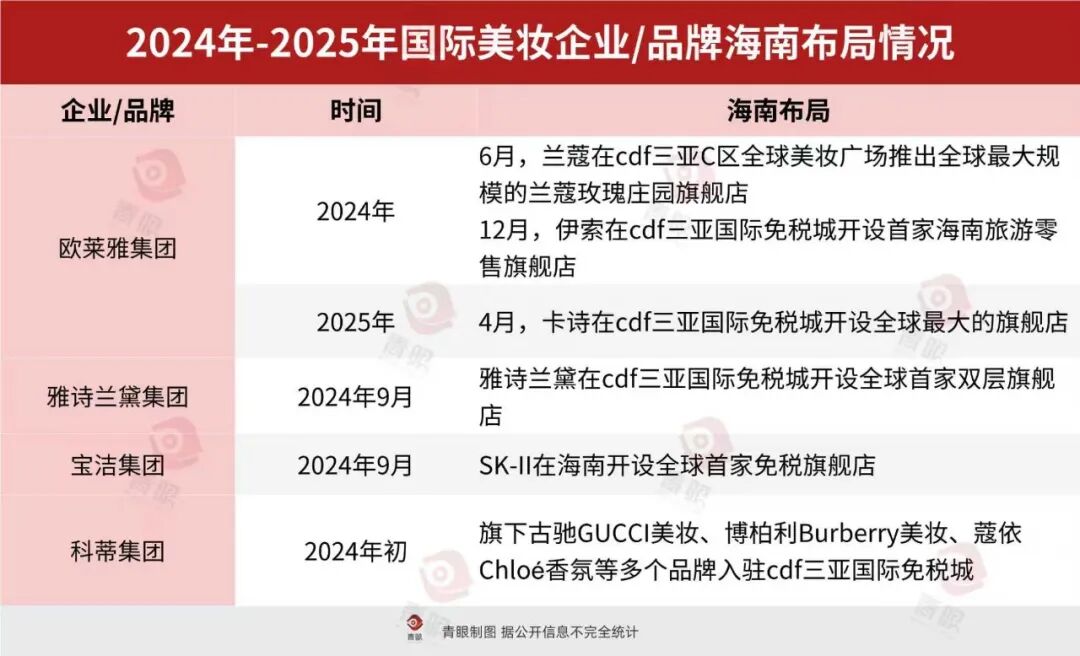
Core Insights - Hainan is emerging as a key variable in reshaping the global beauty industry landscape [1] - The upcoming full island closure in Hainan, along with supportive policies for the cosmetics industry, presents unprecedented development opportunities for beauty brands [2][3] Policy Developments - Hainan will implement a new customs management system characterized by "one line open, two lines controlled, and free flow within the island" starting December 18, 2025 [3][4] - The new policies include zero tariff on imported goods, relaxed trade management measures, and efficient regulatory models, significantly reducing import costs for beauty companies [4][5] Market Opportunities - The zero tariff policy will expand the list of duty-free products from 1,900 to approximately 6,600 items, covering about 74% of all product categories, which is a 53% increase from before the closure [4][5] - Beauty products such as skincare, perfumes, and shampoos will see their import tariffs eliminated, directly lowering costs for companies [5] Industry Trends - International beauty giants like L'Oréal and Estée Lauder are increasing their presence in Hainan, with flagship stores and new brand introductions [6][7][8] - Domestic brands are also leveraging Hainan as a strategic platform for international expansion, benefiting from the favorable policies [9][10] Economic Impact - Hainan's unique duty-free ecosystem is attracting a large international customer base, making it an ideal testing ground for domestic brands aiming for global markets [10][11] - The influx of new cosmetic companies in Hainan reflects strong industry consensus on the region's potential, with 41,826 new registrations in the past six months [13] Supportive Measures - Hainan has introduced direct financial incentives for innovative cosmetic products, including one-time rewards for newly approved special cosmetics and raw materials [14][15] - The coordinated effect of these policies and the upcoming closure is expected to attract more beauty companies to Hainan, transforming it into a hub for cosmetic innovation [15][17]
2025年东方美谷中国化妆品行业趋势洞察蓝皮书
Sou Hu Cai Jing· 2025-12-02 18:15
Group 1: Global Market Trends - The global cosmetics market is expected to exceed $600 billion by 2025 and reach $720 billion by 2030, driven by emerging markets, middle-class expansion, and digitalization, with a notable 77% year-on-year growth in beauty GMV on platforms like Douyin and TikTok Shop [10][11][12] - The competition landscape is evolving towards a multi-polar structure, with a shift in the value chain focus towards upstream raw material technology and offline experiences [15] - The Asia-Pacific region is projected to be the global growth engine, with a CAGR of approximately 6% from 2023 to 2025, while Latin America is expected to grow at around 19% during the same period [16] Group 2: Chinese Market Development - The Chinese cosmetics market is showing signs of moderate recovery, with retail sales of cosmetics in the first three quarters of 2025 reaching 328.82 billion yuan, a year-on-year increase of 3.9%, and is expected to exceed 450 billion yuan for the entire year [18][19] - Online channels accounted for 54.13% of sales in the first nine months of 2025, with a year-on-year growth of 12.34%, indicating a significant shift towards e-commerce [22][27] - Domestic brands are gaining market share, with over 56% of the market in the first nine months of 2025, and their sales growth rate is 2.46 times that of foreign brands [33][34] Group 3: Consumer Demand Changes - The primary consumer demographic is women aged 25-35 in first and second-tier cities, but there is a notable increase in demand from men (35.74% share, up over 20% from 2022) and the elderly (84% increase in the 45+ age group) [18] - Consumers are increasingly making small, frequent purchases, focusing on ingredient efficacy (51.63% attention) and cost-effectiveness, with a shift from basic skincare to efficacy-driven products [18][35] - Personalized skincare needs are becoming more prominent, with a growing demand for multifunctional products and specific scenarios such as post-night shift recovery and outdoor skincare [35] Group 4: Industry Innovations and Regulations - The report highlights the importance of innovation in raw materials and regulatory frameworks, with a focus on enhancing safety standards and supporting new ingredient innovations [40][41] - The regulatory environment is becoming stricter, aligning with international standards, and emphasizing the integration of ESG principles into the industry [40][41] - The future of the industry will focus on deepening efficacy, segmenting scenarios, and cultural empowerment, with technological advancements in biotechnology and digital technologies [40][41]

珀莱雅化妆品股份有限公司关于“珀莱转债”2025年付息公告
Shang Hai Zheng Quan Bao· 2025-12-01 19:58
Core Points - The company will begin paying interest on its convertible bonds, "Pola Convertible Bonds," starting December 8, 2025, for the period from December 8, 2024, to December 7, 2025 [2][14] - The bond has a total issuance amount of RMB 751.713 million, with a maturity period of six years from December 8, 2021, to December 7, 2027 [4][12] Summary by Sections Bond Issuance Overview - The bond was issued on December 8, 2021, with a total issuance amount of RMB 751.713 million and a face value of RMB 100 per bond [4][12] - The bond has a fixed interest rate that increases over the years, starting from 0.30% in the first year to 2.00% in the sixth year [2][4] Interest Payment Details - The interest payment date is set for December 8, 2025, with a record date of December 5, 2025 [3][20] - The interest for the fourth year will be 1.50% (RMB 1.50 per bond) before tax, resulting in a net payment of RMB 1.20 after tax for individual investors [14][18] Conversion Terms - The conversion period for the bonds is from June 14, 2022, to December 7, 2027, with an initial conversion price of RMB 195.98 per share, adjusted to RMB 95.46 as of the latest update [6][12] - The conversion price has been adjusted multiple times due to various corporate actions, including equity distributions and stock incentive plans [6][7][10] Credit Rating - The company and the convertible bonds have been rated "AA" with a stable outlook by a credit rating agency [12][13] Tax Implications - Individual investors are subject to a 20% tax on interest income, while foreign institutional investors are exempt from corporate income tax on bond interest until December 31, 2025 [18][19]