
Proya(603605)

Search documents
公司回购策略周报-20260119
Yuan Da Xin Xi· 2026-01-19 12:05
Group 1: Drivers of Excess Returns from Stock Buybacks - Stock buybacks are positively correlated with the buyback ratio, where higher buyback ratios lead to greater excess returns. The highest excess returns for companies with buyback ratios over 5% are 4.48% and 4.36% for the 5th and 4th groups, respectively, while other groups yield less than 1.5% [1][11] - The valuation logic of "stronger gets stronger" and "undervaluation recovery" exists post-buyback announcement. Companies with low valuation (1st group) show a significant excess return of 7.45%, while the highest and lowest valuation groups yield 3.32% and 2.11% excess returns, respectively, over 90 days post-announcement [1][13] Group 2: Recent Stock Buyback Activities - From January 12 to January 16, 2026, 16 companies with more than 10 institutional ratings announced buybacks, with Salted Fish (盐津铺子) being notable for a buyback ratio exceeding 1%. Proya (珀莱雅) is recommended for its low PE percentile over the past three years [2][17] - Salted Fish efficiently completed its buyback, demonstrating strong confidence in its value, with revenue of 4.427 billion and net profit of 605 million in the first three quarters of 2025. The company is upgrading its distribution channels and enhancing profitability [2][19] - Proya initiated its first buyback on January 15, 2026, repurchasing 230,800 shares with a total plan amounting to 80 million to 150 million. The company reported revenue of 7.098 billion and net profit of 1.026 billion in the first three quarters of 2025, with a gross margin of 73.69% [2][19] Group 3: Yearly Stock Buyback Overview - From January 16, 2025, to January 16, 2026, 28 companies with more than 10 institutional ratings announced buybacks, with notable mentions being Jian Sheng Group (健盛集团) and Jingxin Pharmaceutical (京新药业) for buyback ratios exceeding 5% [3][20] - Jian Sheng Group initiated a buyback plan in October 2025, using 150 million to 300 million in self-funds and loans, with a maximum buyback price of 14.69 per share. The company reported revenue of 1.886 billion and net profit of 309 million in the first three quarters of 2025, with a significant cash flow increase of 72.95% [3][23] - Jingxin Pharmaceutical started its buyback plan in January 2025, planning to use 350 million to 700 million in self-funds for employee stock ownership plans. The company reported revenue of 3.048 billion, a slight decline of 5.0%, and a net profit of 576 million, with a non-recurring net profit growth of 8.92% [3][23]



大消费行业周报:细分赛道出现分化-20260118
Ping An Securities· 2026-01-18 12:06
Investment Rating - The industry investment rating is "stronger than the market," indicating an expected performance that exceeds the market by more than 5% within the next six months [25]. Core Insights - The report highlights a divergence in the performance of various segments within the consumer sector, with a stable overall market performance but most sub-sectors underperforming compared to the broader market [4][6]. - There is an expectation for consumer demand to improve ahead of the Lunar New Year, driven by sufficient market liquidity [4]. - The tourism sector is showing potential for growth, with leading companies responding effectively to changing consumer demands [4]. - The beauty industry is experiencing steady growth, with a focus on companies that adapt quickly to market dynamics [4]. - The food and beverage sector is seeing a recovery in supply-demand relationships, particularly in dairy products, while the restaurant supply chain is stabilizing [4]. - In the liquor segment, leading companies are expected to maintain market share despite recent profit adjustments [4]. Market Performance Review - The Shanghai Composite Index fell by 0.57% during the week of January 12-16, with the media sector rising by 3.34% while other sectors like food and beverage and agriculture saw declines of 2.03% and 3.49% respectively [6][8]. Social Services - The report emphasizes the importance of companies that actively respond to changes in consumer demand, particularly in tourism and beauty sectors [4]. Industry Dynamics - The People's Bank of China has introduced measures to enhance structural monetary policy support, which may positively impact consumer spending and economic recovery [10]. - The Philippines has announced visa-free entry for Chinese citizens, which could boost tourism [11]. Company Announcements - Companies like Giant Biological and Proya are making strategic moves, such as product approvals and share buybacks, indicating proactive management in response to market conditions [13][19]. - The report notes significant developments in the liquor industry, including the launch of premium products and partnerships for promotional events [20].
行业周报:钱大妈递表港交所,“折扣日清”打造模式特色-20260118
KAIYUAN SECURITIES· 2026-01-18 08:43
Investment Rating - The industry investment rating is "Positive" (maintained) [1] Core Views - The report highlights the competitive advantage of Qian Dama through its "community small store + daily clearance mechanism + warehouse and cold chain" model, which enhances supply stability and operational efficiency [3][24][35] - The report emphasizes the importance of emotional consumption themes and identifies high-quality companies in high-growth sectors, recommending specific companies across various segments [6][37] Summary by Sections Industry Overview - The retail and social service indices reported a decline of 1.47% and an increase of 1.53% respectively during the week of January 12-16, 2026 [5][13] - The internet e-commerce sector showed the highest growth, with a year-to-date increase of 11.18% [16][19] Company Highlights - Qian Dama has submitted its IPO application to the Hong Kong Stock Exchange, focusing on fresh food retail in the South China market, with a GMV of 9.8 billion yuan in 2024, significantly outperforming its competitors [24][25] - The company operates 2,983 stores, with 2,898 being franchise stores, contributing over 90% of its revenue [25][31] - The report recommends several companies based on their performance and market positioning, including: - Chaohongji, expected to achieve a net profit of 436-533 million yuan in 2025, driven by brand upgrades and channel expansion [39][43] - Meilitiantian Medical Health, projected to see a revenue increase of 28.2% in FY2025H1 [39] - Zhou Dafu, focusing on product structure optimization and store upgrades [39] Investment Themes - Investment Theme 1: Focus on high-end gold and fashion jewelry brands, recommending Chaohongji and Laopu Gold [6][37] - Investment Theme 2: Emphasize retail companies adapting to trends and AI-enabled cross-border e-commerce leaders, recommending Yonghui Supermarket and Aiyingshi [6][37] - Investment Theme 3: Highlight domestic beauty brands that meet emotional value and safety innovation, recommending Maogeping and Pola [6][37] - Investment Theme 4: Focus on differentiated medical beauty product manufacturers and leading medical beauty institutions, recommending Meilitiantian Medical Health and Aimeike [6][37]


美妆行业周度市场观察-20260118
Ai Rui Zi Xun· 2026-01-18 05:08
Investment Rating - The report does not explicitly provide an investment rating for the beauty industry Core Insights - The Chinese beauty industry is witnessing a strategic shift towards technology and upstream investments, with leading companies like Proya investing in biopharmaceuticals to enhance raw material R&D capabilities and build technological barriers [4] - The oral care market is experiencing significant growth, with Q1 2025 sales reaching 1.72 billion yuan, a year-on-year increase of 27.7%, driven by innovative products that address diverse consumer needs [4] - Starbucks is transitioning its strategy to include beauty products, appointing a former executive from E.L.F. to enhance its marketing efforts, aiming to alleviate growth anxieties in the North American market through sensory marketing [7] - Sephora has introduced six domestic beauty brands, aiming to attract younger consumers while facing challenges related to its high-end positioning [7] - Huaxizi has made a significant entry into the U.S. market by partnering with Ulta Beauty, marking a milestone for Chinese beauty brands in global expansion [8] - Lin Qingxuan is set to become the first "high-end domestic skincare stock" listed on the Hong Kong Stock Exchange, with a projected revenue of 1.052 billion yuan in the first half of 2024, reflecting a 98.3% year-on-year growth [8] Industry Trends - The beauty industry is increasingly focusing on building an ecological closed loop through investments in upstream technology and new brands, enhancing competitiveness [4] - The oral care segment is evolving with new product innovations that cater to health needs and technical upgrades [4] - The trend of cross-industry collaboration is evident, as brands like Starbucks seek to redefine their market presence through beauty products [7] - The introduction of domestic brands in high-end retail spaces indicates a shift in consumer preferences and retail strategies [7] - The global expansion of Chinese beauty brands highlights their growing international competitiveness and cultural integration [8]
美妆企业失去流量红利,它们正在放弃达人直播
Di Yi Cai Jing· 2026-01-16 15:31
Core Insights - The beauty brand Opal's founder, Zhou Yan, highlighted the increasing commission rates for influencers in live streaming, projecting it to reach 60% by 2025, indicating a significant challenge for beauty companies in managing rising costs of traffic acquisition [1][5] - Domestic beauty brands have gained market share over foreign brands, with Proya achieving over 10.7 billion RMB in revenue in 2024, marking it as the first Chinese beauty brand to surpass the 10 billion RMB threshold [4][10] - The live streaming e-commerce model has been crucial for the rise of domestic beauty brands, but the industry is facing regulatory scrutiny and a shift towards self-broadcasting as influencer costs become unsustainable [4][6] Industry Challenges - The beauty industry is experiencing a "traffic anxiety," with companies like Proya heavily reliant on platforms like Douyin and Tmall, where online sales account for over 90% of their revenue [5][10] - Proya's sales expenses reached 5.16 billion RMB in 2024, constituting 47.9% of its revenue, with a notable increase in promotional costs, indicating diminishing returns on marketing investments [5][9] - The trend of relying on influencer marketing is declining, with companies urged to develop their own content capabilities to ensure long-term sustainability [6][7] Market Dynamics - The cost of acquiring traffic has surged, with CPM rates on short video platforms rising from 30-50 RMB in 2020-2021 to 300 RMB by 2025, necessitating a multi-channel approach to reduce costs [8][9] - The beauty market has seen a stagnation in new brand emergence, with existing brands needing to focus on product development and brand positioning to remain competitive [9][10] - The disparity in R&D investment between domestic and foreign brands is significant, with foreign companies like L'Oréal investing around 13 billion euros (approximately 100 billion RMB) in R&D, comparable to Proya's total revenue [10][11] Future Outlook - The current landscape suggests that while domestic brands have capitalized on the e-commerce boom, they face a long road ahead to compete with global giants like L'Oréal and Shiseido, particularly in terms of brand development and international expansion [11][12]


美妆企业失去流量红利
Di Yi Cai Jing· 2026-01-16 14:01
Core Insights - The beauty brand Opal's founder, Zhou Yan, highlighted the increasing commission rates for influencers in live streaming, projecting a rise to 60% by the end of 2025, indicating a significant challenge for beauty companies in managing costs and maintaining profitability [2][5] - Domestic beauty brands have gained market share over foreign brands, with Opal achieving over 10.7 billion yuan in revenue in 2024, marking it as the first Chinese beauty brand to surpass the 10 billion yuan threshold [4][16] - The shift from influencer-driven sales to self-operated content is becoming a trend as companies seek to reduce dependency on high commission rates and improve their own content capabilities [7][11] Industry Challenges - The beauty industry is experiencing a flow of anxiety due to rising costs associated with influencer marketing, with sales expenses for Opal reaching 51.6 billion yuan in 2024, accounting for 47.9% of its revenue [5][6] - The marginal returns on channel investments are diminishing, as evidenced by Opal's revenue growth rate lagging behind its sales expense growth by 8 percentage points in 2024 [6] - The market is witnessing a decline in new brand emergence, with companies needing to adapt to a more rational approach rather than relying on opportunistic strategies [13][14] Competitive Landscape - The competitive environment is intensifying, with domestic brands facing significant pressure from established foreign brands like L'Oréal and Procter & Gamble, which have more robust R&D and marketing systems [16][17] - The disparity in R&D investment is stark, with L'Oréal's R&D expenditure in 2024 reaching approximately 13 billion euros (around 100 billion yuan), comparable to Opal's total revenue [16] - The potential for domestic brands to rank among the top global beauty companies is limited by their reliance on the Chinese market, which does not support the scale needed for global competitiveness [16][17]

毛戈平林清轩们资本市场交锋,但上市仅是开始
2 1 Shi Ji Jing Ji Bao Dao· 2026-01-16 13:10
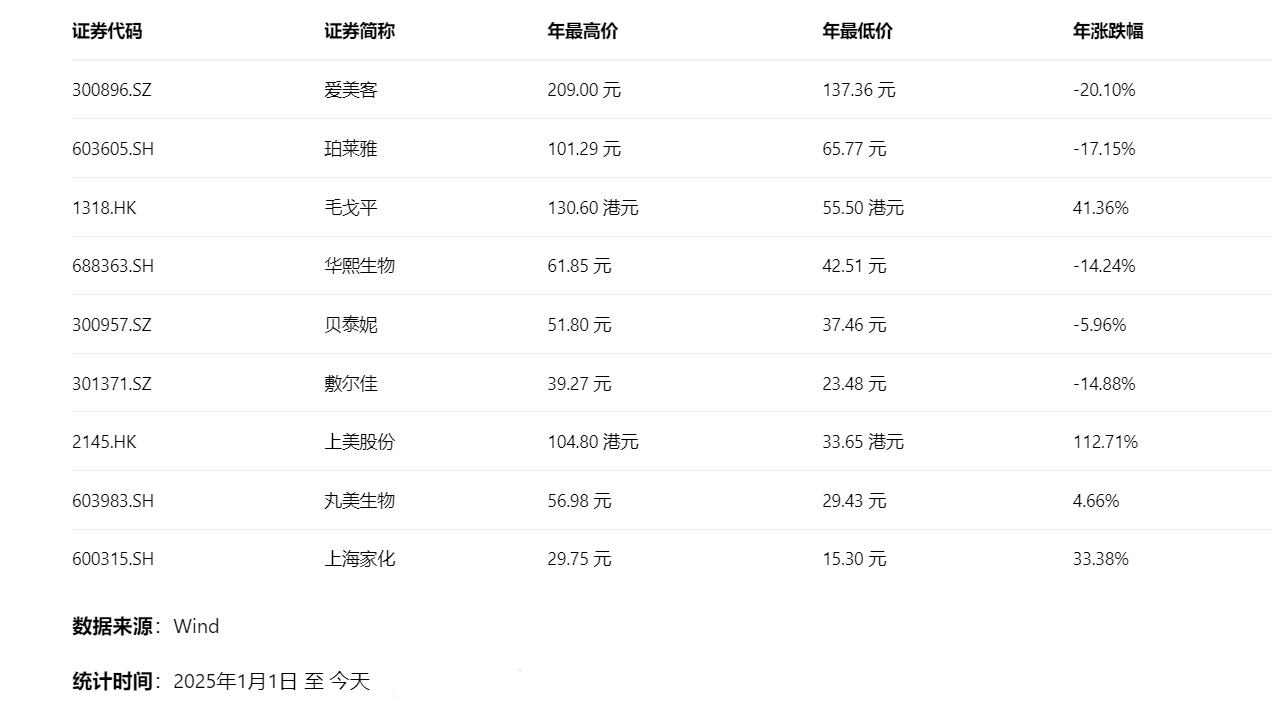
Core Insights - The Chinese beauty industry is experiencing a surge in IPOs, with over 41 beauty-related companies aiming for listings on the Hong Kong Stock Exchange since 2025, indicating a strong desire for growth and market expansion [1] - Lin Qingxuan's listing marks the beginning of its multi-brand and global strategy, while the stock performance of other brands like Maogeping shows significant volatility post-IPO [1][2] Group 1: Market Trends - Lin Qingxuan officially listed on the Hong Kong Stock Exchange on December 30, 2025, with an initial share price of 77.77 HKD, opening at 85 HKD, a 9.3% increase, and achieving a market capitalization of over 11.8 billion HKD [2] - Other companies like Perlay and Marubi are facing challenges, with Perlay's stock experiencing a significant decline and a slowdown in revenue growth, raising concerns about its market position [3][4] Group 2: Internationalization Efforts - Many beauty brands are focusing on internationalization as a core strategy, with companies like Perlay and Natural Hall aiming to enhance their global brand recognition through their IPOs [6][7] - Despite the ambitions, most brands still rely heavily on the domestic market for revenue, with limited success in overseas sales [7][8] Group 3: Investment and Development - Brands are investing in acquisitions and partnerships to strengthen their market presence, such as Perlay's investment in the cosmetic brand Huazhi Xiao and collaborations with private equity firms for global expansion [7][8] - The imbalance between marketing and research and development is a concern, as many brands have low R&D investments compared to their marketing expenditures, which may hinder their competitiveness in international markets [8][9]
美妆企业失去流量红利
第一财经· 2026-01-16 13:07
Core Viewpoint - The beauty industry in China is facing a flow dilemma, with increasing commission rates for live-streaming influencers, which has led to a significant rise in marketing costs and a decline in profitability for many brands [3][4][7]. Group 1: Industry Trends - The commission rate for influencers in live-streaming is projected to rise from 40% in 2024 to 60% in 2025, indicating a shift in the cost structure for beauty brands [7]. - Domestic beauty brands have gained market share, surpassing foreign brands in 2024, with Proya achieving over 10.7 billion yuan in revenue, becoming the first Chinese beauty brand to exceed this threshold [6][16]. - The live-streaming e-commerce model has provided domestic brands with opportunities to compete against established foreign brands, which have more complex organizational structures [6][16]. Group 2: Financial Insights - Proya's sales expenses reached 5.16 billion yuan in 2024, accounting for 47.9% of its revenue, highlighting the high cost of marketing in the current environment [7]. - The growth rate of Proya's revenue in 2024 was 8 percentage points lower than the growth rate of its sales expenses, indicating diminishing returns on marketing investments [7]. - Research and development (R&D) spending for Proya was only 2.1 billion yuan in 2024, representing about 1.9% of its revenue, which is significantly lower than its marketing expenses [15][16]. Group 3: Strategic Shifts - Many companies are transitioning from relying on influencer marketing to developing their own content, as the effectiveness of influencer-driven sales diminishes [8][11]. - The trend indicates a need for brands to enhance their content capabilities to survive in a competitive market [11]. - The beauty industry is witnessing a decline in new brand emergence, with existing brands needing to focus on product development and brand positioning to remain competitive [15][17]. Group 4: Market Challenges - The cost of advertising on short video platforms has surged, with CPM rates increasing from 30-50 yuan in 2020-2021 to 300 yuan during the 2025 Double 11 shopping festival [14]. - The market is becoming increasingly competitive, with a plethora of beauty brands leading to intense competition and consumer choice [15][17]. - The disparity in R&D investment between domestic and foreign brands remains significant, with foreign companies like L'Oréal investing around 13 billion euros (approximately 100 billion yuan) in R&D, nearly equal to Proya's total revenue [16].

美妆企业失去流量红利,它们正在放弃达人直播 | 海斌访谈
Di Yi Cai Jing· 2026-01-16 12:29
Core Insights - The commission rate for influencer live streaming in the beauty industry is expected to rise significantly, from 40% in 2024 to 60% in 2025, indicating increasing costs for brands [1][5] - Domestic beauty brands are facing challenges due to rising traffic costs and a shift in consumer behavior, leading to a need for more sustainable business models [4][16] Group 1: Industry Trends - The rise of influencer live streaming has been crucial for the growth of domestic beauty brands, allowing them to gain market share against established foreign brands [4][15] - In 2024, domestic beauty brands surpassed foreign brands in market share, with Proya achieving over 10.7 billion yuan in revenue, becoming the first Chinese beauty brand to exceed 10 billion yuan [4][15] - The influencer-driven sales model is becoming less effective, with many brands transitioning to self-operated content to reduce dependency on high commission rates [6][8] Group 2: Financial Insights - Proya's sales expenses reached 5.16 billion yuan in 2024, accounting for 47.9% of its revenue, highlighting the high cost of marketing and promotion [5][14] - The growth rate of Proya's revenue in 2024 was 8 percentage points lower than the growth rate of its sales expenses, indicating diminishing returns on marketing investments [5] - Research and development (R&D) spending remains low in comparison to marketing expenses, with Proya's R&D investment at only 2.1 billion yuan, about 1.9% of its revenue [14][15] Group 3: Market Dynamics - The beauty market is experiencing a decline in new brand emergence, with existing brands struggling to maintain growth amid rising costs and competition [13][14] - The CPM (cost per thousand impressions) for advertising on short video platforms has surged from 30-50 yuan in 2020-2021 to 300 yuan during the 2025 Double Eleven shopping festival, reflecting increased advertising costs [13] - The competitive landscape is intensifying, with many brands needing to focus on product development and brand positioning rather than relying solely on traffic-driven sales strategies [14][16]

珀莱雅:拟8000万元至1.5亿元回购公司股份
Jing Ji Guan Cha Wang· 2026-01-16 02:07
Group 1 - The company, Proya (603605), announced a share repurchase plan with a budget ranging from 80 million to 150 million yuan [1] - The maximum repurchase price is set at 100 yuan per share [1]