Proya(603605)

Search documents
化妆品医美行业周报:业绩预告彰显板块景气度,建议关注节前促销-20260201
Shenwan Hongyuan Securities· 2026-02-01 11:45
行 业 及 产 业 美容护理 2026 年 02 月 01 日 行 业 研 究 / 行 业 点 评 相关研究 证券分析师 王立平 A0230511040052 wanglp@swsresearch.com 王盼 A0230523120001 wangpan@swsresearch.com 聂霜 A0230524120002 nieshuang@swsresearch.com 联系人 王立平 A0230511040052 wanglp@swsresearch.com 业绩预告彰显板块景气度,建议关注节前促销 看好 ——化妆品医美行业周报 20260201 本期投资提示: 请务必仔细阅读正文之后的各项信息披露与声明 本研究报告仅通过邮件提供给 中庚基金 使用。1 证 券 研 究 报 告 - ⚫ 本阶段化妆品医美板块表现弱于市场。2026 年 1 月 23 日至 2026 年 1 月 30 日期间, 申万美容护理指数下滑 3.8%,表现弱于市场。其中,申万化妆品指数下滑 3.6%,弱于 申万 A 指 1.9pct;申万个护用品指数下滑 4.6%,弱于申万 A 指数 3.0pct。 ⚫ 周观点:业绩预告彰显板块景气度 ...




商贸零售行业周报:功效护肤品牌HBN母公司护家科技递表港交所
KAIYUAN SECURITIES· 2026-02-01 10:45
Investment Rating - The industry investment rating is "Positive" (maintained) [1] Core Insights - The report highlights the emergence of HBN, a leading domestic skincare brand, which has submitted its prospectus to the Hong Kong Stock Exchange, indicating strong growth potential in the efficacy skincare market [3][24] - The report emphasizes the importance of emotional consumption themes and recommends high-quality companies in high-growth sectors, including gold and jewelry, offline retail, cosmetics, and medical aesthetics [6][49] Summary by Sections Retail and Social Services Market Review - For the week of January 26 to January 30, the retail and social services indices closed at 2435.34 points and 9283.84 points, respectively, with declines of 4.18% and 3.45% [5][14] - The jewelry sector showed the highest growth, with a weekly increase of 7.07% and a year-to-date increase of 19.39% [15][18] Industry Dynamics: HBN and Efficacy Skincare - HBN, established in 2019, is the largest domestic skincare brand in the efficacy segment, focusing on visible results and innovative product strategies [24][25] - The brand's core products, including the "A Retinol" series, have achieved significant sales milestones, with a strong emphasis on scientific validation and consumer trust [29][33] Investment Recommendations - Investment focus areas include: - Gold and jewelry brands with differentiated product offerings, recommending companies like Laopuhuang and Chaohongji [6][49] - Offline retail companies adapting to market changes, with recommendations for Yonghui Supermarket and Aiyingshi [6][49] - Domestic cosmetics brands that emphasize emotional value and safety, recommending brands like Maogeping and Proya [6][50] - Medical aesthetics firms with unique product lines, recommending Meilitiantian Medical Health and Aimeike [6][51]




商贸零售行业周报:功效护肤品牌HBN母公司护家科技递表港交所-20260201
KAIYUAN SECURITIES· 2026-02-01 10:15
Investment Rating - The industry investment rating is "Positive" (maintained) [1] Core Insights - The report highlights the emergence of HBN, a leading domestic skincare brand, which has submitted its prospectus to the Hong Kong Stock Exchange, indicating strong growth potential in the efficacy skincare market [3][24] - The report emphasizes the importance of emotional consumption themes and suggests focusing on high-quality companies in high-growth sectors [6][49] Summary by Sections Industry Performance Overview - The commercial retail and social services indices reported declines of 4.18% and 3.45% respectively during the week of January 26 to January 30, 2026, ranking 26th and 23rd among 31 primary industries [5][14] - The jewelry sector showed the highest growth, with a weekly increase of 7.07% and a year-to-date increase of 19.39% [15][18] Key Industry Developments - HBN, established in 2019, is recognized as the largest domestic skincare brand in the efficacy skincare segment, with a market share of 0.8% in the Chinese improvement skincare market as of 2024 [24][25] - HBN's revenue for the first three quarters of 2025 reached 1.51 billion yuan, a year-on-year increase of 10.2%, with high-efficacy skincare products accounting for 78.6% of total revenue [29] Investment Recommendations - Investment Theme 1: Focus on high-end gold and fashion jewelry brands, recommending companies like Laopuhuangjin and Chaohongji [6][49] - Investment Theme 2: Highlighting retail companies that adapt to emotional value and intelligent trends, with recommendations for Yonghui Supermarket and Aiyingshi [6][49] - Investment Theme 3: Emphasizing beauty and personal care brands that innovate with emotional value and safe ingredients, recommending brands like Maogeping and Pola [6][50] - Investment Theme 4: Targeting differentiated medical beauty product manufacturers and leading medical beauty institutions, recommending companies like Aimeike and Meilitiantian [6][51]


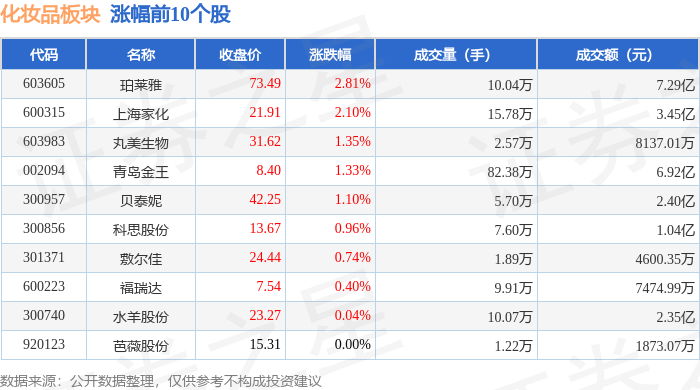
化妆品板块1月29日涨1.12%,珀莱雅领涨,主力资金净流出8297.15万元
Zheng Xing Xing Ye Ri Bao· 2026-01-29 09:00
Group 1 - The cosmetics sector experienced a rise of 1.12% on January 29, with Proya leading the gains [1] - The Shanghai Composite Index closed at 4157.98, up 0.16%, while the Shenzhen Component Index closed at 14300.08, down 0.3% [1] - Key stocks in the cosmetics sector showed varied performance, with Tian Cai Ya up 2.81% and Jia Heng Jia Hua down 3.79% [2][3] Group 2 - The main capital flow in the cosmetics sector indicated a net outflow of 82.97 million yuan from institutional investors, while retail investors saw a net inflow of 82.61 million yuan [2] - Specific stock performances included Shanghai Jahwa with a net inflow of 17.61 million yuan from institutional investors, while other stocks like Marubi and LaFang experienced net outflows [3]

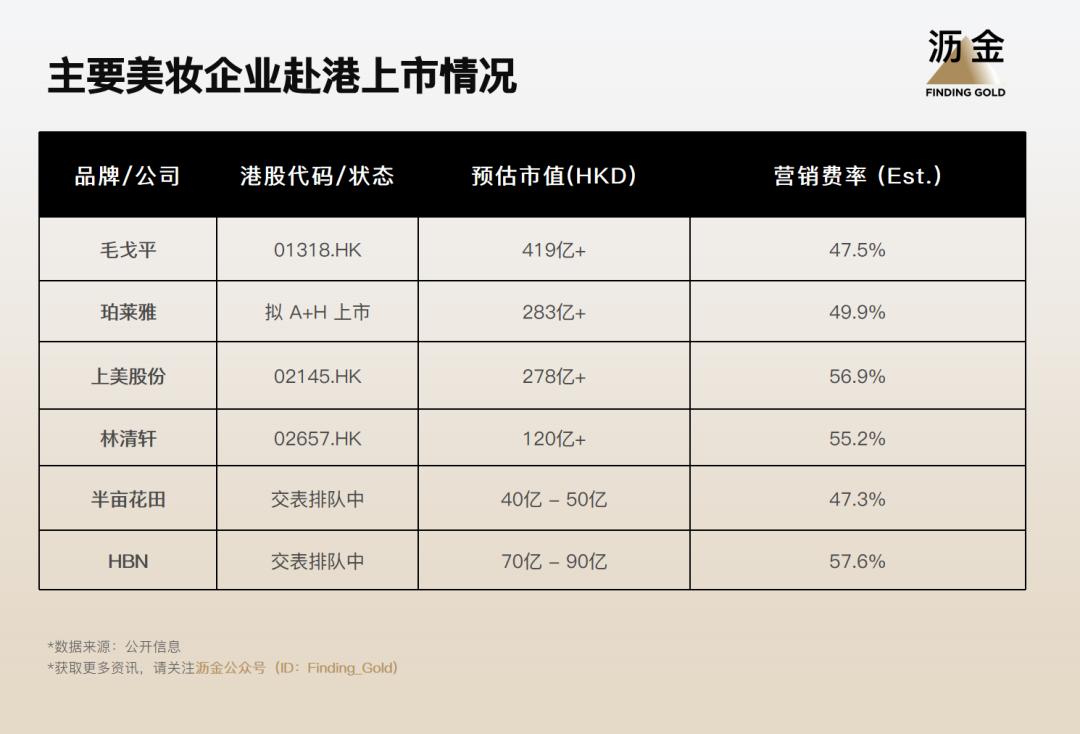
国货美妆2026,在港股抢滩登陆
3 6 Ke· 2026-01-28 12:52
Core Viewpoint - The Chinese beauty industry is experiencing a significant shift as domestic brands rush to list on the Hong Kong Stock Exchange, driven by a near closure of IPO opportunities in the A-share market. This trend is not merely a celebration but signals a harsh beginning of industry differentiation and value reassessment [1][5]. Group 1: Market Dynamics - The successful listings of brands like Lin Qingxuan and the planned secondary listing of Proya highlight Hong Kong as a new haven for domestic beauty brands [1]. - The high price-to-earnings (PE) ratio of over 30 for Mao Geping is misleading, as it reflects a unique business model rather than a general trend in the domestic beauty sector [4]. - The market is expected to shift focus from the narrative of domestic brand growth to a stringent evaluation of business fundamentals [5]. Group 2: Brand Performance and Strategy - HBN and Banmu Huatian rely on traditional consumer goods models, heavily investing in marketing to drive growth, contrasting with Mao Geping's unique model that minimizes external marketing dependency [6][8]. - HBN's financials show a significant profit growth rate of 232.5% and 190.3% for 2024 and the first nine months of 2025, respectively, despite a marketing expense ratio of 57.6% [8]. - The key for HBN post-listing is to demonstrate that it can achieve higher brand premiums and customer lifetime value with the same marketing investment compared to competitors [10]. Group 3: Liquidity and Market Pressure - The liquidity risk in the Hong Kong market is severe, with top-tier companies absorbing most capital, leaving mid-tier brands vulnerable to becoming illiquid [12]. - The pressure of performance guarantees for many domestic brands in 2024-2025 may lead to unsustainable practices, risking significant stock price drops if growth slows post-2026 [13]. Group 4: Competitive Landscape - The competition in the beauty industry is evolving from ingredient concentration to structural competition, with brands needing to lower marketing costs while maintaining revenue [15]. - Unique raw materials are becoming essential for brand differentiation and valuation in the market, as seen with successful brands like Juzhibio and Lin Qingxuan [18]. - The necessity for international expansion is increasing, as domestic market growth is plateauing, making overseas markets critical for future success [20]. Group 5: Future Outlook - The Hong Kong market is becoming increasingly discerning, seeking brands that can demonstrate efficiency and long-term viability rather than just rapid growth [22][23]. - Brands that can effectively manage their desires, respect market realities, and commit to long-term strategies will be better positioned for success in the evolving landscape [23].

化妆品医美行业25年业绩前瞻:预计25年品牌端稳中有进,上下游边际改善
Shenwan Hongyuan Securities· 2026-01-27 14:15
Investment Rating - The report rates the cosmetics and medical beauty industry as "Overweight" for 2025, indicating an expectation for the industry to outperform the overall market [2][11]. Core Insights - The demand side of the cosmetics and medical beauty sector is expected to accelerate, with retail sales of cosmetics projected to reach 465.3 billion yuan in 2025, a year-on-year growth of 5.1%, surpassing the overall retail growth by 1.4 percentage points [3]. - The performance of Hong Kong-listed beauty companies is strong, with significant growth in GMV (Gross Merchandise Volume) through platforms like Douyin, particularly during promotional events like Double Eleven [3]. - The A-share market shows a mixed performance, with companies like Ruoyuchen and Shanghai Jahwa experiencing substantial improvements in their earnings [3]. - The e-commerce operation sector is rebounding, with companies like Ruoyuchen and Yiwang Yichuang expected to see profit growth exceeding 50% in 2025 [3]. - The medical beauty segment is anticipated to face slight fatigue due to macroeconomic factors, but new product launches are expected to stimulate consumer interest in 2026 [3]. Summary by Sections Cosmetics Sector - Retail sales of cosmetics are projected to grow by 5.1% in 2025, with Q4 growth reaching 9.9% [3]. - Key companies such as Shiseido and Lin Qingxuan are expected to see significant GMV growth, with Lin Qingxuan projected to achieve triple-digit growth [3]. - Investment recommendations include companies with strong channel and brand matrices like Maogeping, Shiseido, and Lin Qingxuan, as well as those with improving earnings like Porlaia and Marubi [3]. Medical Beauty Sector - The medical beauty sector is expected to be impacted by macroeconomic conditions, with companies like Aimeike facing challenges [3]. - Recommendations focus on companies with strong R&D capabilities and broad product pipelines, such as Aimeike and Langzi [3]. E-commerce and Operations - The e-commerce operation sector is recovering, with companies like Ruoyuchen and Qingmu Technology expected to see significant profit growth [3]. - The report highlights the importance of self-operated brands and the potential for high growth in this segment [3]. Key Company Valuations - The report provides a valuation table for key companies, indicating a "Buy" rating for several firms including Porlaia, Maogeping, and Shiseido, with projected PE ratios reflecting growth expectations [5].

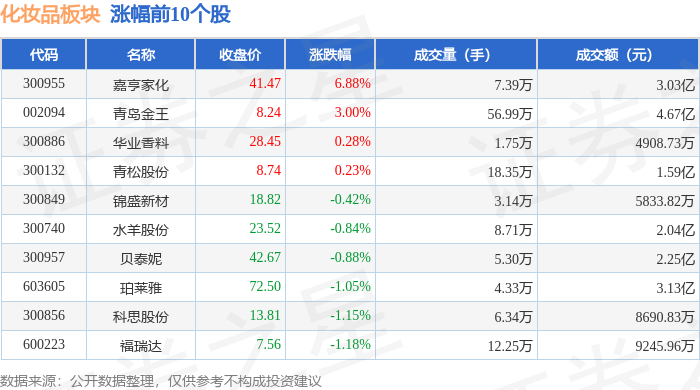
化妆品板块1月27日跌1.27%,丸美生物领跌,主力资金净流出4397.95万元
Zheng Xing Xing Ye Ri Bao· 2026-01-27 08:56
Market Overview - The cosmetics sector experienced a decline of 1.27% on January 27, with Marubi Biotechnology leading the drop [1] - The Shanghai Composite Index closed at 4139.9, up 0.18%, while the Shenzhen Component Index closed at 14329.91, up 0.09% [1] Individual Stock Performance - Key performers in the cosmetics sector included: - Jiahen Home Cosmetics (300955) with a closing price of 41.47, up 6.88% and a trading volume of 73,900 shares, totaling 303 million yuan [1] - Qingdao Kingway (002094) closed at 8.24, up 3.00% with a trading volume of 569,900 shares, totaling 467 million yuan [1] - Conversely, Marubi Biotechnology (603983) closed at 31.84, down 4.47% with a trading volume of 46,400 shares, totaling 149 million yuan [2] Capital Flow Analysis - The cosmetics sector saw a net outflow of 43.98 million yuan from main funds, while retail investors contributed a net inflow of 43.99 million yuan [2] - Notable capital flows included: - Qingdao Kingway (002094) with a net inflow of 22.70 million yuan from main funds [3] - Shanghai Jahwa (600315) with a net inflow of 8.10 million yuan from main funds [3] - Marubi Biotechnology (603983) experienced a slight net outflow of 94,800 yuan from main funds [3]




确定性增量,珀莱雅们“杀回”线下
Xin Lang Cai Jing· 2026-01-27 01:57
Core Insights - The beauty industry is witnessing a shift as leading brands are refocusing on offline channels, which are expected to become a significant growth area by 2026 [1][3] - Major companies like Marubi, Proya, and Shiseido are signaling a strategic pivot towards offline sales, indicating a collective recognition of the potential profitability in this space [1][3][4] Group 1: Market Trends - The past year has seen brands expressing concerns over high competition, expensive traffic, and declining online sales, leading to a reevaluation of growth strategies [1][2] - Data from 2023-2024 shows slight increases in offline revenues for major brands, but their overall contribution to total revenue is declining, highlighting a need for strategic investment in offline channels [3][4] Group 2: Strategic Shifts - Natural堂 has demonstrated the potential of offline channels, with average annual revenues exceeding 1.6 billion yuan over the past three years, indicating that offline can still be a vital growth area [4] - The increasing costs of online traffic and the saturation of online platforms are pushing beauty brands to reconsider their channel strategies, making offline channels a more attractive option for sustainable growth [4][5] Group 3: OTC Channel Opportunities - The OTC (Over-the-Counter) channel is emerging as a key battleground for domestic brands, with over 30% of the top 100 cosmetic brands already having products displayed in pharmacies [6][7] - Major pharmacy chains are actively seeking to expand their beauty product offerings, with plans to introduce personal care items in a significant number of their stores [6][7] Group 4: Brand Strategies - Brands are adopting targeted product strategies for different channels, with Marubi launching new products specifically for offline sales and Proya entering the OTC market with a focus on medical and cosmetic synergy [8][9] - The emphasis is on creating engaging in-store experiences and building emotional connections with consumers to enhance brand loyalty and drive sales [10][11]
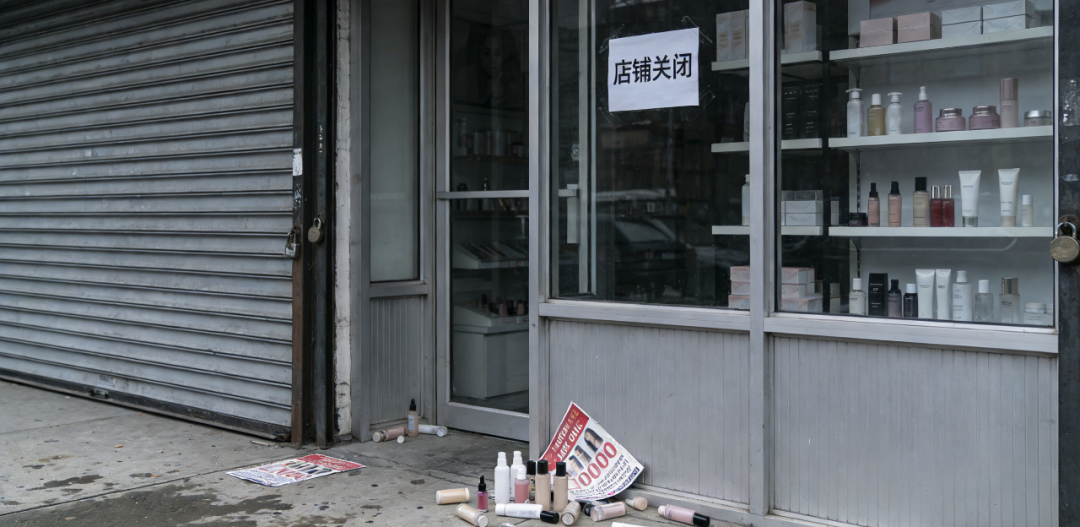
卷不动了,又一TOP卖家清仓闭店
Xin Lang Cai Jing· 2026-01-26 11:10
Core Viewpoint - The closure of the Taobao store "Dai Gua Xiao Huo Ban," a personal beauty agent shop with 450,000 followers, highlights the increasing challenges faced by e-commerce businesses in the beauty industry due to intensified competition, regulatory pressures, and rapid changes in e-commerce strategies [2][3][14]. Group 1: Store Performance and Closure - "Dai Gua Xiao Huo Ban" announced it will completely delist all products by the end of February, with remaining inventory being cleared at a 30% discount [2][26]. - The store has a diverse product range, including popular domestic beauty items, with prices mostly between tens to hundreds of yuan, targeting a budget-conscious consumer base [4][28]. - Despite being a top performer with 458,000 followers and over 300,000 annual sales, the store's overall rating is only 4.5, lagging behind 88% of its peers, primarily due to low logistics speed [8][32][34]. Group 2: Industry Challenges - The beauty e-commerce sector is experiencing a wave of store closures, with many previously successful shops shutting down due to economic and psychological pressures [14][38]. - The operational environment for e-commerce is becoming increasingly difficult, with many merchants forced to sell products at cost price to attract customers, leading to unsustainable revenue [16][40]. - Issues such as high return rates and strict consumer protection policies are exacerbating the challenges for small beauty shops, making it hard to maintain profitability [17][41]. Group 3: Market Dynamics and Future Outlook - Despite the closures, the overall potential for the Chinese cosmetics market remains strong, with projections indicating a market size exceeding 170 billion yuan by 2028, maintaining a compound annual growth rate of over 8% [20][44]. - The market is witnessing a polarization, with large brands like Proya and Han Shu continuing to grow, while smaller players struggle unless they find a unique positioning [21][45]. - Strategies for survival in the current market include focusing on product quality, offering tailored solutions, and targeting niche markets to build a loyal customer base [22][46].

海底捞+老铺黄金+珀莱雅
2026-01-26 02:50
Summary of Conference Call Company and Industry Overview - **Industry**: Consumer Sector, specifically focusing on the restaurant and jewelry industries - **Companies Discussed**: Haidilao (restaurant), Laopuhuang (jewelry), and Proya (cosmetics) Key Points and Arguments Haidilao 1. **Performance Recovery**: Haidilao's performance is showing signs of stabilization, with a notable recovery in customer turnover rates in Q3 and Q4 of 2025, maintaining an average customer spend of around 100 RMB [2][6] 2. **Management Changes**: The return of Zhang Yong is expected to positively influence the company's operations, although specific growth targets have not been set. The potential for new store openings is contingent on stabilizing turnover rates [3][4] 3. **Brand Expansion**: Haidilao is exploring multi-brand strategies, with new concepts like barbecue and sushi being developed, which could enhance its market presence [4][5] 4. **Market Sentiment**: The overall sentiment in the consumer sector is at a low point, particularly in the Hong Kong market, but there is potential for a rebound due to low expectations and valuations [1][6] 5. **Future Outlook**: For 2026, the revenue forecast is cautiously optimistic, with estimates suggesting a recovery in performance, potentially reaching 4.5 to 4.7 billion RMB [6][7] Laopuhuang 1. **Sales Momentum**: Laopuhuang is experiencing a surge in customer interest, particularly during the Valentine's Day season, with expectations of exceeding previous sales records due to rising gold prices and promotional activities [9][10] 2. **Brand Strength**: The brand's positioning and market presence have strengthened, with significant customer engagement observed during promotional events, indicating a robust demand outlook [11][12] 3. **Pricing Strategy**: There is anticipation of price increases following the Valentine's Day period, which could further enhance sales performance [10][11] 4. **Market Positioning**: Laopuhuang's strategy includes optimizing store locations and expanding its product offerings, which is expected to drive growth in the coming years [12][13] Proya 1. **Valuation and Growth Potential**: Proya is currently undervalued, with a projected earnings multiple of around 15 times for 2026, making it an attractive investment opportunity [19][20] 2. **Management Changes**: Recent leadership changes are expected to bring new strategies and innovations, particularly in product development and market positioning [19][20] 3. **Product Innovation**: The introduction of new product lines, particularly in the skincare segment, is anticipated to capture market share and drive sales growth [20][21] 4. **Acquisition Strategy**: Proya is actively pursuing acquisition opportunities, particularly in the cosmetics sector, to enhance its market presence both domestically and internationally [22][23] Additional Important Insights - **Consumer Sentiment**: The overall consumer sentiment remains cautious, but there are signs of potential recovery in spending, particularly in the restaurant and jewelry sectors [1][6] - **Market Dynamics**: The competitive landscape is evolving, with companies like Haidilao and Laopuhuang adapting their strategies to meet changing consumer preferences and market conditions [4][10] - **Future Monitoring**: Continuous monitoring of market trends and consumer behavior will be essential for assessing the performance of these companies in the upcoming quarters [24]