
Sinocelltech(688520)

Search documents
生物制品公司财务总监PK:百万年薪以上占比41%神州细胞马洁年薪143万行业第三
Xin Lang Cai Jing· 2025-08-08 04:37
Core Insights - The report highlights the significant role of CFOs in listed companies, with the total salary scale for A-share CFOs reaching 4.27 billion yuan in 2024 [1] - The average annual salary for CFOs in the A-share biopharmaceutical sector is 1.0042 million yuan [1] Salary Distribution - The salary distribution among A-share biopharmaceutical CFOs shows that 13% earn below 500,000 yuan, 46% earn between 500,000 and 1 million yuan, 33% earn between 1 million and 2 million yuan, and 8% earn above 2 million yuan [1] - The top five highest-paid CFOs are from Kanghong Pharmaceutical, Junshi Biosciences-U, Shenzhou Cell, Tebao Bio, and Aopumai, with salaries of 3 million yuan, 2.0602 million yuan, 1.4297 million yuan, 1 million yuan, and 1 million yuan respectively [1] Age and Education Distribution - CFOs aged between 40 and 50 years constitute 54% of the market, while those over 50 years account for 38%, and those aged 40 and below represent 8% [1] - The educational background of CFOs shows that 8% have an associate degree, 50% hold a bachelor's degree, and 42% possess a master's degree [1] Salary Changes - Among CFOs with over two years of tenure, the largest salary decrease was observed for Xu Baohong from Junshi Biosciences-U, with a year-on-year decline of 24.66% [1] - The largest salary increase was recorded for Liu Liwen from Zhixiang Jintai-U, with a year-on-year increase of 35.91% [1]


科创板资金动向:6股主力资金净流入超亿元
Zheng Quan Shi Bao Wang· 2025-08-07 09:29
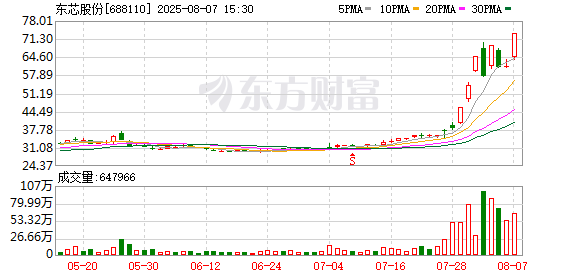
Market Overview - The main funds in the Shanghai and Shenzhen markets experienced a net outflow of 37.824 billion yuan, with the Sci-Tech Innovation Board seeing a net outflow of 1.264 billion yuan [2] - A total of 243 stocks saw net inflows, while 345 stocks experienced net outflows [2] Sci-Tech Innovation Board Performance - On the Sci-Tech Innovation Board, 225 stocks rose, with two stocks, Sino Medical and Dongxin Technology, hitting the daily limit [2] - 358 stocks declined in value [2] Fund Flow Analysis - Among the stocks with net inflows, six had inflows exceeding 100 million yuan, with Dongxin Technology leading at 370.38 million yuan [3] - Other notable inflows included Han's Laser and Lianqi Technology, with net inflows of 282.55 million yuan and 256.33 million yuan, respectively [3] Continuous Fund Flow - There are 48 stocks that have seen continuous net inflows for more than three trading days, with Changguang Huaxin leading at nine consecutive days [3] - Conversely, 130 stocks have experienced continuous net outflows, with Yihua Tong showing the longest streak at 16 days [3] Top Net Inflows - The top stocks by net inflow include: - Dongxin Technology: 370.38 million yuan, 20% increase [3] - Han's Laser: 281.86 million yuan, 1.25% increase [3] - Lianqi Technology: 256.33 million yuan, 2.22% increase [3] - Other significant inflows were seen in stocks like Borui Pharmaceutical and Huahong Semiconductor [4] Stocks with Significant Outflows - The stock with the highest net outflow was Shijia Photon, with a net outflow of 206 million yuan and a decline of 2.27% [2] - Other notable outflows included Anhui Technology and Shenzhou Cell, with net outflows of 130 million yuan and 112 million yuan, respectively [2]


重组蛋白概念下跌1.29%,10股主力资金净流出超5000万元
Zheng Quan Shi Bao Wang· 2025-08-07 08:51
Core Viewpoint - The recombinant protein sector experienced a decline of 1.29% as of the market close on August 7, with several companies within the sector showing significant drops in stock prices [1][2]. Market Performance - The top-performing concept sectors included rare earth permanent magnets (+3.24%), brain-computer interfaces (+2.69%), and hyperbaric oxygen chambers (+2.56%), while the recombinant protein sector was among the worst performers [2]. - Within the recombinant protein sector, companies such as Zhifei Biological, ShenZhou Cell, and Dezheng Health saw the largest outflows of main funds, with net outflows of 1.22 billion, 1.12 billion, and 1.10 billion respectively [2][3]. Fund Flow Analysis - The recombinant protein sector experienced a net outflow of 867 million in main funds today, with 37 stocks seeing outflows, and 10 stocks having outflows exceeding 50 million [2]. - The stocks with the highest net inflows included Borui Pharmaceutical, Rejing Biological, and Marumi Biological, with inflows of 2.33 billion, 16.48 million, and 16.39 million respectively [2][4]. Stock Performance - Notable declines in stock prices within the recombinant protein sector included: - Zhifei Biological: -1.06% - ShenZhou Cell: -4.57% - Dezheng Health: -1.65% - Beida Pharmaceutical: -2.53% - Maiwei Biological: -5.31% [2][3]. - Conversely, stocks that increased in value included: - *ST Suwu: +4.63% - Marumi Biological: +3.55% - Fulejia: +1.17% [1][4].




神州细胞股价微跌0.01% 生物制药企业主力资金持续流出
Jin Rong Jie· 2025-08-05 17:02
Core Viewpoint - ShenZhou Cell's stock price showed a slight decline on August 5, closing at 70.15 yuan, indicating a minor drop of 0.01% from the previous trading day [1] Company Overview - ShenZhou Cell is an innovative enterprise focused on the biopharmaceutical sector, primarily engaged in the research and production of recombinant proteins and monoclonal antibodies [1] - The company is headquartered in Beijing and operates within the innovative drugs and biopharmaceuticals segment [1] Stock Performance - On August 5, the stock reached a high of 70.90 yuan and a low of 68.05 yuan, with a total trading volume of 320 million yuan [1] - The net outflow of main funds on August 5 was 37.93 million yuan, with a cumulative net outflow of 197 million yuan over the past five trading days [1] - The current price-to-earnings (P/E) ratio stands at 122.48, while the price-to-book (P/B) ratio is -77.19 [1]
神州细胞跌7.06% 中邮证券1周前喊买入
Zhong Guo Jing Ji Wang· 2025-08-01 08:31
中国经济网北京8月1日讯神州细胞(688520.SH)今日股价收报69.52元,跌幅7.06%。 中邮证券有限责任公司研究员盛丽华、陈成7月24日发布研报《神州细胞(688520):成功实现扭亏为盈 临床管线值得期待》称,给予神州细胞"买入"评级。 ...
医药行业周专题:国产创新药具备全球竞争力,出海正盛
Orient Securities· 2025-08-01 07:37
Investment Rating - The report maintains a positive outlook on the pharmaceutical and biotechnology industry, emphasizing the transition from "Made in China" to "Created in China" for innovative drugs [10]. Core Insights - The report highlights that domestic innovative drugs are gaining global competitiveness and are currently in the first and second stages of international expansion, primarily through licensing agreements and partnerships [10][12]. - The report identifies key areas of focus for investment, including PD-(L)1 plus, ADCs, and GLP-1 drugs, which are expected to drive future growth and business development (BD) opportunities [10][51]. Summary by Sections Section 1: Transition from "Manufacturing" to "Innovation" - The policy reforms initiated in 2015 have stimulated a shift from generic to innovative drug development in China, with significant increases in R&D investment since 2018 [19][21]. - The number of First-in-Class (FIC) drugs developed in China has risen from 9 in 2015 to 120 in 2024, indicating a substantial increase in innovation [25][26]. Section 2: Continued BD Opportunities - PD-(L)1 plus is identified as a cornerstone for next-generation cancer treatments, with significant demand and potential for new products [51]. - The report notes that ADCs are transitioning towards more differentiated targets, focusing on unmet clinical needs, with promising candidates like PD-L1, DLL3, and EGFR [51]. - The GLP-1 market is experiencing rapid growth, with a focus on multi-target, oral, combination, and long-acting formulations [51]. Section 3: Investment Recommendations - For PD-(L)1 plus, companies such as Kangfang Biotech, Shansheng Pharmaceutical, and Junshi Biosciences are recommended for investment due to their strong pipelines [5]. - In the ADC space, companies like Fuhong Hanlin and Zai Lab are highlighted for their potential in addressing unmet clinical needs [5]. - In the GLP-1 sector, firms such as Borui Pharmaceutical and Zai Lab are noted for their promising developments [5].


“新上市药品首发价格机制”首次公开,科创医药ETF嘉实(588700)盘中交投活跃,近1周新增规模同类居首!
Sou Hu Cai Jing· 2025-08-01 06:04
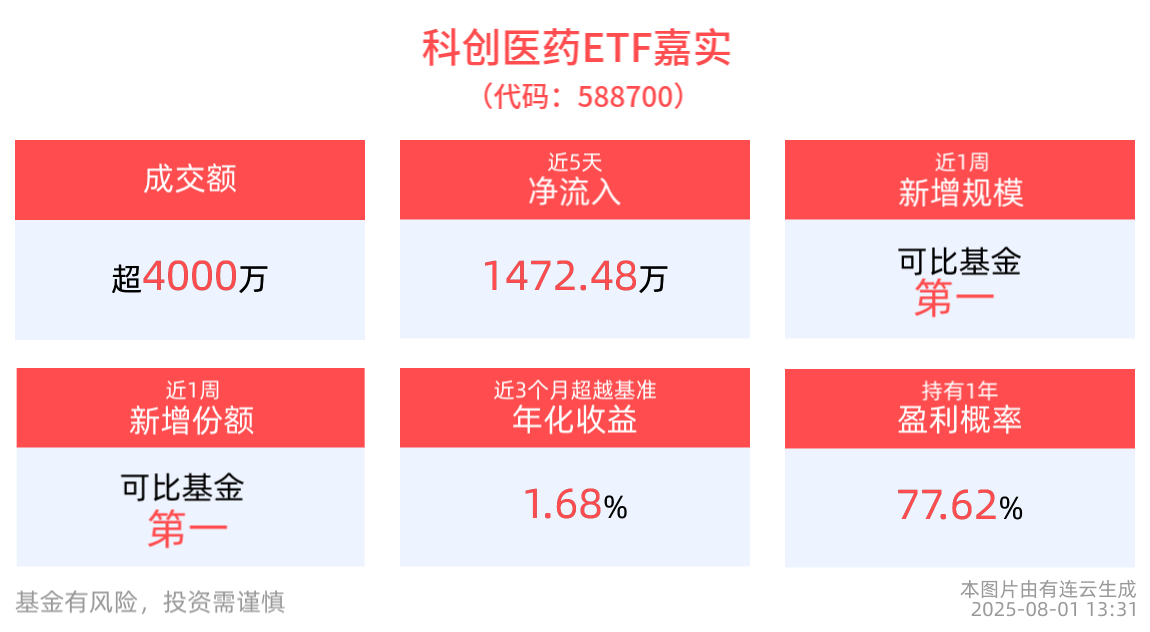
Group 1 - The core viewpoint highlights the active trading and significant growth of the Science and Technology Innovation (Sci-Tech) Pharmaceutical ETF managed by Harvest, with a turnover rate of 21.72% and a transaction volume of 47.63 million yuan on July 31 [2] - Over the past week, the Sci-Tech Pharmaceutical ETF has seen an average daily transaction volume of 53.21 million yuan, ranking first among comparable funds [2] - The fund's scale increased by 16.78 million yuan in the past week, also leading among comparable funds, with a share increase of 12.50 million shares [2] Group 2 - The fund has attracted a total of 14.72 million yuan in inflows over the last five trading days [2] - As of July 31, the net value of the Sci-Tech Pharmaceutical ETF has risen by 48.77% over the past year, ranking 350 out of 2943 in the index stock fund category, placing it in the top 11.89% [2] - The fund's highest monthly return since inception was 23.29%, with the longest consecutive monthly gain being six months and a maximum increase of 41.76% [2] Group 3 - The top ten weighted stocks in the Shanghai Stock Exchange Sci-Tech Innovation Board Biopharmaceutical Index account for 49.14% of the index, with leading companies including United Imaging Healthcare and BeiGene [2] - The stock performance of the top ten companies shows mixed results, with some stocks experiencing slight declines while others have positive growth [4] Group 4 - The National Healthcare Security Administration has established a "new drug first launch price mechanism" to encourage drug research and innovation, marking a significant policy development [4] - The pharmaceutical and biotech sectors are expected to benefit from a high level of innovation and a potential revaluation of value stocks, with recommendations for companies in the Pharma and Biopharma/Biotech sectors [5] - The medical device industry is also anticipated to benefit from policy optimizations, with recent statements from relevant authorities supporting innovation and addressing issues of internal competition [5]



生物制品上市公司董秘PK:上海莱士刘峥年薪325.65万元行业第一 已在公司任职15年
Xin Lang Zheng Quan· 2025-08-01 05:24
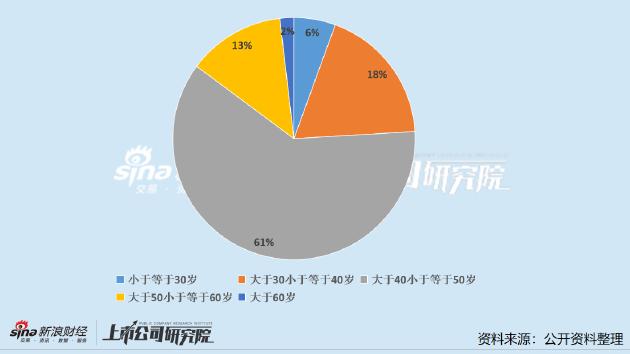
Core Insights - The report highlights that the total salary of A-share listed company secretaries in 2024 reached 4.086 billion yuan, with an average annual salary of 754,300 yuan [1] - A total of 1,144 company secretaries earn over 1 million yuan annually, accounting for more than 21% of the total [1] Salary Distribution - The average annual salary for company secretaries in the biopharmaceutical sector is 1.01 million yuan [5] - The distribution of salaries among company secretaries is as follows: below 500,000 yuan (15%), 500,000-1,000,000 yuan (41%), 1,000,000-2,000,000 yuan (38%), 2,000,000-3,000,000 yuan (4%), and above 3,000,000 yuan (2%) [5] Age and Education Distribution - The age distribution of company secretaries shows that those aged 40-50 make up 61%, while those over 50 account for 15%, and those aged 30-40 account for 18% [1] - In terms of education, 52% of company secretaries hold a bachelor's degree, while 44% have a master's degree, and only 2% have a doctoral degree [3] Investor Engagement - There is significant variation in the number of investor meetings held by companies, with 43% of companies hosting fewer than 10 meetings annually [7] - The top five companies with the highest number of investor meetings are: Bohui Innovation (1,500 meetings), Jindike (777 meetings), Nearshore Protein (681 meetings), Sailun Biotech (549 meetings), and Kanghua Biotech (504 meetings) [9]


生物制品上市公司董秘PK:辽宁成大邱闯成为业内唯一博士董秘 今年5月刚刚上任
Xin Lang Zheng Quan· 2025-08-01 05:24
Core Insights - The report highlights that the total salary of A-share listed company secretaries in 2024 reached 4.086 billion yuan, with an average annual salary of 754,300 yuan [1] - A total of 1,144 secretaries earned over 1 million yuan annually, accounting for more than 21% of the total [1] Salary Distribution - The average annual salary for secretaries in the A-share biopharmaceutical sector is 1.01 million yuan [5] - The distribution of salaries is as follows: below 500,000 yuan (15%), 500,000-1,000,000 yuan (41%), 1,000,000-2,000,000 yuan (38%), 2,000,000-3,000,000 yuan (4%), and above 3,000,000 yuan (2%) [5] Age and Education Distribution - The age distribution of secretaries shows that those aged 40-50 constitute 61%, while those over 50 account for 15%, and those aged 30-40 make up 18% [1] - In terms of education, 52% of secretaries hold a bachelor's degree, while 44% have a master's degree, and only 2% possess a doctoral degree [3] Investor Engagement - There is significant variation in the number of investor meetings held by companies, with 43% of companies hosting fewer than 10 meetings annually [7] - The top five companies with the highest number of investor meetings are: Bohui Innovation (1,500 meetings), Jindike (777 meetings), Nearshore Protein (681 meetings), Sailun Biotech (549 meetings), and Kanghua Biotech (504 meetings) [9]


生物制品上市公司董秘PK:康乐卫士任恩奇为行业最年轻董秘 任职已满1年年薪38.32万元
Xin Lang Zheng Quan· 2025-08-01 05:20
Core Insights - The report highlights that the total salary of A-share listed company secretaries in 2024 reached 4.086 billion yuan, with an average annual salary of 754,300 yuan [1] - Over 21% of company secretaries earn more than 1 million yuan annually, indicating a significant portion of high earners in this role [1] Salary Distribution - The average annual salary for company secretaries in the biopharmaceutical sector is 1.01 million yuan, with the distribution of salaries as follows: below 500,000 yuan (15%), 500,000-1,000,000 yuan (41%), 1,000,000-2,000,000 yuan (38%), 2,000,000-3,000,000 yuan (4%), and above 3,000,000 yuan (2%) [5] - The top five highest-paid company secretaries have salaries of 3.2565 million yuan, 2.5345 million yuan, 2.2809 million yuan, 1.9265 million yuan, and 1.89 million yuan, with their tenure at the companies ranging from less than one year to 15 years [7] Age and Educational Background - The age distribution of company secretaries shows that those aged 40-50 constitute 61%, while those over 50 account for 15%, and those under 30 make up 6% [1][3] - The educational background indicates that 52% hold a bachelor's degree, 44% have a master's degree, and only 2% possess a doctoral degree, with the latter represented by just one individual [3] Investor Engagement - There is a significant variance in the number of investor meetings held by companies, with 43% of companies hosting fewer than 10 meetings annually, while only 2% have more than 1,000 meetings [9] - The five companies with the highest number of investor meetings are reported to have 1,500, 777, 681, 549, and 504 meetings, respectively [9]

