
HWPC(688799)

Search documents
华纳药厂股价涨5.52%,安信基金旗下1只基金重仓,持有122.94万股浮盈赚取320.88万元
Xin Lang Cai Jing· 2026-01-22 03:16
Group 1 - Warner Pharmaceutical's stock increased by 5.52%, reaching 49.88 CNY per share, with a trading volume of 177 million CNY and a turnover rate of 2.77%, resulting in a total market capitalization of 6.55 billion CNY [1] - The company, established on April 30, 2001, and listed on July 13, 2021, is located in Changsha, Hunan Province, and specializes in the research, production, and sales of chemical raw materials, chemical drug formulations, and traditional Chinese medicine formulations [1] - The revenue composition of the company includes 73.19% from formulation products, 25.22% from raw materials and intermediates, 1.52% from technical services, 0.06% from plant extracts and food, and 0.01% from other sources [1] Group 2 - Anxin Fund's Anxin Medical Health Stock A (010709) holds 1.2294 million shares of Warner Pharmaceutical, unchanged from the previous period, representing 0.94% of the circulating shares, with an estimated floating profit of approximately 3.2088 million CNY [2] - The fund, established on January 12, 2021, has a current scale of 362 million CNY, with a year-to-date return of 10.02%, ranking 1184 out of 5542 in its category, and a one-year return of 74.07%, ranking 305 out of 4256 [2] - The fund manager, Chi Chenshen, has been in position for 5 years and 12 days, managing a total asset scale of 1.691 billion CNY, with the best fund return during his tenure at 57.47% and the worst at 53.57% [3] Group 3 - Anxin Medical Health Stock A (010709) has Warner Pharmaceutical as its eighth largest holding, with 1.2294 million shares, unchanged from the previous period, accounting for 3.47% of the fund's net value, and an estimated floating profit of approximately 3.2088 million CNY [4]

医院卖34.93元药店19元 同款药为何不同价?
2 1 Shi Ji Jing Ji Bao Dao· 2026-01-16 00:22
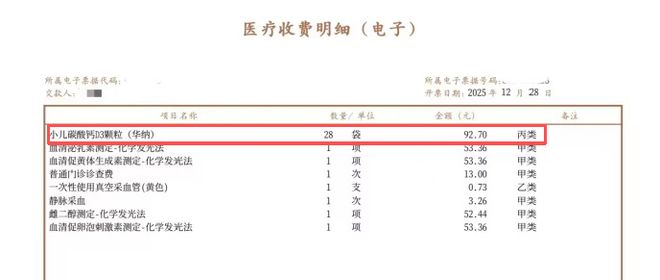
Core Viewpoint - The significant price discrepancies between hospital and retail pharmacy prices for the same medication raise concerns about the effectiveness of centralized procurement policies and the trust in public healthcare systems [2][3]. Price Discrepancies - A specific example highlights that the price of pediatric calcium carbonate D3 granules is 34.93 yuan in a hospital, while the same product is priced at approximately 19 yuan in pharmacies and e-commerce platforms, resulting in a price difference of 15.93 yuan [2]. - The price of the same medication can vary significantly across different sales channels, with instances of hospital prices being higher than retail prices and vice versa [3]. Centralized Procurement Issues - The pediatric calcium carbonate D3 granules were included in centralized procurement in 2022, with a winning bid price of 3.795 yuan per bag, which was further reduced to 2.495 yuan per bag in subsequent procurement rounds [3][4]. - Despite the centralized procurement prices, hospitals are reportedly selling the medication at prices that exceed these rates, indicating a disconnect between procurement prices and actual supply costs [4][6]. Factors Contributing to Price Differences - The pricing discrepancies are attributed to several factors, including the dynamic nature of market conditions, hidden service costs in hospitals, and the competitive pricing strategies of retail pharmacies and e-commerce platforms [6][7]. - Regulatory gaps and insufficient monitoring of real-time prices across different sales channels contribute to the lack of price uniformity [8]. Regulatory Responses - The National Medical Insurance Administration has initiated measures to address price discrepancies, including monitoring and comparing prices across various platforms to ensure compliance with procurement guidelines [10][11]. - Local governments are also implementing stricter regulations to align hospital prices with those of retail pharmacies and e-commerce platforms, emphasizing the need for transparency and fairness in drug pricing [11][12]. Future Directions - Experts suggest that a more transparent pricing mechanism is necessary, potentially resembling e-commerce platforms, to allow for direct price comparisons and foster competition among pharmaceutical companies [12].

调查|医院卖34.93元 药店19元 同款药为何不同价?
2 1 Shi Ji Jing Ji Bao Dao· 2026-01-16 00:20
Core Viewpoint - The significant price discrepancies between hospital and retail prices for pediatric calcium D3 granules raise concerns about the effectiveness of centralized procurement policies and public trust in healthcare systems [1][3][8]. Price Discrepancies - Pediatric calcium D3 granules sold in hospitals can be priced at 34.93 yuan for a 14-bag pack, while the same product is available for approximately 19 yuan in pharmacies and e-commerce platforms, resulting in a price difference of 15.93 yuan [1]. - Similar price discrepancies exist for other medications, with examples showing hospital prices exceeding retail prices and vice versa [2]. Centralized Procurement and Pricing - The pediatric calcium D3 granules were included in centralized procurement in 2022, with the winning bid price set at 3.795 yuan per bag, which was later reduced to 2.495 yuan per bag in 2025 [3][4]. - Despite the centralized procurement prices, hospitals are selling the product at prices that deviate from these rates, indicating a disconnect between procurement prices and actual supply costs [3][8]. Factors Contributing to Price Differences - The price differences can be attributed to several factors, including the dynamic nature of market conditions, hidden service costs in hospitals, and the competitive pricing strategies of retail and online pharmacies [9][10]. - Regulatory gaps and the lack of real-time monitoring of drug prices contribute to the persistence of these discrepancies [10][11]. Regulatory Responses - The National Medical Insurance Administration has acknowledged these pricing issues and is working on measures to align hospital prices with those of retail pharmacies and e-commerce platforms [11][13]. - Local governments are also implementing stricter regulations to ensure that procurement prices are consistent with market prices, with penalties for non-compliance [14][15]. Future Directions - Experts suggest that a transparent pricing mechanism similar to e-commerce platforms should be established to allow for better price comparisons and competition among suppliers [17].
价差80%!电商平台卖19元,医院卖34.93元,又一乱象曝光
21世纪经济报道· 2026-01-15 14:56
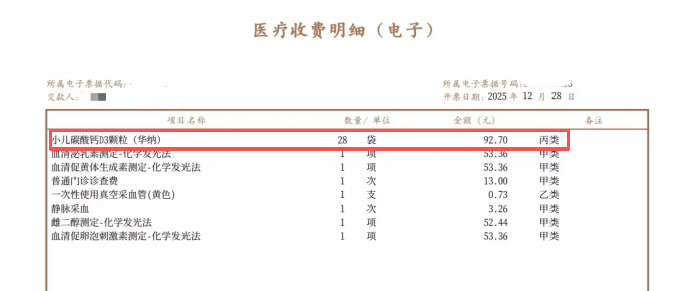
Core Viewpoint - The article highlights significant price discrepancies between hospital and retail prices for pediatric calcium D3 granules, raising concerns about the effectiveness of centralized procurement policies and the trust in public healthcare systems [1][2][3]. Price Discrepancies - A notable price difference of 80% was reported for pediatric calcium D3 granules, with hospital prices reaching 34.93 yuan compared to 19 yuan in pharmacies and e-commerce platforms [1]. - Similar instances of price variation exist, such as a consumer purchasing a vitamin D product for 47.4 yuan in a hospital, while the same product was priced at 63 yuan in a retail pharmacy and only 29.8 yuan online [2]. Centralized Procurement Issues - Pediatric calcium D3 granules were included in centralized procurement in 2022, with the winning bid price set at 3.795 yuan per bag, which was later reduced to 2.495 yuan per bag in 2025 [3]. - Despite the procurement price, the hospital price for the same product was found to be 3.31 yuan per bag, indicating a discrepancy between procurement prices and actual hospital pricing [3]. Factors Contributing to Price Differences - Experts suggest that the price differences stem from various factors, including the dynamic nature of market conditions, raw material costs, and the potential disconnect between procurement prices and actual supply costs [6]. - Public hospitals are expected to adhere to a zero-markup policy, but the actual supply prices may lead to higher hospital prices if they exceed the procurement prices [6]. Regulatory Responses - The National Medical Insurance Administration has initiated measures to address price discrepancies, including monitoring and adjusting prices to align with market conditions [15][16]. - Local governments have also implemented regulations to ensure that procurement prices remain comparable to retail prices, with specific thresholds for price adjustments [16]. Future Directions - Experts advocate for a transparent pricing mechanism that allows for real-time price comparisons across different sales channels, aiming to reduce reliance on administrative controls and enhance market competition [18].

华纳药厂:2025年前三季度,公司实现营业收入10.86亿元
Zheng Quan Ri Bao Wang· 2025-12-30 13:46
Core Viewpoint - Warner Pharmaceuticals reported a slight increase in revenue and a significant rise in net profit for the first three quarters of 2025, indicating overall growth despite a decline in adjusted net profit [1] Financial Performance - The company achieved an operating revenue of 1.086 billion yuan, representing a year-on-year growth of 1.55% [1] - The net profit attributable to shareholders reached 207 million yuan, showing a year-on-year increase of 30.75% [1] - The net profit attributable to shareholders after deducting non-recurring gains and losses was 99 million yuan, reflecting a year-on-year decline of 26.52% [1] - After excluding the impact of share-based payments, the adjusted net profit attributable to shareholders was 133 million yuan, with a slight year-on-year decrease of 1.48% [1] Product Revenue Breakdown - Revenue from formulation products amounted to 805 million yuan, marking a year-on-year growth of 0.55% [1] - Revenue from raw materials and intermediates reached 262 million yuan, with a year-on-year increase of 2.06% [1]
国家药监局持续深化化妆品监管;华纳药厂撤回一份药品注册申请
2 1 Shi Ji Jing Ji Bao Dao· 2025-12-30 00:40
Group 1: Regulatory Developments - The National Medical Products Administration (NMPA) held a meeting to summarize the regulatory achievements of 2025 and discuss key work for 2026, emphasizing the need for comprehensive regulatory reforms in the cosmetics industry [1] - The meeting highlighted that the Chinese cosmetics market is projected to reach a total transaction value of 1,073.82 billion yuan in 2024, indicating continuous market expansion [1] - Despite the growth, the industry faces structural issues, with over 20,000 registered cosmetics companies but low market concentration and a lack of globally influential brands [1] Group 2: Clinical Innovations and Approvals - The first non-injection epinephrine product, Neffy® (优敏速®), has been approved in China for emergency treatment of severe allergic reactions, marking a significant milestone in drug innovation [4] - HaiXiang Pharmaceutical announced the initiation of Phase II clinical trials for NWRD06, a novel nucleic acid drug aimed at preventing liver cancer recurrence, which is the first of its kind targeting the GPC3 marker [5] - Xinhua Medical received registration for two types of medical devices, enhancing its competitiveness in the in vitro diagnostics market [6] Group 3: Financing and Market Expansion - Beijing Ruifeng Biotechnology completed a C-round financing of over 100 million yuan, aimed at expanding its commercial capabilities and enhancing research and development in both human and animal health [8][9] - Humatrix Medical announced the completion of an A+ round financing of over 100 million yuan, which will be used to advance clinical trials for its core product and expand its product pipeline [10] Group 4: Healthcare Insurance and Spending - The National Healthcare Security Administration reported that from January to November 2025, the total income of the basic medical insurance fund reached 2.632 trillion yuan, with total expenditures of 2.110 trillion yuan, indicating stable fund operations [12]


华纳药厂:关于撤回药品注册申请的公告
Zheng Quan Ri Bao· 2025-12-29 13:58
Core Viewpoint - Warner Pharmaceuticals has received approval from the National Medical Products Administration to withdraw its registration application for the silicone emulsion product [2] Group 1 - Warner Pharmaceuticals announced the receipt of a termination notice for its drug registration application [2] - The company has decided to withdraw its application for the silicone emulsion product [2]
华纳药厂(688799) - 自愿披露关于撤回药品注册申请的公告
2025-12-29 09:30
湖南华纳大药厂股份有限公司 自愿披露关于撤回药品注册申请的公告 公司董事会及全体董事保证本公告内容不存在任何虚假记载、误导性陈述或 者重大遗漏,并对其内容的真实性、准确性和完整性依法承担法律责任。 证券代码:688799 证券简称:华纳药厂 公告编号:2025-101 公司于 2025 年 1 月向国家药品监督管理局递交该产品的上市许可申请并获 得受理。经审慎研究,结合研发策略,公司决定主动撤回本次药品注册申请。 该药品注册申请的主动撤回并终止不会对公司当期及未来生产经营与业绩 产生重大影响。敬请广大投资者注意投资风险。 特此公告。 湖南华纳大药厂股份有限公司董事会 2025 年 12 月 30 日 近日,湖南华纳大药厂股份有限公司(以下简称"公司")收到国家药品监 督管理局核准签发的《药品注册申请终止通知书》,同意公司撤回西甲硅油乳剂 的注册申请。现将相关情况公告如下: | 药品名称 | 注册分类 | 受理号 | 通知书编号 | 审批结论 | | --- | --- | --- | --- | --- | | 西甲硅油 | 化学药品 | | | 根据《药品注册管理办法》第八十九条以 及申请人的撤回申请《关于 ...
华纳药厂(688799.SH):撤回药品注册申请
Ge Long Hui A P P· 2025-12-29 09:16
Core Viewpoint - Warner Pharmaceuticals (688799.SH) has voluntarily withdrawn its drug registration application for Simethicone Emulsion, which is primarily used to alleviate discomfort caused by excessive gas in the gastrointestinal tract [1] Group 1: Company Actions - The company received a termination notice from the National Medical Products Administration (NMPA) regarding the drug registration application [1] - The decision to withdraw the application was made after careful consideration of the research and development strategy [1] Group 2: Product Information - Simethicone Emulsion is used for treating symptoms such as abdominal bloating and can also be utilized as an auxiliary medication for abdominal imaging examinations [1] - The product was initially submitted for market approval in January 2025 and had received acceptance from the NMPA [1]
华纳药厂:主动撤回西甲硅油乳剂药品注册申请
Xin Lang Cai Jing· 2025-12-29 09:07
Core Viewpoint - Warner Pharmaceuticals (688799.SH) has received approval from the National Medical Products Administration to withdraw its drug registration application for Silicones Emulsion, which is primarily used to treat discomfort symptoms caused by excessive gas in the gastrointestinal tract, such as bloating [1] Group 1 - The company submitted the marketing authorization application for the product in January 2025 and received acceptance [1] - The decision to voluntarily withdraw the drug registration application will not have a significant impact on the company's current and future production operations and performance [1]