
Tianneng Battery (688819)

Search documents
趋势研判!2025年中国启动型铅酸蓄电池行业全景分析:铅酸电池在汽车起动领域依旧无可替代,未来将迎来汽车铅酸电池黄金发展时代[图]
Chan Ye Xin Xi Wang· 2025-07-24 01:32
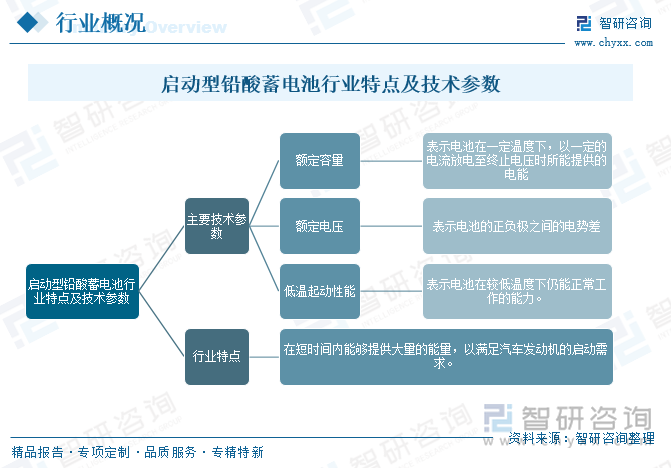
Core Viewpoint - The market for starting lead-acid batteries in China is experiencing a decline due to various factors including technological substitution, policy restrictions, changes in consumer demand, and fluctuations in raw material prices, particularly as lithium batteries gain prominence in the automotive sector [1][4][6]. Industry Characteristics and Technical Parameters - Starting lead-acid batteries are designed for internal combustion engine vehicles, providing high discharge rates to start engines. Key technical parameters include rated capacity, rated voltage, and low-temperature starting performance [2]. Current Development Status of the Industry - Prior to 2019, the market for lead-acid batteries grew due to the rapid development of the automotive industry and communication infrastructure. However, the market has seen a decline recently, with the market size expected to be 905.4 billion yuan in 2024 and 851.27 billion yuan in 2025 [4][6]. Market Size and Forecast - The starting lead-acid battery market in China is projected to reach 224.81 billion yuan in 2024, with automotive starting batteries accounting for 176.55 billion yuan and motorcycle starting batteries for 16.93 billion yuan. By 2025, the market is expected to decline to 211.63 billion yuan [6][10]. Industry Chain - The upstream of the starting lead-acid battery industry includes raw materials such as lead, sulfuric acid, and plastic. The midstream involves production processes like plate production and battery assembly, while the downstream primarily serves the automotive sector [8]. Competitive Landscape - China is a leading producer and consumer of lead-acid batteries, with major companies including Tianneng Group, Fengfan Co., Camel Group, and Tianjin Jieshi Battery Co. These companies have significant advantages in technology, market expansion, and brand development [15][18]. Key Enterprises - Tianneng Group focuses on various battery types, achieving a revenue of 41.835 billion yuan in 2024 with a gross margin of 16.15% [18]. Fengfan Co. has a market share of over 25% in automotive starting batteries and 30% in traction batteries [20]. China Power has a revenue of 8.051 billion yuan with a gross margin of 11.75% [21]. Industry Development Trends - The starting lead-acid battery market is expected to grow as automotive technology advances, with increasing demand for energy-efficient vehicles. The market is anticipated to enter a golden development era, driven by the need for intelligent and personalized battery solutions [23].


天能股份:探路绿色能源企业高质量发展
Shang Hai Zheng Quan Bao· 2025-07-15 18:26
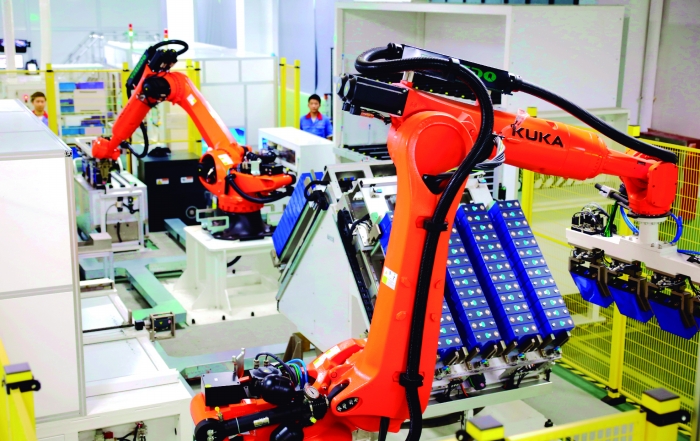
Core Viewpoint - TianNeng Co., Ltd. has successfully transitioned from traditional battery manufacturing to a leading enterprise in the new energy sector, focusing on high-quality development through innovation and value creation [5] Group 1: Lithium Battery Production - The lithium battery production line at TianNeng is highly automated, utilizing a sophisticated transportation system and temperature detection technology to ensure quality control [6] - The company has developed 100Ah/150Ah home storage and communication series products, becoming a qualified supplier for companies like ZTE [6] - TianNeng is targeting niche markets such as industrial power, low-speed power, and communication backup energy, rather than competing directly in the passenger vehicle sector [6] Group 2: Lead-Acid Battery Business - TianNeng has established a strong foundation in the lead-acid battery sector, with 11 specialized production bases across six provinces in China [7] - The company is expanding its applications in various fields, including automotive start-stop systems and communication backup power, while also developing lithium-ion, hydrogen fuel, sodium-ion, and solid-state batteries [7] - The upcoming national standard for electric bicycles is expected to boost demand for lead-acid batteries, as it raises the weight limit for electric bicycles using these batteries [8] Group 3: Investor Returns - Since its A-share listing in 2021, TianNeng has distributed a total cash dividend of 2.779 billion yuan, with 1.6 billion yuan in dividends over the past three years, representing 83.39% of the average net profit during that period [9] - The company is exploring diverse methods for returning value to investors, including a stock repurchase plan completed in March 2025, totaling 55 million yuan [9] - TianNeng is committed to maintaining a stable cash dividend strategy while optimizing shareholder return plans based on operational performance and financial conditions [9] Group 4: New Business Developments - TianNeng has made significant advancements in sodium-ion batteries, developing high-performance products with energy densities of 160Wh/kg and 95Wh/kg for electric vehicles and energy storage [10] - The company has also designed two prototype solid-state batteries with energy densities of 300Wh/kg and 400Wh/kg, targeting applications in drones and robotics [10] - Investors have gained a clearer understanding of TianNeng's strategic layout, technological capabilities, and innovation strengths in the new energy power battery sector through site visits [10]
上证智选科创板价值50策略指数报1330.16点,前十大权重包含天能股份等
Jin Rong Jie· 2025-06-19 09:05
Group 1 - The Shanghai Stock Exchange's Selected Sci-Tech Board Value 50 Strategy Index (Value 50) opened at 1330.16 points and has seen a decline of 0.85% over the past month, 8.54% over the past three months, and 0.75% year-to-date [1] - The Value 50 Index selects 50 listed companies from the Sci-Tech Board that exhibit lower operational risks and valuation levels, reflecting the overall performance of companies with certain value characteristics [1] - The top ten holdings of the Value 50 Index include: SMIC (6.1%), Haiguang Information (4.04%), Cambrian (3.55%), Transsion Holdings (2.92%), China Railway Construction Heavy Industry (2.74%), Lattice Semiconductor (2.67%), Times Electric (2.58%), Sundar Membrane (2.51%), Tianneng Battery (2.49%), and Ninebot (2.42%) [1] Group 2 - The industry composition of the Value 50 Index holdings is as follows: Information Technology (41.45%), Industrials (35.18%), Healthcare (12.17%), Consumer Discretionary (6.10%), Communication Services (2.03%), Consumer Staples (1.90%), and Materials (1.17%) [2] - The index samples are adjusted quarterly, with adjustments occurring in the second Friday of March, June, September, and December [2] - In special circumstances, the index may undergo temporary adjustments, such as when a sample company is delisted or undergoes mergers, acquisitions, or spin-offs [2]



天能股份(688819) - 天能电池集团股份有限公司2024年年度权益分派实施公告
2025-06-05 10:30
本公司董事会及全体董事保证公告内容不存在任何虚假记载、误导性陈述或 者重大遗漏,并对其内容的真实性、准确性和完整性依法承担法律责任。 证券代码:688819 证券简称:天能股份 公告编号:2025-033 天能电池集团股份有限公司2024年年度权益 分派实施公告 重要内容提示: | 股权登记日 | 除权(息)日 | 现金红利发放日 | | --- | --- | --- | | 2025/6/12 | 2025/6/13 | 2025/6/13 | 一、 通过分配方案的股东大会届次和日期 本次利润分配方案经天能电池集团股份有限公司(以下简称 "公司")2025 年 4 月 29 日的2024年年度股东大会审议通过。 二、 分配方案 截至股权登记日下午上海证券交易所收市后,在中国证券登记结算有限责任 公司上海分公司(以下简称"中国结算上海分公司")登记在册的本公司全体股东。 是否涉及差异化分红送转:是 每股分配比例 每股现金红利0.41元 相关日期 1. 发放年度:2024年年度 2. 分派对象: 3. 差异化分红送转方案: 一、差异化分红方案 2025 年 4 月 29 日,公司召开 2024 年年度股东大会 ...
天能股份(688819) - 北京市中伦律师事务所关于天能电池集团股份有限公司差异化分红的法律意见书
2025-06-05 10:17
关于天能电池集团股份有限公司 差异化分红的 北京市中伦律师事务所 法律意见书 二〇二五年五月 北京 • 上海 • 深圳 • 广州 • 武汉 • 成都 • 重庆 • 青岛 • 杭州 • 南京 • 海口 • 东京 • 香港 • 伦敦 • 纽约 • 洛杉矶 • 旧金山 • 阿拉木图 Beijing • Shanghai • Shenzhen • Guangzhou • Wuhan • Chengdu • Chongqing • Qingdao • Hangzhou • Nanjing • Haikou • Tokyo • Hong Kong • London • New York • Los Angeles • San Francisco • Almaty 法律意见书 北京市中伦律师事务所 关于天能电池集团股份有限公司 差异化分红的法律意见书 致:天能电池集团股份有限公司 北京市中伦律师事务所(以下简称"本所")接受天能电池集团股份有限公 司(以下简称"公司"或"天能股份")的委托,就公司 2024 年年度利润分配所 涉及的差异化分红(以下简称"本次差异化分红")相关事宜出具本法律意见书。 为出具本法律意见书,本所 ...
2025年中国铅酸蓄电池行业龙头企业分析:坚持技术引领,行业龙头地位进一步巩固【组图】
Qian Zhan Wang· 2025-06-03 08:09
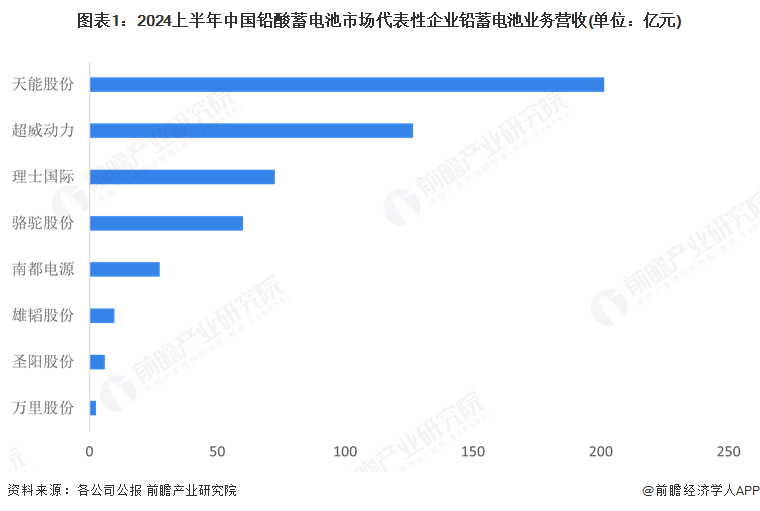
Group 1 - TianNeng Co., Ltd. leads the industry in sales revenue from lead-acid battery business, achieving 20.137 billion yuan in revenue in the first half of 2024, significantly higher than competitors like Chaowei Power, which reported 12.658 billion yuan [1][4] - The company has established ten production bases across five provinces in China and operates over 60 subsidiaries, positioning itself as a leader in the domestic new energy power battery sector [1] - TianNeng's revenue from lead-acid batteries accounted for 93.32% of total revenue in 2024, with a total of 41.835 billion yuan from this segment [7][9] Group 2 - TianNeng has faced operational pressures recently, with total revenue declining to 45.042 billion yuan in 2024, a decrease of 5.67% year-on-year, and net profit dropping to 1.555 billion yuan, down 32.54% [4] - The company has a limited presence in overseas markets, generating only 0.296 billion yuan from international sales, which is just 0.66% of total revenue [9] - Despite challenges, TianNeng is enhancing its lead-acid battery technology and manufacturing scale, with a production output of 12,227.67 million KVAh in 2024, reflecting a year-on-year decrease of 6.05% due to market demand suppression and raw material price fluctuations [12]
【干货】2025年铅酸蓄电池产业链全景梳理及区域热力地图
Qian Zhan Wang· 2025-05-28 06:15
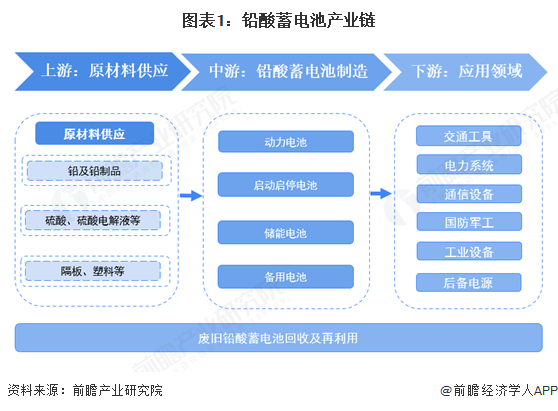
Industry Overview - The lead-acid battery industry chain consists of upstream raw material suppliers, midstream battery manufacturers, and downstream application sectors, with the midstream being the core preparation stage that relies heavily on upstream materials like lead [1][2] - Lead and lead products account for over 70% of the production costs of lead-acid batteries, with other materials including plastics and sulfuric acid [1] Key Players - Major upstream participants include companies like Yuguang Gold Lead, Zhuzhou Smelter Group, and Yunnan Chihong Zinc & Germanium, while midstream manufacturers include Tianneng Group, Chaowei Power, and Camel Group [2] - Environmental companies such as Greeenmei are involved in the recycling and reuse of used lead-acid batteries [2] Regional Distribution - As of April 8, 2025, there are 1,576 companies in China related to the lead-acid battery industry, with a concentration in Guangdong, Jiangsu, Shandong, Anhui, and Zhejiang provinces [5] - The industry has seen a reduction in the number of companies due to a stable structure and market supply-demand balance [5] Listed Companies - There are eight publicly listed companies in the lead-acid battery sector in China, with the highest concentration in Zhejiang province, which has three companies, including Tianneng and Chaowei [6]


2025年中国铅酸蓄电池价值链分析:原材料铅是酸蓄电池最大的生产成本
Qian Zhan Wang· 2025-05-24 05:09
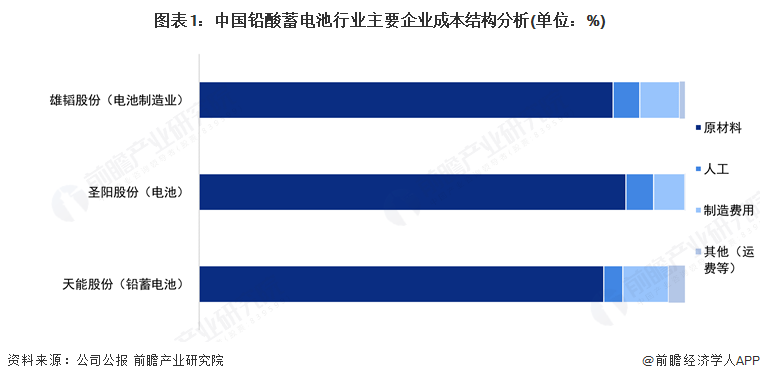
Group 1 - The core point of the article highlights that the cost structure of lead-acid battery production is heavily influenced by raw material costs, particularly lead, which constitutes a significant portion of the overall expenses [1][2][4] - In the lead-acid battery industry, the cost of raw materials accounts for over 80% of the total production costs for leading companies like Yongtao and Tianneng, while manufacturing and labor costs remain relatively low [1][2] - The price of lead-acid batteries is determined by a combination of supply-side factors, manufacturing costs, and consumer demand elasticity, with lead prices being particularly volatile and influential on market pricing [5][8] Group 2 - The lead-acid battery industry value chain exhibits a "low in the middle, high on both ends" trend, indicating that procurement and traditional manufacturing processes hold lower value compared to R&D and digital transformation efforts [10] - The production of lead-acid batteries relies on various raw materials, with lead accounting for approximately 70% of the raw material costs, followed by plastic at around 10% [4] - The competitive landscape of the lead-acid battery market is relatively concentrated, with leading firms like Tianneng and Chaowei holding significant market shares and pricing power, while smaller companies face greater price competition and sensitivity to raw material cost fluctuations [8]
氢能深度系列(二):政策助推应用落地,氢能两轮车有望迎放量元年
KAIYUAN SECURITIES· 2025-05-12 10:23
Investment Rating - The industry investment rating is "Positive" [7] Core Viewpoints - The hydrogen two-wheeler market is expected to see significant growth driven by policy support, with a projected domestic deployment of nearly 7,000 units in 2024, representing a year-on-year increase of over 230% [4][6] - Hydrogen two-wheelers offer advantages in energy density, range, environmental adaptability, and safety compared to lithium-ion and lead-acid models, making them suitable for B-end applications such as shared mobility and scenic transport [4][24] - The market for hydrogen two-wheelers is projected to grow from 0.9 billion yuan in 2024 to 35 billion yuan by 2030, with a compound annual growth rate (CAGR) of 84% from 2024 to 2030 [5][6] Summary by Sections 1. Policy and Market Dynamics - National top-level design and local demonstrations are accelerating the deployment of hydrogen two-wheelers, with the Ministry of Industry and Information Technology (MIIT) setting clear tasks for the industry [14][15] - Local governments are issuing supportive policies, with projections for the deployment of 20,000, 30,000, and 40,000 hydrogen two-wheelers by 2026, 2028, and 2030 respectively [19][18] 2. Safety and Economic Viability - Hydrogen two-wheelers are expected to be the first to achieve large-scale deployment in B-end applications due to their superior safety features and gradually improving economic viability [20][24] - The cost per kilometer for hydrogen two-wheelers is projected to decrease to 0.1805 yuan, although it currently remains higher than lithium-ion and lead-acid models by 35% and 13% respectively [4][6] 3. Market Potential and Growth - The shared electric vehicle market has a penetration potential of approximately 7 million units, with hydrogen two-wheelers expected to reach a penetration rate of 10% by 2030 [5][6] - The deployment of hydrogen two-wheelers is anticipated to accelerate in 2025, marking a significant year for market entry [18][19] 4. Beneficiary Companies - Key beneficiaries in the hydrogen two-wheeler market include: - Yong'an Xing (603776.SH): Leading in hydrogen two-wheeler deployment [6] - Hupu Co., Ltd. (300471.SZ): Holding a 35% stake in hydrogen technology with solid-state hydrogen storage technology [6] - Tianneng Co., Ltd. (688819.SH): Focusing on fuel cell development and partnerships in hydrogen electric bikes [6] - Shenkai Co., Ltd. (002278.SZ): Involved in hydrogen supply systems with potential for expansion in the two-wheeler sector [6] - Jiangsu Shentong (002438.SZ): Specializing in high-pressure hydrogen valve production with mass production capabilities [6]


电力设备行业深度报告:氢能深度系列(二):政策助推应用落地,氢能两轮车有望迎放量元年
KAIYUAN SECURITIES· 2025-05-12 10:06
Investment Rating - The industry investment rating is "Positive" [7] Core Viewpoints - The hydrogen two-wheeler market is expected to see significant growth driven by policy support, with a projected domestic deployment of nearly 7,000 units in 2024, representing a year-on-year increase of over 230% [4][6] - Hydrogen two-wheelers offer advantages in energy density, range, environmental adaptability, and safety compared to lithium-ion and lead-acid models, making them suitable for B2B applications such as shared mobility and scenic transport [4][24] - The market for hydrogen two-wheelers is projected to grow from 0.9 billion yuan in 2024 to 35 billion yuan by 2030, with a compound annual growth rate (CAGR) of 84% from 2024 to 2030 [5][6] Summary by Sections 1. Policy and Market Dynamics - National top-level design and local demonstrations are accelerating the deployment of hydrogen two-wheelers, with the Ministry of Industry and Information Technology (MIIT) setting clear targets for the industry [14][15] - Local governments are issuing supportive policies, with projections for the deployment of 20,000, 30,000, and 40,000 hydrogen two-wheelers by 2026, 2028, and 2030 respectively [19][18] 2. Safety and Economic Viability - Hydrogen two-wheelers are expected to be the first to achieve large-scale deployment in B2B scenarios due to their superior safety features and gradually improving economic viability [20][24] - The cost per kilometer for hydrogen two-wheelers is projected to decrease to 0.1805 yuan, although they currently remain 35% and 13% more expensive than lithium-ion and lead-acid models respectively [4][6] 3. Market Potential and Growth - The shared electric vehicle market has a penetration potential of approximately 7 million units, with hydrogen two-wheelers expected to capture a market share of 10% by 2030 [5][6] - The deployment of hydrogen two-wheelers is anticipated to accelerate in 2025, supported by various local policies and market demand [18][19] 4. Beneficiary Companies - Key beneficiaries in the hydrogen two-wheeler market include: - Yong'an Xing (603776.SH): Leading in hydrogen two-wheeler deployment [6] - Hupu Co., Ltd. (300471.SZ): Holding a 35% stake in hydrogen technology with competitive solid-state hydrogen storage technology [6] - Tianneng Co., Ltd. (688819.SH): Focusing on fuel cell development and partnerships in hydrogen electric bikes [6] - Shenkai Co., Ltd. (002278.SZ): Involved in hydrogen supply systems with growth potential in the two-wheeler sector [6] - Jiangsu Shentong (002438.SZ): Specializing in high-pressure hydrogen valve production with mass production capabilities [6]