VANKE(000002)

Search documents
2025年报业绩预告开箱(六):百亿巨亏连环爆,AI与创新药继续领跑
市值风云· 2026-02-02 11:59
Performance Highlights - New Yi Sheng (300502.SZ) expects net profit between 9.4 billion and 9.9 billion CNY, a year-on-year increase of 231.24% to 248.86% due to rising demand for high-speed optical modules driven by global computing power investments[4] - Han's Chip (688256.SH) anticipates net profit between 1.85 billion and 2.15 billion CNY, turning from a loss of 450 million CNY last year, benefiting from the growing demand for AI computing power[5] - Zhongji Xuchuang (300308.SZ) projects net profit between 9.8 billion and 11.8 billion CNY, a year-on-year growth of 89.50% to 128.17%, driven by strong customer investment in computing infrastructure[6] - Runze Technology (300442.SZ) expects net profit between 5 billion and 5.3 billion CNY, a year-on-year increase of 179.28% to 196.03%, largely due to non-recurring gains from public REITs issuance[10] Underperformance Highlights - Great Wall Motors (601633.SH) forecasts net profit of 9.912 billion CNY, a year-on-year decline of 21.71% due to increased marketing expenses and competitive pressures[36] - GAC Group (601238.SH) expects a net loss between 8 billion and 9 billion CNY, turning from a profit of 824 million CNY last year, impacted by fierce competition and increased asset impairment provisions[39] - Xiexin Integrated (002506.SZ) anticipates a net loss between 890 million and 1.29 billion CNY, shifting from a profit of 68 million CNY last year due to structural supply-demand issues in the photovoltaic industry[41] - Baile Tianheng (688506.SH) projects a net loss of around 1.1 billion CNY, down from a profit of 3.708 billion CNY last year, primarily due to increased R&D expenses[42] Industry Trends - Technology-driven sectors like AI and innovative pharmaceuticals are leading growth, with companies like New Yi Sheng and Han's Chip benefiting from strong demand and technological advancements[69] - Cost control is becoming a critical competitive advantage, particularly in the energy and manufacturing sectors, as seen with companies like Datang Power (601991.SH) benefiting from lower coal prices[70] - Traditional cyclical industries such as real estate and agriculture are facing significant downward pressure, with companies like Vanke (000002.SZ) and Tianbang Foods (002124.SZ) experiencing substantial losses due to market adjustments[72]





2025年报业绩预告开箱(六):百亿巨亏连环爆,AI与创新药继续领跑
市值风云· 2026-02-02 10:24
Core Viewpoint - The article highlights the performance forecast of various A-share listed companies, indicating a significant divergence in earnings growth across different sectors, driven by technological advancements, cost control, and industry cycles [4][62]. Group 1: Companies with Strong Earnings Growth - **New Yisheng (300502.SZ)**: Expected net profit of 9.4 billion to 9.9 billion, a year-on-year increase of 231.24% to 248.86%, driven by rising demand for high-speed optical modules due to global computing power investments [6]. - **Han's Laser (688256.SH)**: Expected net profit of 1.85 billion to 2.15 billion, turning from a loss of 0.452 billion in the previous year, benefiting from the increasing demand for AI computing power [8]. - **Zhongji Xuchuang (300308.SZ)**: Expected net profit of 9.8 billion to 11.8 billion, a year-on-year increase of 89.50% to 128.17%, supported by strong investment in computing infrastructure [10]. - **Runze Technology (300442.SZ)**: Expected net profit of 5 billion to 5.3 billion, a year-on-year increase of 179.28% to 196.03%, primarily due to non-recurring gains from public REITs issuance [12]. - **CITIC Securities (601995.SH)**: Expected net profit of 8.542 billion to 10.535 billion, a year-on-year increase of 50% to 85%, driven by steady growth in core business segments [15]. Group 2: Companies with Earnings Below Expectations - **Great Wall Motors (601633.SH)**: Expected net profit of 9.912 billion, a year-on-year decrease of 21.71%, impacted by increased marketing expenses and intense competition [34]. - **GAC Group (601238.SH)**: Expected net profit of -8 billion to -9 billion, turning from a profit of 0.824 billion in the previous year, due to fierce competition and adjustments in product structure [36]. - **GCL-Poly Energy (002506.SZ)**: Expected net profit of -0.89 billion to -1.29 billion, turning from a profit of 0.068 billion, affected by structural supply-demand issues in the photovoltaic industry [38]. - **Boli Tianheng (688506.SH)**: Expected net profit of -1.1 billion, turning from a profit of 3.708 billion, due to increased R&D expenses [39]. - **Daiyue City (000031.SZ)**: Expected net profit of -2.7 billion to -2.1 billion, continuing losses from the previous year, influenced by asset impairment provisions [42]. Group 3: Industry Trends - **Technological Breakthroughs**: Industries driven by technology, such as AI and innovative pharmaceuticals, are showing strong growth, with companies like New Yisheng and Rongchang Bio leading the way [62][63]. - **Cost Control**: The energy and manufacturing sectors are experiencing a clear divide, with companies like Datang Power benefiting from lower coal prices and effective cost management [64]. - **Downward Pressure from Industry Cycles**: The real estate, agriculture, and photovoltaic sectors are under significant pressure, with companies like Vanke and Tianbang Food facing substantial earnings declines [65][66].



Asian Shares Follow Wall Street Lower As Risk Aversion Mounts
RTTNews· 2026-02-02 08:46
Market Overview - Asian stocks declined, following Wall Street's downward trend, due to ongoing trade tensions, uncertainty over U.S. monetary policy, and heavy selling in precious metals [1] - Precious metals, including gold and silver, saw significant declines, with gold dropping over 5% and silver nearly 8% [2] - Oil prices fell nearly 5% amid reports of U.S. and Iran readiness to negotiate an agreement to ease tensions [2] Chinese Market - Chinese and Hong Kong markets experienced sharp declines, with China Vanke warning of an 11.8 billion net loss for 2025 and BYD reporting a 30.1% year-on-year drop in vehicle sales for January [3] - The Shanghai Composite index fell 2.48% to 4,015.75, while the Hang Seng index dropped 2.23% to 26,775.57 [3] - Both China Vanke and BYD shares fell more than 4% in Shanghai [3] Economic Data - China's official manufacturing purchasing managers' index (PMI) was reported at 49.3, below forecasts, indicating contraction, while the non-manufacturing PMI also fell into contraction [4] - A private gauge indicated that Chinese manufacturing activity continued to expand in January [4] Japanese Market - The Nikkei average decreased by 1.25% to 52,655.18, reversing early gains, while the broader Topix index settled 0.85% lower at 3,536.13 [5] - Major companies like SoftBank Group, Advantest, Disco Corp, and Lasertec saw declines ranging from 3.8% to 14% [5] - Investors overlooked a private-sector survey indicating Japan's manufacturing activity grew at the fastest pace in about three and a half years [6] South Korean Market - The Kospi average plunged 5.26% to 4,949.67, ending a four-session winning streak, with major companies like Hyundai Motor and Samsung Electronics falling between 4% and 9% [7] - The Korea Exchange issued a sell-side circuit breaker for 5 minutes during the trading session [7] Australian and New Zealand Markets - Australian markets closed lower, with the S&P/ASX 200 falling 1.02% to 8,778.60, driven down by financials and materials amid rate hike concerns [7] - New Zealand's S&P/NZX-50 index finished marginally lower at 13,412.44 [8] U.S. Market Influence - U.S. stocks ended lower, with the dollar index climbing and Treasury yields surging after President Trump nominated Kevin Warsh for Fed Chair, leading to a hawkish shift in U.S. monetary policy [8][9] - Warsh is perceived as skeptical of loose monetary policy and has previously criticized the Fed for underestimating inflation risks [9]



A股上市房企去年预亏超两千亿
第一财经· 2026-02-02 08:23
2026.02. 02 本文字数:1871,阅读时长大约3分钟 作者 | 第一财经 孙梦凡 封图 | AI生成 Wind数据显示,截至目前已有65家A股上市房企发布业绩预告,其中去年预计实现盈利的房企仅16家,其余49家均出现不同程度的亏损,亏损房企数量 占比超七成。从"预亏"规模看,去年预计亏损超百亿的有5家,亏损规模较高的超八百亿。 在A股上市房企中,万科A目前亏损规模居首。该公司预计,2025年归属于上市公司股东的净利润亏损约820亿元,较上年同期亏损494.78亿元大幅扩 大;扣除非经常性损益后的净利润亏损约800亿元,上年同期亏损453.94亿元。 除了房开结算规模下降、毛利率处于低位、资产计提减值等行业普遍因素,万科去年业绩预亏的原因还有:部分经营性业务扣除折旧摊销后整体亏损, 部分非主业财务投资出现亏损;部分大宗资产交易和股权交易价格低于账面值。 华夏幸福、绿地控股、华侨城A、金地集团四家房企,去年"预亏"规模都超过百元,期内预计归母净利润数值分别为-240亿元~-160亿元、-190亿元 ~-160亿元、-155亿元~-130亿元、-135亿元~-111亿元,部分房企已经实质性"资不抵债"。 ...

A股上市房企去年预亏超两千亿
Di Yi Cai Jing· 2026-02-02 07:48
Core Insights - The overall performance forecast for real estate companies in 2025 indicates significant losses, with 49 out of 65 A-share listed companies expected to report losses, accounting for over 70% of the total [1][4] - Vanke A leads in projected losses, estimating a net profit loss of approximately 82 billion yuan, a substantial increase from the previous year's loss of about 49.48 billion yuan [1] - Other companies such as China Fortune Land Development, Greenland Holdings, and China Overseas Land & Investment also anticipate significant losses, with projections exceeding 10 billion yuan [2] Company Performance - Vanke A's projected net profit loss for 2025 is around 82 billion yuan, with a non-recurring loss of about 80 billion yuan, compared to previous losses of 49.48 billion yuan and 45.39 billion yuan respectively [1] - China Fortune Land Development expects a net profit loss between 24 billion and 16 billion yuan, while Greenland Holdings anticipates a loss between 19 billion and 16 billion yuan [2] - Poly Developments managed to maintain a slight profit, with a net profit of approximately 1.03 billion yuan, although this represents a 79.49% decrease year-on-year [3] Industry Overview - The total projected loss for the 49 companies is estimated to be between 202.6 billion and 235.2 billion yuan, indicating a severe downturn in the real estate sector [4] - The overall net profit for the 65 companies, including those expected to be profitable, is projected to be between -164 billion and -202.2 billion yuan, suggesting that the real estate sector may face losses exceeding 200 billion yuan [4] - The real estate market is still in a "de-inventory" phase, with pressures on sales and prices, although there are signs of stabilization in key cities [5]
房地产开发与服务26年第5周:坚定看好地产行情,商业不动产REITs首批挂牌
GF SECURITIES· 2026-02-02 06:53
Core Insights - The report maintains a bullish outlook on the real estate market, highlighting the significant debut of commercial real estate REITs, with the first batch of applications exceeding 32.1 billion RMB, accounting for 14% of the existing C-REITs market [5] - The cancellation of the "three red lines" policy marks a pivotal shift, indicating a return to orderly market development and improved financing channels for real estate companies [16][20] - The report notes a strong year-on-year increase in transaction volumes for both new and second-hand homes, with new home transactions in 50 cities up 3.3% week-on-week and 37.2% year-on-year [5][9] Group 1: Central Policies - The cancellation of the "three red lines" policy allows for a more market-oriented development of the real estate sector, which had previously constrained financing for weaker firms [16] - The central government is actively managing expectations and stabilizing the policy environment to facilitate a turning point in the real estate cycle [16] Group 2: Transaction Performance - New home transactions saw a week-on-week increase of 3.3% and a year-on-year increase of 37.2%, reflecting a recovery from last year's low base due to the Spring Festival [5][9] - Second-hand home transactions also showed significant growth, with a year-on-year increase of 154.9%, driven by a favorable comparison to last year's figures [9] Group 3: Market Dynamics - The report indicates that the new home supply has improved, with a week-on-week increase of 34.5%, which is unusual before the Spring Festival, suggesting increased developer confidence [5] - The second-hand market remains robust, with a year-on-year increase in visits and transactions, indicating sustained demand [5] Group 4: Land Market Performance - The land market showed weaker performance, with total land sales in 300 cities amounting to 12.7 billion RMB, down 20% week-on-week and 69% year-on-year [5] - The report highlights a supply of 7.93 million square meters, with a land absorption rate of 51%, indicating a dual weakness in supply and demand [5] Group 5: Company Performance and Recommendations - The report suggests that companies with strong investment fundamentals and low valuations, such as China Jinmao and China Overseas, are leading the sector [5] - The property management sector also performed well, with a 2.6% increase, outperforming the Hang Seng Index [5] Group 6: C-REITs Overview - The C-REITs composite return index rose by 0.36%, with 41 out of 78 REITs showing gains, particularly in the renewable energy and highway sectors [5]



债市早报:1月制造业PMI为49.3%;资金面整体均衡平稳,债市偏强震荡
Jin Rong Jie· 2026-02-02 03:58
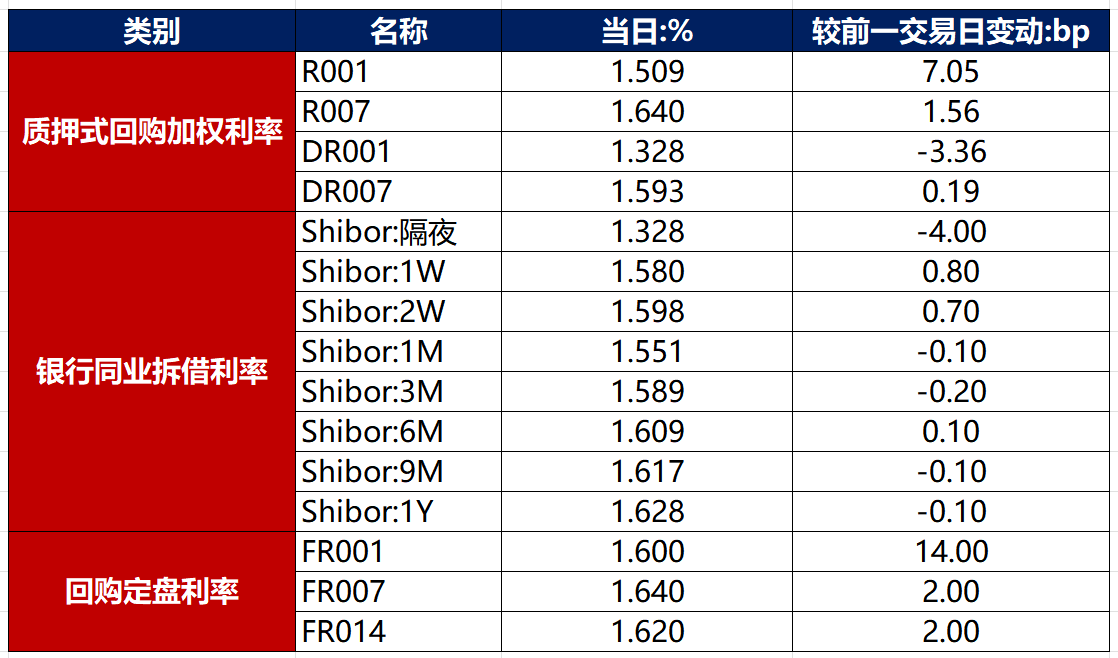
Group 1: Domestic News - President Xi Jinping's article emphasizes the need to build a modern financial system with a focus on a scientific and stable financial regulation system, a reasonable financial market structure, and effective financial supervision [2] - In 2025, the national public budget revenue is projected to be 21.6045 trillion yuan, a decrease of 1.7% compared to 2024, with tax revenue increasing by 0.8% to 17.6363 trillion yuan [2] Group 2: Economic Indicators - The manufacturing PMI for January is reported at 49.3, indicating a decline in economic activity, while the factory price index has risen above the critical point for the first time in nearly 20 months [3] - The non-manufacturing business activity index and the comprehensive PMI output index are at 49.4 and 49.8, respectively, both showing a decrease from the previous month [3] Group 3: Capital Market Developments - The China Securities Regulatory Commission (CSRC) is focused on consolidating the capital market's positive momentum and enhancing the adaptability of regulatory systems [4] - The CSRC plans to deepen reforms in the capital market, improve the convenience and attractiveness of refinancing systems, and support the development of a modern industrial system [4] Group 4: International News - The U.S. Senate passed a $1.2 trillion government spending bill, but a partial government shutdown is expected due to the House of Representatives not being in session until February 2 [5] - President Trump nominated Kevin Warsh as the next Federal Reserve Chairman, who has previously criticized quantitative easing and emphasized the need for closer collaboration between the Fed and the Treasury [6] Group 5: Commodity Market - International crude oil prices have declined, with WTI crude down 0.32% to $65.21 per barrel, while natural gas prices increased by 13.9% to $4.416 per million British thermal units [7] Group 6: Financial Market Operations - On January 30, the central bank conducted a reverse repurchase operation of 477.5 billion yuan at a fixed rate of 1.40%, resulting in a net cash injection of 352.5 billion yuan for the day [8] - The overall funding environment remains stable, with the DR001 rate decreasing by 3.36 basis points to 1.328% [9] Group 7: Bond Market Dynamics - The bond market showed a strong upward trend, with the 10-year government bond yield decreasing by 0.50 basis points to 1.8100% [12] - The credit bond market experienced significant price deviations, with certain bonds like "21 Vanke 04" dropping by 17.52% [13] Group 8: Convertible Bonds - The convertible bond market saw major indices decline, with the China convertible bond index down by 1.73% on January 30 [15] - The trading volume in the convertible bond market reached 93.272 billion yuan, an increase of 2.399 billion yuan from the previous trading day [15]
中国地产:1 月房企销售额跌幅仍较大;预计一季度将进一步下滑-China Property-Developers‘ Sales Decline Remained Deep in January; We Expect Further Drop in 1Q
2026-02-02 02:42
Summary of Conference Call on China Property Market Industry Overview - The conference call focused on the **China Property** market, specifically the performance of major property developers in January 2026 and expectations for the first quarter of 2026 [1][2]. Key Points Sales Performance - Contracted sales for the 25 major developers tracked fell **32% year-on-year (y-y)** in January 2026, despite a low base due to the Chinese New Year (CNY) calendar effect [1][2]. - The top 50 and top 100 developers experienced declines of **26% and 29% y-y**, respectively, in January, compared to **-22% and -29%** in December [2]. Divergence in Developer Performance - State-Owned Enterprises (SOEs) outperformed other developers with milder declines. Notable performers included: - **China Overseas Land & Investment (COLI)**: +20% y-y - **Jinmao**: +14% y-y - **CR Land**: +0.4% y-y - Conversely, developers like **Sunac**, **Shimao**, **CIFI**, **Midea RE**, and **GZ R&F** reported declines exceeding **50% y-y** [3]. Market Outlook - The physical property market is expected to continue its downtrend in 2026-27, with projected declines of **8% and 6% y-y** in secondary home prices [4]. - A meaningful nationwide housing policy is anticipated to remain muted in the coming months, contributing to fragile buyer sentiment and increased inventory [4]. Investment Sentiment - Recent sentiment-driven outperformance in the China property industry is viewed as unsustainable, with expectations of a sector pullback as results season approaches [5]. - The focus remains on quality names with credible self-help stories, such as: - **CR Land (1109.HK)** - **Seazen (601155.SS)** - **C&D International (1908.HK)**, which is seen as a consolidator in the residential market with optimized landbanks [6]. Additional Insights - The analysis indicates that home prices in tier 1 and select tier 2 cities could stabilize in the second half of 2027 if the macro environment remains resilient [4]. - The overall sentiment in the market is cautious, with expectations of continued challenges for developers, particularly those with weaker brand recognition and fewer saleable resources [5][6].


中国地产:政策预期的 “踏空焦虑”—— 销售与政策的双向辩论-China_Property_Fear_of_Missing_Out_A_Two-Way_Debate_on_Policy_Expectation__Sales
2026-02-02 02:22
Summary of China Property Sector Conference Call Industry Overview - **Industry**: China Property Sector - **Key Focus**: Market expectations, policy changes, sales performance, and investment opportunities Core Insights 1. **Investor Positioning**: Many investors in Hong Kong, Singapore, and overseas have been underweight in the China property sector, while sectors like metals, mining, tech, and healthcare are well-owned. There is a shift towards increasing exposure in the property sector due to fear of missing out on potential recovery [1][2] 2. **Sales and Investment Trends**: Secondary sales improved in January, with a month-on-month increase compared to December. However, new home sales remain weak, with a year-on-year decline of approximately 30% expected to persist into Q1 2026 due to last year's high base [2][4] 3. **Policy Easing Expectations**: Positive market sentiment in January was driven by expectations of policy easing, including VAT cuts and adjustments to down payment requirements for commercial properties. The easing of the "three red lines" policy indicates that deleveraging targets may have been met [2][15] 4. **Opportunistic Window**: There is a belief that an opportunistic window may exist from January to March before the National People's Congress meeting and FY25 earnings reports, suggesting potential for strategic investments during this period [2] 5. **Stock Picks**: Recommended stocks include China Overseas Land & Investment (COLI), Jinmao, and Greentown, which are expected to benefit from land acquisition growth and ample saleable resources in 2026. CR Land is noted for its strong fundamentals but is already well-owned [3] 6. **Secondary Market Activity**: Secondary transaction volumes improved to approximately 26,038 units in the week ending January 25, 2026, reflecting a 19% year-on-year increase. This is seen as a positive sign for market confidence [3][9] 7. **New Home Sales Performance**: New home sales increased by 15% week-on-week but are still down approximately 30% year-on-year. The primary sales trend remains uncertain and is not yet sustainable [4][11] 8. **Land Acquisition Trends**: Significant increases in land acquisition costs were noted for several companies, with Jinmao seeing a 78% increase year-on-year. In contrast, Vanke and Longfor reported substantial declines in land acquisition values [17] Additional Important Points - **Policy Support**: Recent supportive policies include lowering the minimum down payment for commercial property mortgages and extending tax refund policies for home buyers [15][16] - **Market Sentiment**: The market's positive response to policy changes indicates a potential shift in investor sentiment towards the property sector, despite ongoing challenges in new home sales [2][4] - **Valuation Insights**: The sector's valuations are being closely monitored, with recommendations varying from buy to neutral based on individual company fundamentals [20] This summary encapsulates the key discussions and insights from the conference call regarding the China property sector, highlighting both opportunities and ongoing challenges.
万科预告2025年亏损820亿元,2年合计亏损1314亿!
梧桐树下V· 2026-02-02 02:06
Core Viewpoint - Vanke Enterprise Co., Ltd. is projected to incur a net profit loss of approximately 82 billion yuan in 2025, following a loss of 49.48 billion yuan in 2024, resulting in a total loss of 131.48 billion yuan over two years [1]. Financial Performance Summary - The net profit attributable to shareholders is expected to be a loss of approximately 82 billion yuan, compared to a loss of 49.48 billion yuan in the same period last year [2]. - The net profit after deducting non-recurring gains and losses is also projected to be a loss of about 80 billion yuan, compared to a loss of 45.39 billion yuan in the previous year [2]. - Basic earnings per share are expected to be a loss of approximately 6.89 yuan per share, compared to a loss of 4.17 yuan per share in the previous year [2]. Reasons for Loss - The significant decline in the settlement scale of real estate development projects and low gross profit margins are primary reasons for the losses. The profits from real estate development mainly correspond to projects sold in 2023 and 2024, with high land acquisition costs leading to a substantial decrease in total gross profit [2]. - Increased credit impairment and asset impairment provisions due to heightened business risk exposure [2]. - Overall losses in some operational businesses after deducting depreciation and amortization, along with losses from non-core financial investments [2]. - Prices of certain bulk asset transactions and equity transactions were below book value [2]. Operational Highlights - The company delivered 117,000 housing units during the reporting period, and the revenue from operational services remained stable [3]. - The company has actively promoted cost reduction and efficiency improvement measures in its development business, achieving a continuous decline in management expenses for two consecutive years [3]. - Despite these efforts, the company continues to face severe challenges, and operational performance is expected to remain under pressure [3]. Future Outlook - The company aims to improve operations through strategic focus, standardized operations, and technological empowerment, optimizing business layout and structural adjustments to enhance development and operational capabilities across multiple scenarios [3]. - As of January 30, 2026, Vanke's total assets were 1,136.595 billion yuan, and net assets were 175.756 billion yuan, representing declines of 11.64% and 13.28% respectively compared to the end of 2024 [4]. - The closing price of Vanke A shares was 4.88 yuan per share, with a total market value of 58.222 billion yuan [4].