KFMI(300666)

Search documents
27股获券商推荐;稳健医疗目标价涨幅达44%|券商评级观察
2 1 Shi Ji Jing Ji Bao Dao· 2025-10-10 01:13
Core Insights - On October 9, brokerages set target prices for listed companies a total of 12 times, with notable increases for companies such as Weikang Medical, Sanor Bio, and Tongfu Microelectronics, showing target price increases of 44.29%, 35.27%, and 24.46% respectively, across the personal care, medical device, and semiconductor industries [1] Brokerage Recommendations - A total of 27 listed companies received brokerage recommendations on October 9, with BYD receiving recommendations from 2 brokerages, while Qianhong Pharmaceutical and Mulinsen each received 1 recommendation [1] Rating Adjustments - Northeast Securities upgraded Jiangfeng Electronics' rating from "Hold" to "Buy" on October 9 [1] Initial Coverage - On October 9, brokerages initiated coverage with 5 new ratings, including: - Dongfang Guoxin received a "Buy" rating from Sinolink Securities - Sanyou Medical received a "Recommended" rating from Ping An Securities - Yidian Tianxia received a "Buy" rating from Zhongyou Securities - Jiangfeng Electronics received a "Buy" rating from Northeast Securities - Cambrian received a "Buy" rating from Huaxin Securities [1]





东兴证券晨报-20251009
Dongxing Securities· 2025-10-09 12:33
Core Insights - The report highlights the significant growth potential in the cesium and rubidium industry, driven by their unique physical and chemical properties and diverse applications in electronics, catalysis, and medical diagnostics [5][6][9] - The global supply of cesium and rubidium is highly concentrated, with Canada’s Tanco mine being the only active cesium mine, indicating a strong oligopolistic market structure [6][7] - The report identifies key companies in the sector, specifically Zhongmin Resources and Jinyinhe, which are positioned to benefit from the increasing demand and supply constraints in the cesium and rubidium markets [11][12] Industry Overview - Cesium and rubidium resources are rare, with cesium being the least abundant alkali metal in the Earth's crust, and rubidium being even scarcer due to its production primarily as a byproduct of lithium and cesium extraction [5][6] - The global cesium resource is estimated at approximately 220,000 tons, with significant reserves located in Canada, Zimbabwe, Namibia, and Australia [6] - The cesium and rubidium market has shown a stable price increase, with cesium prices rising from 775 RMB per gram in 2020 to 900 RMB per gram in 2024, reflecting a compound annual growth rate (CAGR) of 3.8% [8] Company Insights - Zhongmin Resources has increased its market share in cesium and rubidium salts from 45% to approximately 50% despite a decline in overall production due to resource scarcity [7] - Jinyinhe has developed advanced extraction technologies that enhance the efficiency of cesium and rubidium production, positioning the company for significant growth in output and profitability [10][11] - The report anticipates that the expansion of cesium and rubidium supply will meet the rising demand from high-tech applications, including quantum communication and advanced battery technologies [11][12]




江丰电子(300666):靶材基本盘稳健,半导体零部件加速放量
NORTHEAST SECURITIES· 2025-10-09 09:18
Investment Rating - The report initiates coverage with a "Buy" rating for the company [4][6]. Core Views - The company is experiencing significant growth in its ultra-pure metal sputtering target and semiconductor precision component products, with a robust demand from semiconductor equipment manufacturers and chip manufacturers [1]. - The net profit margin has improved significantly, reaching 11.12% in H1 2025, up by 3.29 percentage points year-on-year, while the gross profit margin is expected to recover as production capacity increases [2]. - The company is well-positioned in the ultra-pure metal sputtering target market, achieving a revenue of 1.325 billion yuan in H1 2025, a year-on-year increase of 23.91%, and a gross profit margin of 33.26% [3]. Financial Summary - The company forecasts revenue growth from 2.602 billion yuan in 2023 to 7.479 billion yuan in 2027, with a compound annual growth rate (CAGR) of approximately 26.44% [5]. - The net profit attributable to the parent company is projected to grow from 255 million yuan in 2023 to 863 million yuan in 2027, reflecting a CAGR of about 26.11% [5]. - Earnings per share (EPS) are expected to increase from 0.96 yuan in 2023 to 3.25 yuan in 2027, indicating strong profitability growth [5]. Business Development - The company plans to raise 1.948 billion yuan through a private placement to enhance its production capabilities in static suction cups and ultra-pure metal sputtering targets, addressing supply-demand imbalances in the semiconductor industry [4]. - The construction of new production bases for semiconductor precision components is underway, which is expected to enhance profitability as production capacity ramps up [3].
【科技自立·产业自强】江丰电子:实现超高纯铝等全系列先端靶材产业化 进入到全球领先工艺
Zheng Quan Shi Bao Wang· 2025-10-08 04:15
Core Viewpoint - Jiangfeng Electronics (300666) focuses on ultra-pure materials and sputtering targets for large-scale integrated circuit manufacturing, achieving significant technological breakthroughs and establishing a production base with complete independent intellectual property rights [1] Group 1: Company Achievements - Jiangfeng Electronics has industrialized a full range of advanced targets including ultra-pure aluminum, titanium, tantalum, copper, manganese, and cobalt, reaching globally leading processes and exporting extensively [1] - The company has become a major supplier for many internationally renowned wafer manufacturing enterprises, ensuring China's chip industry meets the demand for ultra-pure materials and transforming the reliance on imports into a competitive advantage [1] Group 2: Strategic Contributions - Jiangfeng Electronics has undertaken multiple national strategic development research and industrialization projects, including the National 02 Major Special Project and the National 863 Major Special Project, promoting the localization of key materials [1] - The company is actively developing new technologies to address shortcomings and has laid out plans in the semiconductor precision components sector, producing over 40,000 product types and contributing significantly to the localization of components for process equipment [1]
靶材:国产替代大势,十倍空间可期(附84页PPT)
材料汇· 2025-10-03 14:48
Group 1 - The domestic sputtering target market has at least ten times the potential for import substitution, as sputtering targets are key materials in semiconductors and display panels, with a global market size of approximately $16 billion in 2019, and domestic demand accounting for over 30% [9][41] - The global sputtering target market is estimated to reach approximately $19.6 billion in 2020, with a compound annual growth rate (CAGR) of 14% [56] - The domestic sputtering target market is projected to be around 33.7 billion yuan in 2020, with a CAGR of 18% [41] Group 2 - The top four global suppliers, JX Nippon Mining & Metals, Honeywell, Tosoh, and Praxair, dominate 80% of the high-end sputtering target market and 90% of the global wafer manufacturing target market [9][42] - JX Nippon Mining & Metals holds a 30% share of the global semiconductor target market, making it the largest player [9][42] - Domestic manufacturers currently supply about 30% of the domestic market, primarily in low-end products, while high-end targets are mainly imported from the US, Japan, and South Korea [9][41] Group 3 - The flat panel display sector is the largest application area for sputtering targets, with a global market size of approximately $5.2 billion and a CAGR of about 8% [9][41] - The domestic market for flat panel display targets is around 16.59 billion yuan, with a CAGR of approximately 20% [9][41] - The trend in the flat panel display industry is towards higher purity, larger sizes, and precise control of grain orientation [9][41] Group 4 - The semiconductor target market reached approximately $1.567 billion globally in 2020, with China's semiconductor target market size around 2.986 billion yuan [9][41] - The semiconductor sector is characterized by high purity requirements, with targets needing to meet 5N purity levels or higher [9][41] - The competition in the semiconductor target market is shifting from high concentration to policy-supported breakthroughs [9][41] Group 5 - ITO (Indium Tin Oxide) targets account for nearly 50% of the display target market, with major suppliers from Japan dominating the high-end TFT-LCD ITO target market [9][41] - The market for ITO targets is driven by demand from LCD, OLED, and heterojunction photovoltaic technologies [9][41] - Domestic companies are gradually overcoming key technical challenges in ITO target production, supported by national policies [9][41] Group 6 - High-purity metals are essential raw materials for sputtering targets, with most high-purity metal production concentrated in the US and Japan [9][41] - Domestic production of high-purity aluminum is led by Hydro, which is the largest producer of 5N5 grade high-purity aluminum [9][41] - The majority of high-purity raw materials for domestic sputtering targets are still imported, with only a small portion of copper and iron being self-sufficient [9][41] Group 7 - Recommended stocks in the sputtering target sector include Jiangfeng Electronics, Longhua Technology, Aishi Chuang, and Xinjiang Zhonghe [9][41] - Domestic leading companies in the sputtering target market have total revenues in the range of 3 to 4 billion yuan, accounting for about 10% of domestic demand [9][41] - The trend towards domestic substitution in the sputtering target market is becoming increasingly evident [9][41]


7N纯度隐形战争:拆解半导体溅射靶材的百亿替代路径(技术壁垒/市场红利/核心玩家)
材料汇· 2025-10-03 14:48
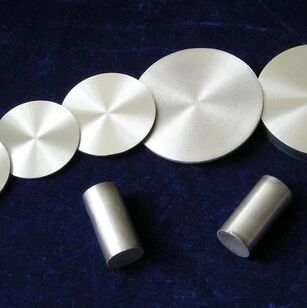
Core Viewpoint - The semiconductor materials sector, particularly sputtering targets, is often undervalued despite its critical role in the semiconductor industry. The ongoing global restructuring of the semiconductor supply chain presents significant opportunities for domestic alternatives to established foreign suppliers [2][4]. Industry Overview - Sputtering targets are essential materials used in physical vapor deposition (PVD) processes, crucial for forming functional thin films on substrates like silicon wafers. They are vital for the performance, yield, and reliability of chips [6][8]. - The demand for sputtering targets is increasing due to advancements in chip manufacturing processes, particularly as technology progresses to smaller nodes (e.g., below 7nm) [9]. Classification of Targets - Sputtering targets can be classified by shape (long, square, round), chemical composition (metal, alloy, ceramic), and application (semiconductor, display, solar cells) [10][11]. - Key materials include high-purity metals like aluminum, copper, and tantalum, which are used in various layers of semiconductor devices [12][13]. Industry Chain Analysis - The upstream supply involves high-purity metals and equipment, with significant reliance on imports for raw materials. Domestic companies are beginning to develop production capabilities [15][16]. - The midstream manufacturing process is highly technical, requiring precise control over various production stages to meet stringent quality standards [18]. - The downstream application primarily focuses on semiconductor chip manufacturing, where sputtering targets are used in critical structures like interconnect layers and barriers [22][23]. Market Situation - The global sputtering target market has grown from 82.1 billion yuan in 2018 to 116.3 billion yuan in 2022, with a compound annual growth rate (CAGR) of 9.1%. It is projected to reach 194.5 billion yuan by 2027, with a CAGR of 10.7% [46][48]. - The Chinese market for sputtering targets has also seen significant growth, with a CAGR of 14.4% from 2018 to 2022, expected to continue at 15.8% through 2027 [49][52]. Competitive Landscape - The global market is dominated by a few key players, with American and Japanese companies holding approximately 80% of the market share. Major companies include JX Nippon Mining & Metals, Honeywell, and Tosoh [60][62]. - Domestic companies like Jiangfeng Electronics and Yuyuan New Materials are making strides in technology and market penetration, particularly in lower-end products, but still face challenges in high-end target production [64]. Future Development Trends - There is a strong trend towards higher purity and quality in sputtering targets, driven by the need for advanced semiconductor processes [68]. - Emerging applications in AI, IoT, and 5G are expected to drive demand for high-performance chips, further boosting the sputtering target market [69]. - The industry is likely to see increased mergers and acquisitions as companies seek to enhance their technological capabilities and market presence [71].



东兴证券晨报-20250930
Dongxing Securities· 2025-09-30 11:00
Core Insights - The report highlights the robust growth and diversification of the cultural and tourism industry, with the cultural industry expected to achieve a revenue of 19.14 trillion yuan in 2024, a 37.7% increase from 2020 [3] - The report emphasizes the strategic partnerships and expansions in the mining sector, particularly focusing on the lithium, cesium, and copper resources, which are expected to enhance the company's growth potential [6][7][9] - The semiconductor testing sector is experiencing rapid growth, with significant orders and revenue increases, indicating a strong market demand for advanced testing equipment [14][18] Economic Policies and Developments - The National Development and Reform Commission announced a new policy tool with a total scale of 500 billion yuan to support project capital, particularly in AI and smart terminal applications [2] - The Ministry of Industry and Information Technology has granted satellite mobile communication licenses to major telecom operators, enhancing communication capabilities in remote areas [2] - The Ministry of Culture and Tourism reported a significant recovery in the tourism sector, with domestic travel and spending showing high growth rates post-pandemic [3] Company-Specific Developments - Zhongwei Co. signed a strategic cooperation framework agreement with Xiamen Tungsten New Energy Materials, focusing on key battery materials for emerging sectors [5] - Huayou Cobalt's subsidiary signed a supply agreement with LGES for a total of approximately 76,000 tons of ternary precursor products from 2026 to 2030 [5] - The report indicates that the company has successfully acquired significant mining rights in Zambia and Namibia, enhancing its resource base and production capabilities [8][9] Industry Trends - The report notes a shift in the highway sector towards high dividend stocks, with several companies experiencing significant stock price adjustments, making them attractive for investors seeking stable returns [21][22] - The semiconductor testing equipment market is expanding rapidly, driven by demand from the AI and storage sectors, with the company achieving substantial revenue growth in this area [14][15][18] - The mining industry is diversifying into multi-metal resources, with a focus on copper and other metals, which are expected to provide new growth avenues for the company [9][10]

江丰电子股价跌5.02%,华夏基金旗下1只基金重仓,持有5.66万股浮亏损失30.45万元
Xin Lang Cai Jing· 2025-09-30 06:20
Company Overview - Jiangfeng Electronics experienced a decline of 5.02% on September 30, with a stock price of 101.72 CNY per share and a trading volume of 2.622 billion CNY, resulting in a turnover rate of 11.37% and a total market capitalization of 26.988 billion CNY [1] - The company, established on April 14, 2005, and listed on June 15, 2017, is located in the Ningbo Jiangfeng Electronic Materials Co., Ltd. in Yuyao City, Zhejiang Province, focusing on the research, production, and sales of high-purity sputtering targets [1] - The main business revenue composition includes ultra-high purity targets at 63.26%, precision components at 21.90%, and others at 14.84% [1] Fund Holdings - According to data from the top ten heavy stocks of funds, one fund under Huaxia Fund holds a significant position in Jiangfeng Electronics. The Huaxia Growth Enterprise Index Enhanced A (018370) held 56,600 shares in the second quarter, accounting for 2.86% of the fund's net value, ranking as the seventh-largest heavy stock [2] - The fund was established on September 18, 2023, with a latest scale of 51.4535 million CNY. Year-to-date returns stand at 49.2%, ranking 807 out of 4220 in its category, while the one-year return is 67.83%, ranking 767 out of 3846 [2] - The fund manager, Sun Meng, has a cumulative tenure of 5 years and 199 days, with a total asset scale of 10.461 billion CNY. The best fund return during his tenure is 129.69%, while the worst is 19.78% [2]
定增减持迷局|江丰电子19亿元定增预案出炉前三个月:实控人一致行动人等巨额减持套现
Xin Lang Zheng Quan· 2025-09-29 13:55
Core Viewpoint - Jiangfeng Electronics' capital operations have raised market concerns due to significant fundraising efforts alongside substantial share reductions by related parties of the controlling shareholder [1][2] Group 1: Fundraising and Financial Performance - In July 2025, Jiangfeng Electronics announced a revised plan for a private placement to raise no more than 1.948 billion yuan, aimed at enhancing the semiconductor precision components and high-end target material industrialization projects [1] - The company had previously completed a private placement in September 2022 at a price of 85 yuan per share, raising 1.649 billion yuan, indicating a pattern of frequent fundraising within a short timeframe [2] - For the first half of 2025, Jiangfeng Electronics reported total revenue of 2.095 billion yuan, a year-on-year increase of 28.71%, and a net profit attributable to shareholders of 253 million yuan, reflecting a 56.79% year-on-year growth [2] Group 2: Shareholder Actions and Market Reactions - In April 2025, the controlling shareholder's related parties, Ningbo Jiangge and Ningbo Hongde, sold 2.6 million shares, cashing out approximately 190 million yuan, which has raised questions about the timing and necessity of the company's fundraising [1] - Investors have expressed skepticism regarding the company's need for such a large amount of capital, especially given the decline in share price from the previous fundraising price of 85 yuan to 69 yuan [1]
A股光刻机指数一年涨130% 产业链名单曝光
2 1 Shi Ji Jing Ji Bao Dao· 2025-09-27 11:32
Core Viewpoint - The semiconductor manufacturing sector, particularly the photolithography machine segment, is experiencing significant growth, with domestic companies gaining unprecedented attention in the secondary market [3][5]. Industry Overview - The photolithography machine is crucial for semiconductor processing, determining the smallest line widths through exposure and photoresist application [7]. - The global market is dominated by ASML, which holds over 80% market share, particularly in the high-end EUV segment [7][8]. - Domestic photolithography machine manufacturers, led by Shanghai Micro Electronics (SMEE), have a low localization rate of only 2.5%, indicating a significant gap compared to international leaders [9]. Market Performance - The photolithography concept stocks have seen substantial price increases, with Zhangjiang Hi-Tech (600895.SH) hitting a historical high and other related stocks like Jiangfeng Electronics (300666.SZ) rising over 17% [3]. - The Wind photolithography index has increased nearly 130% over the past year, with a peak reached on September 24 [3]. Company Developments - Zhangjiang Hi-Tech has invested 22.345 million yuan in Shanghai Micro Electronics, acquiring a 10.779% stake [5]. - Jiangfeng Electronics is developing key materials for photolithography processes and has entered mass production for core cooling components for machines targeting nodes below 28nm [5]. Technological Landscape - The domestic photolithography industry is advancing, but still faces challenges in high-end technology, primarily reliant on imports from countries like the Netherlands and Japan [5][11]. - The industry consists of upstream equipment and materials, midstream system integration and production, and downstream applications [11]. Future Outlook - There is a growing expectation for breakthroughs in the domestic photolithography machine industry due to geopolitical factors limiting access to ASML's EUV machines [10]. - The development of the photolithography machine sector requires collaboration among key companies, research institutions, and government support to achieve supply chain autonomy [12][16].