C&D INC.(600153)

Search documents
行业深度报告:房价止跌回稳系列三:鉴往知来,人口不是影响房价唯一因素
KAIYUAN SECURITIES· 2025-09-24 09:50
Investment Rating - The investment rating for the real estate industry is "Positive" (maintained) [1] Core Insights - The report indicates that new housing transaction areas have shown a month-on-month increase, while real estate development investment has decreased year-on-year from January to August 2025 [3] - The report highlights that the decline in housing prices has been consistent since 2022, with a significant drop in both new and second-hand housing prices across 70 cities, although the rate of decline has started to narrow due to supportive policies [5][16] - It emphasizes that the relationship between population growth and housing prices is not straightforward, as effective housing demand driven by economic development and income growth is crucial for influencing prices [5][25] Summary by Sections Industry Overview - The real estate market has entered a downward trend since 2022, with new and second-hand housing prices experiencing a decline for over 40 months [5][16] - As of August 2025, the new housing price index across 70 cities has decreased by 3.0% year-on-year, while the second-hand housing price index has dropped by 5.5% [16][20] Population Impact - The report concludes that population factors are long-term variables with limited mid-term impact on housing prices, as the marginal changes in housing prices are influenced more by monetary policy, supply-demand relationships, and economic expectations [25][39] - A regression analysis across several developed countries shows that housing price indices do not have a significant correlation with population growth rates [40][42] International Experience - The report draws parallels with international experiences, noting that stable fiscal and monetary policies are essential for stabilizing housing prices after declines [6][46] - It cites examples from the U.S., Japan, and South Korea, where coordinated fiscal and monetary policies have successfully supported housing market recovery after significant downturns [46][49] Investment Recommendations - The report recommends focusing on real estate companies with strong credit ratings and solid fundamentals in urban areas, such as China Overseas Development and Poly Developments [7] - It also suggests that companies excelling in both residential and commercial real estate, as well as those providing high-quality property management services, are well-positioned for growth [7]



开源证券-房地产行业深度报告:房价止跌回稳系列三,鉴往知来,人口不是影响房价唯一因素-250924
Xin Lang Cai Jing· 2025-09-24 09:49
Group 1 - The core viewpoint is that the impact of mid-term population changes on housing prices in developed countries/regions is limited, as there is no significant positive correlation between housing price indices and population growth rates or numbers [1] - From 2022, housing prices in 70 cities have entered a downward trend, with a widening decline expected in Q3 2024, although the year-on-year decline has narrowed since Q4 due to supportive policies [1] - The current adjustment cycle in the housing market has seen both new and second-hand housing price indices decline for over 40 months [1] Group 2 - Historical data shows that housing prices in developed countries/regions have experienced fluctuations since the 1980s, with price corrections often exceeding those in China, but eventually stabilizing [2] - Key factors for stabilizing and recovering housing prices include coordinated fiscal and monetary policies, such as large-scale quantitative easing, interest rate cuts, and fiscal subsidies [2] - A stable policy outlook, low interest rate environment, and improved supply-demand structure are crucial for halting the decline and stabilizing the real estate market [2] Group 3 - The stabilization of housing prices is influenced by multiple factors, including monetary policy, supply-demand relationships, and economic expectations, rather than solely by population dynamics [3] - Recommended investment targets include strong credit property companies with good urban fundamentals and leading product capabilities, as well as firms that can drive both residential and commercial real estate [3] - The increasing penetration rate of second-hand housing indicates a promising outlook for the real estate after-service sector [3]


建发股份涨2.01%,成交额1.96亿元,主力资金净流入1002.09万元
Xin Lang Cai Jing· 2025-09-24 06:18
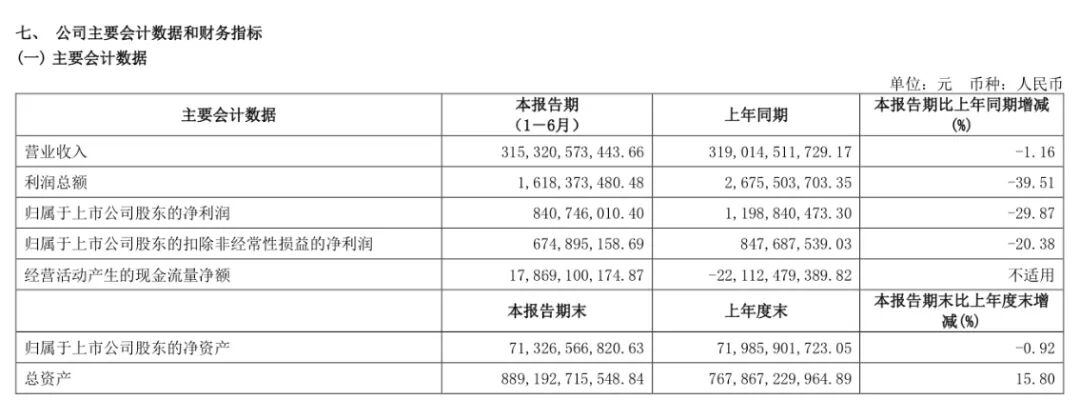
Core Viewpoint - Jianfa Co., Ltd. has experienced fluctuations in stock price and financial performance, with a notable decrease in revenue and net profit in the first half of 2025 compared to the previous year [2][3]. Group 1: Stock Performance - On September 24, Jianfa's stock rose by 2.01%, reaching 10.66 CNY per share, with a trading volume of 196 million CNY and a turnover rate of 0.64%, resulting in a total market capitalization of 30.909 billion CNY [1]. - Year-to-date, Jianfa's stock price has increased by 8.55%, but it has seen a decline of 1.93% over the last five trading days and 6.24% over the last 20 days [1]. Group 2: Financial Performance - For the first half of 2025, Jianfa reported a revenue of 315.321 billion CNY, a year-on-year decrease of 1.16%, and a net profit attributable to shareholders of 841 million CNY, down 29.87% from the previous year [2]. - Cumulatively, Jianfa has distributed 19.039 billion CNY in dividends since its A-share listing, with 6.570 billion CNY distributed over the last three years [3]. Group 3: Shareholder Information - As of June 30, 2025, Jianfa had 59,900 shareholders, a decrease of 7.06% from the previous period, with an average of 48,444 circulating shares per shareholder, an increase of 7.60% [2]. - The second-largest shareholder, Hong Kong Central Clearing Limited, increased its holdings by 30.728 million shares to 107 million shares [3].

厦门四宗宅地揽金81.25亿元 本地房企悉数底价竞得
Zheng Quan Ri Bao· 2025-09-23 16:35
Core Insights - Xiamen's recent land auction on September 23 resulted in the sale of four residential land parcels for a total of 81.25 billion yuan, all sold at the base price [1] - The land parcels are located in both island and offshore areas, with significant participation from state-owned enterprises, indicating a stable market force [3] Group 1: Land Auction Details - The four land parcels sold include two in the Siming and Huli districts with starting residential floor prices of 40,000 yuan per square meter, and two in the Jimei and Haicang districts with starting prices of 22,000 and 18,000 yuan per square meter respectively [1] - Xiamen Guomao Real Estate Co. won the Siming district parcel for 22.20 billion yuan, while Jianfa Real Estate Group acquired the Huli district parcel for 20.38 billion yuan [1] Group 2: Market Dynamics - The Xiamen real estate market shows signs of support, with new residential sales area reaching 1.4975 million square meters in the first half of 2025, a year-on-year increase of 24.6% [2] - The market is characterized by a differentiation in sales performance, with prime locations experiencing faster sales while ordinary projects face longer sales cycles [2] Group 3: Role of State-Owned Enterprises - State-owned enterprises are becoming a stabilizing force in the land market due to their financial strength and urban development experience [3] - The active participation of these enterprises in land acquisition is expected to stabilize market expectations, although overall market confidence recovery will take time [3]

厦门建发集团有限公司注册资本增至100亿元
Zheng Quan Ri Bao Wang· 2025-09-23 13:49
Group 1 - The core point of the article is that Xiamen Jianfa Group Co., Ltd. has increased its registered capital from 9 billion to 10 billion yuan [1] Group 2 - The change in registered capital indicates a potential expansion or strengthening of the company's financial position [1] - The increase in capital may reflect the company's strategic initiatives or growth plans [1] - The registration change was recorded in the Tianyancha App, highlighting the transparency of corporate changes in China [1]
车建兴,解除留置
Zhong Guo Ji Jin Bao· 2025-09-23 06:28
Core Viewpoint - The recent developments at Red Star Macalline, including the return of founder Che Jianxing and a wave of executive departures, are closely linked to the change in control following Xiamen Jianfa's acquisition of a significant stake in the company [2][5][6]. Group 1: Executive Changes - Che Jianxing, the founder of Red Star Macalline, has been released from detention by the Yunnan Provincial Supervisory Committee after a four-month investigation [2]. - Following Che's previous detention, Li Yupeng acted as the interim general manager to ensure smooth operations [3]. - A significant turnover in the executive team has occurred, with four high-level departures in September alone, including the resignation of the board secretary and vice general manager Qiu Zhe due to personal career planning [4]. Group 2: Ownership Changes - Xiamen Jianfa, a state-owned enterprise, became the controlling shareholder of Red Star Macalline in June 2023 by acquiring 29.95% of the shares for approximately 6.286 billion yuan [5][6]. - The transfer of shares was executed at a price of 4.82 yuan per share, resulting in Che Jianxing exiting the role of actual controller of the company [6]. - Following the acquisition, a major management reshuffle occurred, with Li Yupeng being appointed as executive director and chairman, and Shi Yaofeng as the new general manager [6]. Group 3: Financial Performance - Red Star Macalline has reported significant financial losses, with net profits of -2.216 billion yuan in 2023 and -2.983 billion yuan in 2024, and a further loss of -1.9 billion yuan in the first half of 2025, marking the lowest performance since its listing [8]. - The company attributed its declining performance to store closures and rental discounts, alongside a 2.1 billion yuan loss from changes in the fair value of investment properties [8]. - As of June 30, 2025, Red Star Macalline faced substantial short-term debt pressures, with a total of 15.47 billion yuan in short-term loans and 57.38 billion yuan in non-current liabilities due within a year [8].


国企红利ETF(159515)盘中震荡承压,机构:可继续关注周期红利
Sou Hu Cai Jing· 2025-09-23 03:49
Group 1 - The China Securities State-Owned Enterprises Dividend Index (000824) decreased by 0.17% as of September 23, 2025, with Nanjing Bank (601009) leading the gains at 4.30% [1] - The People's Bank of China announced on September 19 that it would adjust the 14-day reverse repurchase operations to a fixed quantity and interest rate bidding, which aims to enhance liquidity management [1] - Analysts from Galaxy Securities believe this adjustment will improve the pricing mechanism of interest rates and enhance liquidity management efficiency, giving larger state-owned banks a competitive edge over smaller banks [1][2] Group 2 - The China Securities State-Owned Enterprises Dividend Index consists of 100 listed companies selected for their high and stable cash dividend yields, reflecting the overall performance of high-dividend state-owned enterprises [2] - As of August 29, 2025, the top ten weighted stocks in the index accounted for 16.84% of the total index, including companies like COSCO Shipping Holdings (601919) and Jizhong Energy (000937) [2] - The National State-Owned Enterprises Dividend ETF (159515) closely tracks the performance of the index, providing investors with exposure to high-dividend state-owned enterprises [2]





大宗供应链运营行业研究框架
2025-09-23 02:34
Summary of Bulk Supply Chain Industry Research Industry Overview - The bulk supply chain industry has a low net profit margin, typically ranging from 0.5% to 0.6%, with state-owned enterprises enjoying significant advantages in funding rates, creating high barriers to entry [1][3][4] - The demand growth driven by urbanization in China allows leading companies to achieve continuous growth by increasing market share, demonstrating resilience through economic cycles [1][3] - Since 2025, commodity prices have stabilized or increased, coupled with anti-involution policies, which are expected to enhance the profitability elasticity of bulk supply chain companies [1][3][6] Core Competitiveness - Key competitive advantages of bulk supply chain companies include: - High dividend yields and low valuations (PE) [5][6] - Thin profit margins but significant profitability elasticity [5][6] - High entry barriers and advantages for state-owned enterprises [5][6] - Broad growth potential, with opportunities to increase market share [5][6] Business Model - Bulk supply chain companies operate on a light asset model, locking in upstream and downstream orders to mitigate price volatility risks and secure stable service fees [1][7] - They generate profits through capital advances and comprehensive logistics services, requiring bank loan support and utilizing futures to hedge risks [1][12] Market Trends - The bulk supply chain market in China is expected to show a trend of concentration among leading companies, which will leverage economies of scale to capture larger market shares over the next decade [1][16] - Despite the current low concentration in the market, leading companies are anticipated to achieve sustained growth and resilience through natural market share concentration [16][17] Financial Performance - The industry has experienced fluctuations in profit margins due to intensified competition, accounting standard changes, and improved resource turnover efficiency [14][15] - Companies like Xiamen Xiangyu have maintained net profit margins around 0.5% to 0.6%, indicating significant elasticity in profitability during favorable market conditions [3][5] Risk Management - Bulk supply chain companies employ various strategies to mitigate price risks, including collecting a 15% deposit from customers and using a combination of futures and spot contracts for hedging [13][24] - Effective risk management is crucial for long-term stability, especially given the low profit margins where any risk event can significantly impact net profits [25] Recent Developments - In the first half of 2025, the profitability of bulk supply chain companies showed improvement, with some companies achieving approximately 30% year-on-year growth through volume increases and customer structure optimization [30][31] - Companies have adapted to industry downturns by lowering service fees for quality clients and focusing resources on stronger operational partners to enhance stability and profitability [29][30] Future Outlook - The bulk supply chain industry is expected to continue evolving towards modernization and specialization, enhancing risk control and capital management [11][26] - The market remains promising, with opportunities for leading companies to expand overseas and optimize customer structures to recover and enhance profitability [31][32]

专题 | 房企好房子体系和产品趋势研究
克而瑞地产研究· 2025-09-21 01:50
Core Viewpoint - The construction of "good houses" is a strategic development direction for residential products, transitioning from policy concepts to industry practices, and is expected to become a long-term trend in the real estate market [1][3]. Group 1: Development and Policy Background of "Good Houses" - The demand for "good houses" is driven by urbanization and a shift in consumer expectations from merely having a house to living in a quality home [3][5]. - The industry's transformation is influenced by policies such as "housing is for living, not for speculation," leading to price control measures that have impacted profit margins for real estate companies [4][5]. - As quality issues in housing become more prominent, the industry is shifting focus from scale to quality, making "good houses" a consensus and development direction [6][5]. Group 2: Real Estate Companies' "Good House" Strategies and Case Studies - Leading real estate companies like Poly, China Overseas, and China Resources are launching "good house" strategies focusing on safety, comfort, green living, and smart technology [7][8]. - Companies are establishing comprehensive technical standards that cover the entire lifecycle from design to service, reflecting a shift towards refined management [8][9]. - The strategies are transitioning from qualitative claims to quantifiable controls, with companies like China Overseas achieving measurable improvements in sound insulation and pollution reduction [8][9]. Group 3: Five Dimensions of "Good House" Product Practices - Safety performance is emphasized as the first guarantee of quality living [30]. - Comfort and livability have evolved from merely increasing physical space to optimizing space efficiency and human-centered design [31][32]. - Health environment assurance has shifted from basic physical indicators to a multi-dimensional approach that includes sound, light, air, and water quality [44][45]. - Green and low-carbon initiatives are integrated into daily life through innovative designs and technologies [52]. - Smart technology is advancing from passive control to proactive service, enhancing user experience through intelligent systems [53][59]. Group 4: Future Outlook for "Good Houses" - The construction of "good houses" will be a continuous process of deepening and refining, with policies expected to become more detailed and standardized [70]. - The industry will continue to transition from traditional scale expansion to quality enhancement, focusing on the four dimensions of safety, comfort, green living, and smart technology [70].





建发股份最新回应!事关地产业务分化、家居业务困境……
Guo Ji Jin Rong Bao· 2025-09-19 13:12
Core Viewpoint - In the first half of the year, Jianfa Co., Ltd. reported a revenue of 315.32 billion yuan, a year-on-year decline of 1.16%, and a net profit attributable to shareholders of 840 million yuan, down 29.87%, marking the lowest level in nearly a decade [1][2]. Financial Performance - The total revenue for the first half of the year was 315.32 billion yuan, a decrease of 1.16% compared to the same period last year [2]. - The total profit for the period was 1.62 billion yuan, down 39.51% year-on-year [2]. - The net profit attributable to shareholders decreased by 29.87% to 840 million yuan [2]. - The net profit after deducting non-recurring gains and losses was 675 million yuan, a decline of 20.38% [2]. - The net cash flow from operating activities was 17.87 billion yuan, with no applicable comparison due to previous losses [2]. - The net assets attributable to shareholders were 71.33 billion yuan, a decrease of 0.92% from the end of the previous year [2]. - Total assets increased by 15.80% to 889.19 billion yuan compared to the end of the previous year [2]. Business Segment Performance - The real estate segment reported a net profit of 11 million yuan, down 1.43 billion yuan year-on-year [4]. - The home furnishing business segment saw a reduction of 213 million yuan in net profit [5]. - The supply chain operation segment remained stable compared to the previous year [2]. Subsidiary Performance - Jianfa Real Estate recorded a net profit of 969 million yuan, up 2.35% year-on-year, contributing 519 million yuan to Jianfa Co., Ltd. after adjustments [6]. - Lianfa Group reported a net profit of -534 million yuan, contributing -508 million yuan to Jianfa Co., Ltd., a decrease of 2.22 billion yuan year-on-year [6]. - Lianfa Group achieved a contract sales amount of 13.41 billion yuan, a year-on-year increase of 29.19% [6]. Land Acquisition and Strategy - Jianfa Co., Ltd. acquired 24 plots of land in the first half of the year, with a total acquisition amount of 58.24 billion yuan, of which over 96% was in first- and second-tier cities [7]. - The company’s land reserve value in first- and second-tier cities accounted for over 83%, an increase of 3.46 percentage points from the end of the previous year [7]. Home Furnishing Business Outlook - The company expressed optimism about the long-term prospects of the home furnishing retail industry, particularly through its investment in Red Star Macalline [7]. - Red Star Macalline's rental and operational business generated over 200 million yuan in operating profit, despite a decline in the fair value of investment properties exceeding 2 billion yuan [8]. - The company plans to enhance its core business and improve operational quality through a systematic core self-operated mall enhancement plan [9][10].