YANKUANG ENERGY(600188)

Search documents
“岳”章——山东企业一线调研·新质生产力篇
Shang Hai Zheng Quan Bao· 2025-12-23 19:06
Group 1 - Shandong's A-share listed companies show resilience with 251 out of 310 companies reporting profits, generating a total revenue of 2.3 trillion yuan and a net profit exceeding 141.1 billion yuan in the first three quarters of 2025 [3][1] - The province's GDP is set to enter the "ten trillion club," with industrial and investment indicators consistently outperforming the national average, highlighting Shandong's robust economic foundation [2][1] - The "Fifteen Five" planning emphasizes the construction of a modern industrial system, focusing on the transformation of traditional industries and the development of new productive forces [2][1] Group 2 - Yanzhou Coal Mining Company is transforming from a traditional coal producer to a green energy provider, integrating AI and renewable energy into its operations [5][4] - Shantui's intelligent transformation is evident in its AI-driven machinery, addressing industry challenges such as rising labor costs and efficiency bottlenecks [6][4] - Donghong's innovative composite pipes are crucial for major infrastructure projects, utilizing smart monitoring technologies to enhance safety and efficiency [7][4] Group 3 - The overall performance of Shandong's listed companies reflects a strong commitment to innovation and high-quality development, contributing to the province's strategic positioning as a key economic growth area in northern China [8][1]



行业研究|行业周报|煤炭与消费用燃料:重视煤炭板块年初红利投资机会-20251222
Changjiang Securities· 2025-12-22 09:44
Investment Rating - The industry investment rating is "Positive" and maintained [8] Core Viewpoints - Recent coal prices have been declining, raising concerns about future price trends. The supply side is expected to remain tight due to year-end production cuts and the imposition of export taxes by Indonesia, while demand may improve with the new year's long-term contracts and seasonal increases in consumption [2][7] - The coal price is anticipated to stabilize and recover in the short term due to supply constraints and seasonal demand increases, suggesting a favorable investment opportunity in the coal sector [6][7] Summary by Sections Market Performance - The coal index (Yangtze) increased by 0.36%, outperforming the CSI 300 index by 0.64 percentage points, ranking 19th out of 32 industries [6][22] - As of December 19, the market price for Qinhuangdao thermal coal was 703 CNY/ton, down 42 CNY/ton week-on-week, while the price for coking coal at Jingtang Port was 1740 CNY/ton, up 110 CNY/ton week-on-week [6][16] Supply and Demand Analysis - As of December 18, the daily coal consumption across 25 provinces was 580.2 million tons, a decrease of 2.0% week-on-week and 9.8% year-on-year. The inventory at power plants was 134 million tons, with a usable days count of 23.2 days, an increase of 0.3 days week-on-week [17][36] - The supply side is influenced by production cuts at coal mines and the impact of export taxes from Indonesia, which could tighten supply further [7][17] Price Trends - The price of thermal coal has seen a significant decline, with a monthly drop of 105 CNY/ton (-13%), nearly erasing gains from October [7][43] - The report suggests that while coal prices are currently under pressure, improvements in supply and demand dynamics could provide a floor for prices in the near term [6][7] Investment Recommendations - The report recommends focusing on coal sector investments, particularly as the first quarter is typically a period of increased insurance capital inflow, which may enhance the attractiveness of coal stocks [7][12]
煤价有底,预计26年开启需求上行周期
Haitong Securities International· 2025-12-22 07:01
Investment Rating - The report maintains a positive investment outlook for the coal sector, recommending a focus on key players such as China Shenhua Energy, Shaanxi Coal and Chemical Industry, and China Coal Energy, while also keeping an eye on Yanzhou Coal Mining and Jinneng Holding [3]. Core Insights - The coal price is expected to stabilize, with a bottom range projected between 680-700 RMB/ton. The demand is currently at a median level compared to the past five years, and port inventories are showing a downward trend. The report anticipates a rebound in coal prices to over 800 RMB/ton by November [3][4]. - The coal sector is believed to have reached a cyclical bottom in Q2 2025, with a reversal in supply-demand dynamics. A new upward cycle for coal and downstream thermal power demand is expected to begin in the second half of 2026 [3][4]. Summary by Sections Coal Price Trends - As of December 19, 2025, the price of Q5500 coal at Huanghua Port is 721 RMB/ton, down 42 RMB/ton (-5.5%) from the previous week. The price of Q5000 coal at the same port is 620 RMB/ton, also down 42 RMB/ton (-6.3%) [6][12]. - Domestic coal prices are generally declining, while international prices are mixed, with Newcastle coal prices showing a slight increase [41][49]. Supply and Demand Dynamics - Domestic coal supply remains stable, with imports expected to decrease. The report notes that the demand for coal is improving significantly during the off-peak season, with Q3 profits anticipated to rebound [3][4]. - As of December 19, 2025, the total inventory of coking coal at three major ports is 279.7 million tons, down 7.1% from the previous week [58]. Long-term Contracts and Pricing - The annual long-term contract price for Q5500 coal at Northern Ports is 694 RMB/ton, reflecting a month-on-month increase of 10 RMB/ton (1.5%) [34]. - The report indicates that the long-term contract prices for coking coal have remained stable compared to the previous week [59]. Key Market Events - The report highlights significant developments in coal transportation infrastructure in Inner Mongolia, which is expected to enhance coal logistics efficiency and capacity [81]. - It also notes that coal prices have continued to decline in early December, with various types of coal experiencing price drops [81].




煤炭行业2026年策略:“反内卷”催化产能收缩,高分红彰显中期投资价值
Dongxing Securities· 2025-12-22 04:30
Group 1: Price Outlook - The "anti-involution" policy is expected to catalyze a rebound in coal prices, with a stable increase anticipated in 2026. In 2025, coal prices experienced a low-to-high trend, with the lowest price for Qinhuangdao 5500 kcal thermal coal dropping to 610 CNY/ton in June and rebounding to 813 CNY/ton by December 1 [4][24] - The annual price range for China's coking coal index fluctuated between 1100 and 1570 CNY/ton in 2025, with a significant increase of 37.14% from the lowest point in June to the highest in November [4][21] Group 2: Domestic Supply - The "anti-involution" policy will promote industry self-discipline and stricter safety regulations, potentially leading to a decline in domestic coal production due to the exit of pre-registered increased capacity in 2026 [5][30] - The National Energy Administration's notification in July 2025 mandated that coal mines' annual output must not exceed announced capacity, contributing to a tightening of coal supply [5][31] - The coal import volume in 2025 is expected to decrease, with a total of 432 million tons imported from January to November, marking an 11% year-on-year decline [5][34] Group 3: Demand Dynamics - Thermal power is expected to play a stabilizing role, with resilient demand anticipated during the 14th Five-Year Plan period. The cumulative thermal power generation from January to October 2025 was 52130.5 billion kWh, showing a slight decline of 0.19% year-on-year [6][45] - The development of AI computing power is projected to drive significant growth in new electricity demand, with electricity consumption in the power sector expected to increase due to sustained demand for thermal coal [6][59] Group 4: Market Value Management - The implementation of market value management assessments is expected to weaken industry cycles, with high dividend payouts reflecting mid-to-long-term investment value. The China Securities Regulatory Commission has encouraged cash dividends and improved investor returns since late 2023 [7][60] - Major coal companies are responding to initiatives to enhance shareholder returns, with companies like China Shenhua and China Coal Energy committing to high dividend payouts, with ratios expected to remain above 65% [7][61] Group 5: Investment Recommendations - The "anti-involution" policy is anticipated to lead to self-discipline in the industry and a stable increase in coal prices. The coal sector is viewed as a stable high-dividend investment, suitable for providing solid returns [9][64] - Recommended stocks include leading coal companies with strong resource endowments and stable dividend policies, such as China Shenhua A+H, China Coal Energy A+H, and Yanzhou Coal Mining A+H [9][64]


东兴证券:煤炭行业“反内卷”催化产能收缩 高分红彰显中期投资价值
智通财经网· 2025-12-22 04:01
Core Viewpoint - The "anti-involution" policy is expected to promote industry self-discipline and capacity verification, leading to a stable increase in coal prices, with the coal industry transitioning towards high-quality development during the 14th Five-Year Plan period [1][2]. Group 1: Coal Price Trends - The coal price is anticipated to recover from its lows, with a projected stable increase in 2026. In 2025, coal prices are expected to fluctuate, with the lowest price for Qinhuangdao 5500 kcal thermal coal dropping to 610 CNY/ton in mid-June and recovering to 813 CNY/ton by December 1 [2]. - The China coking coal price index is projected to fluctuate between 1100-1570 CNY/ton in 2025, with a significant recovery of 37.14% from its lowest point [2]. Group 2: Supply Side Dynamics - The "anti-involution" policy aims to break low-price competition and shift the industry focus from scale expansion to quality improvement. The National Energy Administration has initiated capacity verification for coal mines in several provinces, which may lead to a decline in production due to stricter safety regulations [3]. - The coal import tax reinstated on January 1, 2024, and the emphasis on controlling low-quality coal imports are expected to reduce the volume of imported coal, with a notable 11% decrease in coal and lignite imports from January to November 2025 [3]. Group 3: Demand Side Insights - Thermal power generation is expected to remain resilient, with a projected increase in demand driven by AI computing power, which is anticipated to significantly boost electricity consumption in data centers [4]. - The cumulative thermal power generation from January to October 2025 was 52,130.5 billion kWh, showing a slight year-on-year decline, but thermal power is expected to play a crucial role in meeting electricity demand during peak periods [4]. Group 4: Dividend and Investment Outlook - The coal industry is witnessing a shift towards higher dividend payouts, with companies like China Shenhua and Shaanxi Coal aiming to maintain or increase their cash dividend ratios, reflecting a broader trend of enhancing shareholder returns [5]. - The introduction of market value management assessments and the emphasis on cash dividends are expected to strengthen the investment value of coal companies, with a focus on stable and sustainable returns [5]. Group 5: Investment Recommendations - Investment strategies should focus on leading coal companies with strong resource endowments, cost advantages, and stable dividend policies, such as China Shenhua and Shaanxi Coal, while also considering companies with growth potential like Guanghui Energy and Huayang Co [6].

澳大利亚煤电需扩能两倍以支撑2050年电力需求增长
GOLDEN SUN SECURITIES· 2025-12-22 03:25
Investment Rating - The industry investment rating is "Buy" for several companies including China Coal Energy, China Shenhua, and Jinneng Holding Coal Industry [3][8]. Core Viewpoints - Australia's electricity demand is projected to double by 2050, necessitating a twofold increase in coal power capacity to ensure supply during the transition period. Total electricity demand is expected to rise from 205 billion kWh to 389 billion kWh by the fiscal year 2049-50, with significant contributions from high-energy industries such as industrial electrification and data centers [2][3]. - Current coal power capacity in Australia has decreased from approximately 30,000 MW to about 21,000 MW, with aging units averaging over 40 years of operation. Non-scheduled outages are expected to reach 7% of total operating time from 2027 to 2035, indicating a critical need for coal power to maintain grid stability during the transition to renewable energy [3][8]. Summary by Sections Industry Overview - The report highlights a significant decline in Australia's coal power capacity and the urgent need for expansion to meet future electricity demands. The transition to renewable energy sources is progressing but faces substantial gaps in implementation [2][3][8]. Key Companies - Recommended companies include: - Yancoal Australia (Buy) - Jinneng Holding Coal Industry (Buy) - China Coal Energy (Buy) - China Shenhua (Buy) - Shaanxi Coal and Chemical Industry (Buy) - Huainan Mining (Buy) - China Qinfa (Buy) [3][8]. Price Trends - Coal prices have shown mixed trends, with Newcastle coal prices at $105 per ton, down by $2.75 per ton (-2.55%), while European ARA coal prices increased slightly to $96.21 per ton, up by $0.64 per ton (+0.67%) [1][3][36].

煤炭行业周报(2025年第49期):11月原煤产量同比继续回落,日耗仍有提升空间,煤市或逐步改善-20251221
GF SECURITIES· 2025-12-21 10:13
Core Insights - The coal market is expected to gradually improve as November raw coal production continues to decline year-on-year, while daily consumption has room for growth [5][79] - The report indicates that the coal industry is rated as a "Buy" with expectations of improved profitability in Q4 2025 and 2026 [5][6] Market Dynamics - The price of thermal coal has continued to decline, with the CCI5500 thermal coal index reported at 716 RMB/ton, down 42 RMB/ton week-on-week [11][80] - In the main production areas, thermal coal prices have generally decreased, with Shanxi region prices dropping by 70 RMB/ton [11][80] - The coal mining capacity utilization rate was reported at 88.3%, a decrease of 1.9 percentage points week-on-week [21][38] - Coal inventory at major ports increased by 2.8% week-on-week, reaching 7.261 million tons [21][24] Industry Outlook - The report anticipates a slight increase in coal demand in 2026, while supply is expected to have limited upward potential, leading to an upward adjustment in coal prices [5][79] - The report highlights that the coal industry’s total profit for the first ten months of 2025 was 257 billion RMB, a 49% year-on-year decline [5][6] - The report emphasizes the importance of the 2026 long-term contract policy, which aims to ensure stable supply and pricing in the coal market [82][85] Key Companies - Companies with stable dividends in the thermal coal sector include China Shenhua, Yanzhou Coal, and Shaanxi Coal [5][6] - High elasticity companies benefiting from improved demand expectations and supply contraction include Shanxi Coking Coal and Lu'an Environmental Energy [5][6] - Companies with long-term growth potential highlighted in the report include Baofeng Energy and China Qinfa [5][6]
煤价分化炼焦煤企稳向上,神华千亿收购提升价值
ZHONGTAI SECURITIES· 2025-12-20 11:51
Investment Rating - The report maintains an "Overweight" rating for the coal industry [2][5]. Core Views - The coal market is expected to stabilize as supply tightens and demand rebounds, driven by seasonal factors and production adjustments [7][8]. - China Shenhua's acquisition of significant assets is projected to enhance its coal production capacity and resource reserves substantially [8]. - The investment strategy suggests a focus on undervalued stocks with high dividend yields and growth potential in the coal sector [8]. Summary by Sections 1. Industry Overview - The coal industry comprises 37 listed companies with a total market capitalization of 1,875.44 billion yuan and a circulating market value of 1,839.35 billion yuan [2]. 2. Coal Price Tracking - Recent trends indicate a divergence in coal prices, with coking coal stabilizing upwards while thermal coal prices are under pressure due to weak demand [7][8]. - As of December 19, 2025, the price of thermal coal at the port was 708 yuan/ton, reflecting a week-on-week decrease of 42 yuan/ton [8]. 3. Supply and Demand Dynamics - Coal production in November 2025 was 42,679 million tons, a year-on-year decrease of 0.5% but a month-on-month increase of 4.93% [7]. - The report highlights that the demand for electricity coal has been affected by warmer weather, leading to a decrease in daily coal consumption [7]. 4. Key Company Insights - China Shenhua's acquisition plan involves purchasing multiple coal and energy assets for a total consideration of 1,335.98 billion yuan, significantly increasing its coal production capacity by approximately 230 million tons per year [8]. - Other companies such as Yancoal Energy and Shanxi Coking Coal are also highlighted for their growth potential and dividend policies [13]. 5. Investment Recommendations - The report recommends a strategy of buying undervalued stocks with strong dividend yields, such as China Shenhua, Zhongmei Energy, and Xinji Energy, while also focusing on companies with significant production capacity growth [8][13].


2025年度齐鲁首席技师名单公布,聊城7人上榜!



Xin Lang Cai Jing· 2025-12-20 08:46
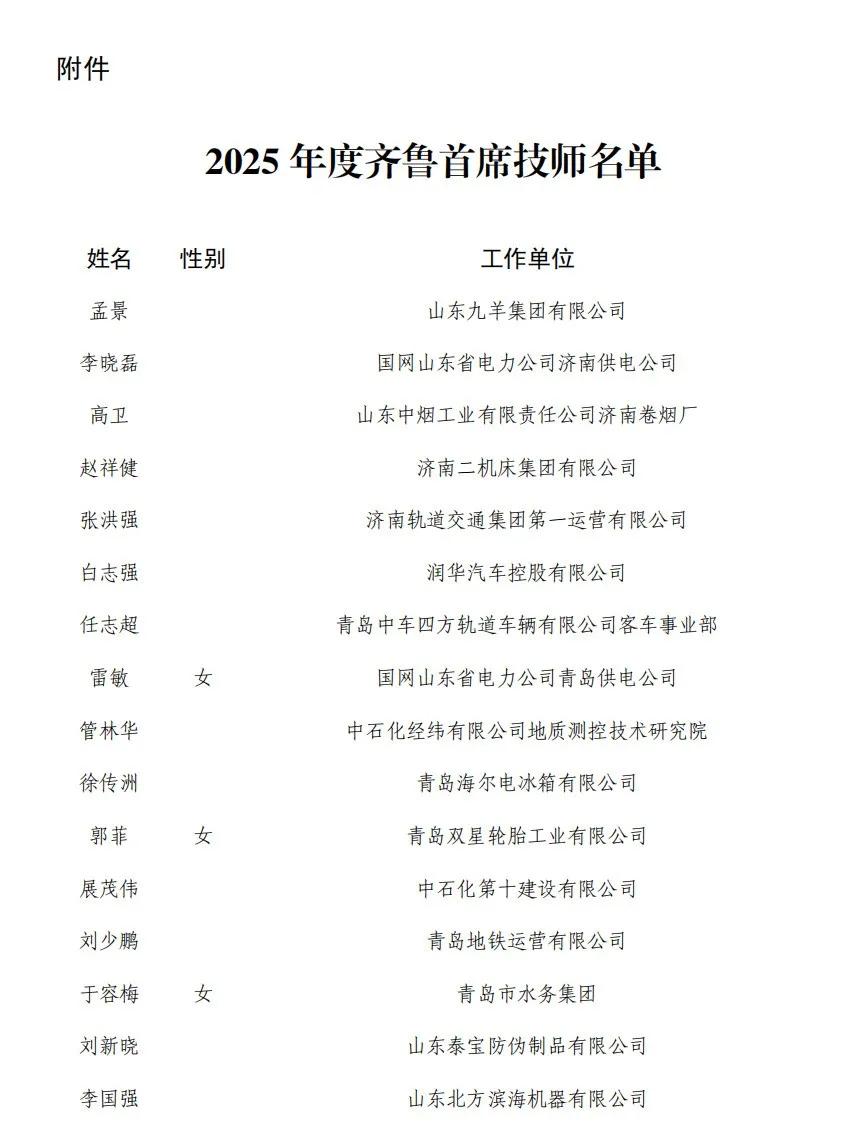
Core Points - The Shandong Provincial Government has announced the list of 150 individuals selected as Qilu Chief Technicians for the year 2025, following a structured selection process [1] Group 1: Announcement Details - The announcement was made by the Shandong Provincial Organization Department, Human Resources and Social Security Department, and Finance Department [1] - The selection process involved recommendations, evaluations, and public announcements [1] Group 2: Selected Individuals - Notable individuals include Meng Jing from Shandong Jiuyang Group Co., Ltd., Li Xiaolei from State Grid Shandong Electric Power Company, and Gao Wei from Shandong Tobacco Industry Co., Ltd. [2][3] - The list includes a diverse range of professionals from various sectors such as electric power, automotive, and manufacturing [2][3][4]

临近尾盘20%涨停!这个板块,突然活跃
Zheng Quan Shi Bao· 2025-12-18 11:51
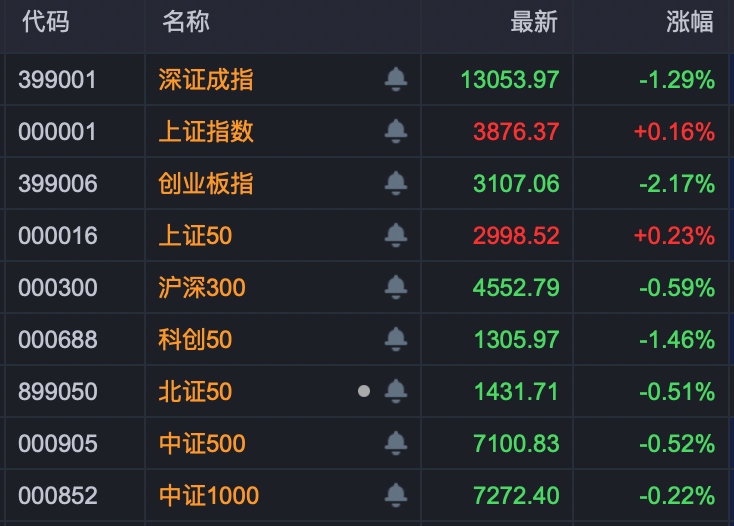
Market Overview - The A-share market experienced slight fluctuations today, with large-cap blue-chip stocks showing strength, as the Shanghai Composite Index and the Shanghai 50 Index slightly rose, while technology growth stocks faced adjustments, leading to small declines in the ChiNext Index, Sci-Tech 50, and North China 50. The market turnover reached 1.68 trillion yuan [1]. Index Performance - The Shenzhen Component Index closed at 13,053.97, down by 1.29% - The Shanghai Composite Index closed at 3,876.37, up by 0.16% - The ChiNext Index closed at 3,107.06, down by 2.17% - The Sci-Tech 50 Index closed at 1,305.97, down by 1.46% - The North China 50 Index closed at 1,431.71, down by 0.51% [2]. Sector Performance - Active sectors included pharmaceutical commerce, high-dividend stocks, elderly care concepts, and commercial aerospace, while sectors such as Hainan, consumer electronics, glass fiber, and power grid equipment saw the largest declines [2]. - Defense and military industry attracted over 9.5 billion yuan in net inflows, while banking received over 5.5 billion yuan. Other sectors like automotive and biopharmaceuticals also saw significant inflows exceeding 4 billion yuan [3]. Investment Insights - Huazhang Securities noted that historically, years of significant gains see increased volatility in January of the following year, suggesting a potential adjustment phase ahead. Investors are advised to remain patient and await clearer signals for upward trends. The AI industry is highlighted as a stable long-term investment focus [3]. - Guotai Junan emphasized that the spring market typically starts between December and April, with potential early initiation if prior market adjustments and favorable policy expectations align. Current market conditions present a crucial window for positioning in the spring rally [3]. High Dividend Stocks - High-dividend stocks saw a strong performance in the afternoon, with all bank stocks rising. Notable gainers included Shanghai Bank and Chongqing Rural Commercial Bank [4]. - The demand for stable cash flows from long-term funds like insurance and pension funds has increased significantly in a low-interest-rate environment. Insurance companies are projected to increase equity allocations by over 410 billion yuan in the first three quarters of 2025, with high-dividend assets comprising over half of the new positions [4]. Elderly Care Sector - The elderly care concept stocks were notably active, with companies like Jiayou Meikang and Waineng Health hitting their daily limit up of 20% [4]. - The National Health Commission has issued a plan to enhance elderly care services, aiming for a more comprehensive system by 2027 [5]. Silver Economy - The silver economy market in China is projected to reach 8.3 trillion yuan by 2024 and exceed 20 trillion yuan by 2030, with the consumption potential of the elderly population expected to grow to 106 trillion yuan by 2050, positioning China as a leader in the global silver economy market [6]. - CITIC Securities forecasts that the number of new pension recipients will increase by approximately 5.5 to 6 million annually over the next 2-3 years, which will be a significant driver for the silver economy and domestic demand expansion [6].