
Hengrui Pharma(600276)

Search documents
恒瑞医药:1类创新药SHR-1918注射液药品上市许可申请获受理并纳入优先审评程序
Zhi Tong Cai Jing· 2026-02-24 08:51
智通财经APP讯, 恒瑞医药(600276.SH)发布公告,近日,公司子公司北京盛迪医药有限公司收到国家 药品监督管理局(以下简称"国家药监局")下发的《受理通知书》,公司1类创新药SHR-1918注射液的药 品上市许可申请获受理,且已被纳入优先审评程序。 SHR-1918注射液是公司自主研发的血管生成素样蛋白3(ANGPTL3)单克隆抗体,通过抑制ANGPTL3的 活性,从而降低血清中的甘油三酯(TG)和LDL-C水平。目前,全球范围内同靶点药物有再生元公司的 EVKEEZA®(evinacumab-dgnb) 获批上市。经查询EvaluatePharma数据库,该产品2025年全球销售额约 为2.16亿美元。截至目前,SHR-1918注射液相关项目累计研发投入约24,220万元(未经审计)。 ...

恒瑞医药:1类创新药SHR-1918注射液获受理并纳入优先审评程序
Mei Ri Jing Ji Xin Wen· 2026-02-24 08:47
每经AI快讯,2月24日,恒瑞医药(600276)(600276.SH)公告称,公司子公司北京盛迪医药有限公司收 到国家药监局下发的《受理通知书》,公司1类创新药SHR-1918注射液的药品上市许可申请获受理,且 已被纳入优先审评程序。该药品用于治疗成人和12岁及以上的未成年人纯合子家族性高胆固醇血症 (HoFH)患者。SHR-1918注射液是公司自主研发的血管生成素样蛋白3(ANGPTL3)单克隆抗体,通 过抑制ANGPTL3的活性,从而降低血清中的甘油三酯(TG)和LDL-C水平。截至目前,相关项目累计 研发投入约2.42亿元。 ...
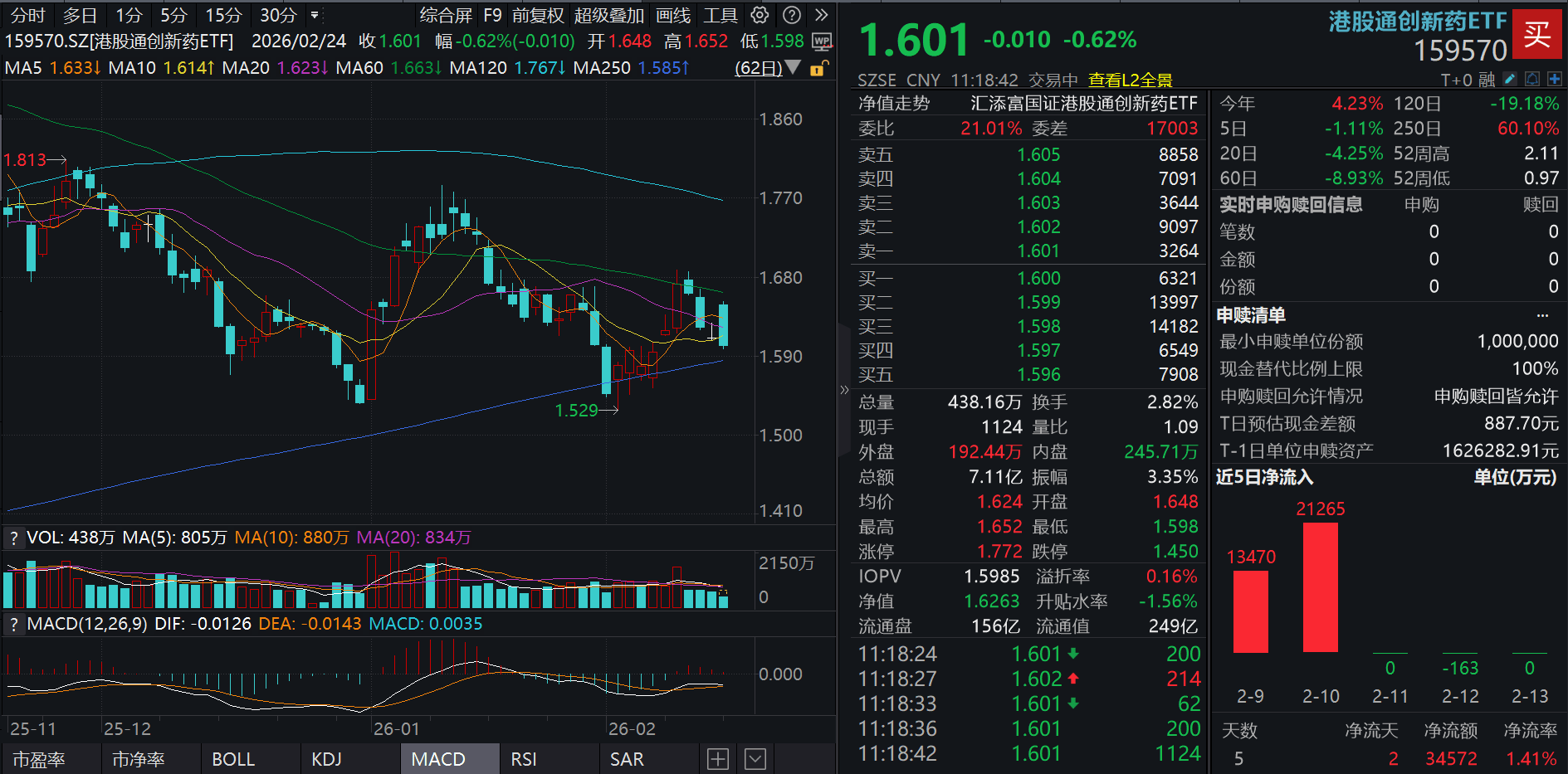
春节期间医药行业重点梳理!港股通创新药ETF(159570)冲高回落,近5日累计吸金超3.4亿元!FDA创新药审评政策再松绑,利好创新药!
Sou Hu Cai Jing· 2026-02-24 03:40
截至11:07,港股通创新药ETF(159570)标的指数热门股多数回调:石药集团、中国生物制药、三生制药、翰森制药、荣昌生物跌超5%,信达生物跌超4%, 康方生物跌超3%。 | 序号 | 代码 | 名称 | 估算板車 | 涨跌幅 | 17.47 80 ▼ | | --- | --- | --- | --- | --- | --- | | 1 | 1801 | 信达生物 | 10.51% | -0.56% | 6.81亿 | | 2 | 1093 | 石药集团 | 12.18% | -3.15% | 5.98 7. | | 3 | 6160 | 高密被田 | 10.99% | -1.13% | 2.83 Z | | 4 | 1530 | 三生制药 | 6.50% | -2.57% | 2.65 Z | | 5 | 9926 | 康方生物 | 8.49% | -1.33% | 2.57 Z | | 6 | 3692 | 翰森制药 | 6.84% | -1.84% | 1.99 Z | | 7 | 1177 | 中国生物制药 | 10.01% | -3.66% | 1.74Z | | 8 | 6990 | 科伦博 ...

未知机构:国泰海通医药创新药推荐观点更新进一步推荐具备价值重估空间的pharma以-20260224
未知机构· 2026-02-24 03:00
Summary of Key Points from the Conference Call Industry Overview - The focus is on the **Pharmaceutical (Pharma)** and **Biopharmaceutical/Biotech** sectors, highlighting companies with potential for value re-evaluation and those entering a performance ramp-up phase [1][2]. Core Insights and Arguments 1. **Value Re-evaluation of Pharma Companies**: - There is a recommendation to further support Pharma companies that have the potential for value re-evaluation, particularly emphasizing key marginal changes. The BD (Business Development) revenue for Pharma is expected to normalize, which will drive an upward shift in the valuation framework [1][2]. 2. **Performance Ramp-up in Biopharma/Biotech**: - Continuous recommendation for Biopharma/Biotech companies that are entering a performance ramp-up phase and have pipelines that are consistently delivering results. The expectation is that by 2026, leading Biopharma/Biotech companies will enter a period of accelerated performance [2]. 3. **Key Marginal Changes**: - The core marginal change driving the value re-evaluation logic for Pharma companies is the normalization of BD revenue. This is supported by two main factors: - Leading Pharma companies have a more comprehensive technology platform and pipeline layout, enhancing their ability to continuously produce BD assets [2]. - External transactions are evolving from sporadic single-asset licensing to a more platform-based and series-based licensing model, making upfront payments, milestones, and revenue sharing more replicable and predictable. Recent collaborations, such as the partnership between **Shiyao** and **AstraZeneca** for a long-acting weight loss drug (total package of $18.5 billion) and **Innovent** with **Eli Lilly** in oncology and immunology (total package of $8.9 billion), exemplify this trend [2]. Recommendations - Specific companies recommended for investment include: - **Hengrui Medicine** - **Hansoh Pharmaceutical** - **Shiyao Group** (new addition in February) - **China National Pharmaceutical Group** - **Sinopharm** (new addition in February) - **Haisco** [2]. Additional Important Insights - The oncology, metabolism, and autoimmune sectors are expected to see a concentration of critical data releases. The integration of new technology platforms such as small nucleic acids, bispecific/trispecific antibodies, next-generation ADCs, and PROTAC/molecular glue is anticipated to provide significant valuation elasticity for leading companies at key data points, potentially opening up overseas BD opportunities [3].




未知机构:国泰海通医药春节期间创新药领域重点新闻梳理上市公司恒瑞医药-20260224
未知机构· 2026-02-24 02:50
【国泰海通医药】春节期间创新药领域重点新闻梳理-上市公司 恒瑞医药: 1)2/12 CDE官网显示公司递交了ANGPTL3单抗SHR-1918针对HOFH的上市申请。 目前公司暂未披露1918的III期临床结果; 1)2/20 公司公告阿美替尼已获欧洲药品管理局EMA批准在欧盟上市,用于EGFR19del或L858RNSCLC一线治疗, 以及T790MNSCLC治疗; 石药集团: 1)2/16 公司公告旗下受体偏向性GLP1/GIP激动剂月制剂SYH2082在美国获批临床; 信立泰: 翰森制药: 1)2/20 公司公告阿美替尼已获欧洲药品管理局EMA批准在欧盟上市,用于EGFR19del或L858RNSCLC一线治疗, 以及T790MNSCLC治 【国泰海通医药】春节期间创新药领域重点新闻梳理-上市公司 恒瑞医药: 1)2/12 CDE官网显示公司递交了ANGPTL3单抗SHR-1918针对HOFH的上市申请。 目前公司暂未披露1918的III期临床结果; 翰森制药: 1)2/20 公司在《欧洲呼吸杂志子刊-开放研究》ERJ OPEN RESEARCH上披露了IL17RB单抗SM17针对CRSWNP和 IPF ...
渤海证券研究所晨会纪要(2026.02.24)-20260224
BOHAI SECURITIES· 2026-02-24 00:25
证券分析师 022-28451618 SAC NO:S1150511010016 cuijian@bhzq.com 晨会纪要(2026/02/24) 崔健 渤海证券研究所晨会纪要(2026.02.24) 固定收益研究 债市延续偏强震荡——利率债周报 行业研究 1-8 批国家药品集采平稳接续,基药目录管理办法印发——医药生物行业周报 证 券 研 究 报 告 晨 会 纪 要 请务必阅读正文之后的声明 渤海证券股份有限公司具备证券投资咨询业务资格 1 of 5 晨会纪要(2026/02/24) 固定收益研究 债市延续偏强震荡——利率债周报 王哲语(证券分析师,SAC NO:S1150524070001) 周 喜(证券分析师,SAC NO:S1150511010017) 李济安(证券分析师,SAC NO:S1150522060001) 统计区间:2026 年 2 月 6 日至 2026 年 2 月 12 日。 统计期内,一级市场共发行利率债 96 只,实际发行总额为 9643 亿元,节前发行规模依然较高,其中,国 债发行规模增加,专项债发行规模小幅减少。 4、二级市场:债市延续偏强震荡 统计期内债市延续偏强震荡特征, ...
投资观点&研究专题周周谈第163期:血制品2025年行业总结及2026年展望
Huachuang Securities· 2026-02-23 10:45
Investment Rating - The report maintains a positive outlook on the blood products industry, suggesting that the supply-demand relationship will gradually improve, leading to performance recovery for companies in this sector [10][34]. Core Insights - The blood products industry is characterized by a clear long-term growth trajectory, supported by a favorable regulatory environment for plasma collection and an expanding product range among companies [12][34]. - Short-term performance has been impacted by supply-demand mismatches, with a notable decline in profitability observed in 2025 due to excess supply and price reductions [19][36]. - The report highlights the importance of white albumin and immunoglobulin (IVIG) as core products, with a stable demand expected despite recent price pressures [33][34]. Summary by Sections Market Review - The report notes a decline of 0.85% in the medical index, underperforming the CSI 300 index by 1.22 percentage points, ranking 21st among 30 sectors [6]. - The top-performing stocks in the medical sector include Aidi Te, Zhendai Medical, and Olin Bio, while the worst performers include Beixin Life and Huayuan Bio [6]. Industry and Stock Events - The report emphasizes the recovery of plasma collection activities post-pandemic, which has led to increased supply and a shift in the market dynamics for blood products [19][26]. - The report identifies key companies to watch, including Tian Tan Biological and Bo Ya Biological, as they are expected to benefit from the industry's growth [12][34]. Overall Perspective and Investment Themes - The report suggests focusing on innovative drugs, medical devices, and the blood products sector, highlighting the potential for significant growth driven by domestic differentiation and international expansion [10][12]. - The report also discusses the ongoing consolidation in the industry, particularly among state-owned enterprises, which may enhance market concentration and operational efficiencies [46]. Supply and Demand Dynamics - The report indicates that the supply of blood products is expected to tighten in 2026 due to a slowdown in plasma collection growth and a decrease in imported white albumin supply [30][34]. - Demand for white albumin remains robust, with sales showing signs of stabilization despite recent challenges [33][34]. Future Outlook - The report anticipates a gradual return to a balanced supply-demand relationship in the blood products industry, which could lead to improved financial performance for key players [34][36]. - The potential for new product introductions and market expansions is highlighted as a significant driver for future growth in the sector [12][34].






恒瑞医药研发里程碑与股价动态引关注
Jing Ji Guan Cha Wang· 2026-02-20 05:39
Core Insights - The article highlights the recent milestones in research and development for Heng Rui Medicine, particularly the inclusion of KRAS G12D inhibitor HRS-4642 for advanced pancreatic cancer treatment by the National Medical Products Administration [1] - The company is also advancing its clinical pipelines, including IL-17 monoclonal antibody SHR-1314 and GLP-1/GIP dual-target agonist HRS-9531, showcasing its R&D strengths [1] - A supply disruption incident involving partner Lingli Pharmaceutical is ongoing, with Heng Rui Medicine stating it is legally assisting in the matter without disclosing specific adjustments to the partnership [1] Stock Performance - As of February 13, the A-share price closed at 58.23 yuan, down 0.87%, with a trading volume of 2.009 billion yuan; the Hong Kong stock price as of February 20 was 69.25 HKD, down 2.33% [1] - Technical analysis indicates short-term volatility, with a resistance level at 60.76 yuan and a support level at 55.95 yuan [1] - On February 13, there was a net outflow of 130 million yuan from major funds, but institutional target prices average at 76.40 yuan, indicating a potential upside of 31.20% from the current price [1] Institutional Insights - As of February 18, it was noted that the revenue from innovative drugs for Heng Rui Medicine has reached 60.66%, indicating a shift in valuation logic towards pipeline-driven growth [1] - The company has the second-largest pipeline globally with 163 self-developed projects, yet its market capitalization stands at 67 billion USD, highlighting a disparity compared to similar international pharmaceutical companies [1] - Business development (BD) is expected to become a new growth driver, with projected external licensing revenue of 6 billion yuan in 2026, although there are concerns regarding the global competitiveness of the Fast Follow strategy [1]
中国创新药产业加速迈向全球价值链核心
Jing Ji Guan Cha Wang· 2026-02-18 03:24
Core Insights - The Chinese innovative pharmaceutical industry is transitioning from "importing and imitating" to "innovating and exporting," enhancing its global influence and authority in the innovative drug sector [1] - In early 2026, the market for outbound licensing transactions in China's innovative drugs continued its strong growth, with the first quarter's transaction amount exceeding $33.28 billion, setting a historical record [1][2] - By 2025, the total value of China's innovative drug license-out transactions reached $140.27 billion, a significant increase from $2.56 billion in 2017, making China the global leader in this sector [2] Transaction Growth - The growth in China's innovative drug licensing transactions is driven by the dual pressures of a "patent cliff" and "innovation demand" in the global pharmaceutical industry [1] - In 2026, the upfront payment scale in just one month approached half of the total for the entire year of 2025, indicating a rapid increase in transaction volume and quality [2] - The structure of transactions is evolving, with a shift from simple rights transfers to deep binding models based on technology platform sharing and global R&D collaboration [2][3] Strategic Partnerships - Notable collaborations include partnerships between Innovent Biologics and Eli Lilly, as well as between 3SBio and Pfizer, showcasing the trend of comprehensive capability partnerships rather than mere product supply [3] - Leading pharmaceutical companies are adopting a dual strategy of "independent R&D + global licensing," creating a sustainable innovation cycle [3] Financial Performance - Over 70% of innovative pharmaceutical companies reported positive revenue growth in 2025, with cash flow from outbound licensing contributing to a virtuous cycle with capital market financing [4] - The evolving payment system in China, which combines basic medical insurance with commercial insurance, supports a stable cash flow from the domestic market while enhancing long-term corporate value through global collaborations [4] Global Impact - The trend of outbound licensing is reshaping cooperation rules and competitive dynamics in the global pharmaceutical industry, with Chinese companies increasingly playing a proactive and critical role [4][6] - The collaboration between companies like Innovent and Takeda exemplifies a mutually beneficial partnership that leverages global channels and local clinical capabilities [4] Market Sentiment - Despite market fluctuations, analysts generally view high-quality innovative pharmaceutical companies as attractive long-term investments, reflecting a dual recognition of explosive innovative potential and structural growth resilience in the Chinese pharmaceutical industry [5] Industry Dynamics - The surge in outbound licensing is prompting local companies to balance "bringing in" and "going out," with the latter gaining prominence and indicating international market recognition of China's innovative drug quality [6] - There is a need for rational and cautious approaches in the face of rising transaction prices and potential market uncertainties, emphasizing the importance of thorough scientific and commercial due diligence [6]
创新药出海开年跑出“加速度”:产业迈入2.0时代
Jing Ji Guan Cha Wang· 2026-02-18 02:45
Core Insights - The Chinese innovative pharmaceutical industry has entered the 2.0 era, shifting from "import imitation" to "innovation output," with new forms like license-out and new co indicating a transformation in internationalization [1] - In the first quarter of 2026, the total transaction amount for Chinese innovative drug licensing (BD) exceeded $33.28 billion, surpassing the highest quarterly level of 2025, marking a shift from a "follower" to a core driver in the global innovation value chain [1][2] - The explosive growth in BD transactions is attributed to multiple factors, including the global pharmaceutical industry's "patent cliff" and "innovation demand," alongside China's recognized R&D efficiency and clinical capabilities [1] Transaction Growth - In 2025, the total value of China's innovative drug license-out transactions reached $140.27 billion, a significant increase from $2.56 billion in 2017, accounting for 49% of global innovative drug licensing transactions, surpassing the U.S. for the first time [2] - In January 2026, the upfront payment scale approached half of the total for 2025, with total transaction amounts reaching 22% of 2025's total [2] - The quality of transactions is also improving, with frequent occurrences of upfront payments exceeding $100 million and 37 transactions exceeding $1 billion, second only to the U.S. [2] Transaction Structure - The upgrade in transaction structure is a core feature of China's innovative drug internationalization, with traditional "selling seedlings" models being replaced by "technology platform output" and "global R&D collaboration" [2][3] - Notable collaborations include Innovent Biologics and Eli Lilly, where the partnership is based on a new molecule, demonstrating deep trust in China's R&D capabilities [2] Strategic Transformation - Leading pharmaceutical companies are adopting a dual strategy of "independent R&D + global licensing," creating a sustainable innovation ecosystem [3] - Examples include BeiGene's revenue surpassing 36 billion yuan in 2025, showcasing strong commercialization capabilities, and other companies achieving breakeven for the first time [3] Financial Performance - Over 70% of innovative pharmaceutical companies achieved revenue growth in 2025, with cash flow from BD transactions and IPO funding providing substantial resources for the industry [4] - The combination of domestic market cash flow and global licensing is creating a dual-driven model that reduces financial risks and accelerates the conversion of innovative results [4] Industry Ecosystem - The internationalization of innovative drugs is reshaping the global pharmaceutical landscape, with predictions of the emergence of global Chinese pharmaceutical giants [4] - Collaborations like that between Innovent Biologics and Takeda illustrate the strategic partnerships that enhance project advancement efficiency [4] Investment Trends - The innovative drug sector has seen a correction over the past two quarters, but long-term prospects for quality targets remain favorable, suggesting increased allocation [5] - The "dumbbell strategy" proposed by CICC highlights the dual characteristics of "innovation output" and "steady growth" in the Chinese innovative drug industry [5][6] Market Dynamics - An increasing number of Chinese innovative pharmaceutical companies are transitioning from "license-in" to proactive "license-out," achieving record high transaction amounts and gaining recognition in international markets [6] - Horizontal cooperation and integration among domestic pharmaceutical companies are accelerating to optimize resource allocation and address market competition and regulatory challenges [6]