BOB(601169)

Search documents
并购市场需求旺盛 贷款投放密集落地
Zhong Guo Jing Ying Bao· 2026-01-16 20:35
Group 1 - The core viewpoint of the article highlights the increasing activity in the domestic merger and acquisition (M&A) market, driven by a series of supportive policies from regulatory authorities, particularly the new guidelines on M&A loans issued by the National Financial Regulatory Administration [1][2][3] - The new M&A loan management regulations allow for a higher proportion of controlling M&A loans in the transaction price, increasing the limit from 60% to 70%, and extending the loan term from seven years to ten years, thereby facilitating financing for M&A transactions [3][4] - The implementation of these regulations has led to a rapid increase in M&A loan projects being approved and disbursed by various commercial banks within a short period, indicating a positive market response to the new policies [2][3][4] Group 2 - The new regulations specifically include minority stake acquisitions in the scope of M&A loans, which aligns with current industrial upgrade needs and is expected to promote industrial integration and high-quality economic development [4][7] - Several banks, including Industrial and Commercial Bank of China and Agricultural Bank of China, have successfully issued the first M&A loans under the new regulations, demonstrating proactive engagement with local enterprises to meet their financing needs [4][5][6] - The regulatory environment is further supported by multiple government departments encouraging industrial mergers and acquisitions, particularly in technology sectors such as electronics and biomedicine, which are seeing increased M&A activity [8][9]






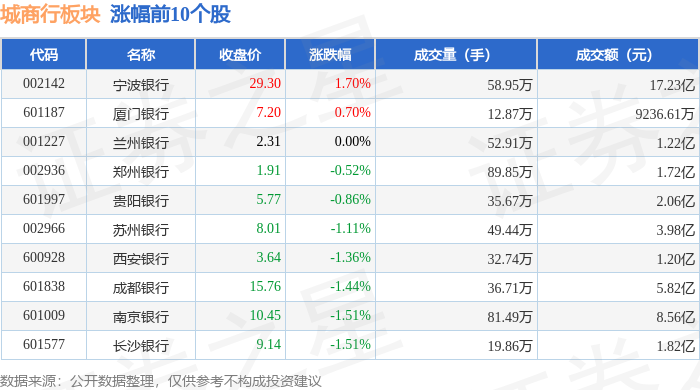
城商行板块1月16日跌1.27%,江苏银行领跌,主力资金净流出2.29亿元
Zheng Xing Xing Ye Ri Bao· 2026-01-16 08:56
Core Viewpoint - The city commercial bank sector experienced a decline of 1.27% on January 16, with Jiangsu Bank leading the drop. The Shanghai Composite Index closed at 4101.91, down 0.26%, while the Shenzhen Component Index closed at 14281.08, down 0.18% [1]. Group 1: Stock Performance - Ningbo Bank closed at 29.30, up 1.70% with a trading volume of 589,500 shares and a transaction value of 1.723 billion [1]. - Xiamen Bank closed at 7.20, up 0.70% with a trading volume of 128,700 shares and a transaction value of 92.3661 million [1]. - Jiangsu Bank closed at 9.76, down 2.69% with a trading volume of 2,061,300 shares and a transaction value of 2.033 billion [2]. - Shanghai Bank closed at 9.64, down 2.43% with a trading volume of 961,200 shares and a transaction value of 933.3 million [2]. Group 2: Capital Flow - The city commercial bank sector saw a net outflow of 229 million from main funds, while speculative funds had a net inflow of 716 million, and retail investors experienced a net outflow of 487 million [2]. - Hangzhou Bank had a main fund net inflow of 153 million, while retail investors saw a net outflow of 113 million [3]. - Nanjing Bank recorded a main fund net inflow of 70.5 million and a retail net outflow of 131 million [3].





这场变革中,金融力量正发挥重要助力
Xin Lang Cai Jing· 2026-01-15 14:14
Group 1 - China's innovation ecosystem has shown significant results, with many small tech companies receiving support in technology and funding, facilitating their technological breakthroughs [1][10] - Over 600,000 tech and innovative SMEs have been cultivated in China, with more than 140,000 specialized and innovative SMEs and over 17,600 national-level "little giant" enterprises [10] - Private enterprises constitute the majority among specialized and innovative SMEs, which are crucial for the country's technological self-reliance efforts [10] Group 2 - Beijing Bank is a representative pioneer in nurturing industrial innovation through financial support, focusing on technology finance as its primary strategy [2][11] - The bank aims to build a "specialized and innovative first bank" by restructuring service structures and innovating product systems to empower private and tech SMEs [2][12] Group 3 - Beijing Bank has developed a comprehensive financial service system that accompanies tech enterprises throughout their development cycle, providing tailored financial support [4][13] - The bank has established a "1+18+N" technology finance specialized network, serving nearly 60,000 tech SMEs with over 1.45 trillion yuan in credit funding [5][14] Group 4 - The core challenge in serving specialized and innovative enterprises lies in pricing their intangible assets, such as patents and data algorithms, which differ from traditional hard assets [6][15] - Beijing Bank has innovated its risk assessment by integrating various data sources to create dynamic digital profiles of enterprises, enhancing financing efficiency [7][15] Group 5 - The bank's strategy extends beyond individual financing solutions to building a collaborative industrial innovation ecosystem, focusing on key industries like information technology and high-end equipment [18] - By acting as a resource connector, Beijing Bank helps tech companies find market orders and investment partners, transitioning from mere financing to comprehensive intelligence integration [18][19]
北京危旧楼改建融资难题破局!试点银行:个人满足这些条件可申请
Bei Ke Cai Jing· 2026-01-15 13:20
Core Viewpoint - The Beijing Financial Regulatory Bureau has launched a pilot program for financing the renovation of old residential buildings, introducing a specialized "Personal Housing Renovation Loan" product to address residents' financing challenges and improve living conditions in aging neighborhoods [1][6]. Group 1: Pilot Program and Financial Products - The pilot program is the only one in the country supported by the National Financial Supervision Administration, allowing for the creation of a "Personal Housing Renovation Loan" product [1][6]. - Seven banks, including Beijing Bank and China Construction Bank, are participating as pilot banks for the renovation projects [2]. - The first "Personal Housing Renovation Loan" has been successfully issued, marking a significant step in addressing the financing difficulties faced by residents [4][10]. Group 2: Conditions and Process for Borrowers - Borrowers must meet five specific conditions to qualify for the "Personal Housing Renovation Loan," including signing a renovation agreement and demonstrating good creditworthiness [7][8]. - The loan amount is determined based on the renovation costs, and the disbursement aligns with the progress of the renovation project [6][10]. Group 3: Impact on Residents and Urban Development - The initiative aims to alleviate the financial burden on residents during the renovation process, allowing more families to participate and improving living conditions by addressing safety hazards in aging buildings [9][10]. - The program is expected to drive significant fixed asset investment, potentially reaching hundreds of billions in the next five to ten years, thereby stimulating related industries and enhancing overall economic development in Beijing [10].
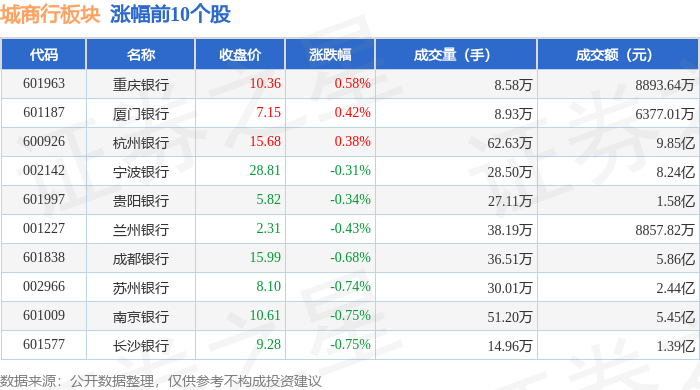
城商行板块1月15日跌0.59%,青岛银行领跌,主力资金净流入2.21亿元
Zheng Xing Xing Ye Ri Bao· 2026-01-15 08:59
Market Performance - The city commercial bank sector declined by 0.59% on January 15, with Qingdao Bank leading the decline [1] - The Shanghai Composite Index closed at 4112.6, down 0.33%, while the Shenzhen Component Index closed at 14306.73, up 0.41% [1] Individual Stock Performance - Chongqing Bank closed at 10.36, up 0.58% with a trading volume of 85,800 shares and a transaction value of 88.94 million [1] - Xiamen Bank closed at 7.15, up 0.42% with a trading volume of 89,300 shares and a transaction value of 63.77 million [1] - Hangzhou Bank closed at 15.68, up 0.38% with a trading volume of 626,300 shares and a transaction value of 9.85 billion [1] - Ningbo Bank closed at 28.81, down 0.31% with a trading volume of 285,000 shares and a transaction value of 824 million [1] - Chengdu Bank closed at 15.99, down 0.68% with a trading volume of 365,100 shares and a transaction value of 586 million [1] Capital Flow Analysis - The city commercial bank sector saw a net inflow of 221 million from institutional investors and a net inflow of 296 million from speculative funds, while retail investors experienced a net outflow of 517 million [2] - Hangzhou Bank had a net inflow of 123 million from institutional investors, accounting for 12.51% of its total [3] - Shanghai Bank had a net inflow of 97.02 million from institutional investors, representing 20.87% of its total [3] - Nanjing Bank had a net inflow of 37.40 million from institutional investors, making up 6.86% of its total [3]

金价飙升后,银行里的“一尺铁柜”成了抢手货
Xin Lang Cai Jing· 2026-01-15 00:02
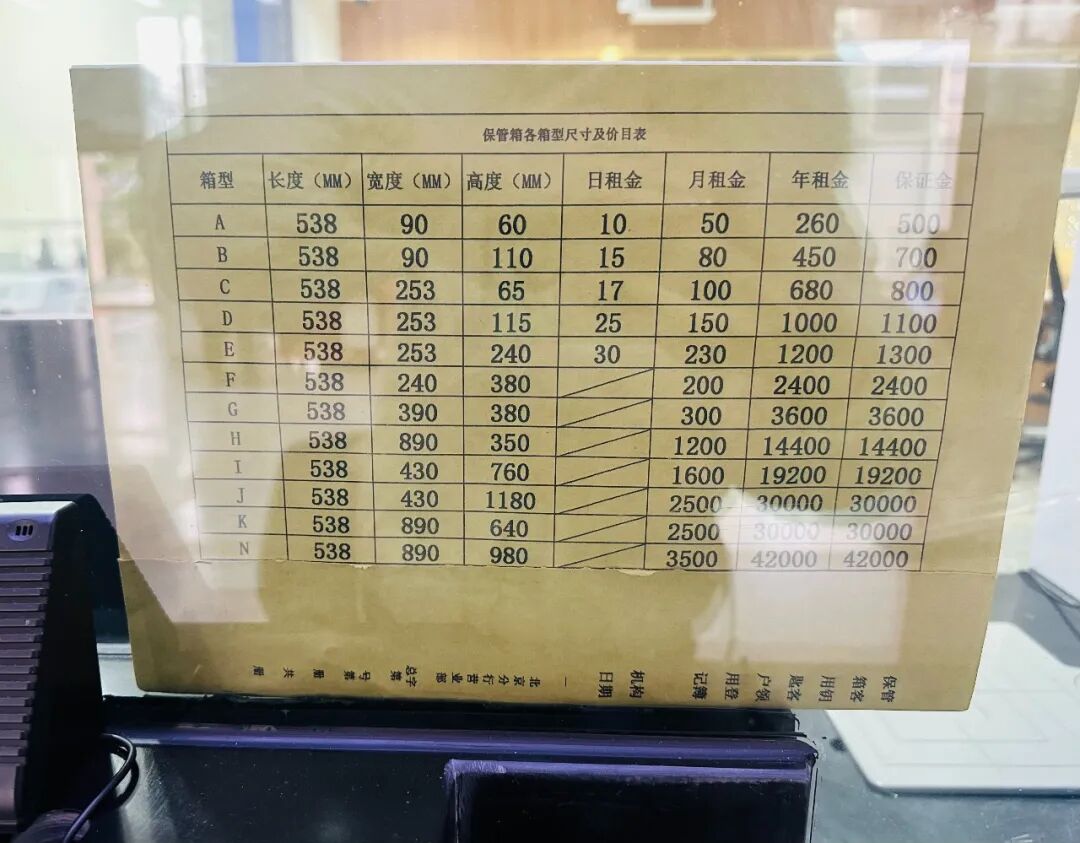
Core Insights - The rising gold prices have sparked a surge in demand for bank safe deposit boxes, leading to a situation where they are in high demand but low supply [1][4][12] - Many banks in Beijing report that all safe deposit boxes are currently rented out, with waiting lists exceeding 100 customers at some locations [2][10] - The demand for safe deposit boxes is driven by increased interest in gold investments, as geopolitical risks continue to elevate the appeal of gold as a safe-haven asset [4][12] Demand and Supply Dynamics - The demand for safe deposit boxes has significantly increased, with banks reporting a notable rise in inquiries since last year [4][12] - Banks are struggling to keep up with the demand, as the supply of safe deposit boxes has not increased in tandem, leading to a shortage [6][15] - Some banks have ceased offering safe deposit box services altogether due to high maintenance costs and low profitability [15][16] Pricing and Features - Different banks offer various sizes and pricing structures for safe deposit boxes, with significant variations in rental fees [3][11] - For example, at China Merchants Bank, the smallest box has a monthly rental fee of 50 yuan, while larger boxes can cost up to 42,000 yuan annually [11] - Postal Savings Bank offers a fully automated safe deposit box with advanced security features, including 24-hour monitoring and multiple verification methods for access [5][13] Market Trends - The ongoing geopolitical tensions and expectations of continued low interest rates are expected to sustain the demand for gold and, consequently, safe deposit boxes [4][12] - Investors are increasingly looking for secure storage options for their gold investments, as concerns about home security grow [4][12] - Some banks are innovating their services, such as offering promotional deals for customers purchasing gold products, to attract more clients [16]



金价飙升后 银行里的“一尺铁柜”成了抢手货
Zhong Guo Zheng Quan Bao· 2026-01-14 21:10
Core Viewpoint - The surge in gold prices has led to a significant increase in demand for bank safe deposit boxes, resulting in a shortage of available boxes in Beijing banks [1][4]. Group 1: Demand for Safe Deposit Boxes - There is a booming demand for safe deposit boxes as residents are increasingly investing in gold, with reports indicating that many banks are fully booked and customers are facing long waiting lists [1][2]. - Some banks have reported waiting lists exceeding 100 people, with estimates suggesting that new customers may not be able to rent boxes until 2026 [2][4]. Group 2: Supply Constraints - The supply of safe deposit boxes has not kept pace with the rising demand, as only larger bank branches typically offer this service, and many smaller branches do not have safe deposit box facilities [1][6]. - Factors such as space limitations and high maintenance costs have prevented banks from expanding their safe deposit box offerings, leading to a decline in the availability of this service [6]. Group 3: Pricing and Variability - Different banks offer various sizes and pricing structures for safe deposit boxes, with significant differences in rental fees based on box dimensions [3][4]. - For example, at China Merchants Bank, the smallest box has a monthly rental fee of 50 yuan, while larger boxes can cost up to 42,000 yuan annually [3]. Group 4: Investor Sentiment and Alternatives - Investors express concerns about the safety of storing physical gold at home, leading many to prefer bank safe deposit boxes for their perceived security [5]. - Some investors are considering alternatives such as home safes due to the high rental costs and long wait times associated with bank safe deposit boxes [7]. Group 5: Innovations and Promotions - To address the supply-demand imbalance, some banks are exploring smart upgrades and promotional offers to attract customers, such as free rental periods for new clients purchasing gold products [7]. - For instance, Qingdao Rural Commercial Bank has offered promotional incentives for customers purchasing gold products, including free usage of safe deposit boxes for a limited time [7].
实探 | “租箱子比买金子难多了!”
Zhong Guo Zheng Quan Bao - Zhong Zheng Wang· 2026-01-14 14:57
Core Insights - The demand for bank safe deposit boxes has surged due to rising gold prices and geopolitical risks, leading to a situation where many banks are fully booked and customers are facing long wait times to rent a box [1][5]. Group 1: Market Demand - Since 2025, the continuous rise in gold prices has fueled investor interest in acquiring gold, resulting in a significant increase in demand for bank safe deposit boxes [5]. - Many investors prefer to store their physical gold in bank safe deposit boxes for security reasons, as they feel safer compared to keeping it at home [6]. Group 2: Supply Constraints - Banks are experiencing a shortage of available safe deposit boxes, with reports indicating that all models are currently rented out and customers are waiting in line, sometimes with over a hundred people ahead [2][5]. - The supply of safe deposit boxes has not kept pace with the growing demand, leading to a situation where potential renters are advised to wait for existing customers to vacate their boxes [6]. Group 3: Pricing Structure - Different banks have varying pricing structures for their safe deposit boxes, with fees based on the size and type of the box. For example, the smallest box at China Merchants Bank has a monthly rental fee of 50 yuan, while the largest can cost up to 42,000 yuan annually [3][4]. - The pricing for safe deposit boxes at Ping An Bank also varies significantly, with the smallest box costing 100 yuan per month and the largest reaching 15,000 yuan annually [4].
银行行业今日净流出资金50.88亿元,招商银行等12股净流出资金超亿元
Zheng Quan Shi Bao Wang· 2026-01-14 09:24
| 代码 | 简称 | 今日涨跌幅(%) | 今日换手率(%) | 主力资金流量(万元) | | --- | --- | --- | --- | --- | | 600036 | 招商银行 | -2.58 | 0.93 | -203476.81 | | 601169 | 北京银行 | -2.71 | 2.18 | -92629.68 | | 601166 | 兴业银行 | -2.38 | 0.61 | -51513.60 | | 600000 | 浦发银行 | -2.85 | 0.41 | -31061.75 | | 600015 | 华夏银行 | -2.81 | 0.99 | -27174.30 | | 601288 | 农业银行 | -1.71 | 0.12 | -24314.35 | | 601658 | 邮储银行 | -1.68 | 0.32 | -19835.95 | | 000001 | 平安银行 | -0.96 | 0.66 | -18038.37 | | 601398 | 工商银行 | -1.54 | 0.14 | -15404.23 | | 601988 | 中国银行 | -1.44 | 0 ...
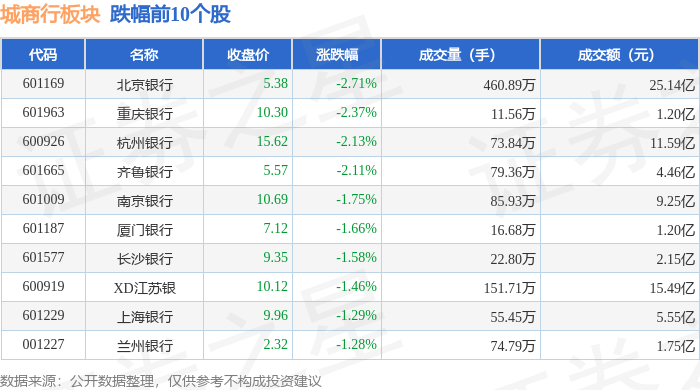
城商行板块1月14日跌2.11%,北京银行领跌,主力资金净流出7.29亿元
Zheng Xing Xing Ye Ri Bao· 2026-01-14 08:58
Core Viewpoint - The city commercial bank sector experienced a decline of 2.11% on January 14, with Beijing Bank leading the drop, while the overall market showed mixed results with the Shanghai Composite Index down 0.31% and the Shenzhen Component Index up 0.56% [1] Group 1: Market Performance - The closing price of Beijing Bank was 5.38, down 2.71%, with a trading volume of 4.6089 million shares and a transaction value of 2.514 billion [1] - Other notable declines included Chongqing Bank at 10.30 (-2.37%), Hangzhou Bank at 15.62 (-2.13%), and Qilu Bank at 5.57 (-2.11%) [1] - The city commercial bank sector saw a net outflow of 729 million in main funds, while retail investors contributed a net inflow of 53.1975 million [1] Group 2: Fund Flow Analysis - Hangzhou Bank had a main fund net inflow of 1.20 billion, but a net outflow from retail investors of 92.9469 million [2] - Suzhou Bank recorded a net inflow of 52.503 million from main funds, while retail investors had a net outflow of 54.0558 million [2] - Shanghai Bank experienced a main fund net inflow of 45.3249 million, with a retail net outflow of 46.6735 million [2]