Yanghe(002304)

Search documents
食品饮料行业周度更新:从中国快消品数据报告,看食品饮料消费结构-20251222
Changjiang Securities· 2025-12-21 23:30
Investment Rating - The industry investment rating is "Positive" and is maintained [9] Core Insights - In the first three quarters of 2025, the Chinese fast-moving consumer goods (FMCG) market exhibited distinct characteristics of "price reduction, volume increase, structural differentiation, and channel reshaping." The overall market average price decreased by 2.4% year-on-year, but the decline has narrowed, indicating price stabilization. Third to fifth-tier cities have become the main drivers of sales recovery, while competition in first and second-tier cities has intensified. Notably, packaged food sales led with a growth rate of 3.4%, although the momentum is slowing due to price sensitivity. Beverages are the only category to experience a decline, significantly impacted by price wars and competition from freshly brewed tea drinks [2][4][27]. Summary by Sections Market Overview - The FMCG market in China is characterized by a "price reduction, volume increase" trend, with a 2.4% year-on-year decline in average prices, which is stabilizing. Sales growth in lower-tier cities contributed approximately 80% to market growth, with a year-on-year increase of 4-6% [17][21][27]. Category Performance - Packaged food sales grew by 3.4% year-on-year, driven by stable demand for core and snack food categories. However, growth momentum is slowing, with quarterly growth rates of 4.6%, 4.2%, and 2.9%. In contrast, the beverage category saw a 1.1% decline in sales, despite a 3.6% increase in volume, primarily due to a 4.6% drop in average prices [21][25][27]. Channel Dynamics - The channel landscape is evolving, with traditional offline channels continuing to shrink. Emerging formats such as warehouse membership stores and snack collection stores are experiencing rapid growth, with increases of approximately 40%, 51%, and 92% respectively. E-commerce channels also showed resilience with a growth rate of about 7% [22][27]. Subsector Performance - The food and beverage sector has seen a mixed performance, with the overall index down 3.66% since the beginning of the year, lagging behind the CSI 300 index. However, subsectors like snack foods, food composites, and soft drinks have shown relative strength in recent weeks [29][35]. Industry Trends - The liquor industry is undergoing strategic adjustments, with major companies like Kweichow Moutai and Wuliangye implementing market reforms. Fast food and coffee brands are leveraging price adjustments and co-branding initiatives to attract consumers. The soft drink sector is focusing on product innovation and brand exposure, while the dairy sector is investing in capacity expansion and governance changes [35][36][37].





“失意”2025:白酒行业“深水区”探底,亟待价值重塑
中国基金报· 2025-12-21 13:18
Core Viewpoint - The Chinese liquor industry is undergoing significant adjustments, facing challenges from macro policies and shrinking consumer demand, leading to a decline in prices and market confidence [3][5]. Price Decline and Control Upgrades - The wholesale price index for liquor in China fell by 9.9% year-on-year in the first half of 2025, with premium liquor prices dropping by 14.96% [5]. - The price of Feitian Moutai has decreased by approximately 35% from the beginning of the year, falling below the retail guidance price of 1499 yuan [5]. - Major liquor companies are tightening their supply and implementing measures to stabilize prices, with Wuliangye and Moutai taking significant steps to support their distributors and maintain market order [6][7]. Concentration Increase and Small Enterprises' Struggles - In the first three quarters of 2025, only two out of twenty listed liquor companies achieved revenue growth, while the total revenue for the sector decreased by 5.83% year-on-year [9]. - The top six liquor companies accounted for 84% of the market share, indicating a growing concentration in the industry [9]. - Many small and medium-sized enterprises are facing severe challenges, with some experiencing financial distress and "exploding" due to unsustainable business models [10]. Frequent Personnel Changes - The liquor industry has seen numerous personnel changes in 2025, with key figures resigning amid poor performance, reflecting the pressure for companies to adapt to new market conditions [12][13]. - The frequent turnover is viewed as a strategy to bring in new ideas and improve execution efficiency during a challenging market cycle [13]. Value Restructuring and Accelerated Transformation - Brands that focus on "low-alcohol and health" products, such as Jin Liquor, have seen growth, with an expected increase of around 10% in overall performance for 2025 [15]. - Major liquor companies are shifting their focus to younger consumers and value-for-money products, with new product launches aimed at capturing changing consumer preferences [16][17].


食品饮料行业周报 20251215-20251219:政策重视扩内需提消费 26 年重申看好顺周期方向-20251221
Shenwan Hongyuan Securities· 2025-12-21 13:13
Investment Rating - The report maintains a "Buy" rating for high-end liquor companies and recommends several key stocks in the food and beverage sector [6][8]. Core Insights - The report emphasizes the importance of expanding domestic demand as a strategic initiative for economic stability and security, with government agencies prioritizing this in 2026 [6][8]. - Despite recent price fluctuations in high-end liquor, the report anticipates a recovery in the sector, projecting a potential turning point in fundamentals by Q3 2026 [6][8]. - The report identifies systemic opportunities in consumer goods, particularly in the food sector, with a focus on CPI as a core observation indicator [6][8]. Summary by Sections 1. Weekly Insights on Food and Beverage - The food and beverage sector saw a 1.05% increase last week, with the liquor segment declining by 0.58% [5]. - The report ranks the food and beverage sector 13th among 31 sub-industries in terms of performance [5]. 2. Market Performance of Food and Beverage Segments - The report highlights the recent price movements of key liquor brands, including Moutai and Wuliangye, with Moutai's bottle price increasing by 45 RMB to 1545 RMB [7][30]. - Wuliangye is focusing on optimizing its product matrix and channel strategies to enhance long-term growth [7]. 3. Industry Matters - The report discusses the expected improvement in the supply-demand dynamics of the dairy industry in 2026, recommending stocks like Yili and New Hope Dairy [8][9]. - It also notes the high dividend yield of Hai Tian Wei Ye, projecting a dividend payout of 17.54 billion RMB [9][26]. 4. Valuation Table - The food and beverage sector's dynamic PE is reported at 20.10x, with a premium rate of 24% [30]. - The liquor segment's dynamic PE stands at 18.49x, with a premium rate of 14% [30].


今日财经要闻TOP10|2025年12月21日
Xin Lang Cai Jing· 2025-12-21 12:14
Group 1 - SpaceX responded to misleading reports regarding the safety of its flights, emphasizing that public safety is always its top priority during flight tests [1][10] - The company stated that all incidents involving spacecraft debris were managed within pre-coordinated control areas established by the U.S. Space Force and the FAA [1][10] - SpaceX criticized the media for relying on anonymous sources and non-scientific analyses, asserting that its safety management tools are well-established and effective [1][10] Group 2 - Longjiang Securities reported that China has become the second country after Germany to approve L3 autonomous driving vehicles for road use, marking a significant step towards mass production [3][12] - The approval of the first batch of L3 vehicles is expected to accelerate the commercialization of autonomous driving technology and benefit the entire industry chain [3][12] - The report suggested investment opportunities in intelligent driving algorithm providers, related hardware suppliers, and Robotaxi operating platforms [3][12][13] Group 3 - Morgan Stanley's Liu Mingdi identified four key themes for investment in 2026, including "anti-involution," AI, overseas expansion, and consumption, with real estate as a potential theme [5][15] - The "anti-involution" theme focuses on sectors with strong growth prospects, such as batteries and photovoltaics, and industries closely tied to the macroeconomy [5][15] - Liu emphasized that AI infrastructure capital expenditure is expected to grow, benefiting Chinese suppliers, and highlighted the importance of energy storage, photovoltaics, and batteries in the AI infrastructure sector [5][15] Group 4 - The Chinese fireworks and firecrackers association supported Shanxi province's decision to shift from a complete ban to a scientific management model for fireworks, allowing for limited use [8][18] - This change reflects a balance between cultural needs and safety governance, aiming to preserve traditional customs while managing safety risks effectively [8][18] Group 5 - RRP Semiconductor in India saw its stock price surge over 55,000% in 20 months, becoming a "meme stock" despite having negative revenue and minimal operational capacity [9][19] - The stock's rise is attributed to network speculation and a growing retail investor base in India, as there are few listed semiconductor companies available for investment [9][19] Group 6 - The Mexican proposal to impose tariffs on Chinese goods has prompted a strong response from China, which is prepared to take various countermeasures if the proposal is enacted [10][20] - China is aware of the complexities behind Mexico's proposal, particularly the pressure from the U.S. to align with its tariff policies [10][20] - The Chinese government maintains that it will protect its rights and interests, indicating a readiness to respond if the tariff proposal proceeds [10][20]

白酒T9齐聚宜宾:政策机遇期到来 求增长转向谋价值
2 1 Shi Ji Jing Ji Bao Dao· 2025-12-20 08:10
Core Viewpoint - The Chinese liquor industry is facing both challenges and opportunities as it enters the "14th Five-Year Plan" period, with a significant policy shift recognizing the liquor industry as a "historical classic industry" [2][3] Industry Policy Changes - The liquor industry has been historically classified as a restricted industry until 2020, when it was "unlocked" [2] - In October, the Ministry of Industry and Information Technology issued guidelines promoting the high-quality development of historical classic industries, further elevating the status of the liquor industry [2] - This policy change is seen as a major boost for the industry, providing a historical opportunity for development [2][3] Current Industry Challenges - The liquor industry is currently undergoing its fifth round of adjustment, with all segments, including leading brands, facing pressure [5] - The ongoing adjustment period is described as more complex and profound, with competition intensifying since 2021 [5] - There is a need for the industry to rethink existing consumption models, business models, product forms, and cultural expressions to innovate and adapt to modern demands [7][10] Shifts in Consumer Demand - The traditional consumption model is declining, with consumers increasingly seeking products that address their needs beyond just drinking [8][15] - The market is transitioning from functional consumption to emotional consumption, where consumers value cultural identity and emotional connections [15][16] - The rise of "self-pleasure" consumption is changing market dynamics, requiring companies to offer diverse product specifications and consumption methods [15][16] Future Directions for the Industry - The industry must balance tradition and innovation, ensuring that cultural values are preserved while adapting to modern consumer needs [16] - There is a call for the industry to leverage technology, cultural resonance, and ecological harmony to drive innovation [12][16] - The focus should be on creating new value propositions that resonate with younger consumers, moving from functional to emotional consumption [15][16] Events and Initiatives - The 2025 China International Famous Liquor Expo was held in Yibin, showcasing the integration of liquor and tourism [18][19] - Yibin has achieved significant milestones in liquor tourism, contributing 30% of revenue and 20% of profits with less than 5% of national production [19] - The expo aims to transform from an industry event to a city festival, promoting deep integration of liquor, culture, and tourism [18][19]

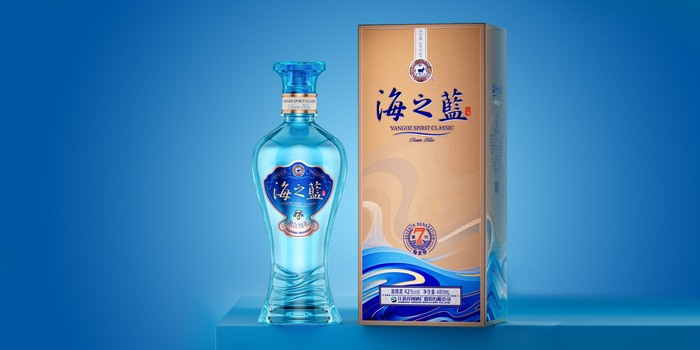
为什么洋河海之蓝会成大厂年会选酒的“标准答案”?
第一财经网· 2025-12-19 09:49
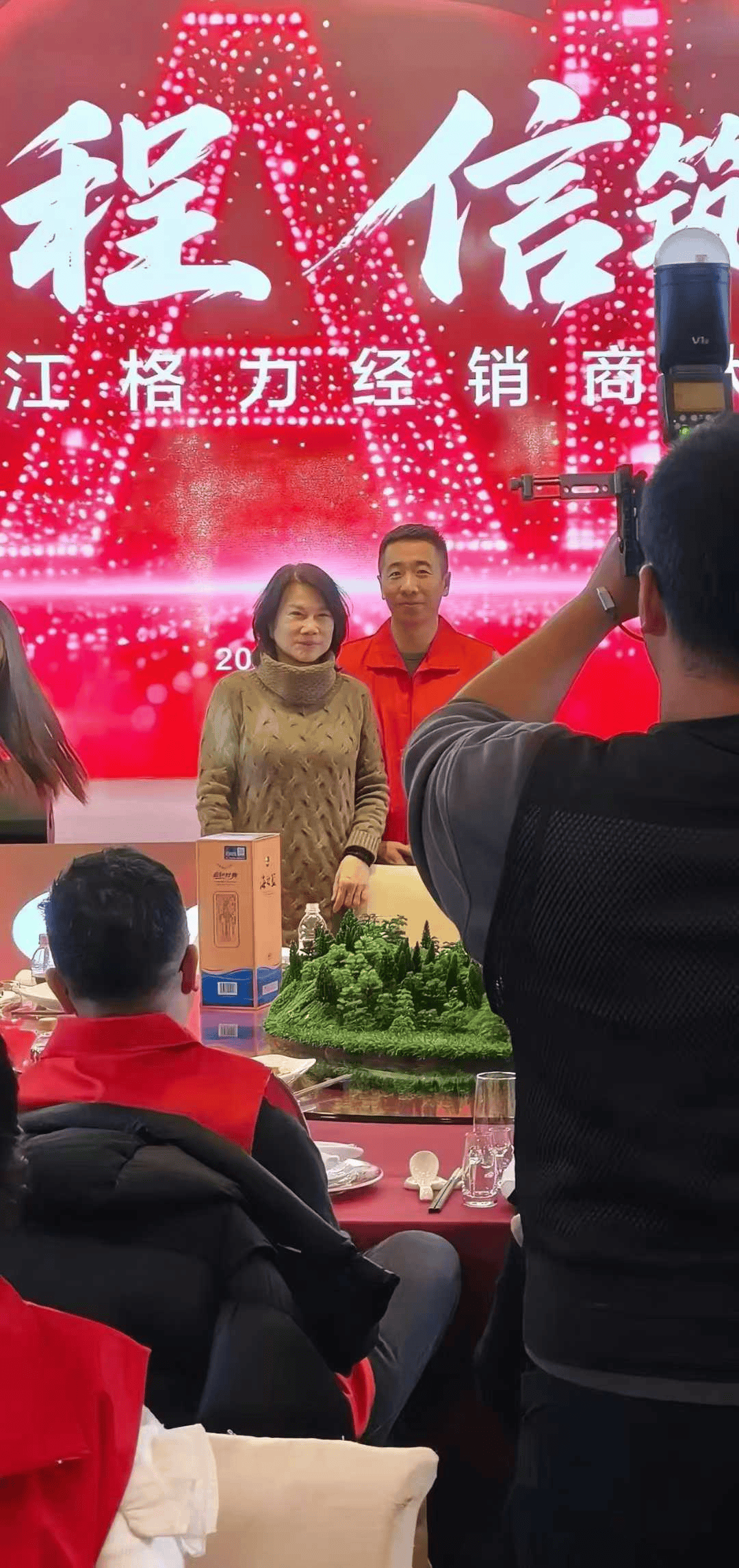
岁末寒风起,年味渐浓时。无论是企业年会的觥筹交错,还是老友重逢的推心置腹,中国人的年终欢聚 时刻,总少不了一瓶酒串联情谊。而今年,这个"酒桌C位"的答案似乎越来越清晰。 "格力经销商大会喝海之蓝,董明珠女士果然眼光独到!""格力都pick海之蓝,看来我这眼光跟董总一 样准!"近日,在黑龙江格力经销商大会的餐桌上,多位经销商如是说。 正如业内经销商所言,"年会季"覆盖了从公共商务到私人社交的全场景消费需求,而洋河完善的产品体 系总能精准匹配不同场合的饮用需求,无论是高端商务宴请还是亲友小聚,都能找到合适的选择。 可以说洋河将产品融入具体的生活场景,并提供超越产品本身的情感价值与服务体验,使得一瓶海之蓝 从"酒桌"走向"生活",使得一个白酒消费品牌,升维为一种生活方式的倡导者。 宴席上的洋河海之蓝优雅大气,与这场汇聚行业翘楚的盛会相得益彰,尽显格调。大家都知道,董明珠 做人、做企业向来追求高品质、高性价比,注重实实在在的品质与体验。而这,恰恰也是洋河海之蓝二 十多年来深入人心的关键。 洋河海之蓝能成为高端企业年会的"座上宾"绝非偶然。在此之前,京东年会、小米家宴等众多知名企业 的欢聚场合,都能看到洋河酒的身影,这 ...
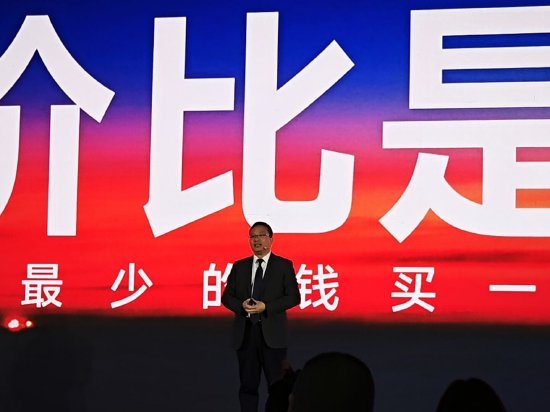
酒仙集团董事长郝鸿峰“点赞”名酒:在报表业绩上它们做出了智慧的选择
Xin Lang Cai Jing· 2025-12-19 08:05
Core Viewpoint - The chairman of JiuXian Group, Hao Hongfeng, emphasized the need for the liquor industry to focus on sustainable practices rather than short-term gains, highlighting the importance of maintaining healthy market conditions and protecting distributor interests [3][5]. Group 1: Industry Performance - The financial reports of major liquor companies are declining, indicating a challenging market environment [3][5]. - Despite the downturn, companies like Wuliangye, Yanghe, Gujing, and ShuiJingFang have set positive examples by making wise choices that contribute to market health [3][5]. Group 2: Strategic Recommendations - Companies should avoid sacrificing distributor interests for short-term financial appearances, as this could lead to long-term market damage that may take 5 to 10 years to recover, or potentially never recover [3][5]. - The strategy of "reducing volume, stabilizing prices, and retreating to advance" is recommended to build a solid foundation for future growth [3][5]. - A return to genuine market reflections in financial reports is essential for the industry to gradually move towards a healthier state [3][5].

别想了,年会酒就抄董明珠的作业:洋河海之蓝
Sou Hu Cai Jing· 2025-12-19 05:15
岁末寒风起,年味渐浓时。无论是企业年会的觥筹交错,还是老友重逢的推心置腹,中国人的年终欢聚时刻,总少不了一瓶酒串联情谊。而今年,这 个"酒桌C位"的答案似乎越来越清晰。 "格力经销商大会喝海之蓝,董明珠女士果然眼光独到!""格力都pick海之蓝,看来我这眼光跟董总一样准!"近日,在黑龙江格力经销商大会的餐桌上, 一瓶海之蓝成为了全场焦点,也成了社交平台上的热议话题。 镜头里,宴席上的洋河海之蓝优雅大气,与这场汇聚行业翘楚的盛会相得益彰,尽显格调。大家都知道,董明珠做人、做企业向来追求高品质、高性价 比,注重实实在在的品质与体验。而这,恰恰也是洋河海之蓝二十多年来深入人心的关键。 董明珠的认可、京东小米的力挺,本质上是品质消费时代的必然选择。二十多年来,洋河海之蓝坚守百元价位、升级绵柔品质、创新互动方式,早已融入 亿万国民的生活场景。 正如业内经销商所言,"年会季"覆盖了从公共商务到私人社交的全场景消费需求,而洋河完善的产品体系总能精准匹配不同场合的饮用需求,无论是高端 商务宴请还是亲友小聚,都能找到合适的选择。 可以说洋河将产品融入具体的生活场景,并提供超越产品本身的情感价值与服务体验,使得一瓶海之蓝从"酒桌 ...
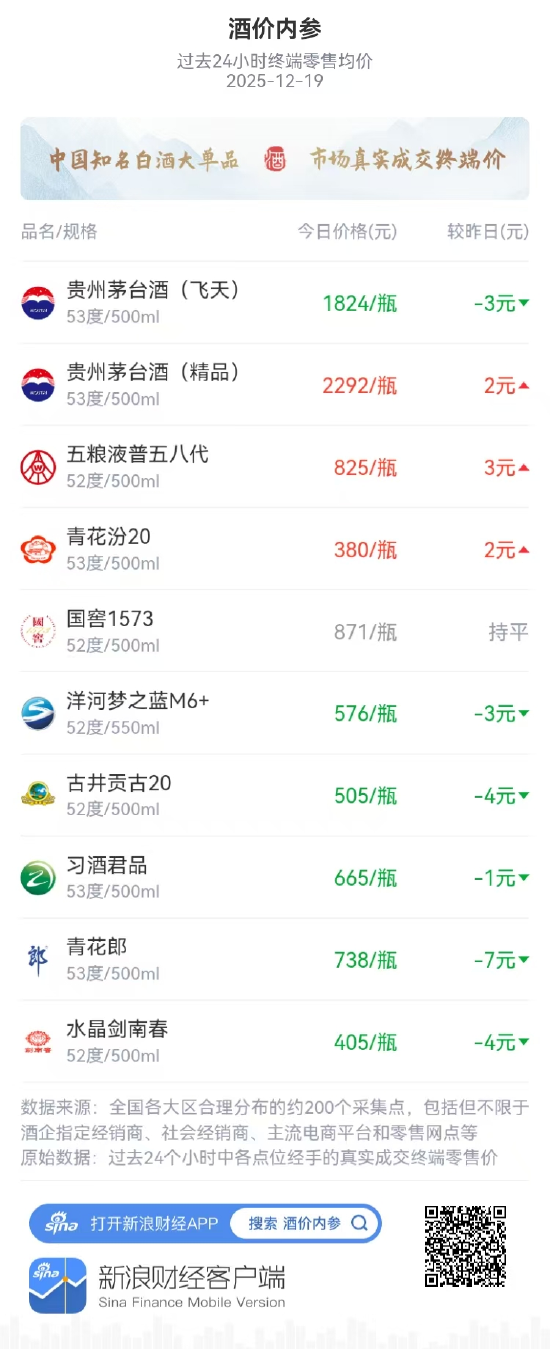
酒价内参12月19日价格发布 古井贡古20价格下跌4元/瓶
Xin Lang Cai Jing· 2025-12-19 01:41
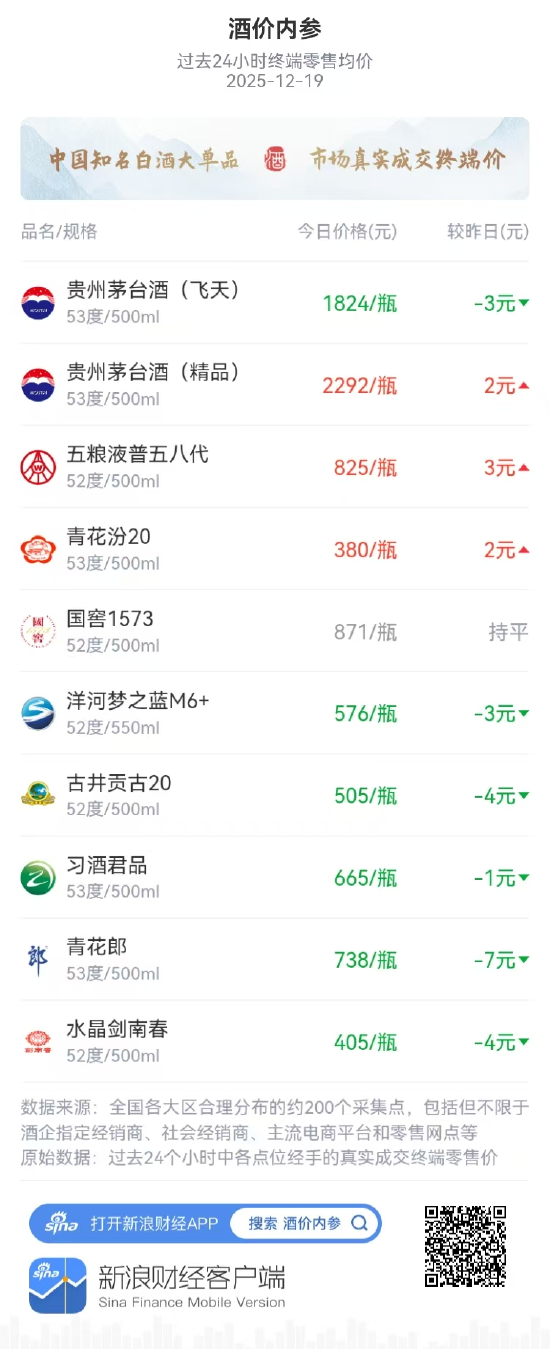
Core Viewpoint - The Chinese liquor market is experiencing a price correction, with the average retail price of the top ten products declining, indicating a potential stabilization in the market after recent fluctuations [1][2]. Price Trends - The overall retail price of the top ten liquor products fell to 9081 yuan, a decrease of 15 yuan from the previous day, marking a new low in five days [1]. - Among the ten products, six saw price declines, with Qinghua Lang dropping by 7 yuan per bottle, the largest decrease [2]. - Other notable price drops include: - Shuijing Jian Nan Chun down 4 yuan - Gu Qing Gong Gu 20 down 4 yuan - Feitian Moutai down 3 yuan - Yanghe Dream Blue M6+ down 3 yuan - Xijiu Junpin down 1 yuan [2]. Product-Specific Strategies - Wuliangye's recent conference revealed strategies focusing on maintaining price balance and optimizing product structure: - The eighth generation of Wuliangye aims to solidify its position in the 1000 yuan price segment - Wuliangye 1618 targets the first banquet brand in the same price range, focusing on key markets like Chengdu and Chongqing - The 39-degree variant aims to strengthen its presence in the 700 yuan segment, targeting regions like the Bohai and Taihu areas - Classic Wuliangye will maintain a dual strategy for classic and new products in the 1500 and 2000 yuan segments respectively - The brand is also focusing on the 300 yuan segment with its small Wuliangye and promoting exclusive products in the cultural liquor market [3]. Market Data - The following are the current prices and changes for notable liquor products: - Feitian Moutai (53 degrees, 500ml): 1824 yuan, down 3 yuan - Boutique Moutai (53 degrees, 500ml): 2292 yuan, up 2 yuan - Wuliangye Pu Wu 58 generation: 825 yuan, down 375 yuan - Qinghua Fen 20 (53 degrees, 500ml): 380 yuan, up 2 yuan - Guojiao 1573 (52 degrees, 500ml): 871 yuan, unchanged - Yanghe Dream Blue M6+: 576 yuan, down 3 yuan - Gu Qing Gong Gu 20: 505 yuan, down 4 yuan - Xijiu Junpin: 665 yuan, down 1 yuan - Qinghua Lang: 738 yuan, down 7 yuan - Shuijing Jian Nan Chun: 405 yuan, down 4 yuan [4][5]. Data Collection Methodology - The data is sourced from approximately 200 collection points across various regions, including designated distributors, social distributors, mainstream e-commerce platforms, and retail outlets, ensuring a comprehensive and accurate representation of the market [1].
酒价内参12月19日价格发布 市场整体下挫多款产品价格回调
Xin Lang Cai Jing· 2025-12-19 01:27
Core Insights - The overall retail price of the top ten Chinese liquor products has decreased, failing to maintain the previous day's rebound, with a total price of 9081 yuan, down 15 yuan from the previous day, marking a five-day low [1][6]. Price Trends - Among the top ten products, six have seen price declines, with Qinghua Lang dropping 7 yuan per bottle, the largest decrease [2][7]. - Other notable price drops include: - Shuijing Jian Nan Chun down 4 yuan per bottle - Gu Qing Gong Gu 20 down 4 yuan per bottle - Feitian Moutai down 3 yuan per bottle - Yanghe Dream Blue M6+ down 3 yuan per bottle - Xi Jiu Jun Pin down 1 yuan per bottle [2][7]. - Conversely, the following products have seen price increases: - Wuliangye Pu Wu 58th generation up 3 yuan per bottle - Boutique Moutai up 2 yuan per bottle - Qinghua Fen 20 up 2 yuan per bottle - Guojiao 1573 remained stable [2][7]. Industry Developments - Wuliangye held its 12.18 dealer conference on December 18, revealing several product strategies aimed at maintaining its market position [2][7]. - Key strategies include: - The eighth generation of Wuliangye focusing on "volume-price balance, structural optimization, and quality service" to solidify its position in the 1000 yuan price segment - Wuliangye 1618 targeting the 1000 yuan banquet brand market in cities like Chengdu and Chongqing - Wuliangye 39-degree aiming to strengthen its presence in the 700 yuan segment, particularly in key markets around the Bohai Sea and Taihu Lake - Classic Wuliangye maintaining a dual strategy for old and new products in the 1500 and 2000 yuan segments respectively - Accelerating marketing efforts for the small Wuliangye in the 300 yuan range and launching exclusive cultural products to enhance market interaction [2][7].