
GAC GROUP(601238)

Search documents
启境入局:中国汽车智能化下半场的价值回归与高端突围
经济观察报· 2026-02-15 02:11
Core Viewpoint - The emergence of Qijing Automotive represents a significant exploration in the intelligent and high-end development path of the Chinese automotive industry during a critical period of transformation [1][26]. Group 1: Strategic Shift from Electrification to Intelligentization - By the end of 2025, the penetration rate of new energy vehicles in China is expected to approach 60%, indicating that the electrification phase is nearing completion, while the intelligentization phase is just beginning [2][6]. - The automotive industry is undergoing a structural transformation, with a shift in competition from mere electrification to intelligentization, as evidenced by the increasing demand for smart, personalized vehicles [6][8]. - Over 80% of automotive companies have initiated AI pilot projects, but only 15% have achieved large-scale application, highlighting the transition from "whether to do" to "how to do it right" in intelligentization [2][8]. Group 2: Challenges in Intelligent Transformation - The transition to intelligentization presents significant challenges, including the need for comprehensive capabilities in data collection, processing, and system integration [16][17]. - Companies must prepare for the responsibilities associated with Level 3 automation, requiring robust safety and quality management systems throughout the product lifecycle [16][20]. - The collaboration model in the intelligent era necessitates deep integration of hardware, software, algorithms, and data, moving beyond traditional supply chain relationships [17][20]. Group 3: Qijing's Unique Position and Strategy - Qijing is positioned as a strategic player in the intelligentization arena, focusing on redefining what constitutes a high-quality vehicle in the smart era [14][26]. - The collaboration between Qijing and Huawei is characterized by "embedded collaboration," allowing for joint product logic definition and system performance validation [16][20]. - Qijing aims to leverage its partnerships to create a new value benchmark in the high-end market, combining technology, luxury, and reliability [26][31]. Group 4: Value Transition of Chinese Brands - Chinese automotive brands are experiencing a value transition, with Qijing positioned to capitalize on this shift by enhancing product quality, user experience, and redefining value in the high-end market [24][26]. - The traditional dominance of luxury brands is declining, with Chinese brands making significant inroads into the high-end market through advancements in electric and intelligent technologies [24][26]. - Qijing's strategy emphasizes a comprehensive user experience and a differentiated dealer network, reflecting growing confidence in Chinese high-end intelligent automotive brands [26][31].

车企“比惨大会”召开!全是特朗普惹的祸?
电动车公社· 2026-02-14 16:05
Core Insights - The global automotive landscape is undergoing significant changes due to the rise of new energy vehicles, with Chinese automakers emerging as top competitors while traditional giants face strategic transformation challenges [1][2]. Group 1: Tesla - Tesla's 2025 financial report shows total revenue of $94.827 billion, a 3% year-over-year decline, marking the first revenue drop in its history [7]. - The company delivered 1.636 million vehicles in 2025, an 8.6% decrease from 2024, leading to a 10% drop in automotive revenue, which constitutes over 70% of total income [9]. - Despite record revenue from energy generation and storage, Tesla's overall revenue decline remains unmitigated [10]. - R&D investment surged by 41% to $6.411 billion, focusing on autonomous driving and humanoid robots, indicating a shift in strategic priorities [14]. Group 2: General Motors - General Motors reported 2025 revenue of $185 billion, down 1.3%, with net profit falling 55.1% to $2.697 billion due to a $7.9 billion charge for strategic restructuring [17][19]. - The company maintains strong cash flow of $10.6 billion despite the profit drop, attributed to one-time restructuring costs and market adjustments [20]. - GM's outlook for 2026 is optimistic, expecting net profit between $10.3 billion and $11.7 billion, supported by a solid market position in the U.S. and new product launches in China [24]. Group 3: Ford - Ford's 2025 revenue reached $187.3 billion, a 1% increase, but it reported a net loss of $8.2 billion, primarily due to a $19.5 billion charge related to electric vehicle restructuring [26][30]. - The company faces challenges similar to GM, with traditional vehicles performing well while electric vehicle strategies require adjustment [32]. Group 4: Hyundai - Hyundai's 2025 revenue was 186.3 trillion KRW (approximately 888.7 billion RMB), a 6.3% increase, but operating profit fell 19.5% to 11.47 trillion KRW [34]. - The decline in profit is largely due to increased tariffs on exports to the U.S., despite a reduction in tariffs effective November 2025 [38]. - The company is also navigating the transition to electric vehicles, which requires adjustments to its product lineup [39]. Group 5: Volvo - Volvo's 2025 revenue was 357.3 billion SEK (approximately 278.8 billion RMB), down 11%, with operating profit plummeting 99% [42]. - The decline is attributed to tariffs, weak demand, and price pressures, prompting a cost-cutting plan involving layoffs [45]. - Despite challenges, Volvo's electric vehicle offerings are performing well, particularly in the Chinese market [48]. Group 6: Great Wall Motors - Great Wall Motors reported 2025 revenue of 222.79 billion RMB, a 10.19% increase, but net profit fell 21.71% to 9.912 billion RMB [52]. - The company achieved record sales of 1.3237 million vehicles, indicating strong growth despite profit declines due to increased investments in new technologies and marketing [54]. - The focus on electric vehicle development, particularly through its premium brand WEY, is expected to enhance growth potential [56]. Group 7: GAC Group - GAC Group's 2025 sales fell 14.06% to 1.72 million vehicles, with a projected loss of 8-9 billion RMB [58]. - The decline is linked to poor performance in traditional fuel vehicles and slower growth in its electric vehicle segment [59]. - The company is pursuing deep collaborations with local suppliers to accelerate its electrification strategy [60]. Group 8: Toyota - Toyota's revenue for the first three quarters of the 2026 fiscal year was 38.09 trillion JPY (approximately 1.72 trillion RMB), a 6.8% increase, but net profit dropped 26.1% to 3.03 trillion JPY [63]. - The profit decline is primarily due to the impact of U.S. tariff policies, despite a 10.5% profit increase in the Chinese market [66][68]. - Toyota is implementing a company-wide plan to reduce its breakeven point and improve operational efficiency [71].




广汽集团等投资成立科技公司,含多项机器人业务
Sou Hu Cai Jing· 2026-02-14 10:20
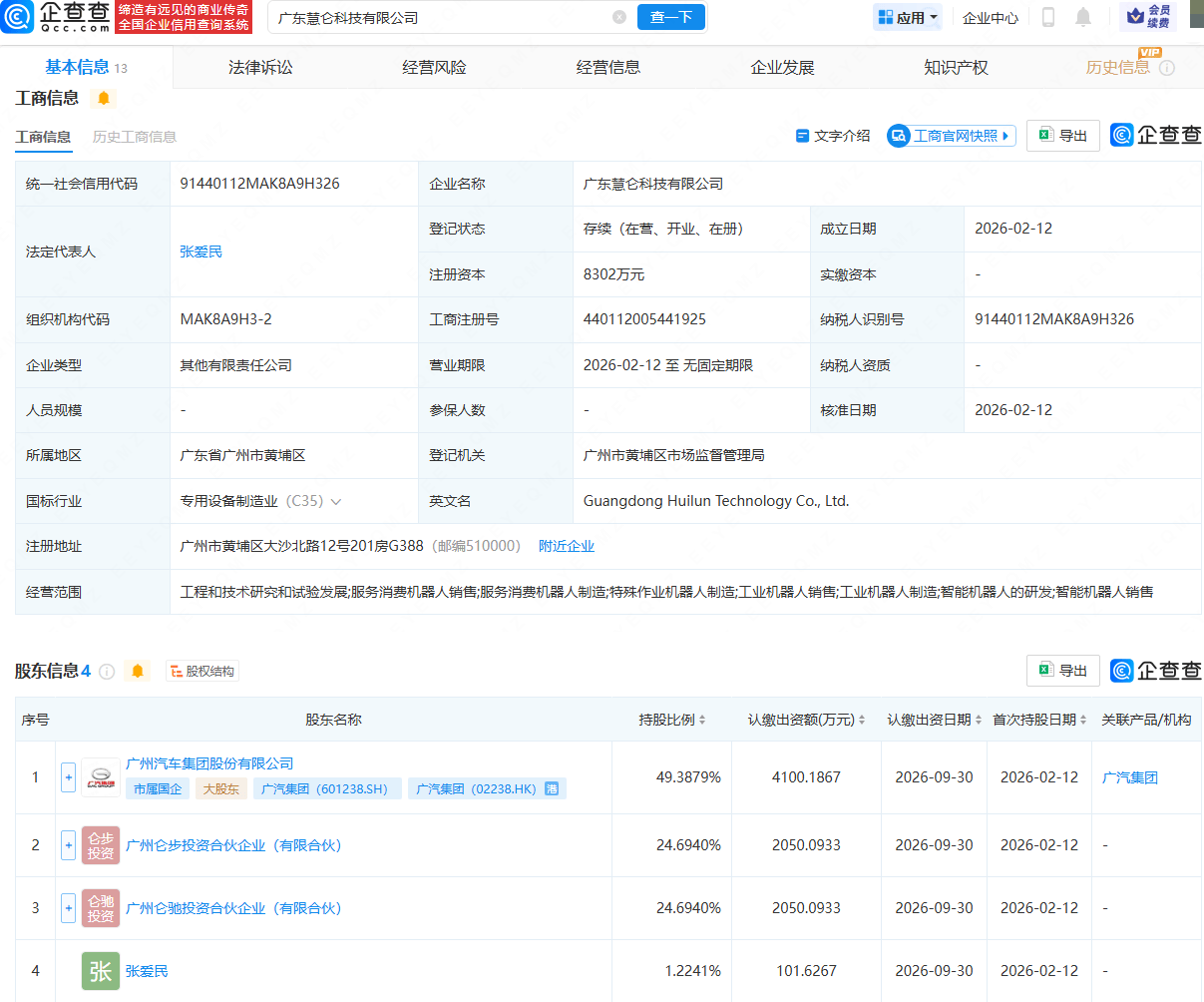
Core Viewpoint - Guangdong Huilun Technology Co., Ltd. has been established with a registered capital of 83.02 million yuan, focusing on the manufacturing and sales of various types of robots, including service and industrial robots [1][2]. Company Information - The legal representative of Guangdong Huilun Technology Co., Ltd. is Zhang Aimin [1][2]. - The company is registered in Huangpu District, Guangzhou, Guangdong Province, with a business scope that includes the sales and manufacturing of service robots, special operation robots, industrial robots, and the research and development of intelligent robots [1][2]. - The company was officially established on February 12, 2026, and is currently in a state of operation [2]. Shareholding Structure - Guangzhou Automobile Group Co., Ltd. holds a 49.39% stake in the company, contributing approximately 41.00 million yuan [3]. - Guangzhou Lunbu Investment Partnership (Limited Partnership) and Guangzhou Chanchi Investment Partnership (Limited Partnership) each hold a 24.69% stake, contributing around 20.50 million yuan each [3]. - Zhang Aimin holds a minority stake of 1.22%, contributing approximately 1.02 million yuan [3].
广汽集团冯兴亚:今年将推出9款改款及全新车型
Feng Huang Wang· 2026-02-14 03:26
Core Insights - The automotive industry is currently at a critical juncture described as "four phases overlapping," presenting significant survival challenges for companies [1] Technology Developments - The company has achieved industry-leading self-developed Star Source range extension technology, addressing the "power depletion" issue in range-extended vehicles [1] - The pilot production line for all-solid-state batteries has been established [1] - In the smart connected vehicle sector, the Haobo GT climbing version has been launched, featuring AI smart cockpit and driving assistance functions, with 68 complete vehicle OTA upgrades and over 700 new and optimized features completed throughout the year [1] Sales Performance - The company experienced a continuous quarter-on-quarter sales growth for three consecutive quarters last year, with January sales reaching 116,600 units, representing a year-on-year increase of 18.47% [1] Product Planning - The company plans to launch 9 refreshed and new models by 2026, aiming to repay user trust with high-quality products and services [2]

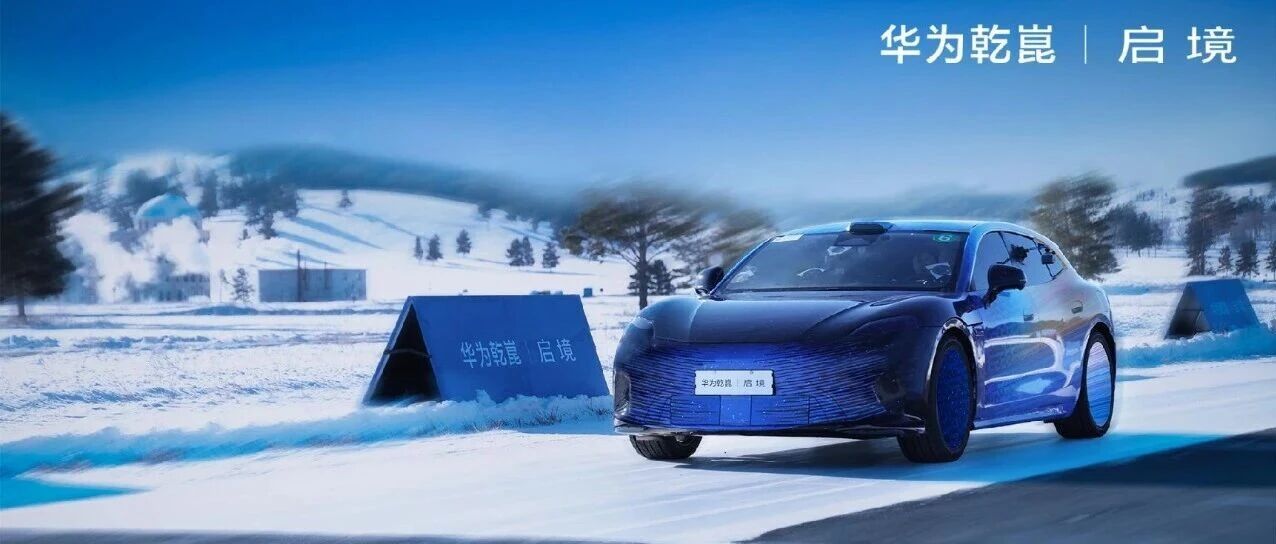
软硬融合的“启境模式”,是否中国智能化“决赛圈”的答案
Xin Lang Cai Jing· 2026-02-14 03:01
文 栾铠韬 当2026年被业界普遍视为L3智能驾驶法规落地的关键之年,一场关于未来产业主导权的"决赛"已然鸣 枪。 在电动化建立起先发优势的中国汽车产业,能否在更艰深、更考验AI认知与体系能力的智能化下半场 实现直线超车?华为与广汽联合打造的"启境",给出了一个超越单一产品范畴的前瞻回答。 它不仅是华为乾崑生态的"第一境",更是一次将尖端算法、数据闭环与整车工程、制造基因进行基因级 融合的宏大实验。启境试图为中国汽车冲30万以上高端腹地,探索一条区别于传统供应商模式与智选车 模式的全新战术路径。 2026,"决赛圈"的逻辑悄然改变 关于2026年的特殊性,行业已有足够多论述。麦肯锡最新研究报告指出,2026年将成为汽车产业从"电 动化上半场"转向"智能化下半场"的关键分水岭。值得关注的是,这一阶段的竞争特征正在发生本质变 化——从早期的"软件定义汽车"向"软硬深度协同"转变。 同时,L3时代的到来,也对新时代的车辆提出了更高的要求。当辅助驾驶迈向有条件的自动驾驶,系 统决策必须与车辆的转向、制动、悬架执行器形成毫秒级闭环响应。任何算法与底层硬件之间的"翻译 损耗",在L3场景下都可能造成一场安全问题。 传统分 ...
广汽集团董事长冯兴亚发布公开信,2026年将打赢“三大战役”
Xin Lang Cai Jing· 2026-02-14 02:27
Core Viewpoint - GAC Group's Chairman emphasizes the importance of self-reliance and user-centric strategies in overcoming challenges, highlighting positive market responses to the company's efforts [1][6][13]. Group 1: Sales and Financial Performance - GAC Group achieved a sales volume of 116,600 vehicles in January, representing a year-on-year increase of 18.47% [1][6][13]. - The company reported a stable financial structure with a debt-to-asset ratio better than the industry average [1][6][13]. - The sales growth was noted as a small reward for the company's arduous transformation efforts, providing motivation for continued progress [1][6][13]. Group 2: Strategic Focus and Transformation - The year 2026 is identified as a critical year for the "Panyu Action," marking a phase of deepening transformation [1][6][13]. - GAC Group plans to focus on three key tasks: stabilizing joint ventures, strengthening independent brands, and expanding ecosystems [1][6][13]. - The company aims to transition organizational processes from establishment to operational efficiency, enhancing integrated operations of independent brands [1][6][13]. Group 3: Product Development and User Engagement - GAC Group intends to launch nine updated and new models this year, aiming to meet user demands with high-quality products and services [1][6][13]. - The company is committed to deepening user communication and product co-creation, continuing initiatives like "User Open Mic" to gather feedback [2][6][13]. - A comprehensive product co-creation mechanism will be implemented to drive technological innovation and improve user experience based on real user needs [2][6][13]. Group 4: Safety and User Assurance - The "Star Spirit Safety Guardian System" was launched to provide comprehensive safety guarantees, shifting from passive defense to proactive prevention [5][12]. - GAC's three major independent brands have adopted a "three responsibilities" policy, ensuring accountability for issues related to battery safety and performance [5][12]. - The company has actively engaged with users through multiple forums, addressing nearly 200 issues raised, with 97% already having clear solutions [5][12].
年销2700万辆,中国汽车又一个世界冠军
3 6 Ke· 2026-02-13 09:55
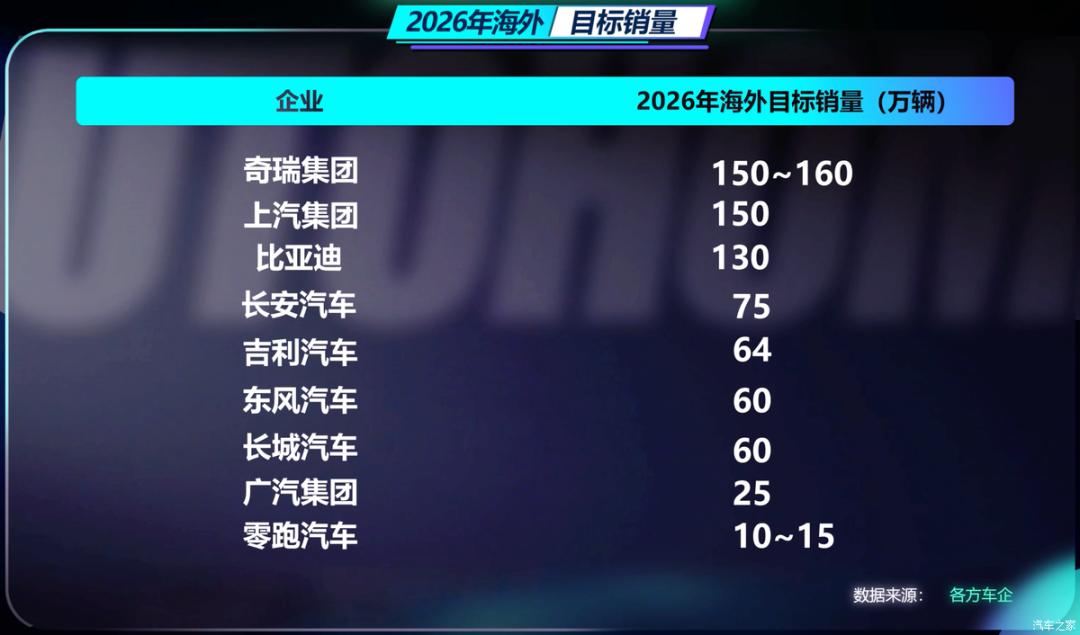
Core Insights - In 2025, Chinese automakers achieved a total global sales volume of 27 million vehicles, surpassing Japan for the first time in over 20 years, marking a significant milestone in the automotive industry [1] - Chinese automobile exports reached 8.32 million units in 2025, maintaining the title of the world's largest exporter for the third consecutive year, with Japan trailing at 4.21 million units [1] - Nine Chinese automakers have already set ambitious overseas sales targets for 2026, indicating confidence in continued growth in international markets [1][2] Group 1: Sales Performance - In 2025, Chery, SAIC, and BYD each exceeded 1 million units in overseas sales, with Chery selling 1.34 million units, representing nearly half of its total sales and a 17% increase year-on-year [3] - BYD's overseas sales surged by 145%, showcasing rapid growth from negligible figures to over 1 million units in just four years [3] - The overall export volume of Chinese automobiles grew by 29.9% in 2025, with December alone witnessing a remarkable 73.2% year-on-year increase, reaching 994,000 units [5] Group 2: Market Trends - The export of Chinese new energy vehicles (NEVs) reached 3.43 million units in 2025, a 70% increase, reflecting a growing global acceptance of electric vehicles [8] - In Europe, electric vehicles accounted for a record 19% of the market share in 2025, with Germany producing 1.67 million electric passenger cars, marking a 23% year-on-year growth [10] - Chinese brands are increasingly gaining traction in international markets, with significant sales growth in Australia and Europe, where they are becoming more competitive against traditional automakers [10][12] Group 3: Strategic Developments - Chinese automakers are expanding their presence in North America and Latin America, with Mexico becoming the largest market for Chinese car exports in 2025 [14] - Agreements with Canada allow Chinese companies to export electric vehicles at a reduced tariff rate, indicating a favorable trade environment [16] - The establishment of local supply chains and partnerships in various regions is a strategic move to enhance competitiveness and market penetration [16][17]





广汽集团(02238.HK):董事会同意公司向广汽传祺汽车提供金额不超50亿元的借款
Ge Long Hui· 2026-02-13 09:30
Group 1 - The core point of the article is that GAC Group has approved a proposal to provide a loan of up to 5 billion yuan to its wholly-owned subsidiary, GAC Trumpchi Automobile Co., Ltd. [1] - The loan will be issued at an interest rate based on the comprehensive interest rate of the company's bond issuance, with regular principal and interest repayments [1]
广汽集团(02238) - 海外监管公告
2026-02-13 09:19
香港交易及結算所有限公司及香港聯合交易所有限公司對本公告的內容概不負責,對其準確 性或完整性亦不發表任何聲明,並明確表示,概不對因本公告全部或任何部分內容而產生或 因依賴該等內容而引致的任何損失承擔任何責任。 隨附之文件乃本公司於二零二六年二月十三日在中華人民共和國上海證券交易 所網頁登載之《廣州汽車集團股份有限公司第七屆董事會第 19 次會議決議公 告》,僅供參閱。 承董事會命 廣州汽車集團股份有限公司 馮興亞 董事長 中國廣州,二零二六年二月十三日 於本公告日期,本公司的執行董事為馮興亞及閤先慶,本公司的非執行董事為陳小 沐、鄧蕾、周開荃、王亦偉及洪素麗,以及本公司的獨立非執行董事為趙福全、肖 勝方、王克勤及宋鐵波。 GUANGZHOU AUTOMOBILE GROUP CO., LTD. 廣州汽車集團股份有限公司 ( 於中華人民共和國註冊成立的股份有限公司 ) (股份編號: 2238) 海外監管公告 本公告乃廣州汽車集團股份有限公司(「本公司」)按香港聯合交易所有限公司證 券上市規則第 13.10B 條發出。 A 股代码:601238 A 股简称:广汽集团 公告编号:2026-012 H 股代码:022 ...
广汽集团(601238) - 广汽集团第七届董事会第19次会议决议公告
2026-02-13 09:15
广州汽车集团股份有限公司(简称"本公司"或"公司")第七届董事会第 19 次会议于 2026 年 2 月 13 日(星期五)以通讯方式召开。本次会议应参与表决 董事 11 人,实际参与表决董事 11 人。本次会议的召集、召开符合《中华人民共 和国公司法》《广州汽车集团股份有限公司章程》《广州汽车集团股份有限公司 董事会议事规则》的相关规定,所做决议合法有效。经与会董事投票表决,会议 审议通过了《关于向广汽传祺提供借款的议案》,同意本公司向全资子公司广汽 传祺汽车有限公司提供金额不超过 50 亿元的借款,利率按照公司债券发行综合 利率,定期还本付息。 表决结果:同意 11 票,反对 0 票,弃权 0 票。 特此公告。 广州汽车集团股份有限公司董事会 广州汽车集团股份有限公司 第七届董事会第 19 次会议决议公告 本公司董事会及全体董事保证本公告内容不存在任何虚假记载、误导性陈述或者重 大遗漏,并对其内容的真实性、准确性和完整性承担法律责任。 A 股代码:601238 A 股简称:广汽集团 公告编号:2026-012 H 股代码:02238 H 股简称:广汽集团 2026 年 2 月 13 日 ...