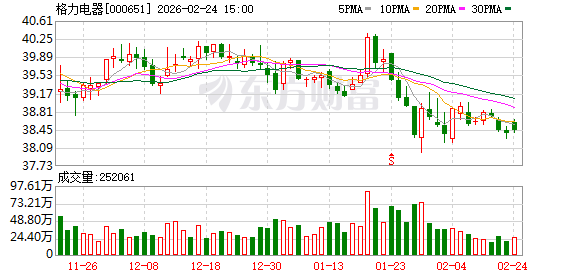
GREE(000651)

Search documents
2026年中国磁悬浮离心压缩机行业概述、产业链、市场现状及发展趋势研判:数据中心高端需求驱动行业向高效国产化加速跃升[图]
Chan Ye Xin Xi Wang· 2026-02-25 01:26
相关上市企业:汉钟精机(002158)、鑫磊股份(301317)、雪人股份(002639)、格力电器 (000651) 相关企业:南京磁谷科技股份有限公司、卧龙电气驱动集团股份有限公司、宁波金力永磁股份有限公 司、北京中科三环高技术股份有限公司、韦尔半导体股份有限公司、歌尔微电子股份有限公司、汉威科 技集团股份有限公司、深圳市汇川技术股份有限公司、深圳市英威腾电气股份有限公司、台达电子工业 股份有限公司、万国数据服务有限公司、光环新网科技股份有限公司 关键词:磁悬浮离心压缩机、磁悬浮离心压缩机市场规模、磁悬浮离心压缩机行业现状、磁悬浮离心压 缩机发展趋势 一、行业概述 磁悬浮离心压缩机是融合磁悬浮轴承技术与离心压缩原理的高端流体机械。磁悬浮离心式压缩机主要由 2级压缩部分、变频控制部分、磁浮轴承、永磁同步电机、轴承控制以及用于控制的压力和温度传感器 和扩大运行范围的进气导叶组成。其核心在于,压缩机转子并非由传统机械轴承支撑,而是通过电磁力 (基于"同性相斥,异性相吸"原理)使其稳定悬浮于半空中,实现无机械接触、无油、无摩擦的高速旋 转。 磁悬浮离心压缩机结构图 内容概况:作为支撑"双碳"战略和数字经济的关键装 ...





全国人大代表董明珠:锻造中国制造硬实力
Jing Ji Ri Bao· 2026-02-24 22:06
技能人才培养,是董明珠代表聚焦的另一条主线。过去一年,她多次走进职业院校实训基地,了解课程 设置与企业需求匹配情况。这些一线情况,让董明珠代表更加关注产教融合的深度。在企业内部,格力 建立了技能分级培养体系,通过岗位轮训、技术比武和等级评定,推动员工从"操作型"向"技术型""复 合型"转变。 "机器在升级,人也要升级。"董明珠代表说,制造业高质量发展,要通过技术进步与人才成长同步推 进,实现效率提升与就业质量提升的双重目标。 (文章来源:经济日报) 2026年全国两会召开前夕,全国人大代表、格力电器董事长董明珠的案头,摆着一摞厚厚的调研材料。 过去一年,她通过走访企业、座谈交流和企业实践,将履职重点进一步聚焦在制造业转型升级的关键环 节上,发现和梳理共性问题。 在一次装备制造产业链座谈会上,一家做配套的中型企业负责人说,自动化设备上得快,但复合型技术 人才跟不上,产线效率没有完全释放。这句话让作为"链主"企业负责人的董明珠代表印象深刻。"技术 改造和设备升级只是第一步,人才结构必须同步升级。" 围绕制造业升级,她把调研范围延伸至中小配套企业。在珠三角一次走访中,一家小型制造企业负责人 向她反映,企业有意推进自 ...
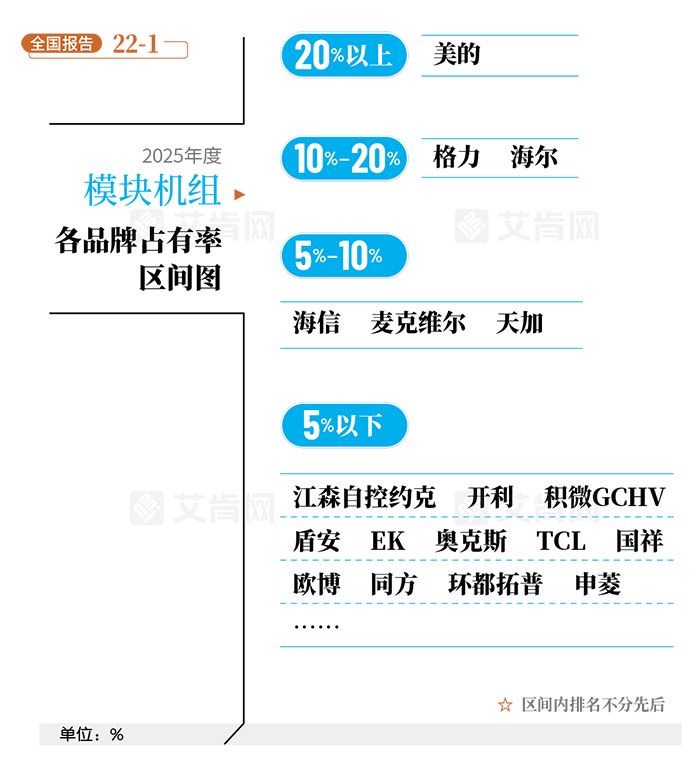
2025年中国模块机组市场深度回调,存量竞争下品牌格局加速分化
Xin Lang Cai Jing· 2026-02-24 11:11
在市场总量收缩的背景下,价格竞争日趋激烈。尤其在中小型项目与标准化产品领域,中标价格持续走 低,行业整体利润空间受到挤压。部分企业通过降本增效维持运营,但长期可能影响产品口碑与行业健 康发展。 尽管新建项目投资放缓、延期现象增多,对大型模块机组传统优势领域造成冲击,但早期装机进入更换 周期,加之双碳目标推动既有建筑能效提升,更新改造需求仍为市场提供支撑。此外,在数据中心备用 冷却、区域能源站、现代农业恒温等对成本与灵活性要求较高的细分领域,模块机组仍保持一定竞争优 势。 从产品趋势看,采用R410A、R32冷媒的产品已成为市场主流,部分领先品牌已开始推广采用R290等更 低GWP值环保冷媒的机型,作为技术储备与差异化布局。 近日,艾肯网发布2025年度中国中央空调模块机组市场报告。 报告指出,受宏观经济承压、房地产配套需求疲软及多联机等产品分流影响,模块机组市场出现显著回 调,全年销售额同比下滑15.6%,下滑幅度低于中央空调行业整体水平。模块机组在中央空调产品中的 占比稳定在约6.6%,市场正式从增量扩张进入存量博弈阶段。 报告指出,受宏观经济承压、房地产配套需求疲软及多联机等产品分流影响,模块机组市场出现 ...



格力电器取得电机转子组件及工业机器人相关专利
Sou Hu Cai Jing· 2026-02-24 04:38
国家知识产权局信息显示,珠海格力电器股份有限公司、珠海凯邦电机制造有限公司取得一项名为"电 机转子组件、电机、工业机器人"的专利,授权公告号CN119651953B,申请日期为2024年12月。 来源:市场资讯 声明:市场有风险,投资需谨慎。本文为AI基于第三方数据生成,仅供参考,不构成个人投资建议。 天眼查资料显示,珠海格力电器股份有限公司,成立于1989年,位于珠海市,是一家以从事电气机械和 器材制造业为主的企业。企业注册资本601573.0878万人民币。通过天眼查大数据分析,珠海格力电器 股份有限公司共对外投资了98家企业,参与招投标项目5000次,财产线索方面有商标信息5000条,专利 信息5000条,此外企业还拥有行政许可923个。 珠海凯邦电机制造有限公司,成立于2003年,位于珠海市,是一家以从事其他制造业为主的企业。企业 注册资本8200万人民币。通过天眼查大数据分析,珠海凯邦电机制造有限公司共对外投资了3家企业, 参与招投标项目41次,专利信息1949条,此外企业还拥有行政许可30个。 ...
全指现金流ETF鹏华(512130)涨超2%,油运贵金属强势领涨
Sou Hu Cai Jing· 2026-02-24 02:41
春节期间,海外贵金属、原油价格集体上涨,现货黄金向上触及5200美元/盎司,WTI原油期货3月合约 收涨1.9%,布伦特原油期货4月合约收涨1.86%。消息面上,美伊谈判反复波动,全球地缘局势升温。 国金证券指出, 原油市场当前脱离供需,转为地缘政治风险驱动。预计未来一个月内价格的高波动率 将不可避免。在美伊局势尚未明朗化前,原油价格处于易涨难跌的状态。短期原油价格如因地缘问题继 续上行,建议关注拥有油气资源的上游企业以及长期受益于行业高景气度的海上油气服务工程板块。 数据显示,截至2026年1月30日,中证全指自由现金流指数(932365)前十大权重股分别为中国海油、格 力电器、上汽集团、中国铝业、中远海控、TCL科技、牧原股份、白银有色、宝钢股份、正泰电器,前 十大权重股合计占比51.19%。 以上内容与数据,与有连云立场无关,不构成投资建议。据此操作,风险自担。 截至2026年2月24日 10:02,中证全指自由现金流指数(932365)强势上涨2.22%,成分股白银有色上涨 9.93%,招商南油上涨9.89%,云天化上涨7.18%,中国海油,春风动力等个股跟涨。全指现金流ETF鹏 华(512130)上 ...



十分钟再谈预制菜:国标出台,装备争唱主角
Nan Fang Du Shi Bao· 2026-02-23 12:41
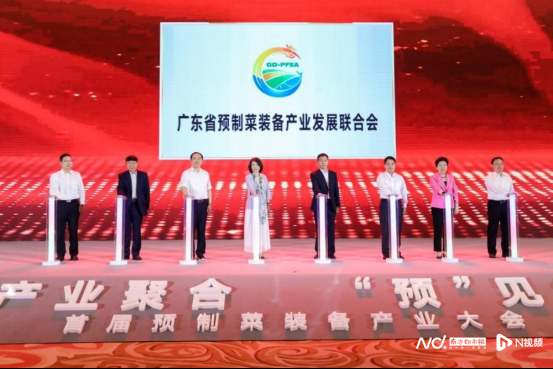
国标征求意见稿发布那天,广东省预制菜装备产业发展联合会秘书长刘婷打来电话:"标准终于来了。 接下来,我们装备业要争唱主角了。" 刘婷一班人一直在等待这个时刻。她判断,接下来几年,装备的权重会明显上升。在她看来,过去几年 预制菜产业的狂奔更多是产品驱动,谁家的菜好吃,谁就能跑出来。但在国标划定红线之后,逻辑变 了:竞争将从谁的配方好,转向谁的产线能稳定、高效、安全地复刻好味道。 而这,正是装备制造业的命题。 国标划下的三道红线 2026年2月6日,《食品安全国家标准预制菜》发布征求意见稿。这份标准划下几条硬杠杠: 定义收窄:预制菜是"加热或熟制后方可食用的预包装菜肴产品",不包括主食类、净菜类、即食食品和 中央厨房制作的菜肴。 添加剂严控:不得添加防腐剂,非必要不添加其他添加剂。 保质期设限:最长不超过12个月,鼓励企业尽量缩短。 这三条红线,将对产业产生深刻影响,预计会发生三件事: 行业集中度快速提升:据日本经验,1996年至2016年,日本预制菜企业数量锐减50%,前五家市场份额 升至80%。中国也将走同样的路。 产品结构加速调整:短保产品、鲜品占比上升,长保产品面临挑战。包装要更透气、更保鲜,冷链要更 密 ...
美国1750亿美元关税退税,对A股的影响(附50股)
Sou Hu Cai Jing· 2026-02-21 11:41
Group 1 - The core point of the article is that the recent US Supreme Court ruling on the $175 billion tariff refund has significant implications for both China and the A-share market, despite the refund being an internal US matter [2][6][28] - The $175 billion in tariffs was primarily collected from imports, including a 10% tariff on Chinese goods, and is now being refunded to US importers [8][10] - The refund will indirectly benefit Chinese companies as US importers, who have been financially strained by tariffs, will use the refunded money to pay off debts to Chinese suppliers and resume orders [12][14][28] Group 2 - The immediate impact on the A-share market is expected to be positive, with a potential "opening red" for A-shares as market sentiment improves following the ruling [40][46] - The ruling is seen as a signal that the previous high tariffs on Chinese goods may not be a permanent state, which could lead to a more favorable environment for Chinese exports [20][48] - Structural opportunities in the A-share market are identified, focusing on five main lines: export-oriented sectors, domestic substitution, strategic resources, domestic consumption, and new energy [51][62][88] Group 3 - Export-oriented sectors, particularly those with high exposure to the US market, are expected to benefit directly from the tariff refunds, with companies like Midea Group and Haier expected to see improved performance [52][72][73] - Domestic substitution and self-sufficiency in sectors like semiconductors and military equipment are highlighted as long-term strategic focuses, with companies like SMIC and AVIC Shenyang Aircraft being key players [53][78][86] - Strategic resources such as rare earths and gold are also expected to see price support due to ongoing global supply chain disruptions, benefiting companies like Northern Rare Earth and Shandong Gold [56][87]



格力电器公布国际专利申请:“边刷装置和清洁机器人”
Sou Hu Cai Jing· 2026-02-21 00:18
Group 1 - Gree Electric Appliances (000651) has filed an international patent application for a "side brush device and cleaning robot" with application number PCT/CN2025/106406, published internationally on February 19, 2026 [1] - The company has announced a total of 6 international patent applications this year, representing a 62.5% decrease compared to the same period last year [1] - In the first half of 2025, Gree Electric invested 3.918 billion yuan in research and development, which is a year-on-year increase of 10.92% [1]

于东来退休幕后:3年放权,永不上市,接班人须60岁退休
创业家· 2026-02-18 09:33
Core Viewpoint - The retirement of Yu Donglai, founder and chairman of Pang Donglai Group, marks a significant shift in the company's governance structure, transitioning from personal leadership to a committee-based management model, emphasizing institutional continuity over individual authority [5][12][44]. Group 1: Retirement Announcement and Governance Changes - Yu Donglai announced his retirement on February 11, 2026, stating he would transition to an advisory role, with daily operations managed by a decision-making committee [8][12]. - The decision to retire is not sudden but part of a long-term strategy to empower a professional management team, moving away from family succession to a system of shared leadership [12][16]. - The decision-making committee will consist of core internal members, implementing a rotating management system to ensure diverse leadership [12][16]. Group 2: Institutional Reforms and Management Philosophy - Over the past three years, Yu has initiated a system reform aimed at decentralizing decision-making and fostering a culture of autonomy among employees [13][15]. - The company has established a culture of democratic decision-making, with middle management positions filled through public competitions, ensuring transparency and alignment with core values [19]. - Yu's retirement aligns with the company's long-term strategy of maintaining a youthful management team, with a rule that the highest management must retire before the age of 60 [21][24]. Group 3: Financial Performance and Employee Welfare - As of November 2025, Pang Donglai's sales exceeded 20.035 billion yuan, with a cash reserve of 4.1 billion yuan, indicating strong financial health [26]. - Employee compensation is robust, with an average monthly salary of 9,886 yuan and a protection system for personal dignity, including compensation for mental and physical harm [26][27]. - The company emphasizes customer service stability, allowing employees to autonomously resolve minor disputes, reinforcing a customer-centric approach [27][29]. Group 4: Challenges and Market Position - Despite Yu's efforts to share his successful model, competitors like Yonghui Supermarket have struggled to replicate Pang Donglai's success, highlighting the unique cultural and operational environment of the company [32][33]. - The company's focus on regional depth and long-term value creation contrasts with the short-term profit pressures faced by publicly traded companies, which can hinder similar initiatives [32][33]. - The transition to a committee-based management model presents challenges, including decision-making efficiency and the potential dilution of the company's core values and service standards [40][41]. Group 5: Future Outlook and Industry Implications - The retirement of Yu Donglai raises questions about the future identity of Pang Donglai, with employees expressing confidence in the institutional safeguards that have been established [37][41]. - The company's approach serves as a case study for other Chinese private enterprises facing succession challenges, emphasizing the importance of institutional resilience over individual leadership [42][44]. - The ongoing commitment to a non-public listing and regional focus positions Pang Donglai as a model for sustainable growth in the retail sector, challenging the prevailing norms of rapid expansion and profit maximization [42][44].



春晚广告位争夺战:四十年国民记忆与商业暗流
创业邦· 2026-02-17 10:32
Core Viewpoint - The evolution of the Spring Festival Gala sponsorship reflects the changing landscape of China's economy and consumer behavior over the past 40 years, showcasing the transition from material scarcity to technological innovation and brand storytelling [4][24]. Group 1: 1980s to Early 1990s - The 1980s marked a period of material scarcity, where items like watches and radios were symbols of wealth and status, leading to the first brand sponsorship by 康巴丝 (Kangbasi) at the Spring Festival Gala [5][7]. - 康巴丝 sponsored the gala by trading 3,000 quartz watches for advertising, which significantly boosted its brand recognition and sales, reaching an annual production of 1.26 million watches by 1987 [8]. - The sponsorship model evolved, with 中华自行车 (Zhonghua Bicycle) taking over the sponsorship in 1995, reflecting the changing consumer demands and economic conditions [9][14]. Group 2: Mid-1990s to Early 2000s - The mid-1990s saw a surge in consumer spending, with the emergence of "标王" (advertising king) sponsorships, particularly in the liquor industry, exemplified by 山东孔府宴酒 (Shandong Confucius Feast Wine) and 秦池酒 (Qinchijiu) [11][12]. - 秦池酒's sponsorship led to a dramatic increase in sales from 1.8 billion yuan in 1995 to 9.5 billion yuan in 1996, highlighting the impact of gala sponsorship on brand visibility and sales [16]. - The era was characterized by a shift towards consumerism, with brands leveraging the gala to enhance their market presence, although some faced backlash due to quality issues [16]. Group 3: 2000s to Early 2010s - The early 2000s marked the rise of home appliance brands, with 美的 (Midea) becoming a prominent sponsor, securing 11 sponsorships from 2003 to 2014, reflecting the growing importance of brand trust [17][19]. - The cost of advertising skyrocketed, with Midea's sponsorship fee increasing from 6.8 million yuan in 2005 to 57.2 million yuan in 2011, indicating the gala's significant viewership and advertising value [21]. - Brands began to focus on storytelling and emotional connections with consumers, moving beyond mere product promotion to build brand loyalty [23]. Group 4: Mid-2010s to Present - The 2010s saw the rise of internet companies as key players in the advertising space, with platforms like WeChat revolutionizing audience engagement through interactive features like the "red envelope battle" during the gala [25][26]. - The digital transformation of the gala allowed for unprecedented levels of interaction, with WeChat reporting 10.1 billion red envelope transactions on New Year's Eve, significantly enhancing its user base [26]. - The emergence of technology companies in the gala sponsorship landscape reflects a broader shift towards innovation and digital engagement, with brands like Xiaomi and AI robotics showcasing advancements in technology [32].