Sanquan Food (002216)

Search documents
食品加工板块10月10日涨0.81%,光明肉业领涨,主力资金净流出426.1万元
Zheng Xing Xing Ye Ri Bao· 2025-10-10 08:46
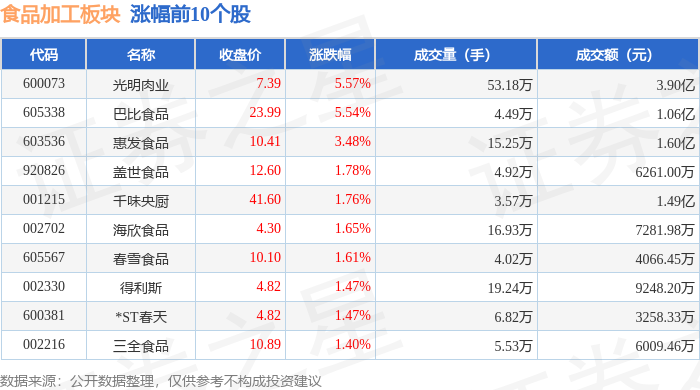
Core Insights - The food processing sector experienced a rise of 0.81% on October 10, with Bright Meat Industry leading the gains [1] - The Shanghai Composite Index closed at 3897.03, down 0.94%, while the Shenzhen Component Index closed at 13355.42, down 2.7% [1] Food Processing Sector Performance - Bright Meat Industry (600073) closed at 7.39, up 5.57% with a trading volume of 531,800 shares and a transaction value of 390 million [1] - Other notable performers included: - Baba Food (605338) at 23.99, up 5.54% [1] - Huifa Food (603536) at 10.41, up 3.48% [1] - Gai Shi Food (920826) at 12.60, up 1.78% [1] - Qianwei Central Kitchen (001215) at 41.60, up 1.76% [1] Capital Flow Analysis - The food processing sector saw a net outflow of 4.261 million from institutional investors, while retail investors had a net inflow of 11.6 million [2] - Key stocks with significant capital flow included: - Bright Meat Industry with a net inflow of 43.4 million from institutional investors [3] - Anji Food (603345) with a net inflow of 12.8 million from institutional investors [3] - Tang Chen Bei Jian (300146) with a net inflow of 12.3 million from institutional investors [3]


低欲望时代,这八大行业将赚得盆满钵满
Sou Hu Cai Jing· 2025-10-06 03:01
Group 1 - The core idea is that despite a perceived economic downturn, certain industries are thriving and generating significant profits, particularly in Japan and China [2][3][29] - The concept of a "low-desire society" does not equate to a lack of opportunities; instead, it presents unique business prospects [3][29] - Consumption patterns are shifting, with a focus on second-hand markets and affordable luxury items, indicating a migration of demand [4][5][6][7][8] Group 2 - The second-hand economy is booming, with platforms like Xianyu and Zhuanzhuan seeing substantial growth in user activity and transaction volume [8][9] - The pet economy is flourishing, with brands like Inaba in Japan and Guobao in China experiencing strong sales, reflecting a shift in spending priorities towards pet care [10][11][12] - The adult care market is expanding, particularly in China, with products like adult diapers showing significant growth potential [13][14][15] Group 3 - Health food and beverage sectors are rising due to changing demographics and increased health awareness, with brands like Dongfang Shuye and Jianchun gaining traction [17][18][19] - The beauty and personal care market is thriving, with products like Ulike hair removal devices achieving substantial sales [20] - Outdoor and leisure products are seeing increased demand, with brands like Kailas and Camel experiencing rapid sales growth [21] Group 4 - The emotional economy is gaining traction, with brands like Labubu and Rio catering to consumers seeking comfort and enjoyment [22][23] - The convenience economy is on the rise, with frozen food brands and smart home appliances addressing the needs of younger generations who prioritize time-saving solutions [25][26][27][28] - The overall trend indicates that in a low-desire market, time-saving innovations may hold more commercial value than cost-saving measures [28][29]

陈泽民第三次创业,投资前沿产业“核电池”
Sou Hu Cai Jing· 2025-09-27 10:36
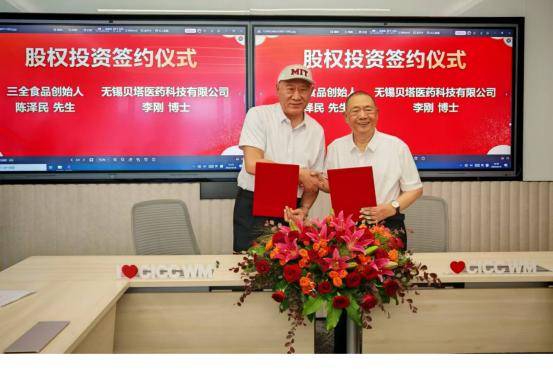
Core Insights - The collaboration between Chen Zemin, founder of Sanquan Foods, and Dr. Li Gang, founder of Wuxi Beta, marks a significant venture into the carbon-14 full industry chain and nuclear battery fields, which Chen views as his "third start" in entrepreneurship [1][3] Company Developments - Chen Zemin's entrepreneurial journey reflects a response to the evolving market, transitioning from food production with Sanquan Foods to geothermal energy, and now to nuclear technology applications [3] - Wuxi Beta has been dedicated to the research and development of carbon-14 nuclear materials and nuclear batteries since 2008, overcoming numerous challenges in this "unmanned zone" of technology [3][4] Industry Potential - Chen Zemin recognizes the vast potential of nuclear battery technology, highlighting its low energy consumption and long lifespan, with applications in medical devices, aerospace, deep-sea monitoring, and nuclear waste recycling [3][4] - The partnership aims to accelerate technological iteration and product mass production, with aspirations to establish Wuxi and Zhengzhou as innovation hubs for nuclear battery applications, promoting the development of the industry chain [4]


食品加工板块9月26日跌0.04%,味知香领跌,主力资金净流出1835.41万元
Zheng Xing Xing Ye Ri Bao· 2025-09-26 08:42
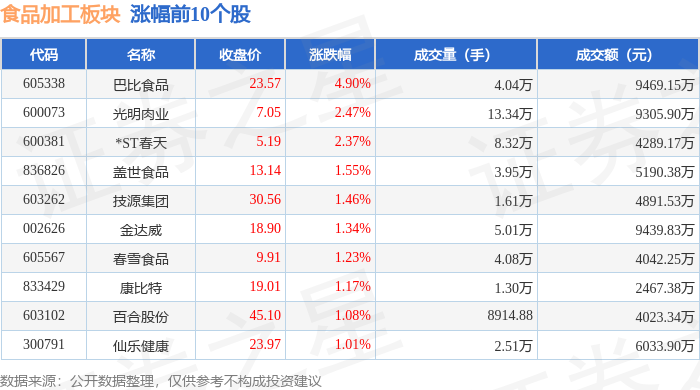
Market Overview - On September 26, the food processing sector experienced a slight decline of 0.04% compared to the previous trading day, with Wei Zhi Xiang leading the drop [1] - The Shanghai Composite Index closed at 3828.11, down 0.65%, while the Shenzhen Component Index closed at 13209.0, down 1.76% [1] Stock Performance - Jinzi Ham (002515) saw a significant increase of 6.61%, closing at 8.07 with a trading volume of 2.4855 million shares and a transaction value of 2.004 billion [1] - Wei Zhi Xiang (605089) led the declines with a drop of 4.53%, closing at 27.61 with a trading volume of 41,000 shares and a transaction value of 115 million [2] - Other notable performers included Gai Shi Food (836826) with a 2.53% increase and Longda Meishi (002726) with a 2.42% decrease [2] Capital Flow Analysis - The food processing sector experienced a net outflow of 18.3541 million from institutional investors, while retail investors saw a net inflow of 65.5132 million [2] - The capital flow data indicates that Jinzi Ham had a net inflow of 94.3197 million from institutional investors, while it faced a net outflow of 56.9452 million from speculative funds [3] - The overall trend shows that while institutional and speculative funds are withdrawing, retail investors are actively buying into the sector [2][3]


食品加工板块9月24日跌0.16%,味知香领跌,主力资金净流出5.67亿元
Zheng Xing Xing Ye Ri Bao· 2025-09-24 08:39
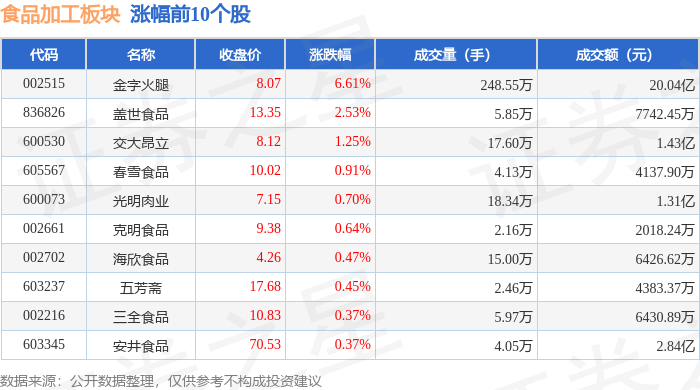
Core Insights - The food processing sector experienced a slight decline of 0.16% on September 24, with Weizhi Xiang leading the drop [1][2] - The Shanghai Composite Index closed at 3853.64, up 0.83%, while the Shenzhen Component Index closed at 13356.14, up 1.8% [1] Stock Performance - Notable gainers in the food processing sector included: - Baba Foods (605338) with a closing price of 23.57, up 4.90% [1] - Guangming Meat (600073) at 7.05, up 2.47% [1] - ST Chuntian (600381) at 5.19, up 2.37% [1] - Conversely, Weizhi Xiang (605089) closed at 28.11, down 1.54% [2] - The sector saw a total trading volume of 5.67 billion yuan in net outflow from major funds, while retail investors contributed a net inflow of 2.49 billion yuan [2][3] Fund Flow Analysis - Major funds showed a net outflow of 5.67 billion yuan, while speculative funds had a net inflow of 3.18 billion yuan [2] - Retail investors contributed a net inflow of 2.49 billion yuan [2] - Specific stock fund flows included: - Guangming Meat (600073) with a net inflow of 17.05 million yuan from major funds [3] - Jindawi (002626) with a net inflow of 11.20 million yuan from major funds [3] - Xianle Health (300791) had a net inflow of 2.03 million yuan from retail investors [3]

36氪精选:罗永浩大战贾国龙,预制菜闷声发大财
日经中文网· 2025-09-20 00:33
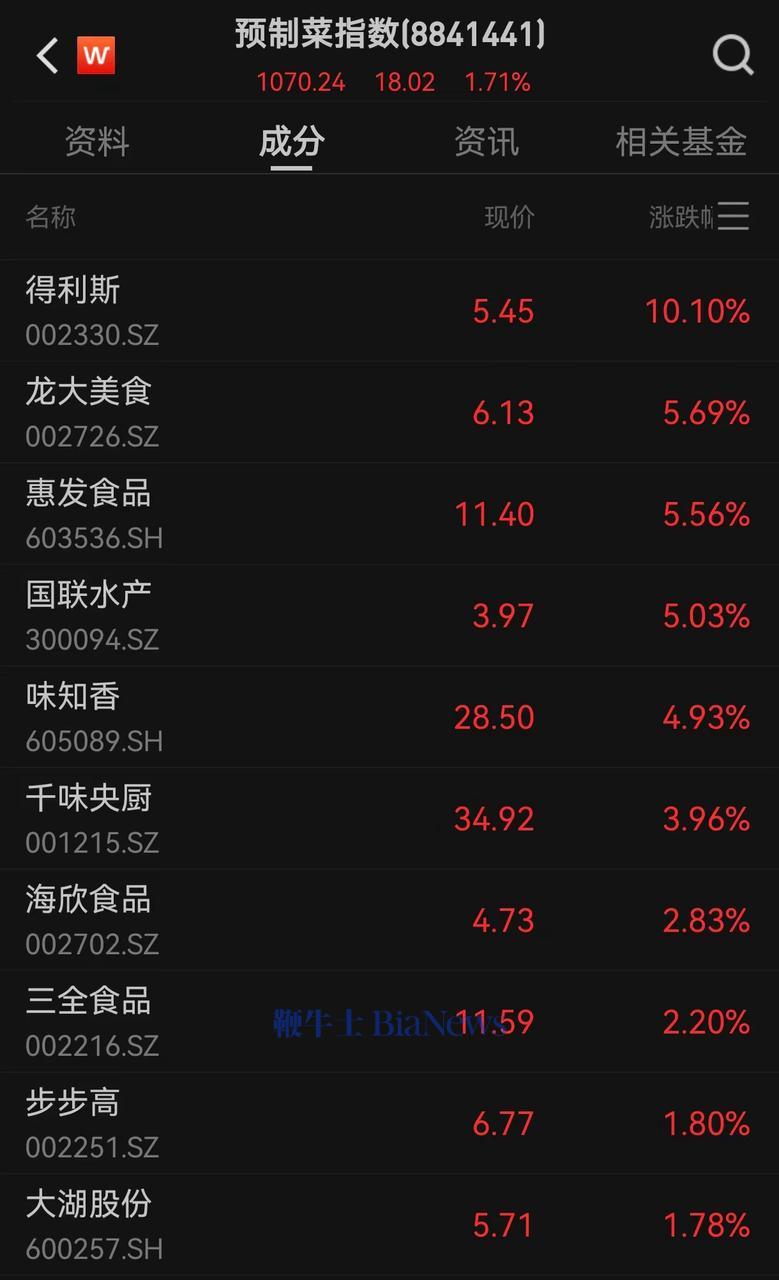
Core Viewpoint - The recent surge in stock prices of pre-prepared food companies in A-shares is attributed to the upcoming national food safety standards for pre-prepared dishes, which will provide a unified identity and safety baseline for the industry [12][13]. Industry Overview - The pre-prepared food industry in China has a history dating back to the 1990s, with significant developments occurring between 2000 and 2005 when many current leading companies were established [13]. - Regulatory frameworks for pre-prepared foods have only begun to take shape in recent years, with standards being introduced by various governmental bodies [13][14]. Market Dynamics - The stock prices of companies such as Deli Foods, Longda Food, and Huifa Foods have seen increases of over 5%, with Deli Foods hitting a 10.10% rise [7][11]. - The rise in stock prices is linked to the public's renewed interest in the pre-prepared food debate, sparked by recent comments from industry figures [12]. Consumer Perception - There is a disconnect between the regulatory definition of pre-prepared foods and consumer understanding, leading to concerns about food safety and transparency [14]. - Consumers express frustration over the lack of knowledge regarding the preparation of their meals, reflecting a deeper societal issue of time constraints and the desire for authentic dining experiences [14][17]. Operational Trends - The adoption of pre-prepared foods is becoming widespread among restaurants, as they are more cost-effective than hiring chefs and allow for a diverse menu without extensive culinary skills [16]. - The rise of central kitchens and cold chain logistics post-2008 has facilitated the expansion of pre-prepared foods, standardizing offerings across various dining establishments [16].



三全食品:9月16日融资净买入119.91万元,连续3日累计净买入1358.51万元
Sou Hu Cai Jing· 2025-09-17 02:41
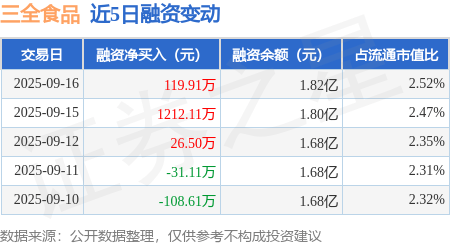
证券之星消息,9月16日,三全食品(002216)融资买入1466.25万元,融资偿还1346.34万元,融资净买 入119.91万元,融资余额1.82亿元,近3个交易日已连续净买入累计1358.51万元。 | 交易日 | 融资净买入(元) | 融资余额(元) | 占流通市值比 | | --- | --- | --- | --- | | 2025-09-16 | 119.91万 | 1.82亿 | 2.52% | | 2025-09-15 | 1212.11万 | 1.80亿 | 2.47% | | 2025-09-12 | 26.50万 | 1.68亿 | 2.35% | | 2025-09-11 | -31.11万 | 1.68亿 | 2.31% | | 2025-09-10 | -108.61万 | 1.68亿 | 2.32% | 融券方面,当日融券卖出1.8万股,融券偿还700.0股,融券净卖出1.73万股,融券余量6.64万股,近20个 交易日中有12个交易日出现融券净卖出。 以上内容为证券之星据公开信息整理,由AI算法生成(网信算备310104345710301240019号),不构成 投资建议。 ...
预制菜概念股ESG相关报告披露率为45% 专家认为提高透明度是关键
Mei Ri Jing Ji Xin Wen· 2025-09-16 11:46
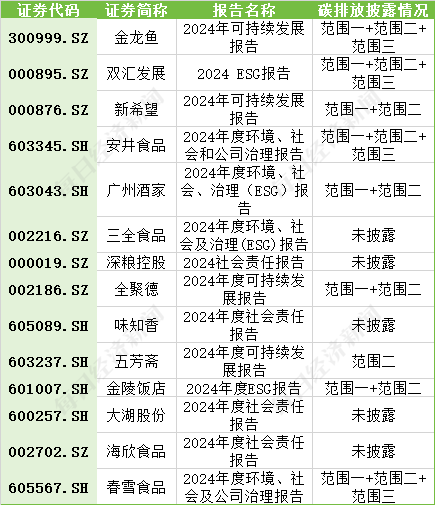
Core Viewpoint - The recent controversy surrounding pre-prepared meals has drawn significant attention to the industry, particularly following comments made by a prominent figure regarding the quality and pricing of dishes at a specific restaurant chain [1] Group 1: Industry Overview - The A-share market has 31 companies involved in the pre-prepared meal concept, with 14 of them disclosing ESG (Environmental, Social, and Governance) reports, resulting in a disclosure rate of 45% [1] - The focus of the industry includes key issues such as product safety and quality, supply chain management, and climate change response [3] Group 2: ESG Reporting - Among the 31 companies, 9 are rated A (including A+, A, A-), 9 are rated B, 8 are rated C, and 5 are rated D, indicating a relatively even distribution of ESG ratings [3] - The majority of companies emphasize the importance of transparency in their ESG reports, with a notable number focusing on sustainable development and social responsibility [2][3] Group 3: Environmental Initiatives - Companies like Jinlongyu and New Hope are implementing green logistics and sustainable packaging practices to reduce environmental impact [4] - Out of the 14 companies that disclosed ESG reports, 8 reported on Scope 1 (direct emissions) and Scope 2 (indirect emissions), while only 4 reported on Scope 3 (value chain emissions), highlighting a gap in comprehensive carbon footprint reporting [4] Group 4: Food Safety and Quality - The industry is shifting towards enhanced food safety and nutritional health management, driven by national strategies aimed at prioritizing public health [5] - New regulations on food additives are set to be implemented, requiring pre-prepared meal producers to adjust their product formulations to comply with stricter safety standards [5] Group 5: Supply Chain Management - Effective supply chain management is crucial for ensuring food safety, with companies like Jinlongyu and New Hope adopting rigorous supplier management practices [7] - The emphasis on transparency and responsible sourcing is seen as essential for maintaining consumer trust and ensuring product quality [8]



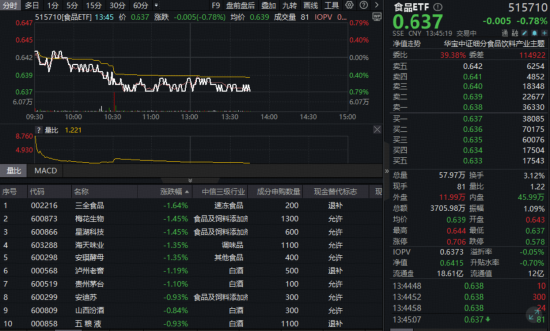
吃喝板块全线回调,食品ETF(515710)震荡走弱!中国酒类市场景气指数首期成果发布,如何解读?
Xin Lang Ji Jin· 2025-09-16 06:36
Group 1 - The food and beverage sector performed poorly on September 16, with the Food ETF (515710) experiencing a decline of 0.78% as of the report time [1][2] - Major consumer goods stocks, including several liquor companies, saw significant declines, with stocks like Sanquan Foods, Haitian Flavoring, Luzhou Laojiao, and Kweichow Moutai dropping over 1% [1][2] - The China Liquor Market Prosperity Index for the first half of 2025 was reported at 47.14, indicating a weak recessionary state in the market, suggesting that consumer demand is still recovering [3] Group 2 - The current valuation of the food and beverage sector is at a low point, with the Food ETF (515710) P/E ratio at 21.24, which is in the 10.37% percentile of the last decade, indicating a favorable long-term investment opportunity [3] - The second quarter of 2025 saw a significant impact on the liquor sector due to policy changes, leading to a noticeable decline in demand, but there are signs of recovery as consumer behavior begins to normalize [4] - The Food ETF (515710) tracks the CSI Sub-Industry Food and Beverage Index, with approximately 60% of its holdings in leading high-end and mid-range liquor stocks, and nearly 40% in beverage, dairy, seasoning, and beer sectors [5]





罗永浩大战贾国龙,预制菜闷声发大财
3 6 Ke· 2025-09-15 13:25
Core Viewpoint - The recent surge in the stock prices of pre-prepared food companies in A-shares is attributed to the public's renewed interest in the pre-prepared food industry, sparked by the apology from Jia Guolong and the upcoming national food safety standards for pre-prepared foods [1][5]. Group 1: Stock Performance - As of September 15, several companies, including Huifa Food, Guolian Aquatic, and Tiankang Biological, saw stock price increases of over 5%, with Delisi reaching a daily limit increase [2]. - Among the rising stocks, suppliers of pre-prepared food, such as Qianwei Yangchun and Longda Meishi, are also noted [3]. Group 2: Regulatory Developments - The significant stock price increase is linked to the approval of the draft national food safety standards for pre-prepared foods by the National Health Commission on September 13, which will provide a unified "identity certification" and safety baseline for the industry [5]. - The pre-prepared food industry has seen regulatory developments only in the past three years, with standards being gradually established [8]. Group 3: Industry History and Trends - The pre-prepared food industry in China dates back to the 1990s, with significant developments occurring between 2000 and 2005, when many of the currently rising companies were registered [6]. - The rise of pre-prepared foods has been facilitated by the emergence of central kitchens and cold chain logistics since 2008, allowing for standardization and wider adoption across various restaurant types [12]. Group 4: Consumer Perception and Market Dynamics - Consumers express concerns about the safety of pre-prepared foods, reflecting a deeper frustration over the loss of transparency regarding food preparation [10]. - The convenience and cost-effectiveness of pre-prepared foods make them appealing to both large and small restaurants, leveling the playing field in the food service industry [12].