VANKE(000002)

Search documents
交易所债券市场收盘,万科境内债涨跌互现
Xin Lang Cai Jing· 2026-01-27 07:37
Group 1 - The bond market showed mixed performance for Vanke's domestic bonds, with "22 Vanke 06" rising nearly 3%, "23 Vanke 01" up over 1%, and "21 Vanke 04" increasing by 0.63% [1] - Conversely, "22 Vanke 04" fell over 5%, and "21 Vanke 06" dropped more than 1% [1] - In the local bond market, bonds such as "25 Jilin Bond 29", "24 Corps Bond 03", and "25 Zhejiang Bond 02" increased by over 1% [1] Group 2 - Special government bonds experienced declines, with "24 Special National 01" down 0.49%, "24 Special National 02" down 0.37%, "24 Special National 03" down 0.47%, and "24 Special National 04" down 0.40% [1] - Other special government bonds like "Special National 2401" decreased by 0.19%, while "Special National 2403" fell by 0.43% [1]

房企化债提速 月内4家获关键进展
Bei Jing Shang Bao· 2026-01-27 03:07
Group 1 - The core viewpoint of the articles highlights the significant progress in debt restructuring for real estate companies in early 2026, continuing the trend from 2025 where major firms like Sunac China and Country Garden successfully restructured debts totaling approximately 1.2 trillion yuan [1][5]. - In January 2026, several companies, including Vanke and Kaisa, announced important developments in their debt restructuring processes, indicating a positive start to the year [2][3]. - The "white list" financing system for real estate projects has been optimized, extending the loan extension period from a maximum of 2.5 years to 5 years, providing companies with more financial flexibility [1][7]. Group 2 - Vanke's debt restructuring plan includes a combination of fixed payments, cash buybacks, and interest prepayments, which has garnered high approval from bondholders [2][3]. - Kaisa's restructuring has entered a critical judicial phase, as indicated by a ruling from the Hong Kong High Court, marking a significant step in its overseas debt restructuring [3]. - The debt restructuring efforts have been characterized as a "blood transfusion" for companies, addressing immediate liquidity crises while emphasizing the need for companies to restore their operational capabilities [5]. Group 3 - The debt restructuring process has seen major milestones, such as Jinke's judicial restructuring involving 147 billion yuan in debt, which is the largest case in the real estate sector [4]. - Sunac China is expected to reduce its overall debt pressure by nearly 60 billion yuan, while Country Garden's overseas debt restructuring aims to reduce approximately 11.7 billion USD, equivalent to about 84 billion yuan in interest-bearing debt [4]. - The "white list" financing mechanism has been crucial in supporting real estate companies, with over 7 trillion yuan in loan approvals by September 2025, facilitating the construction and delivery of nearly 20 million housing units [6][7].


房地产行业周报(26/1/17-26/1/23):二手房成交回暖,《求是》发文提及城市更新-20260127
Hua Yuan Zheng Quan· 2026-01-27 02:05
证券研究报告 房地产 行业定期报告 hyzqdatemark 2026 年 01 月 27 日 证券分析师 邓力 SAC:S1350525070006 dengli@jzsec.com 陈颖 SAC:S1350525110002 chenying02@huayuanstock.com 唐志玮 tangzhiwei@huayuanstock.com 二手房成交回暖,《求是》发文提及城市更新 投资评级: 看好(维持) ——房地产行业周报(26/1/17-26/1/23) 投资要点: 风险提示:房地产量价超预期下行、房地产融资资金趋紧、房地产政策不及预期。 请务必仔细阅读正文之后的评级说明和重要声明 板块行情:本周上证指数上升 0.8%、深证成指上升 1.1%、创业板指下跌 0.3%、沪深 300 下 跌 0.6%、房地产(申万)上升 5.2%。个股方面,涨跌幅前五的分别为:*ST 荣控(+15.8%)、 顺发恒能(+15.7%)、城投控股(+14.9%)、大悦城(+14.4%)、珠免集团(+12.6%),涨跌幅后五 的分别为:城建发展(-6.0%)、中洲控股(-2.8%)、电子城(-2.1%)、特发服务(-1.9 ...




月内4家获关键进展 房企化债提速
Bei Jing Shang Bao· 2026-01-26 16:37
Core Viewpoint - The real estate industry is experiencing a significant debt restructuring process in early 2026, with multiple companies making important progress in their debt resolution efforts, indicating a continuation of the trend from 2025 [1][2]. Group 1: Debt Restructuring Progress - In January 2026, companies such as Vanke, Road King, and Fantasia have disclosed important developments in their debt restructuring [2][3]. - Vanke's debt restructuring plan includes a combination of fixed payments, cash buybacks, and interest prepayments, which has garnered high approval from bondholders [2]. - Fantasia's restructuring has entered a critical judicial phase, as indicated by a ruling from the Hong Kong High Court [3]. Group 2: Scale of Debt Restructuring - In 2025, significant progress was made in debt restructuring, with 21 distressed real estate companies completing their restructuring, amounting to a total debt relief of approximately 1.2 trillion yuan [5]. - Jin Ke Co., for instance, completed a judicial restructuring involving a debt scale of 147 billion yuan, marking it as the largest case in the industry [4]. - Sunac China and Country Garden have also successfully implemented their debt restructuring plans, with Sunac reducing its overall debt pressure by nearly 60 billion yuan [4]. Group 3: Policy Support - The "white list" financing mechanism has been crucial in supporting the debt restructuring efforts, allowing for a shift from relying on company credit to focusing on project assets [6][7]. - As of January 2026, the loan extension period for qualifying "white list" projects has been increased from 2.5 years to 5 years, providing companies with more financial flexibility [7]. - This policy change is expected to enhance the operational stability of quality private real estate companies, allowing them to diversify their business and mitigate risks [7].
2026年债券信用风险展望
Si Lu Hai Yang· 2026-01-26 11:35
Group 1: Report Industry Investment Rating - No information provided in the given content. Group 2: Core Viewpoints of the Report - In 2026, focus on provinces with large maturity scales of industrial bonds, such as Inner Mongolia, Heilongjiang, and Jilin, and avoid entities with industry downturns, weakened profitability, and financing channels, or those with non - bond debt risks [2]. - The broad private real estate developers still face challenges, and other industries have a low probability of concentrated risks, but entities with weak competitiveness, significant profit decline, cash - flow pressure, and concentrated debt maturities should be focused on [2]. - For convertible bonds, weak - quality entities with low - priced underlying stocks and high conversion premiums may face difficulties in exiting through conversion, and potential losses should be watched out for [2]. Group 3: Summary by Relevant Catalogs 1. Overall Bond Market Situation - As of January 6, 2026, the national credit bond balance was 36.18 trillion yuan, with urban investment bonds at 17.73 trillion yuan (49.00%) and industrial bonds at 18.45 trillion yuan (51.00%, down from 54.57% last year) [5]. - Beijing has the largest bond balance, followed by Jiangsu, Guangdong, Zhejiang, and Shandong. Inner Mongolia has the highest short - term bond maturity ratio at 81.09%, followed by Heilongjiang at 40.39% [5]. 2. Urban Investment Bonds - Since 2023, with a series of policies and measures, the debt pressure of urban investment platforms has been relieved, the issuance cost and credit spread of urban investment bonds have decreased, the financing cost is generally below 3%, and the debt term has been significantly extended [10]. 3. Industrial Bonds Provincial - level Analysis - Excluding urban investment bonds, Beijing has the largest industrial bond scale at over 7 trillion yuan, mainly central - enterprise bonds. Inner Mongolia has the highest short - term industrial bond maturity ratio at 82.64%, followed by Tibet, Heilongjiang, Tianjin, and Jilin [11]. - Inner Mongolia, Heilongjiang, and Jilin have a bond issuance coverage ratio of less than 1 for the next - year's maturity scale, indicating weak refinancing ability [14]. Industry - level Analysis - In 2025, default industries included 12 sectors such as automobile services and real estate development. The industrial holding and power industries have the largest bond balances, over 2 trillion yuan each [15]. - The paper - making, automobile services, medical devices, medical services, and publishing media industries have a short - term debt ratio of over 50%, with poor debt term structures [15]. - Industries with large short - term debt repayment pressures include rail transit, packaging, heating, furniture and home appliances, textiles, automobile services, and information technology [15]. 4. Real Estate Industry - In 2025, the default rate of real estate development entities remained high, with Vanke and Zhengxinglong defaulting. As of January 6, 2026, the real estate development enterprise bond balance was 11,528.76 billion yuan, mainly held by local and central state - owned enterprises [18]. - The short - term bond maturity pressure of public, Sino - foreign joint - venture, and private enterprises is over 40%. The broad private enterprises still face pressure, with an issuance amount of only 234.38 billion yuan in the past year, 76.93% of the next - year's maturity amount [20]. - In 2026, private real estate enterprises to focus on are Longfor and Yida Development [23]. 5. Loss - making Industrial Entities - Large - loss entities (losses over 10 billion yuan in 2024 and still in losses in the first three quarters of 2025) are mainly in the real estate development industry, including state - owned enterprises such as Overseas Chinese Town Group and financial street - related companies, as well as steel giant Ansteel Group [24]. - Entities with losses between 5 and 10 billion yuan involve industries such as electrical equipment, chemical, steel, and airport [26]. 6. ABS Market - From 2023 - 2025, the default rate of CSRC - regulated ABS was 1.10%, 0.77%, and 0.88% respectively. As of January 6, 2026, the ABS balance was 25,021.96 billion yuan, with a one - year maturity amount of 3,541.59 billion yuan (14.15%). The 2025 issuance amount covered the next - year's maturity amount 3.97 times, with good continuation [32]. 7. Convertible Bond Market - Since 2024, the convertible bond repayment risk has increased. As of January 6, 2026, the convertible bond balance was 5553.51 billion yuan, a 22.89% year - on - year decrease. The broad private enterprises accounted for 64.73%, with a relatively large proportion [33]. - Entities such as Anhui Honglu Steel Structure, Shenzhen Huayang International Engineering Design, and Shanghai Kehua Bio - Engineering face large convertible bond repayment pressures, but the conversion mechanism can reduce credit risks to some extent [35]. - Entities such as Dongfang Fashion Driving School, Hainan Pulili Pharmaceutical, and Jiangsu Fumiao Technology, although not facing immediate repayment pressures, have negative information such as business fluctuations, financial fraud, and equity freezes, and their dynamic changes should be continuously monitored [36].




房企开年化债提速 一个月内四家获关键进展
Bei Jing Shang Bao· 2026-01-26 11:04
Group 1: Debt Restructuring Progress - In January 2026, several real estate companies, including Vanke, Road King, and Fantasia, reported significant progress in debt restructuring, continuing the trend from 2025 [1][3] - A total of 21 distressed real estate companies completed debt restructuring or received approval for reorganization in 2025, with a total debt relief scale of approximately 1.2 trillion yuan [1][6] - The restructuring efforts are seen as a necessary step to alleviate liquidity crises, with a focus on restoring companies' operational capabilities [6] Group 2: Policy Support and Financing Mechanisms - The "white list" system for real estate financing was optimized in January 2026, extending the loan extension period for eligible projects from a maximum of 2.5 years to 5 years, providing companies with more financial flexibility [1][8] - The "white list" mechanism has been crucial in supporting distressed companies, with over 7 trillion yuan in loan approvals by September 2025, facilitating the construction and delivery of nearly 20 million housing units [7][8] - Analysts suggest that the extended loan terms will benefit financially healthier private real estate companies, allowing them to stabilize operations and diversify their business [9] Group 3: Case Studies of Successful Restructuring - Jin Ke Co., Ltd. completed a judicial reorganization in December 2025, involving a debt scale of 147 billion yuan and covering over 8,400 creditors, marking it as the largest judicial reorganization case in the real estate sector [5] - Sunac China is expected to reduce its overall debt pressure by nearly 60 billion yuan through its restructuring efforts, while Country Garden aims to reduce its offshore debt by approximately 11.7 billion USD, equivalent to about 84 billion yuan [5] Group 4: Market Confidence and Recovery - The debt restructuring process is viewed as a "blood transfusion" to address temporary liquidity issues, while the long-term solution lies in restoring companies' operational capabilities and ensuring project deliveries [6] - The synergy between debt restructuring and project delivery is expected to rebuild market confidence, creating a positive cycle of trust restoration, sales recovery, and capital replenishment [6]

房企开年化债提速,一个月内四家获关键进展
Bei Jing Shang Bao· 2026-01-26 10:51
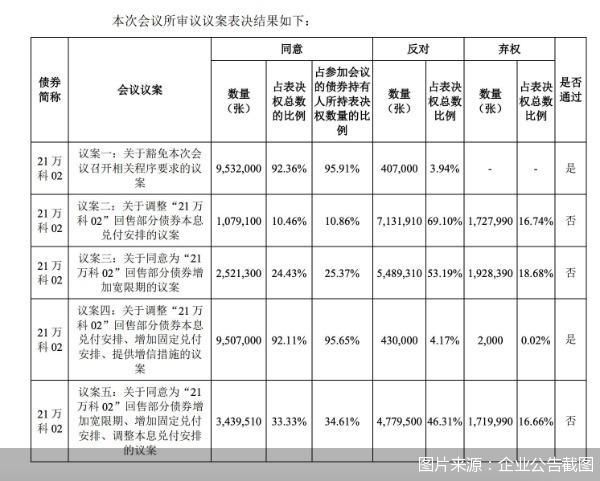
Group 1: Debt Restructuring Progress - In January 2026, several real estate companies, including Vanke, Road King, and Fantasia, reported significant progress in debt restructuring, continuing the trend from 2025 [1][3] - In 2025, 21 distressed real estate companies completed debt restructuring, with a total debt relief of approximately 1.2 trillion yuan [1][6] - The restructuring efforts are seen as a transition from addressing immediate liquidity crises to a more comprehensive resolution of debt risks in the real estate sector [5] Group 2: Policy Support and Financing Mechanisms - The "white list" financing system for real estate projects was optimized in January 2026, extending the loan extension period from 2.5 years to 5 years, providing companies with more financial flexibility [1][8] - The "white list" system has facilitated over 7 trillion yuan in loan approvals by September 2025, supporting nearly 20 million housing units [7] - The recent policy changes are expected to benefit financially healthier private real estate companies, allowing them to stabilize operations and diversify their business [9] Group 3: Specific Company Developments - Vanke announced a bond buyback plan on January 21, 2026, offering to repay 40% of the principal of certain bonds while extending the remaining 60% for one year, which was well-received by bondholders [3][4] - Fantasia's restructuring has entered a critical judicial phase, with the Hong Kong High Court approving a meeting for creditors to discuss the restructuring plan [4] - Jin Ke Co. completed a judicial restructuring in December 2025, involving a debt scale of 147 billion yuan, marking it as the largest case in the real estate sector [5]
从红盘霸榜到配套兑现 万科广佛2025年交出产品力+运营力双优答卷
Sou Hu Cai Jing· 2026-01-26 08:16
据国家统计局数据,国内70个城市在2025年12月的新建商品房住宅销售价格环比下降0.4%,降幅已经连续数月维持在 相近水平,一线城市环比下降0.3%,降幅较前一月收窄0.1%,部分指标的跌幅呈现出收窄或者趋稳的态势。 在全面取消限购、限贷政策持续优化等多重因素叠加之下,2025年的广州房地产市场整体表现尤为亮眼。根据《广州 市2025年住房发展年度计划》及行业数据显示,2025年广州全市新房成交面积达355.6万平方米,同比降幅收窄至 4.2%,其中中心五区成交占比提升至36%,成为大湾区市场回稳的核心引擎。 回望2025年,在房地产行业向高质量发展转型的关键节点,万科深度锚定广佛都市圈发展脉搏,以"与城市共生长"的 初心深耕布局,凭借优质产品供给与全生命周期服务体系,交出了一份亮眼的市场答卷,持续赢得市场与消费者的广 泛认可。 持续领跑,多个红盘霸榜市场头部 (万科·理想花地规划图,以实际建设为准) 凭借深厚的品牌积淀与产品实力,2025年万科在广佛的销售业绩突破100亿元,多个红盘稳居所在板块销售榜单前 列,市场认可度持续领跑。据克而瑞数据,万科·理想花地全年热度稳居广州荔湾花地湾片区首位,2022至2 ...
资金面整体平稳向宽,债市偏强震荡
Dong Fang Jin Cheng· 2026-01-26 06:42
Report Summary 1. Market Conditions on January 21 - The overall liquidity situation was stable and loose; the bond market showed a moderately strong oscillation; the main convertible bond market indices rose collectively, with most individual convertible bonds posting gains; yields of U.S. Treasuries across various maturities generally declined, while yields of 10-year government bonds in major European economies generally increased [1][2] 2. Core Viewpoints - The bond market was influenced by better-than-expected liquidity during the tax payment period, showing a moderately strong oscillation. The convertible bond market followed the equity market's upward trend [16][22] 3. Summary by Directory 3.1 Bond Market News - **Domestic News**: - The central bank aims to accelerate the construction of the RMB cross - border payment system and promote high - quality development of the modern payment system [4] - In 2025, the industrial and information technology sectors contributed over 40% to economic growth, with various industries showing positive growth trends [5] - The tax policies for innovative enterprise CDRs during the pilot phase are extended to December 31, 2027 [7] - The Ministry of Housing and Urban - Rural Development plans to stabilize the real estate market this year and implement relevant systems [7] - **International News**: - Trump announced an agreement framework on Greenland with NATO, suspending planned tariffs on Europe [8] - **Commodities**: - International crude oil futures prices rose, and the international natural gas price increased by nearly 30% [9][10] 3.2 Liquidity - **Open Market Operations**: - On January 21, the central bank conducted 363.5 billion yuan of 7 - day reverse repurchase operations, with a net injection of 122.7 billion yuan [12] - **Funding Rates**: - The overall liquidity was stable and loose. DR001 decreased by 5.00bp to 1.321%, and DR007 increased by 0.04bp to 1.495% [13] 3.3 Bond Market Dynamics - **Interest - Rate Bonds**: - **Yield Trends**: - Due to better - than - expected liquidity during the tax payment period, the bond market was moderately strong. As of 20:00, the yield of the 10 - year Treasury active bond 250016 decreased by 0.05bp to 1.8335%, and that of the 10 - year CDB active bond 250215 decreased by 0.45bp to 1.9455% [16] - **Bond Tendering**: - Multiple bonds were issued on January 21, with details such as issue scale, winning yield, and multiples provided [17] - **Credit Bonds**: - **Secondary - Market Transaction Anomalies**: - Four industrial bonds had a price deviation of over 10%, including significant drops and a sharp increase [18][19] - **Credit Bond Events**: - Various companies had bond - related events such as bond extensions, cancellations of bond issuance, and performance announcements [21] - **Convertible Bonds**: - **Equity and Convertible Bond Indices**: - The A - share market rose, with the Shanghai Composite Index, Shenzhen Component Index, and ChiNext Index increasing by 0.08%, 0.70%, and 0.54% respectively. The convertible bond market also rebounded, with the CSI Convertible Bond, Shenzhen Convertible Bond, and Shanghai Convertible Bond indices rising by 0.90%, 0.89%, and 0.90% respectively [21][22] - **Convertible Bond Tracking**: - Some convertible bonds announced online subscriptions, potential downward revisions of conversion prices, and early redemptions [24] - **Overseas Bond Markets**: - **U.S. Bond Market**: - Yields of U.S. Treasuries across various maturities generally declined, with the 10 - year yield decreasing by 4bp to 4.26%. The yield spreads between 2 - year and 10 - year, and 5 - year and 30 - year Treasuries narrowed [25] - **European Bond Market**: - Yields of 10 - year government bonds in major European economies generally increased, except for the UK where it remained unchanged [27] - **Price Changes of Chinese - Issued Dollar Bonds**: - Details of daily price changes of Chinese - issued dollar bonds as of the close on January 21 were provided [29]
万科境内债普遍上涨
第一财经· 2026-01-26 03:31
Group 1 - Multiple Vanke domestic bonds experienced significant price increases on January 26, with "22 Vanke 02" rising nearly 25%, triggering a temporary suspension of trading [1] - Other notable bond performances included "21 Vanke 04" up over 23%, "22 Vanke 04" and "22 Vanke 06" both up over 11%, and "21 Vanke 06" up over 10% [1][2] - Despite the bond price surges, Vanke's stock price showed a decline, with Vanke A shares down 1.21% and Hong Kong-listed Vanke Enterprises up 0.27% [2][4] Group 2 - The current price of "22 Vanke 02" is 45.966, reflecting a 24.89% increase, while "21 Vanke 04" is priced at 53.400, showing a 23.23% rise [2] - Vanke A shares have a market capitalization of 154.8 billion, with a price-to-earnings ratio of -1.0 and a price-to-book ratio of 0.33 [3] - The Hong Kong-listed Vanke Enterprises has a market capitalization of 161.1 billion, with a price-to-earnings ratio of -0.7 and a price-to-book ratio of 0.23 [4]