
POP MART(09992)

Search documents
泡泡玛特欧洲总部落子英国伦敦
Xin Lang Cai Jing· 2026-01-31 03:46
Core Viewpoint - Pop Mart has announced London as its European headquarters, aiming to expand its presence in the UK and Europe while fostering cultural exchange between China and the West [3][5]. Group 1: Company Expansion - Pop Mart plans to open 7 new physical stores in the UK, including flagship locations in Birmingham, Cardiff, and Oxford Street in London [3][5]. - The company aims to expand by opening 20 additional stores across Europe [3][5]. Group 2: Job Creation - The investment related to this expansion is expected to create over 150 jobs in the UK [3][5]. Group 3: Strategic Importance - The CEO of Pop Mart, Wang Ning, emphasized that London is a crucial hub for global creative ecosystems, making it an important choice for establishing a brand presence in Europe and deepening its global market engagement [3][5]. - The establishment of the European headquarters will enable Pop Mart to integrate global creative resources and collaborate with outstanding artists in Europe, enhancing the value of its intellectual property (IP) [3][5].


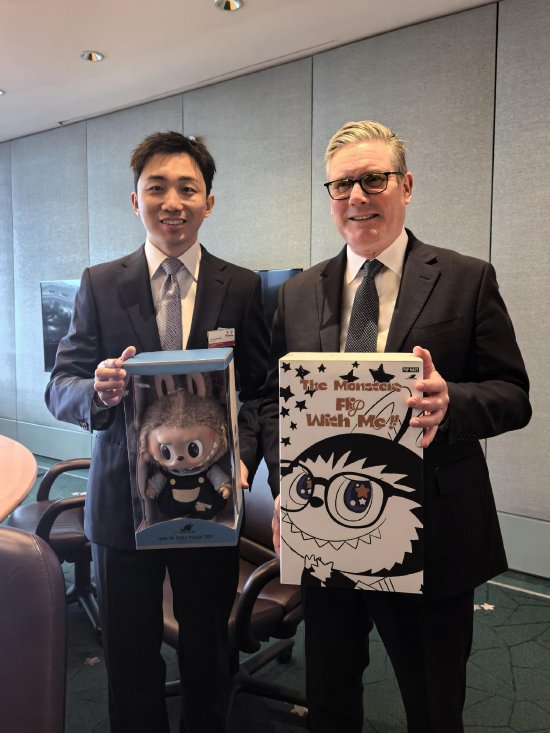
泡泡玛特是门玄学
3 6 Ke· 2026-01-30 08:06
Core Viewpoint - Pop Mart is experiencing a significant rebound in its stock price, with a 23% increase in a single week and a market capitalization returning to the 300 billion HKD range, driven by a large share buyback and successful new product launches [1][2] Group 1: Stock Performance and Market Reactions - The stock price of Pop Mart has shown extreme volatility, characterized by sharp rises and falls, with a 40% drop in the second half of the previous year despite strong performance [2][5] - The recent surge in stock price is attributed to a 3.5 billion HKD share buyback and the popularity of new products like the "PUCKY" electronic wooden fish [1][3] - Pop Mart's stock price reached a historical peak of 339.8 HKD per share in August, with a market capitalization exceeding 450 billion HKD, before experiencing a significant decline [8][10] Group 2: Market Position and Competitive Landscape - Pop Mart operates in a unique market space with no direct competitors globally, allowing it to easily attract market attention and capital with minimal actions [3][21] - The company has defined and cultivated the domestic trend toy market, maintaining a strong market position despite the lack of a mature valuation system for its products [3][26] - Competitors in the domestic and international markets lack the ability to create original IPs and are not positioned to challenge Pop Mart's dominance [17][19] Group 3: Emotional Value and Business Model - Pop Mart's business model is centered around emotional value rather than practical utility, making it difficult to establish a stable valuation [22][23] - The company's products cater to emotional needs, which are inherently unpredictable, leading to significant fluctuations in stock price based on market sentiment [25][26] - The market's response to Pop Mart's stock is driven by belief in the emotional resonance of its products, resulting in a binary reaction: rise when confidence is high, fall when doubts arise [4][26] Group 4: Future Outlook and Challenges - Despite the recent rebound, concerns remain about the sustainability of its product scarcity and the emergence of new phenomenon-level IPs [10][20] - The lack of a clear replacement for Pop Mart in the market raises questions about the long-term viability of its business model [20][21] - The company's ability to continue resonating with younger consumers will be crucial for maintaining investor confidence and market performance [27]

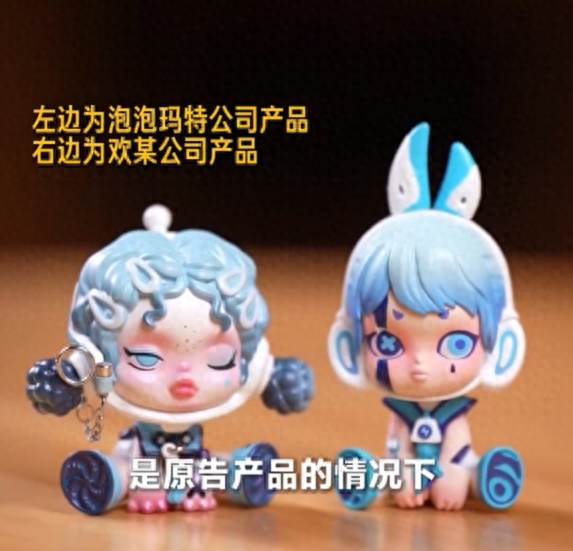
泡泡玛特盲盒遭撞脸,员工称“像孩子被偷走”!起诉获赔25万
Huan Qiu Wang· 2026-01-30 06:49
Core Viewpoint - The case involves a legal dispute between Pop Mart and Qianhai Huan Technology over alleged copyright infringement and unfair competition regarding similar toy designs, highlighting the challenges of intellectual property protection in the creative industry [1][3]. Group 1: Company Overview - Pop Mart's "Night City" blind box series gained popularity due to its unique design and artistic style, leading to the emergence of a similar product, "Friend Island," produced by Qianhai Huan Technology [1]. - The legal team at Pop Mart identified that multiple designs in "Friend Island" closely resembled those in "Night City," with only minor modifications in features and attire [1]. Group 2: Legal Proceedings - In October 2022, Pop Mart filed a lawsuit against Qianhai Huan Technology for copyright infringement and unfair competition in the Shenzhen Qianhai Cooperation Zone People's Court [3]. - A survey conducted by the court revealed that 61.8% of respondents mistakenly believed "Friend Island" was associated with Pop Mart, indicating consumer confusion [3]. - In December 2023, the court ruled that while there was no copyright infringement, Qianhai's product constituted unfair competition, resulting in a compensation order of over 250,000 yuan [3]. - Qianhai Huan Technology appealed the decision, arguing that "Friend Island" was an independent creation and that the court's survey was a legal error, but the Shenzhen Intermediate People's Court upheld the original ruling in July 2025 [3].
泡泡玛特20260129
2026-01-30 03:11
Summary of the Conference Call for Pop Mart Company Overview - **Company**: Pop Mart - **Industry**: Toy and Entertainment Key Points and Arguments Competitive Advantages - Pop Mart has established a unique dynamic barrier through aesthetic culture and top-tier artist resources, which are difficult to replicate [2][3] - The founder's aesthetic vision and deep connections with top artists are crucial to the company's success [2] - The company has successfully extended its reach into various top-tier circles across industries, occupying a significant position in the minds of key consumers, creating a competitive edge that is hard for other brands to match [2] Operational Mechanisms - Pop Mart has institutionalized its operational mechanisms across various aspects, including IP and brand management, product and content development, marketing and operations, store and amusement park management, and new product launches, forming deep operational barriers [2][3] Market Demand and Trends - Demand for trendy toys is driven by demographic changes, shifts in mass media, and consumer psychological needs, with the Kidult subculture becoming particularly prominent during economic downturns [2][6] - Current global systemic anxiety has extended the demand stickiness and lifecycle of trendy toys [2][6] Growth Strategy - The company plans to expand its retail footprint with approximately 600 new stores domestically and over 400 internationally, supported by IP licensing and cross-industry collaborations [2][10] - Product diversification and premiumization strategies are in place to increase average transaction value, with some products priced close to 20,000 RMB [2][13] Future Revenue Projections - For 2026, Pop Mart expects to achieve revenues between 37.5 billion to 68 billion RMB, with adjusted net profits projected between 12.3 billion to 22.6 billion RMB [7][8] Investment Value - The current stock price is considered to have a high safety margin compared to international giants, with a PE ratio significantly above 10, indicating attractive investment potential [5][8] International Market Development - As of mid-2025, overseas revenue was approximately 5.593 billion RMB, with an estimated overseas membership of about 44 million [12] - The company aims to replicate its domestic success in international markets, leveraging its established operational strategies [12] Product Innovation and Customer Engagement - Pop Mart is innovating through diverse product offerings, including figures, plush toys, and movable dolls, enhancing customer engagement and brand loyalty [13][19] - The company has seen significant growth in its membership base, with over 59 million members in mainland China by mid-2025 [11] Expansion into New Business Areas - The company is diversifying into amusement parks, gaming, and film, with notable collaborations such as the development of a movie with Sony Pictures [2][15][16] Artist Collaboration and Marketing - Pop Mart leverages collaborations with renowned artists and brands to enhance its market presence and consumer recognition [17][20] - The company has established a strong operational mechanism that allows for timely market responses and efficient product launches [19] Valuation Assessment - Based on historical valuation metrics of similar companies, Pop Mart is projected to achieve a market valuation of approximately 500 billion HKD by 2026, maintaining a buy rating [22]
智通港股沽空统计|1月30日
智通财经网· 2026-01-30 00:22
Group 1 - The core viewpoint of the articles highlights the short-selling activities of various companies, with specific focus on the short-selling ratios and amounts for leading firms in the market [1][2]. Group 2 - The top three companies by short-selling ratio are BYD Company Limited (95.08%), Lenovo Group Limited (85.25%), and Baidu Group (76.60%) [1]. - The highest short-selling amounts are recorded for China Ping An (1.88 billion), Xiaomi Group (1.086 billion), and Alibaba Group (1.062 billion) [2]. - The top three companies with the highest deviation values, indicating significant short-selling activity compared to their historical averages, are Baidu Group (39.38%), BYD Company Limited (35.91%), and Fuhong Hanlin (27.27%) [1][2].




智通ADR统计 | 1月30日
智通财经网· 2026-01-29 22:41
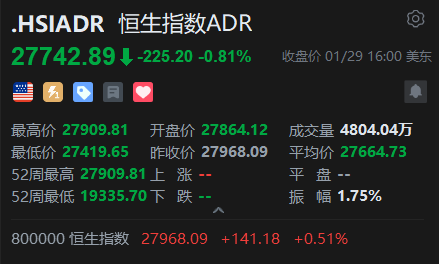
Market Overview - The Hang Seng Index (HSI) closed at 27,742.89, down by 225.20 points or 0.81% as of January 29, 16:00 Eastern Time [1] - The index reached a high of 27,909.81 and a low of 27,419.65 during the trading session, with an average price of 27,664.73 [1] - The 52-week high for the index is 27,909.81, while the 52-week low is 19,335.70 [1] Blue-Chip Stocks Performance - Most large-cap stocks experienced declines, with HSBC Holdings closing at HKD 138.219, up 0.45% compared to the Hong Kong close [2] - Tencent Holdings closed at HKD 619.286, down 0.44% from the Hong Kong close [2] Individual Stock Movements - Tencent Holdings (00700) latest price is HKD 622.000, with a slight increase of 1.000 or 0.16% [3] - Alibaba Group (09988) latest price is HKD 173.300, down by 0.200 or 0.12% [3] - HSBC Holdings (00005) latest price is HKD 137.600, up by 0.100 or 0.07% [3] - China Construction Bank (00939) latest price is HKD 8.160, up by 0.130 or 1.62% [3] - AIA Group (01299) latest price is HKD 90.950, up by 2.100 or 2.36% [3] - Xiaomi Group (01810) latest price is HKD 36.620, up by 0.300 or 0.83% [3] - NetEase (099999) latest price is HKD 206.600, down by 5.400 or 2.55% [3] - Meituan (03690) latest price is HKD 98.600, up by 0.250 or 0.25% [3] - Industrial and Commercial Bank of China (01398) latest price is HKD 6.640, up by 0.050 or 0.76% [3] - Hong Kong Exchanges and Clearing (00388) latest price is HKD 444.200, up by 5.000 or 1.14% [3] - Ping An Insurance (02318) latest price is HKD 73.300, up by 2.350 or 3.31% [3] - Baidu Group (09888) latest price is HKD 155.500, down by 0.600 or 0.38% [3] - China Bank (03988) latest price is HKD 4.760, up by 0.090 or 1.93% [3] - BYD Company (01211) latest price is HKD 101.800, down by 1.000 or 0.97% [3] - JD.com (09618) latest price is HKD 114.600, down by 1.700 or 1.46% [3] - Ctrip Group (09961) latest price is HKD 482.200, down by 13.200 or 2.66% [3]



2029年中国情绪经济规模将超4.5万亿
Di Yi Cai Jing Zi Xun· 2026-01-29 13:27
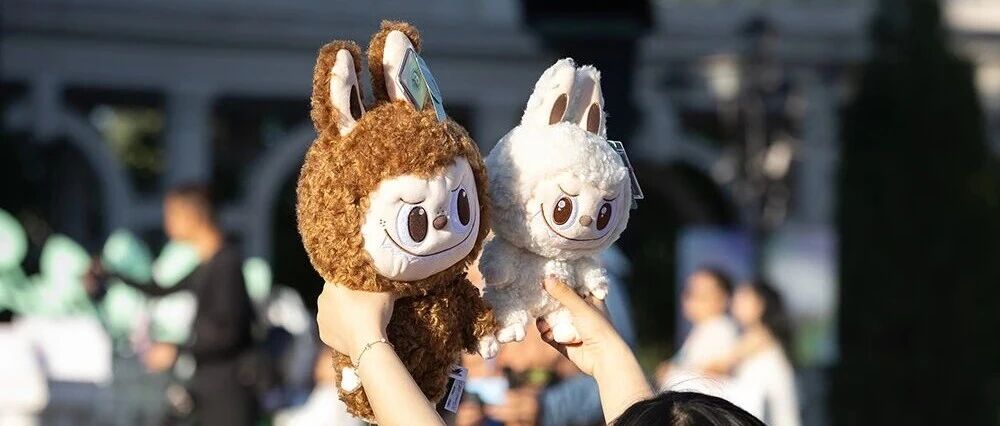
2026.01.29 本文字数:1838,阅读时长大约3分钟 作者 |第一财经 林靖 情绪经济是一种由情绪消费驱动的新兴经济形态。有媒体分析,如今的消费者越来越愿意为开心、治 愈、氛围感、归属感买单,消费选择早已超越了传统刚需的范畴。由此衍生出的一系列消费新业态、新 模式,共同构成了当下火热的"情绪经济"。 从抢购LABUBU到热门影视IP的周边,从景德镇"鸡排哥"意外走红到网络上流行的"爱你老己",从为一 场演唱会奔赴千里之外到"苏超"比赛的一票难求……情绪经济、悦己经济正在快速崛起。 广东省体改研究会执行会长彭澎对第一财经分析,随着经济发展、生活水平提高,人们在基本的吃饱穿 暖之外,有更多其他层面的消费需求。同时,现在人的生活状态比较复杂,竞争压力比较大,很多人面 临复杂的场景,需要解压,焦虑情绪需要释放。 2025年,凭借丑萌怪异造型强势出圈潮玩LABUBU,成为很多年轻人的"心头好"。来自大连的90后赵女 士买了泡泡玛特诸多产品,包括labubu、星星人系列,还专门买了一个柜子存放。"每天下班回家,打 开柜子,捏一捏,心情就好很多,很放松,觉得这是专属于自己的世界,可以找到情绪的寄托,可以暂 时缓解工 ...

中国消费的新“老”温差
财富FORTUNE· 2026-01-29 13:10
Core Viewpoint - The article highlights a significant shift in China's consumer landscape, contrasting the performance of traditional consumer brands like Kweichow Moutai with new consumer brands like Pop Mart, indicating a transition towards "new" consumption driven by changing demographics, real estate cycles, and evolving consumer values [1][3]. Group 1: Company Performance - Kweichow Moutai announced a stock buyback plan of 1.5 to 3 billion yuan but saw its stock price decline after the initial buyback, reflecting a defensive market perception [1][3]. - In contrast, Pop Mart's stock buyback of 350 million HKD led to a market capitalization increase of nearly 60 billion HKD within a week, showcasing a strong growth narrative [1][3]. - On January 29, Kweichow Moutai's stock experienced a rare surge, recovering to over 1400 yuan, which also positively impacted other liquor stocks and the real estate sector [3]. Group 2: Market Dynamics - The article discusses the divergence in investment logic between traditional and new consumer brands, with the former viewed as defensive and the latter as growth-oriented [3][4]. - Traditional consumer stocks, particularly in the liquor sector, are closely tied to macroeconomic conditions and the real estate cycle, which has been under pressure, leading to a challenging environment for recovery [3][4]. - New consumer brands like Pop Mart, Anta, and Li Ning are not solely reliant on macroeconomic support but are leveraging innovation to create structural growth opportunities [4][5]. Group 3: Growth Drivers - The core driver for new consumption has shifted from "demographic dividends" to "emotional dividends," focusing on consumer identity and self-expression rather than basic material needs [4][5]. - The Hong Kong consumer index, which includes new consumption sectors, saw a cumulative increase of about 20% in 2025, while the Shanghai consumer index, dominated by traditional sectors, fell nearly 8% [4]. Group 4: International Expansion - Traditional consumer companies lacking international expansion capabilities face stagnation, while new consumer brands are showing strong growth overseas, with Pop Mart reporting a 3.7 times increase in overseas revenue by Q3 2025 [5]. - Successful international strategies are evident in brands like Anta and Li Ning, which are expanding rapidly in Southeast Asia, indicating a shift from "Made in China" to "Global Brands" [5]. Group 5: Valuation and Investment Considerations - Traditional consumer leaders like Kweichow Moutai still hold strong market positions and stable cash flows, with their valuations entering historically low ranges, appealing to risk-averse investors [6]. - New consumer brands face unique challenges, such as sustaining IP creation and managing acquisitions, with high valuations making them sensitive to any signs of growth slowdown [6][7]. - The sustainability of "self-indulgent" consumption is questioned, as it relies on consumer sentiment and disposable income, which may be the first to be scrutinized in uncertain economic times [8].

股票市场概览:资讯日报:美联储维持利率不变,符合市场普遍预期-20260129
Guoxin Securities Hongkong· 2026-01-29 11:58
Market Overview - The Federal Reserve maintained the federal funds rate target range at 3.5%-3.75%, aligning with market expectations[9] - The Hang Seng Index closed at 27,827, down 2.58% for the day but up 8.57% year-to-date[3] - The S&P 500 index closed at 6,978, with a slight decrease of 0.01% for the day and a year-to-date increase of 1.94%[3] Stock Performance - Gold prices surged, with spot gold exceeding $5,280 per ounce, marking a monthly increase of over 22%[9] - Semiconductor stocks saw significant gains, with the Philadelphia Semiconductor Index rising by 2.34%[9] - Major tech stocks showed mixed results, with Intel up 11.04% and Microsoft down 6% post-earnings report[9] Sector Highlights - Oil stocks continued to rise, with Shanghai Petrochemical gaining over 5% due to geopolitical tensions driving oil prices up by 3%[9] - New consumer concept stocks performed well, with a snack retail chain soaring 69% on its debut[9] - Airline stocks faced pressure, with China Southern Airlines down 6.83% due to rising operational costs[9] Economic Indicators - The U.S. dollar index fell to 95.51, the lowest since February 2022, contributing to the rise in gold prices[9] - The Japanese yen strengthened, impacting export-related stocks negatively, with Toyota down 3.24%[13] - The Bank of Japan raised its policy rate to 0.75%, the highest in 30 years, indicating a cautious approach to future rate hikes[13]


2月金股报告:指数震荡,行业关注资源、出海、科技
ZHONGTAI SECURITIES· 2026-01-29 11:18
Group 1 - The report indicates that the A-share market is experiencing a typical spring rally characterized by initial strength followed by stabilization and structural differentiation, with major indices recording positive returns as of January 28, 2026 [6] - The average daily trading volume in January reached 3.04 trillion yuan, an increase of 1.16 trillion yuan month-on-month, indicating a significant influx of new capital and a loose liquidity environment driving the index upward [2] - Regulatory measures, including raising the minimum margin requirement from 80% to 100%, have led to fluctuations in market sentiment and a deceleration in the index's upward momentum [3] Group 2 - The report highlights that technology assets are experiencing a rotation between thematic and cyclical investments, with thematic investments (e.g., commercial aerospace, AI applications) initially favored but cooling off due to increased margin requirements [4] - In the cyclical sector, non-ferrous metals, basic chemicals, and oil & petrochemicals have shown strong performance driven by three factors: demand from high-end manufacturing, proactive supply-side adjustments, and external geopolitical risks [4] - The report anticipates a structural market characterized by a focus on "resources + technology + overseas expansion," with low-risk preference assets potentially outperforming in certain phases [5] Group 3 - The investment strategy emphasizes focusing on "external demand cyclical + AI industry chain," highlighting the potential for global manufacturing recovery to support resource prices and opportunities for Chinese manufacturing to expand overseas [5] - The AI industry remains a clear investment theme, with a shift from thematic to performance-driven investments, particularly in areas with supply shortages such as power supply and semiconductor sectors [5] - The report recommends a selection of stocks across various sectors, including Invesco's Nonferrous ETF, Dongpeng Beverage, and Huazhong Precision, among others, reflecting a diversified investment approach [10]


