
Tsingtao Brewery(600600)

Search documents
食品饮料行业周报:CPI催化预期,底部价值凸显-20251117



Haitong Securities International· 2025-11-17 07:10
Investment Rating - Investment advice indicates a sector recovery catalyzed by recent CPI data, focusing on growth and supply-demand inflection points [5][16]. Core Views - The report emphasizes the importance of consumer goods growth, particularly in beverages, snacks, and food ingredients, while also highlighting structural opportunities in the baijiu sector [5][16]. - CPI data shows a positive trend with October CPI year-on-year at +0.2% and core CPI at +1.2%, indicating a recovery in domestic demand [6][16]. - The baijiu industry is undergoing accelerated clearing, with expectations for improved sales and inventory adjustments leading into 2026 [7][16]. - Consumer goods are expected to benefit from stabilization and recovery, with a focus on low valuation and high dividend stocks [8][16]. Summary by Sections Investment Recommendations - Recommended baijiu stocks include Shanxi Xinghuacun Fen Wine Factory, Gujing Distillery, and stable targets like Kweichow Moutai and Wuliangye [5][16]. - Beverage growth is highlighted with recommendations for Eastroc Beverage and Nongfu Spring, alongside low valuation stocks like China Foods and Tingyi [5][16]. - Snack and food ingredient stocks recommended include Bailong Chuangyuan, Yankershop Food, and Three Squirrels [5][16]. - Beer recommendations include Yanjing Brewery and Tsingtao Brewery, while condiment stocks like Haitian Flavoring & Food are also suggested [5][16]. Baijiu Sector Insights - The baijiu sector is experiencing a significant adjustment, with industry destocking still in progress and a focus on promotional sales for 2026 [7][16]. - Recent sales data from JD.com shows a +18% year-on-year increase in liquor sales during the Double 11 shopping festival, indicating a positive market response [7][16]. Consumer Goods Outlook - Consumer goods are expected to see growth as the mainline, with structural differentiation evident in beverages, snacks, and health products [8][16]. - The report notes that companies with product innovation and channel expansion will have growth advantages, particularly in the context of recent service and non-food price recoveries [8][16].
食品饮料2026:大年,起点
Orient Securities· 2025-11-16 15:35
Investment Rating - The investment rating for the food and beverage industry is "Positive" (maintained) [5] Core Viewpoints - The food and beverage sector is expected to experience a "difficult to decline" phase starting in 2026, with a clear bottom and upward potential. The growth will shift from valuation recovery to performance-driven [8] - The report emphasizes the importance of "individual stock improvement" and "structural dividends," suggesting that the sector is currently in a performance bottoming phase, with short-term trading opportunities focused on stocks showing significant performance recovery [8] - The report anticipates that the overall performance of the food and beverage sector will improve in 2026, driven by supply-side adjustments and a gradual recovery in consumer demand [8] Summary by Sections Investment Recommendations and Targets - Short-term strategy focuses on trading "individual stock improvement" and "turnaround" themes, recommending stocks such as Miaokelando (600882, Buy), Jinshiyuan (603369, Buy), Gujinggongjiu (000596, Buy), and Shede Liquor (600702, Buy) [4] - Structural dividends are expected to continue, with recommendations for Dongpeng Beverage (605499, Buy) and Yanjinpuzi (002847, Buy) [4] - On the demand side, stability or market share themes are highlighted, recommending stocks like Kweichow Moutai (600519, Buy), Shanxi Fenjiu (600809, Buy), Luzhou Laojiao (000568, Buy), Qingdao Beer (600600, Buy), and Yili Group (600887, Buy) [4]




食品饮料行业点评:近期更新反馈:固本强基,趋时驭势
GOLDEN SUN SECURITIES· 2025-11-16 09:39
Investment Rating - The report maintains an "Accumulate" rating for the food and beverage industry, indicating a positive outlook for investment opportunities in this sector [5]. Core Insights - The food and beverage industry is experiencing a transformation driven by health-conscious consumer trends, product innovation, and channel expansion, with companies actively enhancing their product offerings and exploring overseas markets [1][9]. - In the liquor segment, the supply side is undergoing continuous changes to seek growth, while the demand side is gradually recovering, highlighting the absolute investment value in the industry [2][3]. - The beverage sector is focusing on product innovation and network expansion to uncover growth potential, with a strong emphasis on health upgrades and premiumization [4][7]. Summary by Relevant Sections Liquor Industry - **Water Well**: The company is optimizing its product matrix and plans to launch a new high-end product in 2025, focusing on brand collaboration and expanding its terminal network [2]. - **Jiu Gui Jiu**: The brand is implementing a strategic focus on brand depth and product line simplification, with expectations for improved sales performance [3]. - **She De Jiu Ye**: The company is maintaining its core strategy while expanding its product offerings, particularly in e-commerce, to drive growth [3]. Beverage Industry - **Kang Shi Fu**: The company is committed to innovation and quality, focusing on expanding its product range to meet diverse consumer needs [4]. - **Unified Enterprises**: The company is experiencing stable performance with a focus on product innovation and market expansion, particularly in the instant noodle and beverage segments [7]. - **Hua Run Beverage**: Short-term performance is under pressure due to competition, but long-term growth prospects remain strong due to the essential nature of its products [7]. Health and Wellness Trends - **Anqi Yeast**: The company is targeting over 10% revenue growth, with a focus on expanding its overseas market presence and maintaining cost advantages [9]. - **Xian Le Health**: The company is advancing its global strategy and product innovation to capture new consumer trends, with a focus on high-margin products [9]. - **Jian Yi Health**: The company is enhancing its probiotic offerings and expanding its product lines to meet evolving consumer demands [10]. Overall Market Trends - The food and beverage industry is witnessing a shift towards healthier products and innovative marketing strategies, with companies adapting to changing consumer preferences and exploring new growth avenues [1][4].


顶级资本正在“抄底”消费
Xin Lang Cai Jing· 2025-11-16 02:14
Core Insights - The recent surge in mergers and acquisitions in the consumer sector contrasts with the sluggish growth of the consumption market, raising questions about the underlying investment logic of top-tier capital [1][4]. Group 1: Current Market Conditions - The retail sales of consumer goods in China reached 36.59 trillion yuan in the first three quarters, growing by 4.5% year-on-year, which is still below the 8% growth rate seen in 2019 [1]. - The performance of listed consumer companies shows significant divergence, with major players like Kweichow Moutai and Yum China experiencing slowed growth compared to previous years [2]. - Smaller food and beverage companies are facing considerable operational pressure, with many reporting declines in both revenue and net profit [2]. Group 2: Investment Logic Behind Mergers - The first logic is that target companies possess strong cash flow and a solid foundation, making them attractive despite slower growth rates [4]. - The second logic highlights the brand influence of the target companies, which have established networks and consumer loyalty, making them appealing for capital investment [5]. - The third logic suggests that the current market downturn presents a "buying opportunity" for capital, allowing for acquisitions at reasonable prices [5]. - The fourth logic emphasizes the ongoing opportunities in the consumer sector, as the majority of production activities ultimately cater to consumer needs [5]. Group 3: Future Trends in the Consumer Market - Companies face challenges in understanding new consumer demographics, adapting to new marketing methods, and embracing innovative organizational structures [6]. - Three key trends to watch include a focus on cost-effective innovation, the rise of niche products that provide immediate satisfaction, and growth in self-improvement sectors such as health investments and knowledge-based services [6]. - The exit strategies for capital in the consumer market are evolving, with a shift towards long-term investment approaches rather than relying solely on rapid growth and IPOs [7].


食品饮料行业周报 20251110-20251114:板块关注度回升,重申进入战略配置期-20251115
Shenwan Hongyuan Securities· 2025-11-15 15:27
Investment Rating - The report maintains a positive investment outlook for the food and beverage industry, particularly highlighting the strategic configuration period for quality companies [3][7]. Core Insights - The food and beverage sector has shown signs of recovery, with retail sales growth of 2.9% year-on-year in October and a 3.8% increase in restaurant revenue, indicating a rebound from previous declines [3][7]. - Major liquor companies have experienced significant revenue declines, but the market is actively seeking a balance between volume and price, suggesting a potential bottoming out of the market [3][7]. - The report emphasizes the importance of patience regarding fundamental performance and notes that individual stock performance will vary during this adjustment phase [3][7]. Summary by Sections Food and Beverage Weekly Insights - The food and beverage sector rose by 2.82% last week, outperforming the Shanghai Composite Index by 2.99 percentage points [6]. - Key stocks such as Huanyujia and Sanyuan have shown significant gains, while Dongpeng Beverage and Qianwei Yangchun faced declines [6]. Liquor Sector Analysis - The report indicates that the liquor sector is entering a strategic configuration phase, with expectations of a fundamental turning point in Q3 2026 [8]. - The average price for Moutai is reported at 1655 RMB for loose bottles, with a week-on-week increase of 15 RMB, while the price for Wuliangye remains stable at approximately 830 RMB [8][26]. - The report anticipates continued pressure on sales volume in early 2026, but a stabilization and recovery in prices as inventory clears and demand rebounds [8]. Consumer Goods Sector Insights - The performance of consumer goods companies has been mixed, with leading firms like Yili and Qingdao Beer maintaining stable operations, while some companies in the snack and beverage sectors have seen a slowdown in revenue growth [9]. - The report recommends focusing on high-dividend yielding companies and those with sustainable growth potential, particularly in the snack and beverage segments [9]. Valuation Metrics - As of November 14, 2025, the food and beverage sector has a dynamic PE of 20.85x, with a premium rate of 27%, while the liquor sector has a dynamic PE of 19.51x, with a premium rate of 18% [27].

中高端啤酒,正在成为年轻人的“精神食粮”
3 6 Ke· 2025-11-13 12:11
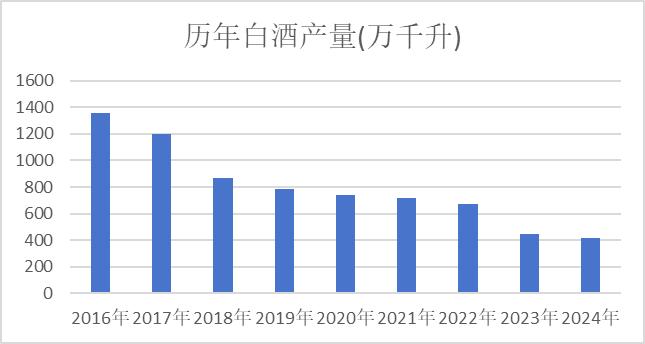
Core Insights - The overall alcohol market is experiencing a decline, with both the baijiu and beer industries facing significant challenges, including a projected 1% decrease in global beer sales in 2024 [1][9] - Despite the downturn, the high-end beer segment is witnessing growth, with high-end and super high-end beers in China and the U.S. showing positive growth rates of 1% and 2% respectively in 2024 [2][9] Industry Overview - The baijiu industry has seen a continuous decline in production, dropping from 13.58 million kiloliters in 2016 to approximately 4.14 million kiloliters in 2024, with projections indicating it may fall below 4 million kiloliters in 2025, marking a 20-year low [4][7] - High-end baijiu prices have also plummeted, with notable brands like Moutai and Wuliangye hitting record lows in wholesale prices [7][8] - The beer industry is similarly struggling, with a 0.6% decline in production for major Chinese breweries in 2024, amounting to 35.21 million kiloliters, which is about 70% of the peak production in 2013 [9] High-End Beer Growth - High-end beer is driving revenue growth for breweries, with companies like Yanjing Beer reporting that mid-to-high-end products accounted for 70.11% of their sales, achieving a revenue growth of 9.32% [9][12] - The trend towards high-end beer consumption is largely driven by younger consumers, who are increasingly willing to pay for quality and unique experiences [12][14] Consumer Behavior - A significant portion of young consumers (over 77%) prefer the concept of "quality over quantity" in their beer choices, indicating a shift in consumption patterns [13] - The younger demographic is motivated by both quality and status, viewing high-end beer as a lifestyle choice rather than just a beverage [14][15] Market Dynamics - The high-end beer market is projected to grow, with the industry’s high-end rate expected to reach 30% by 2026 [19][20] - However, not all companies are successfully transitioning to high-end products, as seen with Budweiser and Tsingtao, which have faced challenges in maintaining sales and profitability in this segment [21][22] Challenges in High-End Transition - The transition to high-end products requires strong brand recognition, effective distribution channels, and cultural resonance with consumers, which many domestic brands struggle to achieve [22][23] - The competition in the high-end market is intensifying, and companies must innovate and connect with younger consumers to succeed [18][24]


青岛啤酒股份(00168)11月13日斥资2.22万元回购1667股A股
Zhi Tong Cai Jing· 2025-11-13 08:56
Core Viewpoint - Qingdao Beer Co., Ltd. announced a share buyback of 1,667 A-shares at a total cost of RMB 22,200, with a buyback price of RMB 13.33 per share [1] Summary by Category - **Company Actions** - The company executed a buyback of 1,667 A-shares on November 13, 2025 [1] - The total expenditure for the buyback was RMB 22,200 [1] - The price per share for the buyback was set at RMB 13.33 [1]
青岛啤酒股份11月13日斥资2.22万元回购1667股A股
Zhi Tong Cai Jing· 2025-11-13 08:49
Core Viewpoint - Qingdao Beer (600600) announced a share buyback plan, indicating confidence in its stock value and commitment to returning capital to shareholders [1] Group 1 - The company plans to repurchase 1,667 shares of A-shares [1] - The total amount allocated for the buyback is RMB 22,200 [1] - The buyback price per share is set at RMB 13.33 [1]
青岛啤酒股份(00168.HK)11月13日耗资2.2万元回购1667股A股
Ge Long Hui· 2025-11-13 08:45
Core Viewpoint - Qingdao Beer Co., Ltd. announced a share buyback of 1,667 A-shares at a cost of 22,000 yuan on November 13 [1] Summary by Category Company Actions - The company executed a buyback of 1,667 A-shares, indicating a commitment to enhancing shareholder value [1] - The total expenditure for this buyback was 22,000 yuan, reflecting the company's strategy to manage its capital structure [1]
青岛啤酒股份(00168) - 翌日披露报表
2025-11-13 08:36
翌日披露報表 (股份發行人 ── 已發行股份或庫存股份變動、股份購回及/或在場内出售庫存股份) 表格類別: 股票 狀態: 新提交 公司名稱: 青島啤酒股份有限公司 呈交日期: 2025年11月13日 如上市發行人的已發行股份或庫存股份出現變動而須根據《香港聯合交易所有限公司(「香港聯交所」)證券上市規則》(「《主板上市規則》」)第13.25A條 / 《香港聯合交易所有限公司GEM證券 上市規則》(「《GEM上市規則》」)第17.27A條作出披露,必須填妥第一章節 。 | 第一章節 | | | | | | | | --- | --- | --- | --- | --- | --- | --- | | 1. 股份分類 | 普通股 | 股份類別 A | | 於香港聯交所上市 | 否 | | | 證券代號 (如上市) | | 說明 | A股於上海證券交易所上市 (證券代號: 600600) | | | | | A. 已發行股份或庫存股份變動 | | | | | | | | | 事件 | 已發行股份(不包括庫存股份)變動 | | 庫存股份變動 | | 已發行股份總數 | | | | 已發行股份(不包括庫存股份)數 目 ...