LI AUTO-W(02015)

Search documents
港股午评:恒指涨2.29%重返27000点 科指涨3.32% 科网股、黄金股普涨 光通讯概念走...
Xin Lang Cai Jing· 2026-02-23 04:15
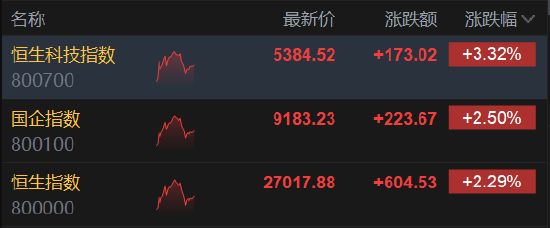
黄金股大涨,潼关黄金涨超11%。由于美国最高法院限制了美国总统特朗普的关税权力,使得与美国谈 判的贸易协定前景充满不确定性,这令市场感到不安,黄金价格走高。与此同时,美伊核谈判前景正影 响原油市场。 | 名称 | 最新价 | 涨跌额 | 涨跌幅 √ | | --- | --- | --- | --- | | 恒生科技指数 | 5384.52 | +173.02 | +3.32% | | 800700 | | | | | 国企指数 | 9183.23 | +223.67 | +2.50% | | 800100 | | | | | 恒生指数 | 27017.88 | +604.53 | +2.29% | | 800000 | | | | 来源:新浪港股 2月23日消息,港股三大指数集体上涨。截至午间收盘,恒生指数涨2.29%,报27017.88点,恒生科技指 数涨3.32%,国企指数涨2.50%。盘面上,科网股普涨,美团涨超6%,京东涨超4%,阿里巴巴、腾讯、 快手、百度涨超3%;黄金股大涨,潼关黄金涨超11%;汽车股活跃,蔚来涨超3%;光通讯概念走强, 长飞光纤光缆涨超15%。 | 代码 | 名称 | 最新价 ...




港股新能源汽车股走强,零跑汽车、理想汽车、蔚来和赛力斯均涨超4% 小鹏汽车涨近4%
Mei Ri Jing Ji Xin Wen· 2026-02-23 03:06
(文章来源:每日经济新闻) 每经AI快讯,2月23日,港股新能源汽车股走强,零跑汽车、理想汽车、蔚来和赛力斯均涨超4%,小鹏 汽车涨近4%。 ...


港股新能源汽车股走强,零跑汽车、理想汽车、蔚来和赛力斯均涨超4%,小鹏汽车涨近4%
Mei Ri Jing Ji Xin Wen· 2026-02-23 03:01
每经AI快讯,2月23日,港股新能源汽车股走强,零跑汽车、理想汽车、蔚来和赛力斯均涨超4%,小鹏 汽车涨近4%。 ...
汽车股早盘普遍上涨 赛力斯及比亚迪股份均涨近5%
Xin Lang Cai Jing· 2026-02-23 02:29
汽车股早盘普遍上涨,截至发稿,赛力斯(09927)上涨4.87%,报96.85港元;比亚迪股份(01211)上 涨4.77%,报100港元;小鹏汽车-W(09868)上涨3.83%,报70.45港元;理想汽车-W(02015)上涨 4.07%,报72.95港元。 来源:新浪港股 ...
港股汽车股今日普涨 赛力斯涨近5%
Mei Ri Jing Ji Xin Wen· 2026-02-23 02:18
Core Viewpoint - The Hong Kong automotive stocks experienced a broad increase today, indicating positive market sentiment in the sector [1] Group 1: Stock Performance - Seres (09927.HK) rose by 4.87%, trading at HKD 96.85 [1] - BYD Company (01211.HK) increased by 4.56%, with shares priced at HKD 99.8 [1] - Xpeng Motors-W (09868.HK) saw a rise of 3.83%, reaching HKD 70.45 [1] - Li Auto-W (02015.HK) gained 3.57%, trading at HKD 72.6 [1]
港股异动 | 汽车股今日普涨 赛力斯(09927)涨近5% 机构看好后续政策落地与出口韧性双重催化
智通财经网· 2026-02-23 02:11
方正证券发布研报称,1月受季节性淡季及前期政策抢装透支影响,车市短期承压,但伴随各地置换补 贴政策逐步落地,终端需求有望加速修复。出口延续强劲表现,助力平滑行业波动。预计2026年我国汽 车出口将达634万辆,同比增长约13%,占产量比重有望突破20%。 智通财经APP获悉,汽车股今日普涨,截至发稿,赛力斯(09927)涨4.87%,报96.85港元;比亚迪股份 (01211)涨4.56%,报99.8港元;小鹏汽车-W(09868)涨3.83%,报70.45港元;理想汽车-W(02015)涨 3.57%,报72.6港元。 消息面上,当地时间2月20日,美国最高法院裁定特朗普政府大规模关税政策违法。特朗普先是宣布在 常规关税基础上对全球商品加征10%关税,后又表示原本10%的全球进口关税税率将升至15%。此外, 乘联分会秘书长崔东树表示,中国汽车海外产销体系完成向"产业出海"的关键转型。 ...
KLÉPIERRE ANNOUNCES CHANGES TO ITS SUPERVISORY BOARD
Globenewswire· 2026-02-20 17:18
Core Viewpoint - Klépierre announces the conclusion of Mr. David Simon's tenure as Chairman of the Supervisory Board after 14 years, highlighting his exceptional leadership and strategic insight [2][3]. Company Overview - Klépierre is the European leader in shopping malls, focusing exclusively on continental Europe, with a portfolio valued at €21.2 billion as of December 31, 2025 [5]. - The company operates large shopping centers in over 10 countries in Continental Europe, attracting more than 720 million visitors annually [5]. - Klépierre is a French REIT (SIIC) listed on Euronext Paris and is included in the CAC Next 20 and EPRA Euro Zone Indexes, as well as various ethical indexes [5]. Leadership Changes - The Vice-Chairwoman will serve as the interim Chair of the Supervisory Board immediately following Mr. Simon's departure, ensuring the Board remains equipped to fulfill its duties [3]. - The Board will convene to consider Mr. Simon's succession in due course [3].

KLÉPIERRE: 2025 EARNINGS UP +5%, NAV UP +9% CONFIDENT ABOUT 2026
Globenewswire· 2026-02-19 16:42
Core Insights - Klépierre reported a 5% increase in earnings and a 9% rise in NAV for 2025, expressing confidence for 2026 [1][2][19] Financial Performance - Net current cash flow increased by 5% year-on-year to €2.72 per share, surpassing previous guidance [3][6] - EBITDA reached €1,119.3 million, up 5.5% year-on-year [3][6] - NAV per share rose by 9% to €35.9, driven by a 4.9% like-for-like portfolio value appreciation [7][10] - Total accounting return was 15% for 2025, with a cumulative return of 31.4% over the last two years [7][8] Operational Highlights - Net rental income grew by 5.1% year-on-year to €1,120.4 million, supported by a 4.5% like-for-like growth [5][24] - Footfall increased by 1.8% and like-for-like retailer sales rose by 3.4%, outperforming national retail sales indices [2][3] - Financial occupancy rate improved to 97.1%, with a rental uplift of 4.6% [3][4] Capital Allocation and Investments - Klépierre raised €1 billion in new financing at a competitive yield of 3.3% with an average maturity of 8.5 years [9][10] - The company acquired the leading mall in Bari for €160 million, expected to generate high-single digit cash returns [11][19] - Extensions at Odysseum and new projects at Le Gru and Romagna are projected to yield above 8% [12][19] Sustainability and Governance - Klépierre aims for net-zero on scopes 1 and 2 by 2030, with significant improvements in energy intensity and waste management [14][15] - The company was recognized for its sustainability efforts, ranking first in the European Listed Real Estate category by GRESB [16][17] - Governance changes include the planned appointment of Ludovic Jacquot to the Supervisory Board [20][21]
充电比加油还快?底盘比肩法拉利?2025年最强技术都有谁?
电动车公社· 2026-02-18 16:15
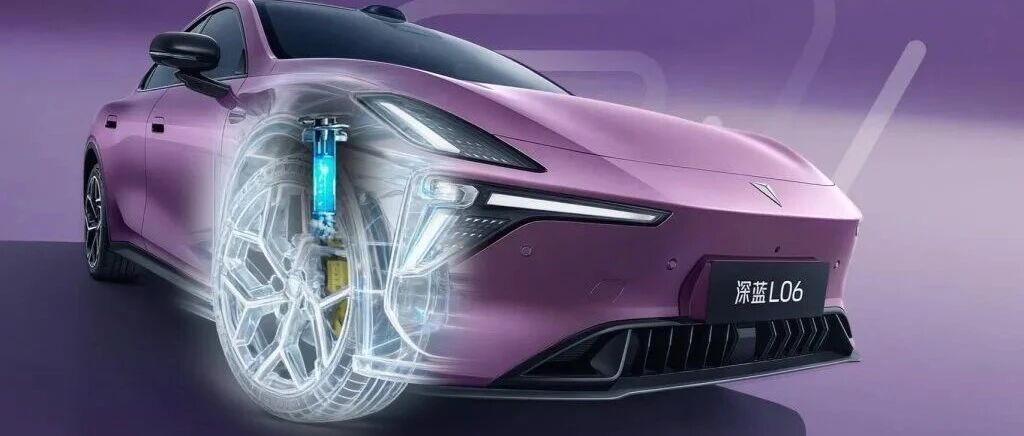
Core Viewpoint - In 2025, the penetration rate of domestic new energy passenger vehicles will exceed 50%, marking an unprecedented milestone in the industry [1]. Group 1: Technological Advancements - The acceptance and purchase of new energy vehicles are driven by technological advancements that enhance product capabilities [2]. - Key technologies emerging as new trends include semi-solid batteries, megawatt fast charging, VLA action language models, WA world models, and magnetorheological dampers [3][16][34][52][67]. Group 2: Semi-Solid Batteries - Semi-solid batteries, represented by brands like NIO and MG, are seen as a more feasible alternative to solid-state batteries, which face significant production and reliability challenges [4][5]. - By 2025, models such as NIO ET7 and MG4 will achieve mass production of semi-solid batteries [6]. - The semi-solid battery's electrolyte can be in gel or slurry form, allowing for better conductivity and safety compared to liquid batteries [9][12]. - The cost of semi-solid battery vehicles has been reduced to around 100,000 yuan, making them more accessible [14]. Group 3: Megawatt Fast Charging - BYD and CATL have introduced megawatt fast charging technology, significantly improving charging speeds, with the potential to add 400 kilometers of range in just 5 minutes [16][17]. - The technology requires supportive energy storage charging stations to mitigate the impact on the power grid [22]. - The use of silicon carbide power devices enables higher voltage platforms, reducing heat loss during charging [24][27]. Group 4: VLA Action Language Model - The VLA model, adopted by brands like Li Auto and Xpeng, enhances autonomous driving by integrating generative language tools to interpret visual data into actionable commands [34][41]. - This model allows engineers to modify generated text for better control, transforming the "black box" of AI into a more transparent system [44]. - Users can interact with the system through voice commands, improving the overall experience [45]. Group 5: WA World Model - The WA world model, utilized by Huawei and NIO, addresses the "black box" issue by simulating and understanding three-dimensional physical interactions for better driving predictions [52]. - This model focuses on cloud-based training to enhance the system's ability to handle complex scenarios [57]. - The WA model is designed to be faster and more efficient than the VLA model, with a focus on real-time decision-making [63]. Group 6: Magnetorheological Dampers - Magnetorheological dampers represent a significant advancement in chassis technology, offering rapid response times compared to traditional dampers [68][86]. - These dampers can adjust their viscosity in real-time, providing better ride comfort and handling [82]. - The entry price for vehicles equipped with magnetorheological dampers has been lowered to around 150,000 yuan, indicating potential for wider adoption [90].


首批625亿元国补到位,车市火爆,有车型价格6万送2万权益
21世纪经济报道· 2026-02-16 12:00
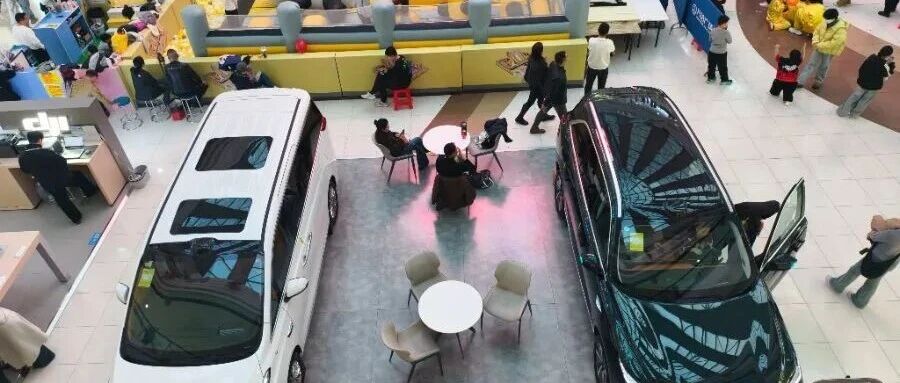
Core Viewpoint - The article highlights the significant boost in the automotive market, particularly in the electric vehicle (EV) sector, driven by government subsidies and the traditional consumption peak during the Spring Festival, showcasing the growing potential in lower-tier cities and rural areas [1][9]. Group 1: Government Initiatives and Market Response - The "Lego New Year" special event launched by the Ministry of Commerce and nine other departments has allocated 625 billion yuan in national subsidies, with local consumer red envelopes and corporate discounts being actively distributed [1]. - The continuation of national subsidies has led to increased foot traffic and sales in automotive showrooms, particularly for vehicles priced between 60,000 to 100,000 yuan [1]. Group 2: Competitive Landscape - Automotive brands are increasingly opening stores in prime locations such as shopping malls, indicating heightened competition and a strategic shift to capture consumer attention [4]. - Price remains the decisive factor for consumers in lower-tier cities, with brands like Extreme Fox promoting models under 100,000 yuan and offering significant incentives [5]. Group 3: Consumer Preferences and Trends - There is a growing acceptance of EVs in rural areas, with sales of EVs in these markets expected to outpace urban areas, driven by government initiatives and consumer demand [9]. - Consumers express a preference for EVs, particularly in the 100,000 to 200,000 yuan range, while also showing concerns about battery range and charging infrastructure [6][10]. Group 4: Charging Infrastructure Development - The construction of charging facilities is rapidly increasing, with projections indicating that by the end of 2025, there will be approximately 20.09 million charging points in China, marking a 49.7% year-on-year growth [11]. - The government of Henan province plans to build 29,000 new public charging points by 2025, significantly enhancing the charging network and alleviating range anxiety for EV owners [11]. Group 5: Future Market Outlook - The Chinese automotive market is expected to peak at around 40 million units, with future growth primarily occurring in lower-tier cities and rural areas, driven by favorable policies and infrastructure improvements [12].