KUAISHOU(01024)

Search documents
官宣!2026年央视春晚节目单发布,合作伙伴超20家知名公司
第一财经· 2026-02-16 06:49
Core Viewpoint - The 2026 Spring Festival Gala, organized by the China Central Television (CCTV), will feature a diverse lineup of performances and collaborations with over 20 partners from various industries, emphasizing technological innovation and cultural celebration [3][26]. Group 1: Event Details - The gala will be broadcast live on multiple platforms, including 10 television channels and 9 radio frequencies, as well as 6 new media platforms, reaching a global audience through 3500 media outlets in over 200 countries [15]. - The event is scheduled for February 16, 2026, at 8 PM [4][15]. Group 2: Host and Performance Lineup - The main hosts for the Beijing venue include Ren Luyu, Sa Beining, and others, with regional hosts for various sub-venues [16]. - The performance lineup includes a variety of acts such as songs, dances, and comedy skits, featuring well-known artists and groups from different regions [5][8][12]. Group 3: Partnerships and Collaborations - The gala has partnered with over 20 companies across sectors like artificial intelligence, smart transportation, and traditional industries, including notable brands such as Wuliangye and Great Wall Motors [26]. - Among the partners, 8 are publicly listed companies, indicating a significant intersection between the event and the stock market [26].






春晚合作公司名单曝光,覆盖智能出行、人工智能机器人、白酒等领域
Ge Long Hui· 2026-02-16 05:00
Group 1 - The core viewpoint of the article highlights that the 2026 Spring Festival Gala has announced over 20 partners across various sectors, including smart mobility, artificial intelligence, and liquor [1] - In the robotics and AI sector, notable partners include Yushu Technology, Volcano Engine, Galaxy General, Songyan Power, Magic Atom, and Zhuimi Technology [1] - ByteDance's AI company, Volcano Engine, and its large model Doubao have also partnered with the 2026 Spring Festival Gala [1] Group 2 - Among the announced partners, eight are publicly listed companies, including Wuliangye, Yanghe, Gujing Gongjiu, Great Wall Motors, JAC Motors, Kuaishou-W, Bilibili-W, and Miniso [1] - The listed companies consist of three liquor firms, two automotive companies, two video platforms, and one trendy toy company [1]



智通港股沽空统计|2月16日
Xin Lang Cai Jing· 2026-02-16 00:32
Core Insights - The article highlights the top short-selling stocks in the market, with BYD Company Limited (81211) leading with a short-selling ratio of 100.00% [1][2]. Group 1: Short-Selling Ratios - BYD Company Limited (81211) has a short-selling ratio of 100.00% [2][3]. - JD.com (89618) follows with a short-selling ratio of 97.67% [2][3]. - Kuaishou Technology (81024) has a short-selling ratio of 80.79% [2][3]. Group 2: Short-Selling Amounts - Meituan (03690) has the highest short-selling amount at 2.11 billion [2]. - Alibaba Group (09988) follows with a short-selling amount of 1.673 billion [2]. - Xiaomi Corporation (01810) has a short-selling amount of 1.482 billion [2]. Group 3: Deviation Values - BYD Company Limited (81211) has the highest deviation value at 44.67% [3]. - Jinfang Pharmaceutical (02595) has a deviation value of 35.39% [3]. - Kuaishou Technology (81024) has a deviation value of 34.76% [3].




春晚,合作上市公司曝光!科技新星登场
Xin Lang Cai Jing· 2026-02-16 00:24
Core Insights - The 2026 Spring Festival Gala will feature a diverse range of corporate partners, reflecting the evolution of China's commercial landscape over the past four decades [1][8] - The event serves as a significant platform for brand recognition and influence, with a history of successful partnerships, particularly in the tech and consumer goods sectors [3][8] Company Partnerships - Eight listed companies have been confirmed as partners for the 2026 Spring Festival Gala, including three liquor companies, two automotive companies, two video platforms, and one toy company [3][8] - Wuliangye will be the exclusive interactive partner for the "Harmony and Goodness" segment, marking its fourth appearance at the gala [5][10] - Yanghe Dream Blue M6+ will serve as the exclusive timekeeping partner for the seventh consecutive year, while Gujing Gongjiu celebrates its 11th year of partnership [5][10] Automotive Collaborations - Huawei and JAC Motors have launched the Zun Jie S800, which will be the flagship partner for smart travel at the gala [4][9] - Great Wall Motors will again be the designated vehicle for new media coverage of the gala, featuring its flagship models [4][9] Technological Innovations - The 2026 gala will emphasize technological advancements, with partnerships from companies like Yushutech, Volcano Engine, and Galaxy General, focusing on robotics and AI [6][11] - Volcano Engine will engage in program production and online interaction, while Yushutech will showcase cutting-edge robotics technology [6][11] Cultural and Emotional Engagement - MINISO has partnered with the gala to launch a series of cultural toys, reflecting a shift from material to cultural consumption [6][11] - The collaboration aims to enhance emotional engagement and cultural relevance in consumer products [6][11]

读懂春晚广告位:今年谁是赚钱顶流?|财经早察
2 1 Shi Ji Jing Ji Bao Dao· 2026-02-15 23:05
Core Insights - The evolution of sponsorship in the Spring Festival Gala reflects the changing landscape of the Chinese economy, transitioning from a production-driven era to a technology-driven era [4] Group 1: Historical Sponsorship Trends - The first sponsor of the Spring Festival Gala in 1984 was Jinan Kangbasi Clock Factory, which used 3,000 clocks as payment for a 10-second ad, leading to significant brand recognition and production growth [1] - In the 1990s, liquor and pharmaceutical companies emerged as major sponsors, with Kongfu Banquet Wine spending 30.79 million yuan in 1995, resulting in a sales surge to 918 million yuan the following year [1] - From 2003 to 2019, Midea Group dominated the zero-point advertising space, with ad costs rising from millions to tens of millions [1] Group 2: The Rise of Internet Giants - In 2015, Tencent spent 53.03 million yuan for exclusive sponsorship, launching the "Shake to Grab Red Envelopes" feature, which led to over 8.1 billion interactions in one night and significantly increased WeChat payment adoption [3] - The competition among internet giants intensified, with Alibaba, Baidu, Kuaishou, Douyin, JD, and Pinduoduo all vying for attention through massive red envelope giveaways, focusing on user engagement and data acquisition rather than mere brand exposure [3] Group 3: The Current Landscape and Future Trends - In 2026, traditional internet companies are still present, but new players in hard technology, particularly AI and robotics, are taking center stage [4] - ByteDance's Volcano Engine became the exclusive AI cloud partner for the 2026 Spring Festival Gala, showcasing AI's integration into interactive experiences, while several top robotics companies also participated [4] - This shift signifies a broader transition in the economy towards a technology-driven era, aligning with the national strategy of promoting "new quality productivity" [4]


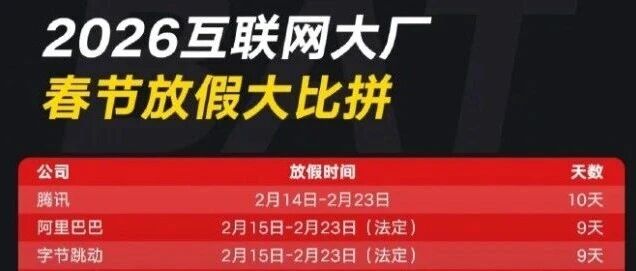
2026年互联网大厂春节放假大比拼,最高17天假。
猿大侠· 2026-02-15 04:11
Holiday Arrangements - Major companies have announced their holiday schedules for the upcoming Spring Festival, with most adhering to the national statutory holiday of 9 days [3][4] - Tencent will have a holiday from February 14 to February 23, totaling 10 days, while 58.com has the longest holiday of 17 days from February 7 to February 23 [4] - Other companies like Alibaba, ByteDance, Baidu, Meituan, Didi, Pinduoduo, Kuaishou, JD, and Xiaomi will follow the statutory holiday from February 15 to February 23, each with 9 days off [4] Employee Sentiment - There is a general satisfaction among employees regarding the holiday duration, with many expressing hope that future holidays will not be less than 9 days [3]


AI视频行业深度报告:技术跃迁驱动内容革命,把握产业变革新机遇
China Post Securities· 2026-02-14 10:32
Investment Rating - The report maintains a strong buy rating for the media industry, indicating a positive outlook for investment opportunities in the AI video sector [2]. Core Insights - The AI video generation technology is evolving rapidly, transitioning from GAN to DiT architectures, which are crucial for advancing towards AGI. This evolution is expected to significantly enhance the capabilities of AIGC (AI-Generated Content) [3][9]. - The global AI video generation market is projected to reach $296 million by 2026, with a year-on-year growth of 35.16%. The industry is exploring both consumer (C-end) and business (B-end) revenue models, with significant advancements in commercial applications expected in the near future [3][4]. Summary by Sections 1. Video Generation Evolution - Video generation integrates multiple modalities, including text, images, and audio, which enhances its complexity and expressiveness, representing the upper limit of AIGC capabilities [7]. - The technology has progressed from early GAN models to the current DiT architecture, marking a significant turning point in the industry with the introduction of models like OpenAI's Sora [9][25]. 2. Technical Progress - Current AI video generation models can produce short segments that approach professional production quality, with resolutions supporting 1080p and frame rates reaching 30fps. However, challenges remain in generating longer videos and maintaining physical realism [34][36]. - The emergence of world models is anticipated to address existing limitations in video generation, potentially leading to a new phase of technological advancement [33]. 3. Commercialization Progress - The AI video generation market is expanding rapidly, with both consumer and business segments progressing simultaneously. The C-end focuses on subscription models, while the B-end primarily utilizes APIs for applications in advertising and e-commerce [3][4]. - The industry is witnessing a shift towards integrating AI capabilities into film production, with significant projects already generating substantial revenue, such as Utopai's projects totaling approximately $110 million [3][4]. 4. Core Beneficiaries - Key companies benefiting from this trend include technology firms with proprietary algorithms, content providers with extensive asset libraries, and platforms actively integrating AI into marketing strategies [4].



谁是中国AI“第一城”?
机器人圈· 2026-02-14 09:48
Core Insights - The article highlights the rapid growth and development of China's artificial intelligence (AI) industry, showcasing significant user adoption and innovation across various sectors [3][4][14][24][31]. Group 1: AI Industry Growth - By the end of 2025, China's generative AI user base is projected to reach 602 million, a 141.7% increase from the end of 2024, with a penetration rate of 42.8%, up 25.2 percentage points year-on-year [3]. - The AI industry in Beijing has surpassed 2,400 companies, including 46 listed firms and 36 unicorns, accounting for over half of the national total [4]. - Shanghai's AI industry is expected to exceed 550 billion yuan in scale by the end of 2025, with a year-on-year growth rate of over 30% [14]. Group 2: Key Players and Innovations - Major companies leading the AI sector include ByteDance, Baidu, and Huawei, focusing on areas such as large models, AI algorithms, and smart driving [5][24]. - Shenzhen has seen a 22.6% year-on-year growth in its core AI industry, with a total scale reaching 368.5 billion yuan in 2024, indicating a shift towards source innovation [24]. - Hangzhou's AI industry is projected to grow from 300 billion yuan in 2023 to 399 billion yuan in 2024, with 84 listed companies and 10 unicorns by the end of 2025 [31]. Group 3: Data and Infrastructure - Beijing has registered 123 large model products and established a data foundation with over 150 petabytes of data [4]. - Shanghai has completed 137 registrations for generative AI services, building a workforce of 300,000 in the AI sector [14]. - Shenzhen's AI industry encompasses a full range of the supply chain, from chips to applications, with 2,887 related enterprises [24].



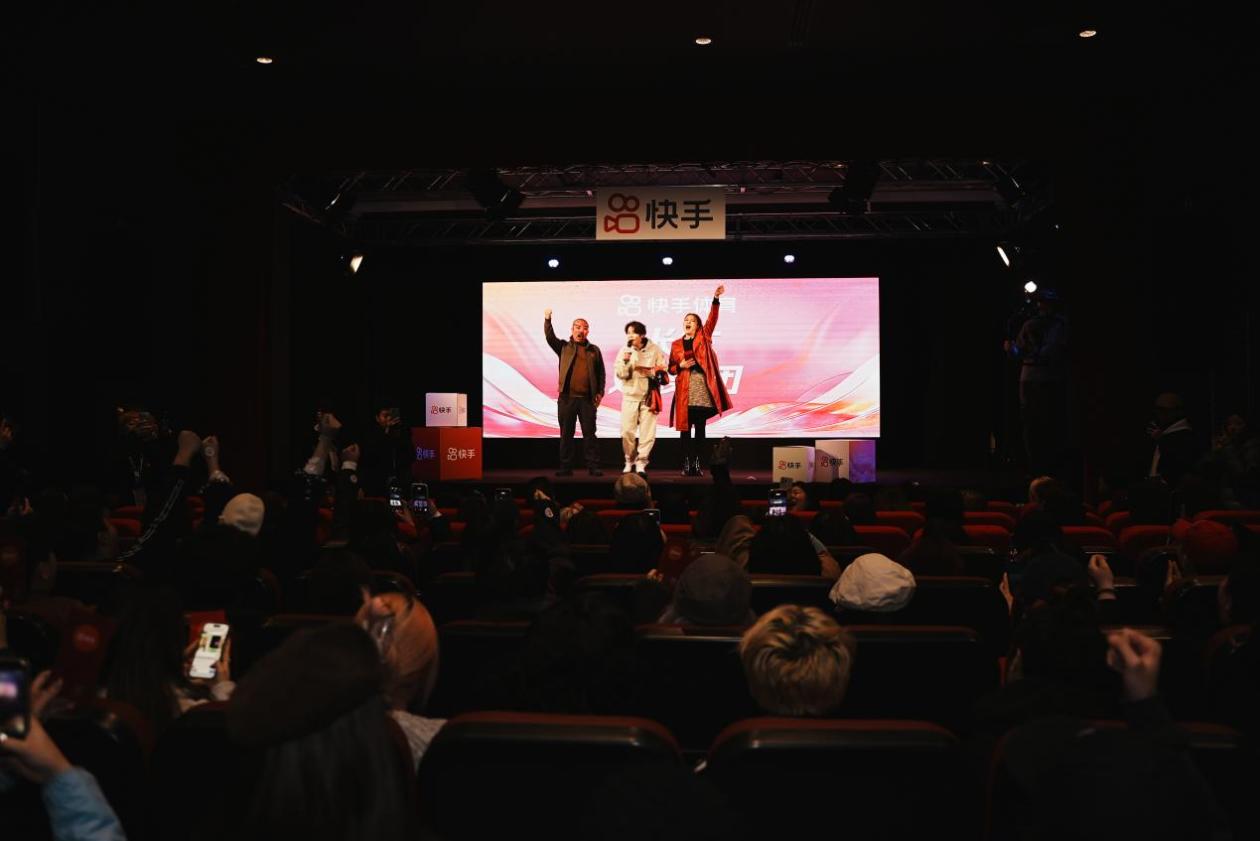
王濛把国风带到米兰,快手“米兰观赛团”用演出点亮新春仪式感
Huan Qiu Wang· 2026-02-14 07:52
Core Viewpoint - The event "Guofeng Yao Milan" organized by Kuaishou in Milan showcased traditional Chinese culture during the Winter Olympics, attracting a diverse audience and promoting cultural exchange [1][10]. Group 1: Event Highlights - The event featured performances by Kuaishou influencers and celebrated the Chinese New Year with traditional elements like lion dancing, which resonated well with both Chinese and foreign attendees [3][5]. - Winter Olympic champion Wang Meng was a key figure at the event, engaging with the audience and sharing her experiences with Chinese culture [3][7]. - The performances included various traditional art forms, such as Qin opera and monkey king acts, which captivated the audience and highlighted the richness of Chinese heritage [7][9]. Group 2: Audience Engagement - The event attracted a mix of Chinese students, expatriates, and foreigners interested in Chinese culture, creating a vibrant atmosphere filled with excitement and cultural appreciation [1][3]. - Attendees expressed their enthusiasm for the performances and the Winter Olympics, with some sharing personal connections to Chinese culture and their experiences in China [5][9]. - The event concluded with a message of unity and sportsmanship, emphasizing the importance of sports in bridging cultural gaps [10].
春节红包超80亿,留存率或不足5%!究竟能换来多少“真用户”?
Xin Lang Cai Jing· 2026-02-14 01:37
Core Viewpoint - The upcoming Spring Festival will see a significant "red envelope war" among major internet companies, with total investments exceeding 8 billion yuan, and potential total funding reaching 10 billion yuan when including undisclosed amounts from various platforms [2][16]. Group 1: Investment Amounts and Strategies - Alibaba is investing 3 billion yuan through its Qianwen app, offering a 25 yuan free order card and incentives for new user referrals [3][14]. - JD.com is also contributing 3 billion yuan, providing shopping coupons and cash prizes, including a 50% discount on iPhones [3][14]. - Tencent is allocating 1 billion yuan for its Yuanbao app, focusing on social interaction and AI-driven features [3][14]. - Baidu is investing 500 million yuan in its Wenxin app, promoting card collection and AI-enhanced interactions [3][14]. - ByteDance's Douyin is contributing 300 million yuan, while the exact amount for its Doubao platform remains undisclosed [3][14]. - Kuaishou is investing 200 million yuan, utilizing various interactive features to engage users [3][14]. - Ant Group (Alipay) and Weibo have not disclosed their investment amounts but are participating in the red envelope activities [3][14]. Group 2: User Retention Concerns - Experts warn that relying solely on red envelopes may lead to low user retention rates, with 7-day retention below 20% and 30-day retention potentially dropping below 5% [8][21]. - The red envelope strategy addresses initial user engagement but fails to ensure long-term usage [8][21]. Group 3: Competitive Landscape and AI Integration - The competition is intensified by the emergence of generative AI technologies, with companies like Alibaba, Tencent, and Baidu leveraging their AI applications as key platforms for distributing red envelopes [6][16]. - The red envelope war reflects a shift in focus towards AI capabilities, with companies aiming to establish a competitive edge in the evolving digital landscape [6][16]. - ByteDance's Doubao is expected to benefit significantly from its collaboration with the Spring Festival Gala, potentially positioning it as a major winner in this year's competition [19].