CSSC Holdings(600150)

Search documents
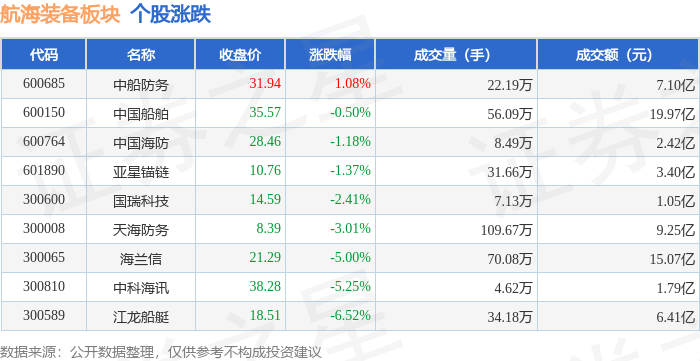
航海装备板块1月20日跌0.89%,江龙船艇领跌,主力资金净流出5.59亿元
Zheng Xing Xing Ye Ri Bao· 2026-01-20 08:59
Core Viewpoint - The maritime equipment sector experienced a decline of 0.89% on January 20, with Jianglong Shipbuilding leading the losses. The Shanghai Composite Index closed at 4113.65, down 0.01%, while the Shenzhen Component Index closed at 14155.63, down 0.97% [1]. Group 1: Market Performance - The maritime equipment sector's stocks showed mixed performance, with notable declines in several companies, including Jianglong Shipbuilding, which fell by 6.52% [1]. - Major stocks in the sector included: - China Shipbuilding (down 0.50% at 35.57) - China Marine Defense (down 1.18% at 28.46) - Tianhai Defense (down 3.01% at 8.39) [1]. Group 2: Capital Flow - The maritime equipment sector saw a net outflow of 559 million yuan from main funds, while retail investors contributed a net inflow of 452 million yuan [1]. - Specific stock capital flows included: - Jianglong Shipbuilding with a main fund outflow of 65.82 million yuan and a retail inflow of 99.88 million yuan [2]. - China Shipbuilding with a main fund outflow of 77.05 million yuan and a retail inflow of 42.59 million yuan [2]. Group 3: Individual Stock Analysis - Individual stock performances indicated significant retail interest in some companies despite overall sector declines: - Yuanrui Technology saw a retail inflow of 8.55% despite a main fund outflow [2]. - Zhongke Haixun had a retail inflow of 13.25% while experiencing a main fund outflow of 22.66 million yuan [2].


青锋行动|中船集团六〇四院10800车双燃料汽车运输船青年突击队
Xin Lang Cai Jing· 2026-01-19 14:04
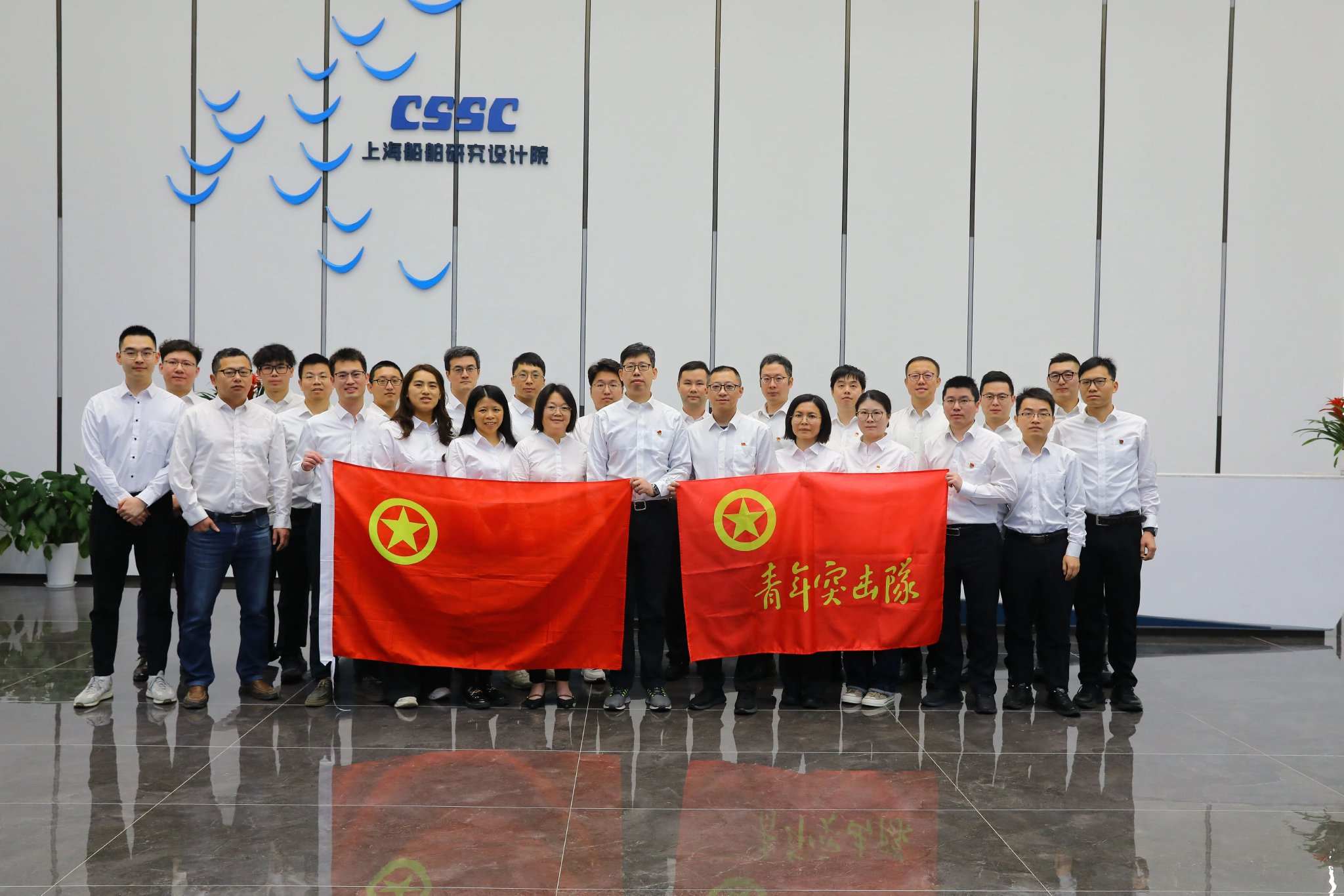
Core Insights - The article highlights the achievements of the youth task force at China Shipbuilding Group, showcasing their innovative contributions to the development of the 10,800-car dual-fuel PCTC, which addresses the challenges faced by China's automotive export industry [1][6] Group 1: Project Overview - The youth task force, with an average age of 35, is focused on developing the 10,800-car dual-fuel PCTC, which currently has a mere 4% share of the global capacity needed to support China's leading position in new energy vehicle production [1] - The team aims to create a PCTC that is technically advanced, energy-efficient, and capable of carrying the largest number of vehicles globally, thereby supporting the "national ship, national transport" initiative [1] Group 2: Innovation and Design Challenges - The team has made significant breakthroughs in green ship design, including the integration of advanced LNG dual-fuel propulsion systems and the preliminary design for ammonia and methanol fuel systems, contributing to China's carbon neutrality goals [3] - They faced challenges in integrating complex alternative energy systems into the ship's design, leading to a fundamental redesign approach that optimized space and system integration [3] Group 3: Quality Assurance and Efficiency - The team implemented a "staggered drawing" method to manage construction pressures, improving overall design efficiency by approximately 12% while ensuring timely delivery of all design documents [4] - They achieved a 98% first-time approval rate for key technical indicators, reflecting a commitment to quality and safety in ship design [4] Group 4: Team Dynamics and Knowledge Transfer - The youth task force emphasizes the importance of knowledge transfer, with experienced members mentoring younger colleagues, leading to the development of automated software that enhances design efficiency [5] - The collaborative spirit within the team fosters a supportive environment, enabling them to tackle complex challenges together [5] Group 5: Market Impact and Recognition - The youth task force has established a PCTC design system with complete independent intellectual property rights, capturing a 60% market share in global PCTC design and generating over $3.7 billion in orders for Chinese shipyards [6] - Their flagship project, the 10,800-car dual-fuel PCTC, achieved a record single order of 20 vessels, marking a significant milestone in the industry [6]
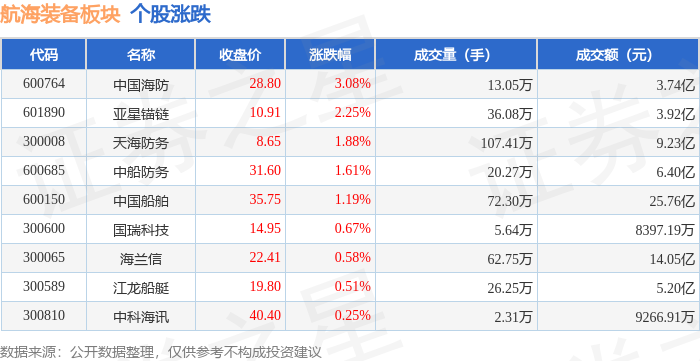
航海装备板块1月19日涨1.33%,中国海防领涨,主力资金净流入2.98亿元




Zheng Xing Xing Ye Ri Bao· 2026-01-19 08:58
Group 1 - The marine equipment sector increased by 1.33% on January 19, with China Shipbuilding Industry Corporation leading the gains [1] - The Shanghai Composite Index closed at 4114.0, up 0.29%, while the Shenzhen Component Index closed at 14294.05, up 0.09% [1] - Key stocks in the marine equipment sector showed varying performance, with China Shipbuilding closing at 35.75, up 1.19%, and China Haifeng leading with a 3.08% increase to 28.80 [1] Group 2 - The marine equipment sector saw a net inflow of 298 million yuan from institutional investors, while retail investors experienced a net outflow of 160 million yuan [1] - Major stocks like China Shipbuilding had a net inflow of 211 million yuan from institutional investors, but faced a net outflow of 89.42 million yuan from retail investors [2] - Other stocks such as HaiLanXin and Jianglong Shipbuilding also experienced mixed fund flows, with HaiLanXin seeing a net inflow of 42.32 million yuan from institutional investors [2]
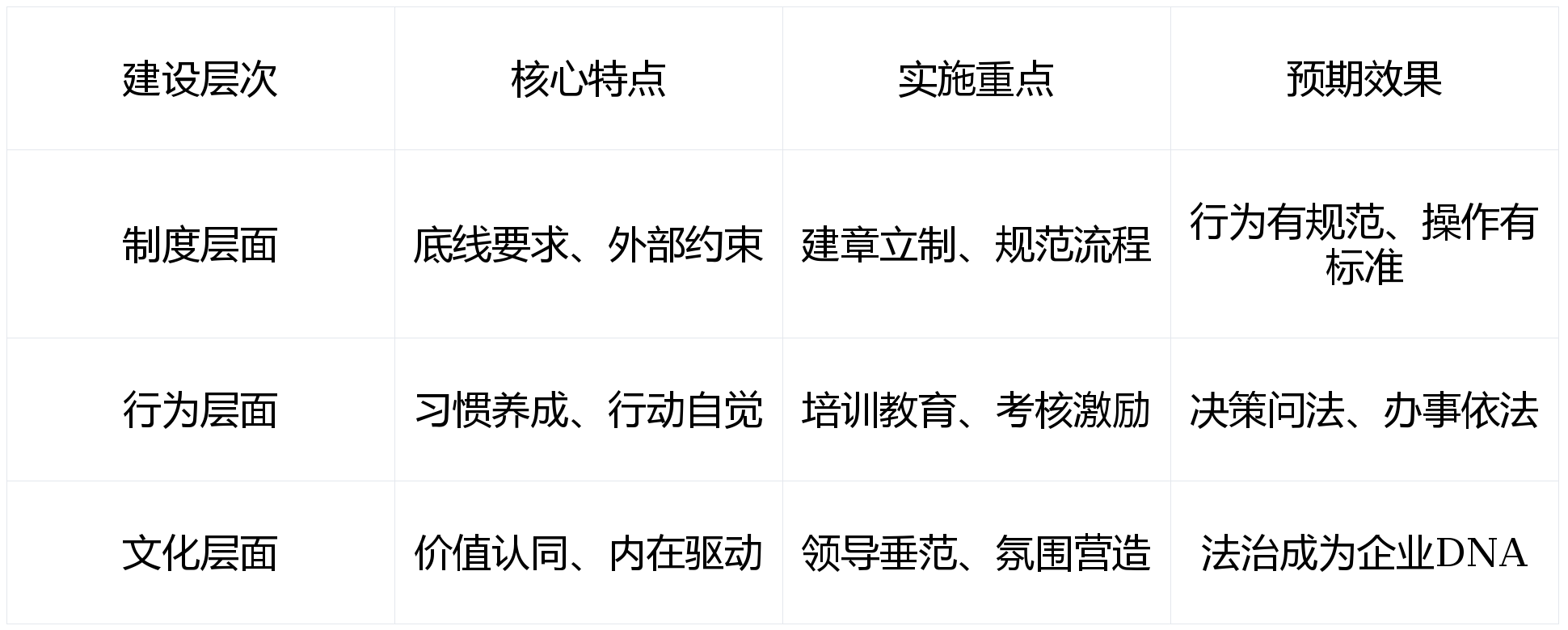
法治为基,商业有序:论企业文化中的法治内核与商业秩序构建
Sou Hu Cai Jing· 2026-01-19 07:14
Core Viewpoint - The article emphasizes the importance of a rule-of-law business environment as a fundamental guarantee for healthy corporate development, highlighting that "the rule of law is the best business environment" as stated by President Xi Jinping [1]. Group 1: Rule of Law as a Foundation - The rule of law is essential for ensuring transaction safety, reducing market uncertainty, and promoting business innovation [1]. - A market economy is fundamentally a rule-of-law economy, where orderly business activities and stable expectations stimulate innovation and investment [1]. - The rule of law provides comprehensive protection for business activities through three core mechanisms: establishing rules, safeguarding rights, and resolving disputes [1]. Group 2: Construction of Legal Culture in Enterprises - The construction of corporate legal culture is a systematic project that evolves from compliance as a "bottom line requirement" to cultural "internal recognition" [2]. - Institutional construction is the cornerstone of corporate legal culture, exemplified by China Shipbuilding Group's comprehensive regulatory framework [3]. - Successful institutional design should be systematic, operable, and dynamic, ensuring that regulations are effectively executed and adapted to changing environments [3]. Group 3: Dynamic Balance of Law and Business Order - The relationship between law and business order is dynamic, requiring a balance that ensures orderly business activities while allowing space for innovation [8]. - Law provides a stable framework for business activities, ensuring fair competition and efficient resource allocation [9]. - Legal frameworks must adapt to new business models, balancing innovation with necessary regulations to prevent deviations from established norms [10]. Group 4: Practical Pathways for Legal Culture in Enterprises - Leadership is crucial in the construction of legal culture, with leaders' legal awareness directly influencing the depth and breadth of legal culture within the enterprise [13]. - Institutional construction is a core aspect of legal culture, requiring a comprehensive system that covers all operational management processes [14]. - Digital transformation offers new tools for enhancing legal management efficiency, with companies leveraging information technology for contract management and compliance monitoring [16]. Group 5: Future Trends in Legal Culture Construction - The integration of law and business will deepen, transforming legal work from a supportive function to a strategic support role [18]. - Digital technologies will be widely applied in legal construction, improving the efficiency and precision of legal work [18]. - The ability to manage legal risks in international operations will become a key factor in corporate competitiveness, necessitating a robust legal framework for overseas operations [18].
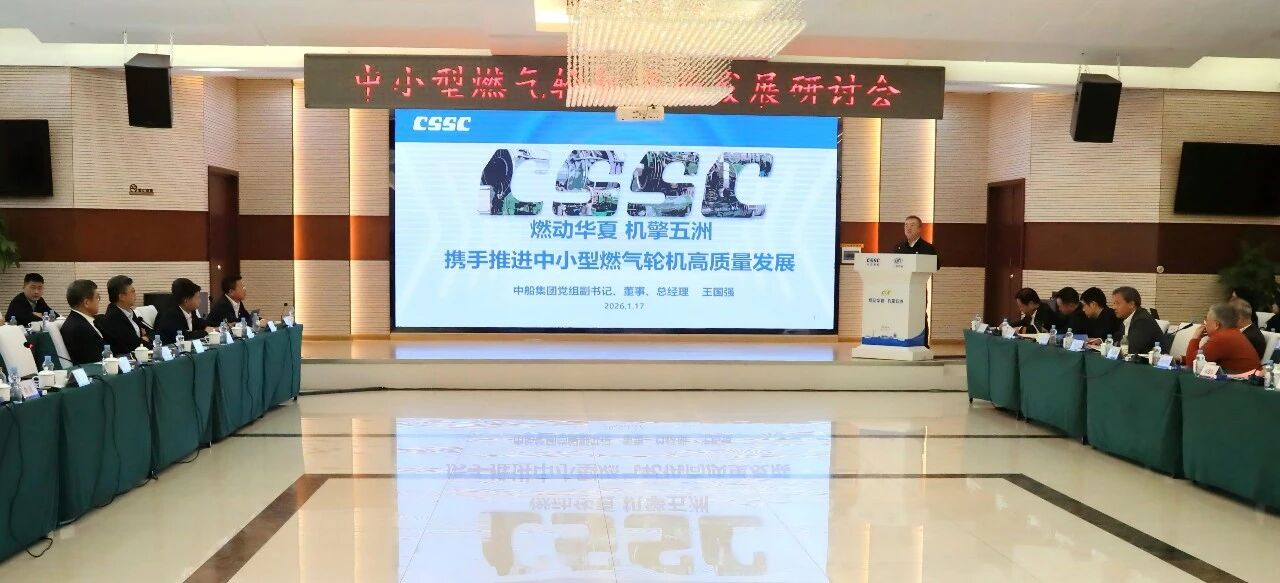
2026中船集团燃机日活动在哈尔滨成功举办
Xin Lang Cai Jing· 2026-01-17 23:54
Core Viewpoint - The 2026 China Shipbuilding Group Gas Turbine Day event successfully took place in Harbin, showcasing advancements in the CGT series gas turbines and emphasizing the importance of independent innovation and green efficiency in the industry [1][5]. Group 1: Event Overview - The event was attended by approximately 150 representatives from over 50 organizations, including government departments, key application enterprises, universities, and industry associations [1][2]. - The theme of the event was "CGT Fuels China, Engine Powers the World," highlighting the innovative achievements of the CGT series gas turbines [5]. Group 2: Key Announcements - China Shipbuilding Group launched the new CGT3 gas turbine product and signed a procurement framework agreement with China National Offshore Oil Corporation (CNOOC) [5]. - A contract for the research and development of key domestic technologies was initiated during the event [5]. Group 3: Strategic Directions - The company aims to enhance the brand influence of CGT gas turbines and contribute to the goals of becoming a manufacturing and energy powerhouse [5]. - The company’s future focus includes five strategic directions: independent control of technology, accelerating application during the energy transition, building green advantages, enhancing industrial value through digital transformation, and fostering open innovation for a world-class gas turbine brand [6]. Group 4: Leadership Insights - The General Manager of China Shipbuilding Group, Wang Guoqiang, reflected on the past year's achievements in various areas, including technological innovation and risk management [6]. - Discussions were held with local government officials and educational institutions to deepen cooperation and enhance strategic partnerships in talent development and research [6].
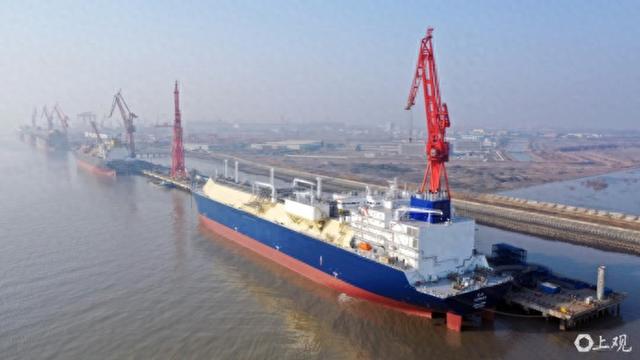
从跟跑到领先:沪东中华即将交付第60艘LNG船
Xin Lang Cai Jing· 2026-01-17 14:39
Core Viewpoint - The company, Hudong-Zhonghua Shipbuilding, is experiencing a busy start to the year with a record number of LNG ships under construction and a strong order backlog, indicating a robust position in the shipbuilding industry focused on green technology [3][27]. Group 1: Production Capacity and Orders - Hudong-Zhonghua currently has a record 24 LNG ships under construction and holds over 50 LNG ship orders, along with more than 30 large container ship orders, with nearly 80% of these being green ship types [3][27]. - The production schedule is fully booked until 2029, showcasing the company's strong demand and operational efficiency [3]. Group 2: Technological Advancements and Innovation - The company is the only shipbuilder globally capable of constructing both NO96 and MARKIII containment systems, highlighting its unique technological capabilities [12]. - Hudong-Zhonghua has established an AI + Future Manufacturing Center to experiment with the integration of new technologies, promoting digital upgrades in traditional shipbuilding [25][27]. Group 3: Skilled Workforce and Expertise - The company boasts a highly skilled workforce, including Zhang Dongwei, a recognized craftsman who has mastered the challenging welding techniques required for LNG ships, maintaining a zero-leakage record in his work [16][21]. - Zhang has trained over 100 composite LNG welders, contributing to a strong talent pipeline for the LNG shipbuilding sector [21]. Group 4: Future Outlook - Hudong-Zhonghua aims to leverage its modernized production capabilities to enhance product structure and expand its global customer base, solidifying its leading position in the industry [27].
聚焦 | 从教育、科技、人才三维视角看国企重组整合
Sou Hu Cai Jing· 2026-01-16 09:06
Core Viewpoint - The article emphasizes that strategic restructuring and professional integration are two core paths in the current state-owned enterprise (SOE) reform, which complement each other to optimize state capital layout and enhance core functions [1] Group 1: Strategic Restructuring and Professional Integration - Strategic restructuring focuses on core responsibilities, reducing redundant investments and homogeneous competition, and emphasizes structural optimization through cross-industry and cross-enterprise resource integration [1] - Professional integration targets niche areas, enhancing technological breakthroughs and innovation collaboration, focusing on functional reinforcement [1] Group 2: Educational Perspective - Restructuring promotes the construction of platforms for industry-education integration and innovative customized talent training, as seen in Hunan's construction company, which restructured its talent development system through property rights reform [1] - The integration of education, talent, and industry chains is facilitated, creating a comprehensive mechanism from basic research to industrialization [4] Group 3: Technological Perspective - Strategic restructuring breaks innovation barriers and promotes interdisciplinary technology integration, as demonstrated by the merger of Baosteel and Wuhan Steel, which enhanced R&D investment intensity and achieved breakthroughs in high-end steel and smart manufacturing [3] - Professional integration is crucial for overcoming "bottleneck" technologies, as exemplified by China Railway's consolidation of R&D resources, leading to advancements in high-speed rail technology [3] Group 4: Innovation Ecosystem Construction - Restructuring fosters collaborative innovation mechanisms by breaking down departmental barriers, ensuring effective alignment between research and industrial needs [4] - The integration of resources across the entire industry chain, as seen in China Shipbuilding Group, has led to significant technological advancements in LNG transport and large cruise ships [4] Group 5: Digital Transformation Empowerment - Restructuring supports the intelligent transformation of traditional industries by optimizing production processes and resource allocation, significantly enhancing production efficiency [5] - The integration of digital technologies in high-end equipment manufacturing is exemplified by China Shipbuilding Group's application of digital twins and virtual reality in ship design and operation [6] Group 6: Talent Perspective - Restructuring enhances talent structure through the aggregation of high-end talent and precise allocation of key positions, as demonstrated by China National Chemical Corporation's establishment of a talent ladder system [10] - Innovative talent incentive mechanisms are introduced, transitioning from a position-oriented to a value-creation-oriented compensation system, enhancing employee retention and growth [11] Group 7: Future Outlook - The article suggests that SOEs should further develop an open talent system, break down institutional barriers, and promote cross-enterprise talent mobility while strengthening innovation ecosystem construction [13]



中国船舶跌2.03%,成交额21.86亿元,主力资金净流出1.90亿元
Xin Lang Zheng Quan· 2026-01-16 06:11
Core Viewpoint - China Shipbuilding Industry Company Limited has shown significant financial growth, with a notable increase in revenue and net profit year-on-year, despite recent fluctuations in stock price and trading volume [2][3]. Group 1: Stock Performance - On January 16, China Shipbuilding's stock price decreased by 2.03%, reaching 35.27 CNY per share, with a trading volume of 2.186 billion CNY and a turnover rate of 1.01% [1]. - Year-to-date, the stock price has increased by 6.04%, with a 1.40% decline over the last five trading days, a 7.04% increase over the last 20 days, and a 1.07% decline over the last 60 days [1]. Group 2: Financial Performance - For the period from January to September 2025, China Shipbuilding achieved a revenue of 107.403 billion CNY, representing a year-on-year growth of 91.21%, and a net profit attributable to shareholders of 5.852 billion CNY, reflecting a 157.71% increase [2]. - Cumulatively, the company has distributed 5.310 billion CNY in dividends since its A-share listing, with 2.102 billion CNY distributed over the last three years [3]. Group 3: Shareholder Information - As of September 30, 2025, the number of shareholders for China Shipbuilding reached 916,900, an increase of 228.92% compared to the previous period, while the average number of circulating shares per person decreased by 58.73% to 6,621 shares [2]. - Among the top ten circulating shareholders, Hong Kong Central Clearing Limited holds 153 million shares, a decrease of 7.2285 million shares from the previous period, while various ETFs have increased their holdings significantly [3].
中金2026年展望 | 船舶:景气修复,中国船企竞争力持续提升
中金点睛· 2026-01-15 23:45
Core Viewpoint - The shipbuilding industry experienced a decline in new orders in 2025, with a stable price environment. However, the industry is expected to recover in 2026 due to ongoing demand for fleet renewal driven by aging vessels and environmental regulations, alongside China's competitive advantage in high-value ship types [1][4]. Group 1: 2025 Review - In 2025, global new ship orders amounted to 56.43 million CGT, a year-on-year decrease of 27%, attributed to high base effects, US-China trade tensions, and elevated ship prices [5][8]. - The new ship price index remained high, ending the year at 184.66, a decrease of 2.38% from the previous year [8]. - By ship type, new orders for oil tankers, bulk carriers, and container ships saw significant variations, with oil tankers down 46%, bulk carriers down 38%, and container ships up 11% [9]. Group 2: 2026 Outlook - The shipbuilding industry is projected to see a recovery in demand, with an estimated average of 14 million DWT in new orders annually over the next decade, primarily driven by bulk carriers and oil tankers [53][64]. - The global shipyard delivery volume in 2025 was 96.83 million DWT, with expectations of reaching 117 million DWT in 2026, reflecting a 21% increase [65]. - The order coverage ratio for shipyards is high, indicating a robust backlog that is likely to support continued order accumulation [65]. Group 3: Demand and Supply Dynamics - Demand for oil tankers is expected to grow due to stable trade demand, while the supply side is projected to see a moderate increase in capacity, with oil tanker capacity growth estimated at 2.01% in 2026 [18][20]. - The dry bulk market is experiencing a shift in trade demand towards bauxite, with overall trade volume expected to increase by 2% in 2026 [21][22]. - Container shipping demand is forecasted to slow, with a projected decline in ton-mile demand due to geopolitical uncertainties [26]. Group 4: Replacement Demand - The average age of the global fleet has increased, reaching 22.6 years, indicating a potential peak in replacement demand as older vessels are phased out [29][40]. - Approximately 50% of new orders in 2025 were for alternative fuel vessels, with LNG and methanol-powered ships leading the way [39][41]. - The International Maritime Organization's (IMO) emissions reduction strategy, although delayed, continues to drive the need for fleet renewal and compliance with stricter environmental standards [39][40]. Group 5: Competitive Landscape - China's shipbuilding industry remains dominant, holding 62% of the global order backlog despite a 35% decline in new orders in 2025 [47][50]. - The concentration of shipbuilding capacity has increased, with the top ten shipyards holding a significant share of the market, reflecting a trend towards consolidation [43][44]. - The competitive dynamics are shifting, with Chinese shipyards expected to benefit from high-value orders and improved capacity utilization [49][50].
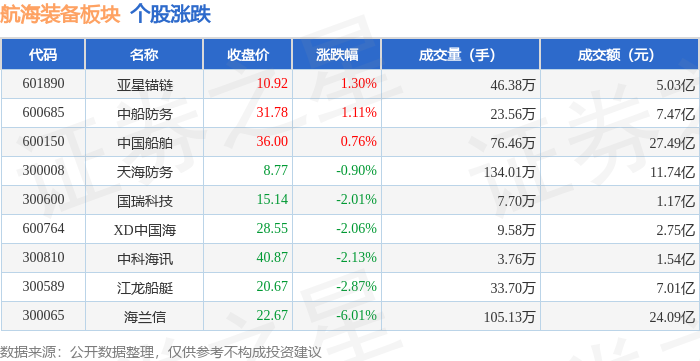
航海装备板块1月15日涨0.15%,亚星锚链领涨,主力资金净流出2.39亿元
Zheng Xing Xing Ye Ri Bao· 2026-01-15 08:59
Group 1 - The marine equipment sector increased by 0.15% on January 15, with Yaxing Anchor Chain leading the gains [1] - The Shanghai Composite Index closed at 4112.6, down 0.33%, while the Shenzhen Component Index closed at 14306.73, up 0.41% [1] - The trading volume and turnover for key stocks in the marine equipment sector showed varied performance, with China Shipbuilding achieving a turnover of 2.749 billion yuan [1] Group 2 - The net outflow of main funds in the marine equipment sector was 239 million yuan, while retail investors saw a net inflow of 402 million yuan [1] - Specific stock performances indicated that China Shipbuilding had a net inflow of 20.5 million yuan from main funds, while Yaxing Anchor Chain experienced a net inflow of 9.364 million yuan [2] - The overall sentiment in the sector was mixed, with significant outflows from stocks like Jianglong Shipbuilding and Tianhai Defense, while retail investors showed interest in several stocks [2]